Shall or Shallot – Virgil

Shall or Shallot

 Virgil Evetts

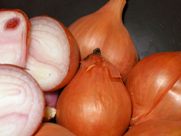
Where would we be without onions? This great and pungent clan of edible lilies is the back bone of practically every great cuisine. Just try to imagine a world without garlic, onions, leeks, spring onions or chives: a gourmand’s dystopian nightmare if ever there was one, and enough to make most of us want to fall on our boning knives.  But it’s my guess that very few of us would even notice the passing of the shallot. For some sad reason this particular member of the great house of Allium is yet to have its day down under. My local supermarket treats them as some sort of quaint novelty – a measly couple of bulbs are offered under cling film on a spotless polythene tray and sold at prohibitive prices.  Placed next to cheaper, free-flow onions it’s no surprise we tend to ignore them.

But despite the higher prices and piddley size the shallot is like the sexy cousin of the dumpy house-frau that is the common onion. Whereas onions are big and brash, the shallot is svelte and sophisticated with an understated charm.

In much of Europe, especially France, the shallot is treated with reverence and is used with intelligence and finesse. In Tropical Asia it replaces the onion altogether, being easier to grow in the dank, equatorial heat.

Shallots have a sweetness and fragrance that sets them far apart from even the best onions. They have a herbaceous, almost winey quality when cooked that may explain their slavish following in classical French cuisine. I can think of no more intoxicating fragrance in the kitchen than that of shallots slowly melting in butter. It’s quite hypnotic.  Their gentle nature also makes them a great replacement for onions in salads. I detest raw onion in salads.  More to the point, I detest raw onion in salads twelve hours later when I can still taste it in my mouth. Another tick in support of shallots – they still offer that savoury onion tang but none of the biting heat or lingering, sweaty after taste. But by all means stick with the tried and true raw onion if you must. Maybe you want to smell like a medieval Romanian peasant.


Practical matters

You can use shallots anywhere you would use onions as the star ingredient; for example French onion soup, that star of the 70s bistro scene, is totally the business when made with shallots. Caramelised shallots are also knee-tremblingly good, however you employ them, they’re sticky and sweet with a smart, rounded flavour that leaves your palate all a flutter.

South East Asian recipes specifying onion usually mean shallots. The true onion is barely known in the sweltering tropics, whereas shallots are grown and eaten in abundance. They are commonly softened in the stock base of soups such as tom kah gai and laksa, and are one of the core ingredients in Thai curry pastes. Indonesian and Malay satay – the highest form of the BBQ art -would be a far lesser dish without the traditional accompaniment of chopped raw shallot and cucumber.  Local belief says that these two together counter the dangerous ‘heaty’ effects of the deliciously spicy, smoky meat on the body. In 30 degree heat and 100% humidity I can never tell the difference, but it sure tastes good.

I wouldn’t recommend using shallots in soffrito or mirepoix. They just don’t have the strength of character to hold their own against the thuggery of celery and carrots.

As I’ve mentioned, shallots are not cheap. Well not onion-cheap anyway, which isn’t really saying much. Onions are practically given away when you consider how long they spend in the ground and the laborious processes involved in harvesting and grading. How does anyone make money off the land?

Anyway, it is possible to have shallots without worsening the global financial crises; grow your own.   They are less fussy than garlic and more productive than onions. If you’re not of a green-fingered persuasion you can buy them quite cheaply at Asian supermarkets. It’s an economy of scale thing I suppose, but Asian supermarkets usually offer shallots at far better price than your local musak-mart.

I know these are tough times and more than ever price dictates choice, but please promise me that you’ll refrain from buying [vastly inferior] Chinese garlic, out of season Californian onions or any other bargain basement allium imports. For a few cents more per kilo you will be rewarded with superior taste and texture, as well as the smug satisfaction that comes with local loyalty.


Shallot Pizza

You may have noticed that I have an ongoing obsession with Pizza. I make no apologies; it’s a great dish. The recipe below is a reverse-engineered rendition of a truly great pizza I ate in Rome a few years ago. To my taste, Roman pizza is usually better than that of Napoli, the home of pizza. There, I said it. Having now offended the honour of every loyal Camorra capo I’m probably on borrowed time now.  So think of me while you partake of this pizza; it is, I rather fancy, like an edible ode to the silky, sweetness and fragrance that is the shallot.

1 tin tomatoes

2+ small dried chillies

Fresh Oregano to taste

2 strips [preferably free range] streaky bacon or pancetta affumicata

A good handful of peeled, sliced shallots

8 Kalamata olives

A good handful of grated Parmigiano, Grana Padano or similar [yes, generic parmesan is fine]

Olive oil

Optional extra: a few roughly strewn anchovy fillets work outrageously well here, but I appreciate that they’re something of an acquired taste.

Do I really need to give you a pizza base recipe? I think not.  By all means make your own but to achieve the thin crispness that typifies Roman pizza, you may be better off with premade.  I use the Turkish Bread brand but I’m sure there are others out there. Either way, start by preheating your oven to its maximum temperature.  Preferably use a pizza stone or inverted cast-iron skillet.

To make the sauce, drain and gently squeeze the tomatoes. Blend with the chillies, oregano, a good glug of oil and season to taste.

Spread the sauce evenly over the base. Sprinkle the cheese evenly over top, followed by the bacon [roughly chopped].

Toss the sliced shallots in a little olive oil [This helps them to cook quickly without burning] before continuing as above.

Arrange the olives evenly around the pizza, dress with a little more oil and shoot into the oven.

Cooking time will depend on temperature but the pizza should be done in about 10-15 minutes. Eat sizzling hot with someone you like.


French Shallot Soup

I can remember the first time I had French onion soup as a child. It was in a dark basement bistro somewhere off Queen Street, I couldn’t tell you exactly where or when but it seemed like a very grown up sort of place and a very grown up dish. The deep, complex flavours of the, steaming soup are perfectly paired with the crispy raft of the gruyere crouton. Forget chicken soup, this is the real soul food.

1 litre+ strong, REAL beef stock

Enough sliced shallots to fill a 1 litre jug [I never said this would be cheap]

A lot of butter [at least 3 or 4 tablespoons full]

Gruyere cheese

Crusty, fresh baguette

¼ cup dry sherry

A bay leaf or two

Brown sugar


In a heavy pot on a medium heat melt the butter. When sizzling, add the shallots and slowly and attentively cook down until they begin caramelise. This takes no less than 20 minutes. The slower you cook them the better the end result. The trick with caramelizing onions etc is to use a low steady heat. Don’t let them stick, don’t let them burn. When caramelisation begins [the shallots will be a dark tan colour and quite sticky] add about a tablespoon of brown sugar and stir a little longer. Add the boiling stock and the bay leaves and allow to simmer uncovered for about half an hour. Add the sherry and simmer for another 10 minutes. Adjust seasoning to taste. At this point the soup should be very rich with a strong beef/shallot flavour and winey/sweet undertone.

Traditionally at this point the soup is plated, the slice of baguette is placed on top, the gruyere on top of that and the whole thing goes under a flaming grill. I can’t be doing with this. It leaves the bowl white-hot and the crouton soggy underneath so…

Slice the bread thickly, drizzle with melted butter and grill on one side. Now generously sprinkle grated gruyere on the ‘raw’ side and grill again until the cheese is sizzling and fragrant.

Serve with or on top of the soup. It’s up to you.

Enjoy, and that’s an order.

The Way of the Sausage

The way of the sausage

I seem to be a man of increasingly simple tastes. I’ve been in ecstasies lately over the humble sausage. I suppose if I’m honest the sausages I eat aren’t all that humble, but the ways I use them are usually pretty no-frills. That said, even a ho-hum snag can be used to great effect in some quite surprising ways and when I’m feeling frisky, which of  a week night is almost never, I do just that. 
Sausages have always been something of a staple in New Zealand. Thanks to the largely working-class ancestry of Pakeha Aotearoa, these fetching offal concealment units have a special place in our hearts -and have no doubt contributed to the premature failure of a good number of our hearts too. And while I shudder at some of the other legacies of our local culinary past, [such as the ritualized abuse of brassicas], I thoroughly approve of a decent snarler. But not just any old processed, vacuum packed, suspiciously slippery so-called. I mean real sausages, of the real meat, real flavour kind.

I was fortunate enough to grow up near a very good, old-fashioned butcher who made the aforementioned genuine article in the traditional style- from off-cuts and probably the odd snout or nipple. They were richly flavoured, moist and fragrant and they had a cult following in 1980s Devonport. On any given Thursday morning a jittery queue would snake out from the Vauxhall road butchery; an anxious snap shot of the community, all hoping to get their weekly garlic sausage fix. Back in the 80s such shops were already the exception to the rule. Much of New Zealand had long since settled for filler laden-travesties or worse still, cheese injected,  meat flavoured [is there an more terrifying suffix?] food-like substances resembling poached penii,  with tantalizingly onomatopoeic names .  My mother wisely banned all such horrors from the house. Fortunately as the Kiwi palate grew up though the 80s and 90s the real sausage stomped out more of a foot-hold. These days even supermarkets offer at least a few decent bangers among the sea of cheap and nasty. Most butchers today pride themselves on the quality of their sausages, and while ego and enthusiasm might sometimes run amuck, [teriyaki pork and shitake!?!] the results can be sublime.

A certain sort of person delights in telling horror stories about what really goes into sausages. They will gleefully declare that all sausages are the ground up remains of pigs eyes, cow sphincters and various visceral odds and ends. While not entirely without foundation these stories should be taken with large flake of Maldon.  
Sausages have existed in various forms, for many hundreds, if not thousands of years and are found in most cuisines. It would be impossible to say who invented them and when, because it’s probably a matter of synchronicity. Our ancestors- wherever you personally hail from- couldn’t afford to waste any part of an animal; a fiscally or physically pricey item depending on how far back you look. Eye balls, other balls, ears, offal, anuses and udders are rich in protein and are at least edible if not appetising.  Perhaps understandably, chopping them up into an anonymous mash and further disguising them in cleaned out intestines is a common approach. In reality the modern sausage [at least in New Zealand] is a pretty inoffensive affair. They are mostly real meat [as in muscle tissue], fat and various fillers- soy protein being the most common.
Offal is unlikely in the modestly priced banger because it imparts a distinctive flavour, spoils quickly and is more valuable sold separately. In the better quality sausage the only preservative will be salt. Nitrates are used in some cases [mostly in cheaper products] to help maintain an appealing pinkish hue but they serve very little preservative function and have the irksome side effect of being quietly carcinogenic. Having said that by the time you have ingested enough nitrates from sausages to be at serious risk of tumors you will also be morbidly obese and on the cusp of spectacular heart failure.
When buying pre-packed sausages, always check the ingredients. The meat, be it pork, beef or venison [I don’t recognise any other kind], should be the main ingredient and make up least 80% of the total content. The sausages should be raw and therefore squishy with a decent amount of fat visible through the casing. Lean sausages are dry and tasteless sausages. Much of this luscious white death will escape during cooking so don’t fret too much,  what remains helps to moisten the meat and carry flavour directly to your eager taste buds.  As consumers we have an understandable suspicion of extenders and fillers in food- they’re a great way of ripping us off. But in the case of sausages don’t be too quick to judge embellishment. Sausages are, in my marginally humble opinion, improved with a little filler- ideally breadcrumbs or oats. These help to hold the meat together, retain moisture and enhance the texture. A sans filler beef sausage, for example is little more than a crumbly bag of steamed mince. Only pork works well with the pure and natural treatment as pig flesh is self-binding i.e. no eggs, crumbs or scarily indefinable textured vegetable protein required.
So far I’ve only been talking about the traditional English style of sausage best known in New Zealand- meat, minimal seasoning and little else besides. These days, however the sausage repertoire of the nation is an ever expanding feast. Just about everyone knows that chorizo is a Spanish sausage- unfortunately nobody seems to know how to pronounce it [Chor-eeth-oh] or that it’s available in both fresh and cured forms. Various spirals of South African sausage or Boerewors are a common feature in most supermarkets thanks to recent migration trends. Even pungent, offaly Thai and Laos sausages can be found if you know where to look.  So in other words ‘sausage’ can mean different things to different people. Regardless of type, fresh sausages are [with the possible exception of the latter examples] more or less interchangeable in most recipes-depending on individual tastes.
How they are cooked will depend entirely on the recipe- if you are going for something as basic [but perfectly respectable] as sausage and mash, it will be a choice of grilled, baked or fried. On a weeknight, when I can rarely being doing with much of a fuss, fried is my preference.  On a low temperature in a covered pan or wok, it’s about as easy as cooking gets.
Assembled below are a number of ways with the humble and not so humble banger that I inflict upon my family from time to time. I really like these. Maybe they do too.

BBQ

Anyone can carbonize a sausage on gas grill. To make something interesting of this mediocrity I like to brown them and then split them down one side. With only the touch of the knife they will splay open. Now baste the split side with a mixture of soy sauce, brown sugar and chilli oil. Keep turning them and add as many layers of the sticky, spicy glaze as possible.

Paella

It just isn’t paella without a few fiery fresh chorizo chopped up and folded into the steamy rice. For a truly transporting paella, choose good quality fatty pork chorizo [see below]. Carefully slice and sauté in a little olive oil until the gorgeous paprika stained fat starts to flow.  Set aside the sausages and use the fat to fry the rice etc. Not exactly what the doctor ordered but I think we all just need to calm down a little when it comes to saturated fat.

Devilled sausages

Known to most Kiwis as something you make from that iconic yellow sachet- and containing far too many numbers and things ending with ‘phate’ for my liking. But to be fair, this much loved faux-food really does taste good, more so when made from scratch with the best pork sausages you can find, crisp autumn apples and served on butter and cream laden mashed agria potatoes.
Brown your bangers quickly in a hot pan and set aside. Do the same -separately- with a couple of sliced onions and a couple of sliced, peeled apples. In the same pan melt a little butter, stir in some flour to make a roux and add a cup or two of good vegetable or chicken stock. Stir until thick. Add ¼ cup of tomato ketchup, a teaspoon of brown sugar, a good glug of Tabasco and season to taste. Now return the other ingredients to the pan. Simmer on a low heat until the sausages are cooked and the apples tender.

Sausage and Peppers

An Italian American classic that probably has its origins in the poverty stricken Calabria of the early 20th century-with the ancestors of most Italian Americans.  Tres, tres Godfather.
Very much as its name suggests- sausages, preferably pork and of the spicy, fennel laden kind, roughly chopped and sautéed in olive oil with lots of ripe peppers [also chopped], a few cloves of garlic [crushed], a couple of pulped tomatoes, a little chilli and good handful of bitter-hot wild rocket. Season to taste.  The sausages and peppers should be nicely browned with the tomato adding just a little moisture and acidity. Scoop up with oven-warmed ciabatta or similar and wash down with litres of rough red.  Bada bing.

Garlic studded

There’s nothing very clever or new about this one but it has big nostalgia value to me. My mother has a thing for garlic and never passes up an opportunity to include it in quantity wherever possible. It’s a safe bet that any sausage cooked by Mum will include a clove or two sneakily slipped inside, creating lovely little nuggets of mellow garlicky sweetness.  As a child I spent a lot of time trying to do the same thing with cheese. Take it from me, it can’t be done. Unoriginal as it may be, the garlic studded snarler is still a crowd pleaser. To make it truly memorable, slip a couple of chillies in too.

Homemade
Ok so this isn’t about using sausages but actually making them. Natural sheep intestine casing can be obtained from any obliging butcher. For my home-made efforts I buy high-fat pork mince from a Chinese butcher. These guys know a thing or two about pork and always have the best quality and priced cuts around. To make an approximate of fresh chorizo- take a kilo of pork mince and add about 2 tablespoons of smoked and 2 of regular paprika, 6+ cloves of crushed garlic, 2 teaspoons salt, 1 teaspoon of ground cayenne, 1 teaspoon of  ground white pepper, 2 tablespoon chopped fresh thyme. Thoroughly mix and knead together until well- blended and darkly stained from the paprika. In a hot pan, test-fry about a tablespoon of the mixture. Taste and adjust the seasoning accordingly. Getting the meat into the skin is a little tricky if you don’t have a machine but it’s quite do-able- after a fashion. For years I used a kitchen funnel with the pointy bit cut down to about 4cm. It’s a bit messy and time consuming but still does the job. These chorizo are worth any amount of toil- they’re dizzyingly good.

Well that’s about enough out of me. How do you serve up your snarlers?

Virgil Evetts

Fig-ure it out – Virgil

Fig-ure it out
Virgil Evetts

Supermarkets and high street fruiters like to perpetuate a myth that all the best fruit comes out in summer.  But we know better.  Those of us who truly live by our stomachs and taste buds that is, know that, apart from a few cherries, berries and early stone fruit, the very best pluckable eating is to be had in autumn.  Apples, quinces, pears, grapes, late peaches,  and most importantly for the sake of this week’s column and my own predilections, figs, all reach their sugary, sensuous best when the days start to shorten and the leaves start to curl.

Being a bit of a bit of miserable bugger, I can usually find something to complain about with even the very best foods, but with figs I’m left scratching the grumbling recesses of my head and drawing blanks. The fig is a faultless fruit.

So maybe I’m being a bit gushy.  Not everyone is fig-mad, but I’ve always acted like a one man fig marketing board and have every intension of treating the next 1000 words or so as one giant sales pitch.  Just you see if I don’t win you over.

The fig, or Ficus carica, has figured into the human diet since prehistoric times. It was one of the plants that, through its easy going ways and delicious rewards, persuaded our ancestors to give up the whole nomadic thing, settle-down on the banks of the Euphrates  and invent the lifestyle block. It’s easy to see the attraction to the agricultural virgin – figs grow almost effortlessly from cuttings (break-off twig, shove it in the ground), they are famously drought tolerant, criminally delicious, are packed full of dietary fibre and are a veritable cocktail of vitamins and anti-oxidants.  So, not only do they taste good, they make you feel good too.  Personally, I wouldn’t care if they were composed of pure fat and caused rectal leakage; I’d still wolf them down at every opportunity.

Botanical stuff

The fig family is enormous and diverse, with members spread far and wide around the globe- mulberries, breadfruit, jack fruit, noni – and that’s just a small scattering of the edible ones.  Among the fig’s less palatable kin are rubber trees, strangler figs and the holy bodi tree.

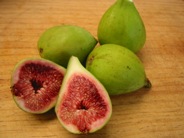
Figs may look and taste great once they have ripened, but the journey from flower to fruit is a total freak-show. The actual flowers of the fig form and open (en mass) inside the juvenile fruit.  In order for pollination to occur, tiny specialist fig wasps must crawl through the tiny aperture at the base of the fruit.  Once inside they rush about (as much as you can inside a fig), laying eggs and disturbing enough of the pollen for pollination to occur. After this, their purpose is served and they drop dead – often inside the fig.

Fortunately for those of you who are now feeling a bit queasy, and wondering how many wasps you’ve eaten in the name of a sticky mouthful, all modern figs are self fertile. In other words, they are entirely wasp-free.  If, like me, you have a perverse thing for roughing it food-wise, and you really want to get an idea of what our ancestors had to endure in this regard, try eating a few ripe Morton bay figs (yes they are edible). These are sweet, if a little gritty, and are usually crammed full of protein-rich wasp maggots and assorted corpses.  I was supposed to be pushing the virtues of the fig, so I’ll dispense with the graphic biology and get back to the gush.

Growing figs

I’ve said it before in a previous column and I’ll say it again here – if you don’t have a fig tree in your garden, or in a tub on your deck, you deserve a good telling off.  They are the easiest fruit to grow, seeming to thrive through abuse and neglect and are almost invulnerable to disease. The only real pests you’ll encounter are birds, who have an almost preternatural ability to find ripe figs.  On a small tree their voracious appetites can lead to heart breaking disappointment in a few short hours.  The sneaky little buggers will turn up at dawn, full of butter-wouldn’t-melt-in-their-beaks innocence, demolish your entire crop and then sit about in the trees smirking.  Rosellas are particularly adept at bringing misery to the fig grower, and should be viewed with great suspicion whenever they arrive in your neck of the woods – no matter how charming they may seem.  I’ve tried to convince my cat that Rosellas are not deadly, screeching sky demons (as she seems to believe) but delectable hook-beaked kitty-morsels. She remains unconvinced and wholly terrified of them.

Once your fig tree is a few years old it will produce far more fruit than you need and it becomes easier to let the bird have their fill.  I only net (I use tulle – MUCH cheaper than real bird net) the best fruit and let the bastard birds gorge on the rest.

There are hundreds of named fig cultivars, but they all fall into one of two basic types – red fleshed and white fleshed. Skin colour isn’t a very reliable indicator of what lies beneath, so it pays to know your figs intimately.  This difference in flesh colour isn’t just an aesthetic thing either; the two forms taste different too.  White fleshed figs tend to be super sweet, and syrupy and at full ripeness almost collapse under their own weight.  Red fleshed figs, while still sweet, have a distinct berry flavour and just enough acidity to counter the sugar.

The latter are by far my favourite of the two.  They are best picked straight from the tree and devoured in situ.  I actually prefer my figs just short of ripe- the extra acid and slight firmness is quite beguiling.

Eating figs

Apart from the slightly salacious joys of figs au natural, they can also be used in the kitchen in a myriad ways.  As is my way, I tend towards the simplicity. I don’t like cluttering the perfection of figs or any seasonal produce for that matter with too much embellishment.

  • I’m very partial to sliced red-fleshed figs served with malevolently ripe blue cheese- Gorgonzola Picante is just perfect – and a drizzle of honey. It’s awfully a la mode to do this one with an oozing chunk of honey comb, but I have no patience for wax-gummed teeth.
  • Grilled figs are another favourite in our household – halve the figs sprinkle with raw sugar, a little orange zest and grill until sizzling and fragrant. Best served with good vanilla ice cream or crème anglaise.
  • But it’s actually a savoury dish that is my favourite way of cooking with figs – it’s just about my favourite way of eating them too. The actual origin of this recipe is a bit vague – it came to me a few years ago by way of my mother, who maintains that it’s a traditional Provencal harvest dish. Considering the method and ingredients she’s probably right, but my mother has a patchy way of organising her thoughts, so who knows?

This dish has become something of an Easter tradition in our family and is – if you ask me – a bit more interesting than the standard Easter lamb.  The recipe may look suspiciously simple, but that’s the whole point. It’s just a humble show case of outstanding produce and is as such, a true delight to eat.

Probably Provencal Figgy Fish

1 fillet per person of super-fresh white fish – gurnard or tarakihi are particularly good.

At least 2 ripe figs per person- sliced into quarters

½ bottle dry white wine

Generous handful of good black olives – Kalamata or Nicoise (not those dreadful pitted black things)

Olive oil for frying

Salt and pepper to taste

Pre-heat oven to 180 Celsius.   Flour the fish and lightly brown in a hot oiled pan. Scatter the figs and olives over the fish.  Add the wine and gently shake the pan,  rather than stirring which will demolish the fish.  Season to taste and place in oven for approximately 15-20 minutes or until fish is cooked, the sauce is starting to thicken and the figs are slightly softened.  Adjust the seasoning and serve with crusty, oven-warmed baguette.  This is the sort of dish you can plonk in the middle of the table eat communally.

The fig season is short (with or without marauding parrots) and very, very sweet. Make the most of it.

The great Caper caper


The great Caper caper
Virgil Evetts

This isn’t going to be one of my usual wide swaths of cynicism columns, nor will it be a list of hot and not. This week, I’m dedicating my lines to just one topic (with a few deviations along the way); those mysterious little punctuations of taste called capers. You know them and you may love them or hate them, but in my experience there aint no in-between. Furthermore, no matter how you feel about capers, I’d just about guarantee that you don’t know much about them. Almost nobody does.  Because unlike olives, anchovies and all those other strangely allied anti pasto antagonists, capers are an ingredient easily overlooked and often taken for granted. It’s hardly surprising really; they are small, ruddy and tragically inconspicuous. If applied carelessly to a dish they are either lost under dense layers of flavour or they jump out at you, starkly sharp and salty. But when you take the time to really understand capers, and to use them with a little care and respect they can become a true love, or in my case, an obsession.

I’m a person of obsessions, I suppose. Always have been.  They wax and they wane like the moon and the tides.  I’d always been fond of capers but true obsession didn’t really get started until I got hold of some seeds in Italy (all perfectly legal, before you ask), which led to my first baby caper plants, which led to my first (admittedly meagre) home caper harvest.  The experience proved that capers would grow quite happily in New Zealand, which was no small discovery.  My frankly exhaustive research (as is the way of obsessive types) indicated that nobody had ever tried to grow capers here before, let alone succeeded.

So obsession took hold and I could think of nothing else. It was all very parp-parp, Mr Toad-esque. I began to entertain all sorts of lofty dreams. I’d start a new life as a caper farmer – in the Hawkes Bay perhaps.  Maybe I’d write waffly, costmeticised books about the good life and become the next Peter Mayle…

 Fortunately reason (via the dulcet, yet ever practical tones of my Best Beloved)-prevailed; horticulture is horrible, back-breaking work. The labour costs are crippling, the returns miniscule and in the case of capers you are competing against growers in some of the poorest nations on Earth, who will cheerfully undercut you by a small fortune per kilo.  She also reminded me that I hate Peter Mayle and that whole genre of Tuscan Sun/Year in Provence, toffee-nosed tossers in the wop-wops. I would just have to make do with my backyard smallholding. For now.

The Caper, or Capparis spinosa is a straggly, low-growing deciduous plant native to the Mediterranean basin. The part we call a caper is the juvenile (the smaller the better) flower bud. If allowed to fully mature these buds give way to exquisite, white petalled blooms with long purple stamens. They have a delicious, albeit surprising fragrance- they smell almost exactly like those old fashioned pink smoker sweets (why are these called smokers?). These lovely flowers eventually go on to form a fruit, the caper berry, which in recent years had become something of deli standard. Waste of a good caper bud if you ask me. I’m with the Italians and French who traditionally regard caper berries as inferior muck suitable only for tourists. Well maybe that’s bit harsh, but considering the horror of my one and only oral encounter with  a freshly picked caper berry, I think it’s quite justified.  Without wanting to bore you with details I can report that fresh caper berries have the texture of gritty mucous and taste like vomit. Exactly like vomit. Even though the pickling process removes all trace of this unpleasantness, I still can’t look at a caper berry without the bile creeping up my throat.

Rather like olives, unless you are possessed of extremely masochistic inclinations, capers are almost inedible in their natural state. They contain a mouth-puckeringly bitter substance called glucocapparin which is only broken down into a palatable form during the pickling or salting process, leaving the buds with a mellow, almost mustardy flavour and a slight spiciness. Glucocapparin is also found in nasturtiums (an unrelated species), the seeds of which are sometimes pickled as mock capers. While it’s true that these taste rather a lot like capers, the illusion is somewhat ruined by their strange, cartilaginous texture.  Stick with the real deal unless you’re into caper flavoured gristle.

If you’ve visited Italy, Spain or any other stretch of the Mediterranean coast line, you may have seen hundreds of capers bushes without realising it. Capers are one of the more common weeds around the Med and are often seen clinging to ancient ruins, sometimes many meters up old towers and columns.  All the great, picture-post card archaeological sites of Italy, the Coliseum, Pompeii, Herculaneum and so on are veritable caper plantations.

Until a few a decades ago all capers were wild harvested, but these days demand far outstrips supply.  The majority of capers are now commercially cultivated, with Spain and Morocco producing the lion’s share.  In recent years a boutique caper industry has sprung up in South Australia, so maybe there’s hope for my caper farm yet. Harvesting capers however, is no job for soft city hands or clapped -out townie backs. The plants are often viciously thorned [the thorny characteristic is carried on a recessive gene] and grow very low to the ground, meaning shredded fingers and hours of painful bending. The job of the wild caper picker is even more perilous, often requiring the scaling of crumbling cliffs and hillsides in baking summer heat. This goes some way towards explaining why wild capers are so heinously expensive. 

All parts of the caper plant are edible- those perfect little buds, the large, crunchy berries, (you know how I feel about those), even the crisp, succulent leaves. The latter were the exclusive perk of the caper harvester in years gone-by, (the main crop being far too valuable for home consumption). After the usual treatment of salting or pickling these make a very good caper substitute, certainly better than that nasty nasturtium carry-on.

Despite the general foodie stance on the matter, I’m no great fan of salted capers; yes they do have a truer caper flavour than pickled, but who can be bothered with all that soaking and rinsing?  Time better spent behind a wine glass methinks.


So what to do with capers?  The golden rule is don’t get too clever. Capers have a delicate flavour and deserve to shine through.

Caper mayonnaise

Finely chop 2 tablespoons of capers and fold through fresh mayo with just a twist of white pepper. This goes particularly well on a poached chicken salad- cos lettuce, a little onion, cherry tomatoes, fried croutons and poached, free-range bird.  A perfect autumn lunch.


Salsa verde

An Italian standard and an exemplar of the strange chemistry that exists between anchovies and capers. This sauce is equally good with sizzling, fatty meats, raw vegetables or just mopped up with bread. Blend or pound together lots of capers and lots of parsley with garlic, anchovies and olive oil. Season to taste. Don’t ask for proportions ‘cos I shan’t tell. Use the force.


Caper and anchovy stuffing

Even if you’re not an anchovy sort of person, you’ll like this one. Promise. To a cup of bread crumbs add 1 fried onion [finely chopped], 4 chopped anchovy fillets, 2 tablespoons+ capers, ¼ cup chopped pistachio nuts. Mix together with a little water and olive oil, season to taste. This stuffing works particularly well with red meats.

Smoked fish mornay

Make a thick béchamel with lots of sharp, aged cheddar, a little white wine and plenty of capers. Fold in as much succulent smoked kahawai as you can afford. Season to taste and spoon into heavy, individual, oven-proof bowls (preferably of the uber-retro earthenware kind). Top with more cheese, bread crumbs and bake until golden brown and angrily sizzling. Serve white-hot with plenty of crusty bread and gallons of wine.

Sizzling antipasto

Into a pan of spitting-hot olive oil drop a handful of capers, pitted Kalamata olives and de-seeded chillies. Quickly stir-fry until lightly browned and crispy. A punchy little partner to cured meats on a lavish anti-pasto platter.

Kitchen gadgets and helpers

Cutting Edge: The best little helpers in the kitchen

I have a perverse fascination with the sleazy world of advertising and marketing. There’s a none-too-subtle, but strangely admirable art, in persuading people of at least passable intelligence to buy things they don’t want, let alone need.

Nowhere is this art more accomplished than in the land of infomercials; that weird parallel universe where audiences gleefully gather to watch ex-boxers  and women called Kathy-Lee cart out all manner of fat-free grills and freaky bench top ovens made of glass. With the possible exception of home gym equipment, no product genre is better represented in infomercial land and home shopping catalogues than kitchen gadgetry.

And oh how we love it! The proof is on bench tops and in kitchen cupboards the world over. All cluttered and crammed with dust-coated food-grade whims, and dishwasher-safe flights of fancy. Continue reading

School holiday cooking – Virgil

Kitchen quality time

Virgil Evetts 

 So the school holidays are upon us again. Yay. Fortunately our ‘child’ (my baby brother-in-law, has lived with us since he was a mere bairn, long story…) is now a gangly uni-student and needs no entertainment outside of loud expletive-laden music, alcohol and the odd curiously-smitten girl. But it wasn’t so long ago that school holidays meant that age old dilemma of how to entertain a ferociously smart and infuriatingly bored boy for weeks on end. In summer this wasn’t such a problem. Once chiselled free from his computer he could be sent to a friend’s house, taken to the beach, the park, etc.  But the winter holidays, starting with the buffet of weather phenomena that is Easter, were an altogether more challenging time for us as parent-type figures and for the bored boy alike. Sure, you can go to the movies, the museum, the mall, but New Zealand by and large isn’t big on indoor entertainment. The choices are quickly exhausted, as are funds.

No doubt the above is more than a little familiar to any parent, caregiver or whatever you want to call yourself.  So what can you do on the cheap? What can you do that doesn’t involve brain-rotting electronic ‘entertainment’ but is still fun?

Well, if there was ever a perfect time for some serious parent/child bonding in the kitchen (and like teaching your own child to drive it’s probably debatable) it might just be a rainy day in the holidays. At least you’ve got a captive audience.

To my way of thinking, teaching a child to respect food and to love, rather than fear, cooking is one of the most valuable things you can pass on. Yes, love, compassion and all those warm fuzzies are important too, I guess, but they won’t put an edible meal on the table.  Also, I’m told on somewhat biased authority that a boy who can cook is quite a catch (this is a very good selling point to teenage boys).

As Jamie Oliver has shown us (repeatedly, ad nauseum thanks, we get it now James), a terrifying number of children are growing up believing that all food comes from cans or the depths of the supermarket freezer, and whilst proficient in microwave management they could barely tell a stove apart from lawnmower, let alone know how to use one.  So please, please teach the kids to cook.

 There is a gooey tendency to patronise children when it comes to cooking lessons. Most books on the subject are full of dinosaur shaped cakes and spaghetti and cheese covered scone-dough creations. While it’s true that most children will enjoy making and devouring this sort of thing, I believe in pushing a little harder.  Cooking is a grown up thing so children should learn to cook like grown-ups. Obviously I don’t mean uber-adult haute cuisine, but real food- pesto, hummus, a nice poached egg. As I’ve said countless times before, the best food is usually the simplest. This to me is one of the true joys of cooking.  A few choice ingredients can come together and work pure magic.

So I’ve assembled here a few ideas to try with kids in the kitchen when the rain starts falling (and let’s face it, it’s inevitable) these holidays.

All of these have been made and enjoyed by aforementioned baby brother-in-law throughout his childhood and will hopefully make him a hit on the flatting circuit. If he ever leaves home.

I’m not a big fan of drumming the science of nutrition into young, impressionable heads. Kids don’t need to know those details, nor do they need to start obsessing about their weight. If you teach them to make real food from basic ingredients and that old adage about everything in moderation, the rest will follow in time. I once over-heard a mother quite skilfully fostering lifelong body-image issues in her little girl by telling her  that she couldn’t have an ice cream because ‘ice-cream makes you fat and ugly’. Nice.

 A brief Achtung [!] that I hope I don’t really need to add- kitchens are full of stabby, slicey, burny things that can have some seriously detrimental affects on unsupervised children. Remember that old joke about the baby with the potato peeler? Based on a true story.

Pizza

Just show me the child who doesn’t like Pizza.  Sure you can buy the frozen kind, and most kids will very happily oblige by wolfing them down, but where’s the fun in that? Making a pizza from scratch can take the best part of an afternoon if you get your resident offspring making the dough from scratch. Sure, it’s a messy business once the flour gets airborne and doughy fingers escape from the non-stick confines of the kitchen but it’s this kind of tactile cooking that kids remember. My basic pizza base recipe goes something like this- 2 cups of flour, a good pinch of salt, enough water and yeast to make an elastic dough and a good splash of olive oil.  I’ve never written it down before because my mother showed me how to do it and taught my hands to know when it’s right. I’ve never forgotten and neither have my fingers.  This is Crucial lesson #1 for any kitchen newbie: learn to trust your senses rather than relying purely on the infallibility of recipes.

I like to let children’s imagination go wild with pizzas. It’s a good way of letting them learn what works and what… offends the very angels in heaven. It’s one thing to tell a kid that banana and tuna don’t go together and another (and far more memorable one) for them to learn firsthand. Crucial lesson #2: we all make mistakes- learn from them.

Pesto

I know of a small boy who until recently refused to eat anything other than pesto sandwiches. It was the first real solid food he ate and he seemed to regard it as the archetype of all things edible. I like this. It shows how cosmopolitan our tastes have become when an otherwise normal kiwi kid obsesses over pesto, a sauce that 20 years ago was regarded as outrageously exotic and new (in New Zealand anyway- the Italians have been making it for centuries). Pesto – of the original Genovese or basil persuasion – seems to have almost universal acceptance with the young kiwi palate. It only takes minutes to prepare but is a great way of teaching kids how to build flavours. Use loads of fresh basil, cashew nuts (far cheaper than pine nuts), cheap generic parmesan (use the real deal if you’re a purest), plenty of garlic, olive oil, salt and pepper. Encourage your trainees to taste the ingredients separately and to judge the finished product with their eyes and taste buds. Crucial lesson #3: taste, taste and taste again

Eggs

There is something very satisfying about lying in bed to the sound of a child quietly cooking themselves an egg for breakfast. Satisfying because you are still in bed. Don’t underestimate the value of self-catering kids.  But as Queen Delia has pointed out (via a cook-book trilogy and TV series – way to stretch a point!), a woeful number of children are venturing forth into the world without this precious skill. Eggs are tasty little monkeys and as I recall have been officially pardoned of all previous charges of cardiovascular misdemeanour, so we should be in eating them by the protein-rich bucketful. Anyway, who can afford meat these days?  I do agree with indoctrinating children in the ethics of eating. The odd You-Tube horror clip on the reality of battery farming is a sobering but valuable lesson. Probably best skipped if you’re a battery-egg household. The easiest style of eggery for the first-timer is scrambled. This takes but a minute, but if you don’t time it right, your eggs will be stone cold by the time the toast is done. Crucial lesson #4: timing is everything- plan ahead.

Schnitzel

A personal favourite of mine. As a child there was no finer meal in my books than Weiner schnitzel, cooked in frothy, sizzling butter, served with mashed potatoes and probably some sort of boiled plant that I ignored or tossed out the window (we didn’t have a dog). I’ve since found that all children seem to have a pre-programmed love of schnitzel and any other breaded fried food for that matter. Schnitzel is dead-easy to make but is both noisy [bash, bash, bash] and messy- two things dear to the heart of every healthy child. Getting to grips with the latter is particularly important for any budding kitchen apprentice. Eggy, floury and bread crumbed fingers are reality of making a decent piece of schnitzel .Crucial lesson # 5: cooking can be icky- get over it.

Hummus

When I was a child chickpeas were loathsome things. Mercifully unknown to most children, and hated by those of us unfortunate enough to be raised by pulse-obsessed hippies.

But oh how the world has changed. The chickpea – in the form of hummus – is the dip and sandwich spread of choice for an entire generation of kiwi kids; stranger still, I’ve come to love the stuff too.

Just as previous generations were taught at a tender age to make evaporated milk/onion soup chip- dip, the contemporary child needs know how to whip up a batch of hummus. If you really want to go the whole nine yards you can get them soaking dried chickpeas a day in advance and regularly changing the stinking water. Then again, why bother when canned are just as good? Crucial lesson #6: sometimes even the best cook cuts corners.


These are just a few ideas. Depending on the age and interest of the child, you can teach them just about anything. The main thing is to keep it fun, practical and avoid being preachy. No kid wants to feel like they’re back at school in middle of the holidays, so when tempers start to fray or if boredom sets in, do something else. You don’t need to impart your entire repertoire in one day.

Chicken and Eggs

Picking up chicks and learning to suck eggs

Virgil Evetts.

I’m never happy unless I’ve got a project on. Whether it’s distilling spirits, making salami, or maturing cheese, I just have to have a folly on the go.  I guess I’m just an anticipation sort of person.

My latest backyard venture has been one of the more ambitious [apart from an ill-advised and quickly-abandoned foray into saffron culture] to date. Chickens.  I’d always toyed with the idea, rather fancying myself in the Farmer Evetts role, but it never went anywhere because my best beloved was not onboard with whole yard-birds thing. Her head had been filled with alarmist tales about the choking stench of poultry, accompanying clouds of disease-ridden flies and marauding hens destroying gardens.  Despite my relentless needling [normally such a successful approach], she was not easily moved.

But in the end all it took was a few freshly laid eggs from a chicken keeping country cousin. Now you may think an egg is an egg is an egg, but scrambled and served on buttery toast these were the creamiest, yellow-est, eggy-est eggs ever to grace our table and my most compelling argument to date. They were of the kind of perfection that just leaves you smiling. Of course I had another reason to smile. I had won.

So I quickly set about designing and building a large pen for the birds [which is most unlike me; I can barely tell one end of a hammer from the other]. I had the good sense to call in a proper builder when it came to making the hen house.

I did much research into the best type of chicken for egg production, toyed with various preposterously-named [and in some case preposterous looking] rare breeds, and eventually settled on the Brown Shaver- the main commercial hybrid egg-bird used in New Zealand. Shavers lay up to 300 eggs per year!! That’s probably more than I’ve eaten in my entire life, but hey, I’m a sucker for big numbers, however impractical they may be.  A certain on-line auction site directed me to a salt- of-the-earth country sort who specialises in rearing Shavers for wannabe townie chicken-whisperers like me.  

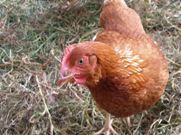
Fast-forward a few weeks and we are care-givers to three happy, friendly and so far odourless bird-girls who have quickly clucked their way into the hearts of the whole family. Ophelia, Becky and Sophie excitedly greet us whenever we venture out into the garden, and get most put out if we don’t reciprocate. They have also formed a curious bond with our cat Lucy who sits lovingly beaming at them for hours at a time. They quietly chatter away to her with a similarly unlikely affection.

Being young birds [a tender 21 weeks], the girls are still a week or so off laying, but seeing as I’m all-a-flutter with excited anticipation, I thought I would share some of my favourite ways with eggs this week.

Those of you who pay close attention to my column [God help you] may recall I have previously mentioned my best beloved’s alleged egg allergy. By pure coincidence this sensitivity evaporated around the time she tasted aforementioned eggy-est of eggs. Funny that.

 Tortilla- Spanish omelette

Just to make it very clear I’m not talking about Mexican wraps nor those flabby plant-strewn things so often passed off as ‘Spanish’ omelettes in New Zealand. In Spain, tortilla typically means a type of omelette, not so very far [in appearance] from frittata, but good. Very good.

Made with eggs, thinly sliced potato, roasted peppers, a little onion and plenty of seasoning [a sprinkle of smoked paprika doesn’t go amiss here either], it  makes the very best summer  lunch or dinner. Just like revenge, tortilla is dish best served cold, but unlike revenge it’s further improved with the addition of crusty sourdough, great dollops of fresh aioli and plenty of wine.  Actually I suppose wine could go quite nicely with revenge too. As with quiche, tortilla should be fairly thin- none of this high as Huka falls nonsense one sees about the place.

Fresh pasta

The better the eggs the better the pasta.  It’s just that simple, people. Fresh pasta gets its silky elasticity and dandelion hue from only the very best free range eggs. The steamy fragrance from a colander full of just-drained homemade pasta is the stuff of true contentment.

Carbonara

Mega-famous and much abused, carbonara is really just a humble dish from the grimy coal country of Northern Italy. Typically it’s served on fresh pasta and made with nothing more than eggs, cream, parmigiano, pancetta and a refreshingly laissez-faire attitude towards heart disease. Needless to say, I love it madly. Alla carbonara means ‘in the style of the coal miner’. Nobody’s quite sure if this is a reference to the soot speckled appearance of the well-peppered sauce, or because the dish originated among the coal mining villages of North-West Italy. Who cares? It tastes good.

Scrambled Eggs

Don’t start on at me. I know that you know how to make scrambled eggs. Who doesn’t? But they deserve mention here because a well-executed plate of this buttery, barely-set bliss is hands-down the truest expression of the egg, and when made with home-laid eggs is an overwhelming argument for keeping your own hens.

Zabaglione

Say after me:  zar-by-own-eh. Sabayon basically. Sometimes part of the great, if over-done, tiramisu but drop-dead gorgeous on its own too, and it owes much of that glamour to a few good eggs. In a double boiler whisk together 6+ egg yolks with a teaspoon each of sugar and marsala per yolk until thick, golden and frothy. Serve chilled with some perfect summer fruit and a sliver or two of the very best chocolate.

Gelato

Another egg based marvel of Latin kitchen chemistry.  The basis of real gelato is a sturdy egg and cream-based custard with whatever embellishments tickle your fancy. Call me a bore, but I think it doesn’t get much better than homemade vanilla gelato; saffron-yellow from free range eggs, with a pleasing, palate-coating texture and just the faintest eggy note under that heady vanilla fragrance.

Truffle -baked eggs

Eggs and truffles have a weird primal thing going on. It’s very, very sexy and I don’t mean figuratively. This simple little concoction illustrates that point in full-frontal blushing detail.  With a few strips of streaky bacon and a small battalion of toast soldiers it makes a dandy wee repast. Break an egg into a ramekin, top with cream, splash generously with truffle oil, season well and bake until set.  If you happen to have a fresh truffle or two lying about the place [who doesn’t?], so much the better.

Now all I need is for my small feathered friends to get their downy little tails into gear and start popping out the goods. In the mean time I could do with some further inspiration on the eggs front. Nine hundred eggs per year is an ambitious challenge to any cook.

Fend for yourself in the kitchen!

Fend for yourself: the art of cooking selfishly

 Virgil Evetts.

Every so often, if I lack inspiration, if I’m feeling tired and world weary ,or I just can’t be bothered,  I send out a text to the rest of the household reading ‘FFYS’: Fend for yourself. This tells them that tonight they will just have to make do without my services as galley slave.  It’s every man (and one woman) for themselves.  Rather than treating this like a chore they all quite enjoy these nights. I do too – it means we can each assemble something quick and simple that we know the others wouldn’t suffer.

For my best beloved it can mean any number of tomato-based pasta dishes that aren’t really my sort of thing. Occasionally, if she’s feeling a little sulky about the whole FFYS business, she will cook herself an egg in various gloomy, unimaginative ways.  This is an elaborate and admirably committed attempt at guilt-tripping me into cooking; she is, you see (allegedly), mildly allergic to eggs.

The baby-brother-in-law, a 21 year old EMO-like creature (who for reasons too tragic and convoluted to describe here lives under our stairs in self-imposed squalor), is shaping up to be a fairly decent cook in his own right.   He is however a little more experimental in his tastes than me.  He has so far married butter chicken with pasta, pizza, nachos and hamburgers, and has lately been muttering about fritters. Chances are on a FFYS night he’ll execute (admittedly with some finesse) one of these abominations.

Occasionally brother and sister will join forces to create something they both enjoy- very often the ubiquitous BLAT. Not something I’m mad on really but each to their own and all that…

For me, as the ever-considerate cook of our happy little household, FFYS nights are a celebration of being able to cook selfishly, without a thought for la famiglia and their various disparate tastes.  These nights don’t seem to come around much anymore, but when they do, one of the following is likely to feature:

Pizza

Made with those very good super-thin pre-made bases. Yes I make my own bases sometimes, but it just aint gonna happen on a week night. I like to keep my pizzi very simple; basically a Margarita with a little salami or prosciutto. To make my  sauce, which is the very foundation of a good pizza, I drain and squeeze the juice from a can of tomatoes, and blend them with a few tablespoon of olive oil, a teaspoon of salt, a few dried chilies and a sprig or two of oregano (preferably the peppery Greek or wild form). Keep your toppings sparse and your oven incendiary.

 Must be eaten with copious quantities of wine.

Carpaccio

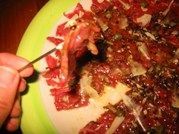
My fondness for raw beef is not shared by the rest of the house-hold, or in fact anybody else I know, so it’s strictly an FFYS venture.  I buy a small piece of very good beef fillet, partially freeze it and then slice it paper thin with a razor-sharp knife. A splash of balsamico, some luscious green EVO (or better still white truffle oil), a little raw garlic, Parmigiano,  and a scattering of wild rocket  turns a pound of sticky flesh into a plate full of indecent pleasure.  Scoop up with super crunchy crostini.  Guaranteed to deeply offend vegetarians.

American hot dogs

I know.  How déclassé am I? Well, we’re all entitled to a few dirty little secrets and, as it happens, this one can make a damn fine meal. Sure they’re of highly questionable nutritional value, and it’s debatable whether any actual meat is involved in the franks, but I like them all the same.

I use bog-standard hot dog buns and franks, because hot dogs are one of those things that shouldn’t be too real.  It’s the embellishments that make all the difference. First off, I fry the sausages in a hot, oiled pan until their skins split and start to blacken. This imparts a little bit of life into the otherwise unfathomable flavour of the franks

I put down a generous layer of caramelized onions under the sausages (having first toasted the bun) and rich, thick, whole grain mustard and cheese béchamel overtop. So what if the kilojoule count is punching through the stratosphere?  They’re a doddle to make and oh so good.  Health be damned.

Mince on toast

This one is about as kiwi as you can get, and I’ve only tweaked it just the tinniest bit from its sloppy, suburban roots.  I fry prime beef mince in a very hot pan with just a little garlic and plenty of seasoning (especially white pepper). It should be very well browned, to the point of being slightly crispy and without a drop of liquid remaining; I don’t go in for that ‘wet bowel motion’ look with my mince.

To accompany this I make a quick salsa by melting about a tablespoon of butter *and a little oil in a hot pan, adding about 2 cups of roughly chopped tomatoes and a few good glugs of Tabasco-style sauce. This is simmered just to the point where the tomatoes are starting to collapse.

Serve the mince on crunchy toasted whole grain bread with plenty of salsa on the side.

The magic of this meal is in its simplicity. It’s really nothing more than an assembly of very good ingredients and that is nearly always my favourite type of cooking.

*Butter may be an unlikely addition to a tomato based sauce, but it works a scary kind of magic.

Steak au galette de pomme de terre

Ok, so it’s really just a nice bit of steak with a hash brown but, as with the previous dish, it’s all about the produce. My best beloved, while not remotely vegetarian, doesn’t like what she describes as ‘hunks of flesh’ (steak).  Another volume in the library that is her food neuroses.   I, on the other hand, love the stuff. The bloodier the better and preferably crazed with moist marbling and trimmed with exquisite silken fat. Oh my.

My local butcher does the most extraordinarily thick ‘New York cut’ sirloins. These are quite simply(assuming you don’t shun your predatory urges) the ultimate FFYS indulgence. You don’t mess with meat like this. Season it generously (once again, I favour white pepper over black), oil the meat rather than the pan and make sure aforementioned pan is melting-hot. That’s it. No marinade, no pummelling with a mallet. Just leave it be.  How far you cook your steak is up to you, but I will just tell you that everything you may have heard about chefs spitting on your food when you order well-done steak is probably true. There is no greater insult to the dearly departed steer (or by association the chef), and you deserve all you get in the way of inedible grey meat and chef’s nasal clearings. Don’t be thinking of reaching for the bottle of Tommy S either;  push your arteries a little further with good dollop of fresh herb butter.  An animal died for this so make it count.

I use waxy potatoes for hash browns because they have the best ‘mouth feel’ for this style of cooking. Otherwise it’s the usual hash brown treatment- grate them, squeeze them and fry until crisp. To offset the richness of the meat and potato, I like a small rocket salad on the side, dressed with plenty of EVO and lemon juice.


FFYS nights are a win/win situation for all involved. Everyone gets to eat what they want, and cook gets a night off from considering the needs and time frames of others.  If this isn’t a tradition in your household, give it whirl. Every cook deserves to be a little selfish from time to time.

It’s not about love……Virgil

It’s not about love:

Ignoring Valentine ‘s Day and surviving the summer kitchen
Virgil Evetts


I suppose I could have jumped on the commercial bandwagon this week and thrown together some Valentine-inspired recipes for lovers or food for a-wooing, but alas, my cynicism prevents me. Valentine’s Day is banned in my house, along with bacchanalian excess on New Year’s Eve and tom-foolery on April 1st . We reserve the right to be affectionate, intoxicated and play cruel practical jokes on each other any time of the year.

So instead I’ve focused on the other inescapable force of the week  [at least in the upper North Island]; the cloying, sticky and energy sucking monster that is summer 2009. I’ve spent most of this week either thanking God for office air-con or gasping on my sofa, drowning in sweat, plagued by mosquitoes and cursing my role as primary cook in a house full of fussy, overly informed eaters. 

Not only should the food be light and simple on these scorching summer eves, but so should the preparation. Which brings us to that less than titillating inevitability, the summer salad…

But hey, it’s not all bad news. You must know by now that I’m not one to simply toss a few leaves and hope for the best.  Chlorophyll and cellulose does not a real meal make…

Sure, there are plenty of traditional and avant-garde salads of a European persuasion to choose from if you feel so inclined; Niçoise, Caesar, radicchio  with cough syrup etc blah blah. And they’re all perfectly fine in their own right too [with the possible exception of the latter], but just not quite dinner to my way of thinking  [gluttonously], or to warrant all that chopping. I have no head [nor interest] for finance, but I’m pretty sure that high investment, low return is a pretty bum deal.

If I’m going to raise a sweat in the kitchen it has to be for something I can really call dinner. It needs some carbs, some fat, some squish, and some crunch. A fully rounded package if you will. The vegetable-rich cuisines of South East Asian rarely disappoint in this regard. Here salads are a serious business and have been shaped by a  year-round assault of the  same sort of dirty, moist heat that hangs over Auckland all summer.


Two Asian salads in particular have been getting regular outings in our house of late:  one of which,   yam neua, is Thai in origin, or perhaps I should say influence as I make a pretty pared down version of the original [which can be horrifically hot]; and the other, Gado gado is a classic Indonesian dish that deserves to be far better known it currently is . Both of these dishes are light, zingy and refreshing, but still substantial enough to leave you feeling well sated.  Despite these salads both hailing from countries known for their fondness for chilli, you can limit and [sigh]… dare I say, omit it altogether. But you shouldn’t. The chilli makes you sweat which helps to cool you down and it triggers the release of endorphins, which make you feel good.  Of course  if you want to be hot and miserable be my guest.

 In New Zealand we usually think of Thai food as rather curry-centric, but in my experience, salads are the true stars of this cuisine and are certainly more regularly eaten by the average Thai.

The Thai idea of a salad, or yam, is somewhat removed from the European approach of plated  foliage. Everything is usually finely chopped, meat or fish are often included and most surprisingly for a salad they are served warm, or even hot.  When ordering salads in Thailand it pays to have a good Thai/English dictionary on hand as they can contain some rather challenging ingredients. Be particularly wary of the word Mangda which means water bug [or pimp, depending on the context]. These rather viscous creatures are not a pleasant surprise in any dish. Come to think of it neither are pimps.

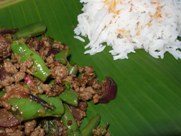
Yam Neua

Thai [inspired] beef salad

[serves 3+]

500gms prime minced beef

1 red onion [finely sliced]

4 cloves New Zealand garlic [crushed]

Fresh chilli to taste [crushed]

2cm pieces of fresh ginger [peeled and crushed]

Juice of two lemons [limes are best but prohibitively pricey in summer]

3 Tbsp + fish sauce

1tsp + brown sugar

1 Tbsp dark soy sauce

1 Tbsp sesame oil

3 kaffir lime leaves [de-stemmed and finely chopped]

1 bunch of fresh Vietnamese mint * [de-stemmed and finely chopped]

1 tomato per person

1 cup blanched fresh green beans [roughly chopped]


In a very hot pan, sauté the mince until well browned and slightly crispy. Set aside.

Heat a little peanut oil [or similar] in the pan and sauté the garlic, ginger and chilli until tender. Add to the beef along with the onion, beans and tomato. Carefully toss.

To make the dressing combine all remaining ingredients in a bowl and adjust to taste. You are looking for that harmonious Thai blend of salty, sour, sweet and spicy.

Pour over the beef mixture, toss again and allow to rest for approximately 10 minutes. This will allow the beef to cool slightly and the flavours to properly develop.

Serve over roughly torn lettuce leaves and season with a drizzle of ketjap manis  [sweet soy sauce]

Like all Thai food this should be accompanied with [preferably Jasmine] rice. The Thai approach is that rice is always the main meal and everything else is but a garnish.

Note: If you don’t like raw onion, soak the slices in lemon juice for about an hour before using. This effectively ‘cooks’ the onion but preserves the texture.

*Vietnamese mint is available at the fresh herbs counter of most supermarkets. It tastes like a very peppery version of coriander with citrus-like overtones. Grows very easily from cuttings.


Gado gado

Indonesian peanut sauce salad

I’ve never quite understood why Indonesian food hasn’t caught on. Dish for dish I think it’s a more interesting cuisine than its better known cousin , Malaysian [although they do share many dishes and techniques], yet apart from chicken satay and nasi goreng most people wouldn’t know an Indonesian dish if it snuck up behind them with a gamelan orchestra.

Gado gado is a real no fuss dish. It relies on very fresh vegetables and great peanut sauce. Nothing more, nothing less, but it’s a guaranteed winner.

1 cup crunchy peanut butter

1 can coconut milk

2cm piece of fresh ginger [peeled and crushed]

1 onion [finely chopped]

3 cloves garlic [crushed]

Fresh chilli to taste [crushed]

1  kaffir lime leaf [de-stemmed and crushed]

Brown sugar to taste

1 tablespoon+ fish sauce Or 1 small piece of shrimp paste [terasi]

¼ cup tamarind water Or the juice of 2 lemons/limes

1 egg per person [hard boiled and halved]

Fresh seasonal vegetables such as green beans, zucchini, bean sprouts, tomato, cucumber etc, all roughly sliced.


To make the sauce, sauté the onions over a medium heat until very tender, add the garlic, ginger, chilli and lime leaf. Sauté for a minute or so longer.  Add the peanut butter and stir until melted and spluttering. Stir in the fish sauce or shrimp paste. Add the coconut milk. Stir until well blended and simmering. Add the tamarind or citrus juice and sugar. Add a little water to thin if necessary.  Taste and adjust seasoning.  Set aside. This sauce burns easily and rather spectacularly so take care.

Use any combination of vegetables you like, but a thoughtful mix of textures and flavours  is important. Traditionally the vegetables should be raw but I prefer to par-cook zucchini, beans and other tough candidates. It’s all a matter of taste really.

I like to boil the eggs in the pot with the rice. This is just matter of pot-economy really. I’m told it’s a bit of a health risk but I’m still kicking, so go figure.

Generously smother the vegetables in the sauce, serve with rice and garnish with the halved boiled eggs.

Happy Valentine ‘s Day, if you’re that way inclined, otherwise enjoy and play nicely.

Virgil

Iced Milks….


Iced Milks….

Virgil Evetts

I’ve had a lifelong love affair with iced coffee.  My mother had a scandalously permissive attitude towards her children and grown up beverages- tea, coffee whatever pleased us. I think she was just glad we weren’t breast feeding anymore. Evetts children are famously early teethers .

Anyway, considering the examples mum set, she couldn’t really object to our precocious tastes. She trained me to wake her with strong, honey-sweetened tea every morning, and on many a summer’s day I was dispatched to the dairy with a jar of Moccona, and a note asking the obliging Mrs White to make her a coffee milkshake.  I was too young to be embarrassed by this palaver or to point out to mum that we owned a blender. I remember slyly sipping from the old fashioned giraffe cup as I trod home. And thus began a long and joyfully enduring addiction to cold milk and caffeine.

Visits to tearooms and cafes always involved [and do so to this day] a long, tall, cream-crowned iced coffee. This was iced coffee as it existed in the 80s; a filling, energising, and beguiling blend of bitter-sweet, creamy bliss. Every café worth its salt offered the drink, along with the slightly lesser,  but still perfectly decent, iced chocolate.

But something has happened in recent years to my beloved and humble iced coffee. It’s not the drink it used to be. Not in the hands of chi-chi city café owners anyway.  These days it’s as if iced coffee is a rendering of some ancient recipe, pieced together from fragments of pastel coloured 80s hieroglyphs. We know it involves coffee and ice, but the rest is anyone’s guess.

Lately I’ve been served alleged iced coffee made from coffee-flavoured syrup and trim milk (thin and medicinal), filter coffee and evaporated milk (curiously paint-like in both colour and texture), loaded with artificial vanilla essence (tastes like ants) and,  most puzzlingly, scalding hot with a couple of ice cubes dropped in as a sort of afterthought .  Iced coffee has even been the catalyst for me being firmly ‘invited’ to leave a café . To cut a long story short it involved a café manager’s stubborn refusal to make me an iced coffee because ‘that drink’s  old-school’ (maaan). My resulting,  and perhaps poorly pitched,  rant about his coffee making skills, political leanings and silly bum-fluff moustache led to the nearest exit being pointed out to me rather emphatically. What can I say?  I’m not a morning person.

But I’ve had some good experiences too, including memorable renditions made from freshly pulled espresso, milk and cream. Very nice, but it’s not quite iced coffee as  I remember it.

So how is it that we have forgotten how to make such as café standard?

Personally I blame New Zealand’s coffee culture. We have, in a few short years, dragged ourselves out of coffee hell, where a few big brands dominated the market with flaccid bags of what they claimed was coffee (but may well have been potting mix), and where white or black were the only real choices if you didn’t want your sexual orientation brought into question.  We are now informed consumers of the bean.   We care about the style of roast, the country of origin, the smugness of fair trade and the ethics of organic. And that’s before you get to any actual consumption. You can’t simply order ‘coffee’ (thank God), you need to specify; flat white, latte, macchiato, short black, corretto and so on and such like…

And therein, methinks lies the answer. We’ve become lost in the details. Iced coffee in its true old fashioned down-country tea rooms form, has largely been dismissed as too pedestrian and crude to be of any worth.

Similarly I fear milk shakes are starting to suffer the same fate. A local café I frequent (but really shouldn’t) doesn’t do them anymore, but you can have a frappe or smoothie if you like. I don’t.

Frappe, at least here in Auckland, usually means, ‘we’ve got a load of ice out back, right, and we need to move it, see?  So we’re going to grind it up with about a teaspoon of milk, a bit of sugar and maybe a squirt of coffee. Then we’re going to sell it to you for $5 a cup under some naff French name that we don’t know how to pronounce’.  FYI Frappe doesn’t rhyme with crap, but perhaps it should.

I can’t be doing with smoothies either. They always seem like the sort of thing rest-homes wiz up for residents who don’t do solids. They’re a bit like what happens when you mix up all the paints on the palette: you end up with green sludge.  

So as with art deco buildings,  and apparently oaks trees gifted by Hitler (happily residing in the grounds of Timaru boys high and surprisingly free of chainsaw attacks), I think there is a growing  pool of foods deserving of cultural heritage protection. If I had to elect a list of such threatened café drinks, it would definitely include the following:  

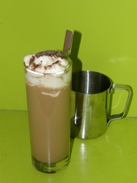
Iced coffee

Made with instant coffee, coldwater and full-cream milk poured over a scoop of vanilla ice-cream, topped with a LOT of freshly whipped cream and finished with a dusting of cinnamon. Must be served in a tall, chunky glass. Tastes like childhood to me.

Iced Chocolate

I would occasionally sulkily settle on this if its sexier cousin was unavailable. Made with cocoa (never drinking chocolate), otherwise as above but finished with chocolate sprinkles. Has been similarly corrupted by silliness over time.  The mint and chilli flavoured version I encountered recently was particularly irritating.

The classic milkshake

Ultra-artificial, preposterously flavoured and superfluously lurid, milkshake syrup is a shining example of the wonders of industrial food technology. It doesn’t pretend to be anything other than utterly fake and probably very bad for you. I love it for that honesty. My personal flavours of choice are…

  • Jaffa : tastes just like the sweets but is perhaps even more magnificently artificial. Not to be confused with J.A.F.A
  • Spearmint: the best choice for a scorching summer day. It has a subtle minty flavour and a pale green colour that wouldn’t look out of place on a school toilet block.
  • Creaming soda: I’ve never quite worked out what this one tastes like, possibly strawberry and vanilla, but I like it all the same. Apparently the manufacturers don’t know either as it’s colourless.

And finally, milkshakes, regardless of flavour, must come in one of those big old fashioned giraffe cups.

 Well that’s me anyway. But what about you, dear reader? Are you of an iced coffee persuasion or more of a milkshake sort of person? What floats your cold drink boat?

Eating Otago

Eating Otago – Virgil Evetts

 Like many New Zealanders, I’m better travelled internationally than within my own country.  It just seems so much easier to fly to Queensland than Queenstown. We’re funny like that in New Zealand. Maybe it’s our bottom-of-the-world inferiority complex [HIV to the tall poppy syndrome’s AIDS] – how could our own fair shores be as good, if not better, than anything across the ditch and beyond?  Well, it’s not so much that in my case, it’s more to do with the knowledge that whatever corner of our fair fiefdom I choose to visit will be full of other New Zealanders. No offence, but I get enough of them at home. I travel for culture [which makes my fondness for Northern Queensland rather baffling], for landscape, for history, and most significantly, for flavours that I can’t get at home. You know- the usual conceited middleclass nonsense.  

Well, we might not have much variety in the culture department here, but all the other boxes get a firm tick. With this in mind, I’ve been making an effort to see more of my own country and to open my eyes and mouth to all that her provinces have to offer. Because let’s be honest, all hand on heart, God of Nations carry-on aside, we live in a remarkably beautiful country.  We grow, manufacture and ferment some of the finest things that will ever pass your lips. The reasons to travel domestic are legion.

In this vein, I recently spent a week in Cromwell, Central Otago,  the very heart of the NZ stone fruit industry and what is now considered to be one of the greatest wine producing regions in the world [as opposed to all those great vineyards on Jupiter].   We stayed with my best beloved’s father, who is establishing a lifestyle block orchard on the shores of Lake Dunstan.  It’s a ridiculously picturesque spot; in fact the scenery of the entire region is overflowing with vast beauty, to an almost desensitising degree.  Soaring mountains with craggy snow-strewn peaks,  desolate valleys of wind-swept tussock and vast braided rivers. On top of all that Lord of the Rings out-takes footage splendour is a wealth of great local produce, which even on a bad day makes a compelling reason to visit Otago

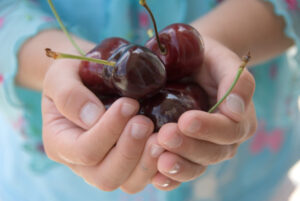
Cherries

Those of us in the North of New Zealand have it tough when it comes to cherries. Needing a cold, dry winter they simply won’t set fruit up here.  Sure, there’s no lack of them in our shops over summer, but the difference between a tree- ripened cherry, bought direct from the orchard, and the fruit that turns up in Auckland is quite profound. Tree-ripened fruit have a perfect balance of acidity and sugar, a rich meaty texture and full rounded flavour. Store-bought cherries taste mealy and flaccid by comparison . You can’t drive far in central Otago without passing untold caged cherry orchards.  So precious is this crop that rather than netting the trees individually the entire orchard is kept in a retractable bird-proof cage. This incredibly pricey undertaking [tens of thousands of dollars per hectare] is the only way to keep the birds, and apparently more than a few thieving humans, off the fruit.  In peak season orchard prices drop to as little as $5-$7 per kilo and locals apparently get quite sick of cherries.  I can’t fathom it but I hear the same happens with crayfish in Kaikoura. In the space of a week I did come close to overindulging in cherries myself, but it was more an issue of gastric turbulence than a jaded palate.  I’ve heard of people travelling to Thailand specifically to eat mangosteen  , but flying for 12 hours for fruit is a bit beyond my passion and budget. On the other hand, a one hour flight to Queenstown for an annual cherry binge seems perfectly reasonable.

Apricots

Another fruit that just doesn’t survive the trip north with its dignity intact.  A fresh, perfectly ripe, and preferably sun-warmed apricot is like a fuzzy little sphere of summer; juicy, sweet as honey with a gorgeous toothsome texture and heady fragrance. Exquisite, swoon-worthy bliss. Unless you have access to a very good fruiterer, don’t waste your time with fresh apricots in the upper North island. They’re picked too early and although pretty enough, lack flavour and finesse.  Do look out for the dried ones from Otago though- these are the dried fruit of your childhood, sour but fragrant and luridly coloured.  Perfect in mustard fruits and ever welcome in lunch boxes.

 Unfortunately the season hadn’t quite kicked off in Otago when I was there but I managed to pinch a few fruit from a woefully unsupervised orchard. I don’t advocate this sort of thing but they were just so temptingly orange.

Wild thyme

The hills around much of Otago are blanketed in wild common thyme.  Technically the plant is a weed [introduced by settlers], and not terribly popular with DoC, but like gorse in the North Island- it aint goin nowhere. Unlike gorse however, it’s a versatile beast in the kitchen.  Due to the tough growing conditions in the mountains – freezing winters, blazing summers and very little water for years on end – Otago wild thyme is powerfully flavoursome; with a pungent,  peppery burn on the palate. Common, well watered garden thyme, despite being the same species tastes like some insipid salad green by comparison.  Wild thyme marries superbly with rustic country dishes like spit roasted lamb, giving the fatty, savoury meat a distinctly high-country accent.

Shrek, central Otago’s inexplicably famous bag of dags feral sheep staggered out of the wilds in 2004 after 6 years of grazing on wild thyme and other mountain herbs. While the rest of the country adopted him as some sort of icon of pluckiness all I could think of was dinner.  In the immortal words of Homer Simpson;   “this is lamb, not a lamb”

Rabbit

In the North Island we hear about what a terrible pest rabbits are in the countryside, but visit any farm up here and you’ll wonder what all the fuss is about. The rabbits are there all right, hopping about in their cute rabbity way, but in fairly modest numbers that amount to little more than a Peter Rabbit-scale nuisance in the lettuce patch.  In the high country of the South Island it’s a very different story. Down there Peter has gathered about 12 million of his nearest and dearest and they’re having a massive, hood-rattling party. They’re a menace [and just a little menacing], hopping about in large arrogant groups, indifferent to the daylight, pock-marking the landscape with burrows and eating all plant life to the ground. Despite my animal loving leanings, I was happily shooting at them with an air rifle by the first evening.  Wild rabbit is a fabulous meat, and would feature prominently in my diet if I lived in a bunny-besieged locale. It makes excellent stew, can be grilled with herbs, cooked in wine and cream, made into ragu and even squeezed out as sausages. Yes, Thumper can be a little stringy at times, but he makes up for it with bucket loads of flavour. Lock and load.

Honey

Great honey can be found all over New Zealand, but two of the best, including one that I regard as New Zealand’s best kept food secret are produced exclusively in Central Otago. Vipers Buglos is a scraggly form of echium that paints the hills and valleys of Otago blue every summer with its nectar rich flowers.  It yields a superb, light honey with a bouquet like a summer meadow. So maybe I did steal that descriptor from a shampoo bottle, but it’s all true.  This honey isn’t overwhelmed with the polleny notes or deep earthiness of many other New Zealand honeys and it’s great on hot, buttery toast or in nice cup of Earl Grey. But by far the greatest honey of the region, and as I said earlier one of the finest foods coming out of NZ, is Otago thyme honey. The word elixir can be used here without a trace of hyperbole. During the spring/summer flowering season, hives are placed high in the thyme covered hills. The result is a honey with a deep, complex and almost overwhelmingly herbal flavour. It’s not everybody’s cup of tea, but I just can’t get enough of the stuff. In winter I make sweet, fried ravioli which are stuffed with Gorgonzola and liberally drizzled with thyme honey. A real show stopper.  If you don’t feel like going to that much bother or you don’t do cheese and sweet, try a teaspoon dissolved in a little hot water and mixed into cold milk. The perfect, fragrant sleeping draft.


I’m sure I’ve just scraped the surface of the food delights on offer in Otago and seeing as I’m bound to be down there again, local knowledge would be welcome. Likewise I’d love to hear your regional favourites from around the country. I’m sure there is a reason to visit Hamilton, so convince me!

PS

I happened upon an amusing post script to this article last week when I opened the menu at the very decent O’Connell street bistro in Auckland – Pappardelle of braised Bendigo Station Rabbit, rimu smoked Bacon, Walnut Watercress pesto & Parmigiano Reggiano: $36. Somewhere in those craggy Otago hills is a gun toting Southern man who is laughing [between sips of Speight’s] all the way to the bank at the stupidity of latte loving JAFAs who pay for mainland vermin. Very nice it was too.

Cooking Geoduck with Virgil

Mollusc envy
Virgil Evetts

Three weeks off work has allowed me to spend many a languid day in my sunny little garden, idly plucking plums and boysenberries, reading a good deal of trashy fiction, eating mountains of very good  ( and largely unhealthy) food and indulging in long,  delicious siestas. I never feel like summer has truly started until after Christmas, when the whole country (apart from those poor unfortunates stuck in the relentless drudgery of hard-core retail) falls into a lazy sort of stupor. The newspapers are full of pictures of babies at the beach and kittens found wanting, and there’s nothing to think about other than the next meal. For me this often means considering how and when to eat the various food items that turn up under the tree on Christmas morning. I’ve never been good at faking gratitude for socks and hanky’s, but thankfully it’s got to the point now where nobody bothers to give me anything that isn’t either edible or ovenproof. So my summer holidays are usually full of chocolates, cheese and various delectable preserved things. I must say though that I’m always disappointed by the lack, in fact complete absence of foie gras.  Take note friends and family; I care nothing for your hippy-dippy goose-loving ethics.

I have one particular friend who takes a certain pleasure in finding obscure comestibles to slip into my stocking; last year she gave me a nice fat wedge of hard-to-find and fiendishly pricey Red-cow Parmigianino. This is a cheese with an uber-cool history and a flavour for which I’d gladly hunt babies. This year she surprised me  with something altogether more original- a brace of alarmingly phallic Geoduck (which is inexplicably pronounced gooey duck and is neither gooey nor duck).

These giant molluscs are prized in many Asian cultures for their potent aphrodisiac “properties “and surprisingly delicate flavour. They are however almost unknown to the rest of the world, despite having been fished commercially in New Zealand (Golden Bay) for a number of years. I was a bit taken back by this gift. To describe Geoduck as phallic is like saying the Pope is a bit religious. They are more like giant, aquatic penises (penii?), complete with a horribly leathery “foreskin” and obscene squirting action.  How anyone thought to eat them is beyond me; but then the dietary past of human kind is littered with perverse experimentation and dire depravity.

I have an aunt with a doctorate in Marine biology who once described eating Geoduck as akin to chewing on muddy leather, so knowing that and considering those castrator’s trophy looks ( the Geoduck,  not my aunt) I was more than a little nervous. They weren’t even the kind of joke gift I could politely throw in the bin when I got home; they cost a not-so-small fortune and my friend (the giver) wanted the shells for her collection of bits of the beach. So I was stuck with a pair of free floating dangly bits with no idea how to cook them and a growing terror of having to eat them.

The Net is a wonderful thing when it comes to obscure foods. A few taps of the keyboard and you can learn how to cook anything- including Homo sapiens- and so it was that I found a step by step guide to preparing and eating Geoduck. Lucky me.

If first impressions were rough; getting up-close and intimate with Geoduck was positively traumatic.

The whole animal, shell and all, is dropped into boiling water, causing it to squeal horribly and squirt water from it’s… for want of a better word, urethra. They are then quickly plunged into cold water, which halts the cooking/torturing process. At about this point the “foreskin” is peeled away in one piece with a ghastly shucking noise, revealing a perfectly white sausage of seafood. This is pulled free from the shell and the distended, sludge filled gut; both of which- thank God- are discarded.

The remaining, not insubstantial slippery white wang is either eaten raw as sashimi or boiled until it almost melts into a sort of stew. The latter seemed like a sacrilege to visit upon any shellfish (however pornographic it may be) and there was no way I was going to eat raw, slimy sea-penis.

So I melted some butter, added a little garlic, sliced the meat thinly [rendering it quite inoffensive] and quickly sautéed it with a splash of Sauvignon blanc, a sprinkle of Italian parsley and some fresh chilli .

I thought it might make an ‘interesting’ (if nothing else) entrée to be followed by something reliably palatable, but my best beloved took one look at the great wobbly sausages and fled from the kitchen muttering (rather cruelly I thought) about the absurdity of boys’ bits. She stubbornly refused to return until all evidence and odour from aforementioned molluscs was gone. So it was just me and a somewhat daunting pile of Geoduck.

Actually it wasn’t too bad. You could even say it was nice I suppose.  Firm but not chewy,  with a flavour similar to cockles but perhaps a little sweeter.  I would eat it again if someone else was paying and more importantly if someone else- preferably someone with a taste for Benny Hill inspired food- was doing the cooking. In my own kitchen I think I’ll just stick to cockles  which taste pretty much the same, are much cheaper and bear no resemblance to human genitals.

Happy New Year

Panetonne- Baked Bliss.


Virgil Evetts

I’m not a regular kneader.  For the most part I find the rules and regulations of baking altogether too stuffy.  I really don’t like being told what to do in the kitchen and baking recipes always read like a barked command to me.  I do however have a real passion for, nay addiction to, European festive breads. There is something so alluring and mysterious about the art [and although loathe to apply that word to food, it fits here] behind panetonne, pandoro [a wonderful bread which curiously the bakery of the same name does not produce], stollen and their various kith and kin.  Seeing as this most regal family of baked goods is pricey and poorly represented on local shelves, I have made something of a tradition out of making my own.  Everything about this process/ritual excites me; the rich silken dough, the exquisite dried and glace fruit, the citrus zest and, OMG, the smell!!!

So this is the one time of the year when I happily set aside my baking resentment issues, haul out the scales, liberally dust the kitchen in high-grade flour and put my dough hook to some serious use. Ooo-err.  Even if my results don’t entirely stack up against their imported counterparts [I think they come pretty close], the whole exercise is so utterly Christmassy that it almost doesn’t matter. It’s as much about the trip as the destination.

Everywhere you go in Europe around Christmas time, you’ll find various seasonal breads. They all tend to be rather similar beasts; sweet yeast dough enriched with butter and eggs [essentially heavily-embellished brioche] and further fortified with fruits, nuts, citrus zest and sometimes spices.  Lovely, fluffy,  fragrant delights.

And then there are the dour ‘cakes’ of English Christmas tradition. Why is it so much of English Christmas food seems to be designed to depress? Brussels sprouts, bread [!!!!]sauce, Christmas cake… it’s like paying penance by the spoonful.   All of these miseries are curiously popular with elderly woman.  Is there a correlation?

On the continent, by contrast, everything is sunshine and light, even if it does get dark at 3pm. Christmas foods are bright and cheerful and, dare I say it… celebratory. Well maybe I’m exaggerating just a little. Some of those pickled herring contrivances of the Netherlands and beyond are pretty grim.

Panetonne is by far the best known member of the illustrious and very large clan of continental Christmas cakes. Even if you don’t know the name you will be familiar with the loaf.  The distinctive high-domed, paper-cased, raisin and peel-studded treats fill the shelves of specialty food stores and bakeries everywhere you turn from around November on. The high-end imports come trussed up in absurdly ornate boxes and great swathes of coloured cellophane and tissue. I’m normally suspicious of pretty packaging- are they overcompensating for something? But in true Italian style, panetonne has both looks and substance.

A far from humble bread, panetonne is seriously steeped in a lot of rather dubious myth and legend, especially about its origins. The most persistent tall tale involves a smitten baker by the name of Tony who is said to have invented a racy new treat as a Christmas gift for his love interest – thus pane- Tony [Tony’s bread]. Nice story but probably not even remotely true. What we do know as fact is that an enriched [baker-speak for full of eggs and butter] bread called panetonne has been made in Milano for at least a few hundred years and that it was probably designed to resemble a cathedral cupola. The addition of fruit, fat, nuts and eggs was common trait of pagan festive foods [it’s all about fertility and such] and one that the Christians merrily adopted when they had done with converting or slaughtering the filthy heathens.  

In Italy there is a strong tradition of gifting panetonne to all and sundry at Christmas. It’s the default gift for anyone who isn’t immediate family.  Funny thing is you could get the feeling that nobody really likes them very much.  Re-gifting of panetonne is not only an acceptable practise but the norm. I have heard of people receiving a panetonne which they had gifted to a third party several years earlier. Actually opening the box and eating the bread appears to be rather rare. As much as I adore panetonne, I can sort of understand how this could happen in Italy. Italians are spoiled for choice when it comes to good food at the best of times, but around any major holiday things can get seriously out of hand as culinary one-upmanship takes over.  One can only eat so much.

For a number of years I obsessed about making panetonne. It’s notoriously complicated you see, considered almost impossible in a domestic setup by most Italians. Well, I wasn’t about to let that get in my way. I tried dozens of recipes, bastardized and hybridised several and eventually came up with a version that I am, just quietly, rather proud of.

Now, before you go too much further, a word or two of warning…

If at all possible use an electric mixer to work the dough. It needs a serious assault kneading-wise, and while I’m sure it’s quite do-able by hand you may wind up with permanent wrist damage, dooming you to an eternity of smutty ribbing.  This recipe has been tested in a fan-forced oven, on warm, dry days. I don’t know how well it will turn out in a regular oven; probably fine but no guarantees. If it’s a rainy or ultra-humid day, of the sort Auckland is so very good at putting on, you might as well pack away your mixing bowls. Do not proceed.  Humidity can play havoc with all baked goods but none more so than enriched breads. Oh the horror.

Well then, enough with the chatter. Here it is,  my very own recipe for panetonne. Consider it my Christmas gift to you…

Panetonne alla Virgili

3 tsp dried yeast [dissolve in a little warm water with a pinch of sugar]

3 cups+ high-grade flour

7 Tbs white sugar

7 Tbs butter

3 free-range eggs [not jumbo]

¾ – 1 cup milk [NOT non-fat]

½ tsp salt

½ cup raisens

½ cup glace peel [good quality and roughly chopped].

1-2 tsp pure vanilla essence.

Note: Ensure all ingredients are at room temperature before proceeding.

Optional: Paper panetonne cases. Available from good kitchen supply stores.

Method

Combine flour, sugar and salt in mixing bowl.  Add butter and begin mixing using the dough hook. Add eggs and continue mixing. Add yeast and vanilla essence and slowly add the milk. Leave to mix for about 5 minutes. As with all bread dough, the mixer should be set at its lowest speed. This is more to do with not burning out the motor than the needs of the dough.

The dough should now be very soft, elastic and slightly sticky.  At about this point you might be panicking, because for reasons that I’ve never been able to work out, the dough sometimes needs rather a lot more flour. Don’t worry, just add flour until the dough looks and feels as described above. If by any weird chance it’s too dry, add more milk. Trust me; you’ll know when it’s ready.

Mix for a further 10 minutes. Cover with a plastic bag or similar and allow to rise for about 2-3 hours or until well risen.

Punch down and mix again for 5 minutes. Cover again and leave to rise for about 1 hour. Punch down again and slowly start adding the fruit, gently working it in by hand. When all the fruit has been incorporated form into a large ball and place in a panetonne case or a deep, 20cm round non-stick cake tin. Ensure any folds are at the bottom. Cover loosely and allow to rise again for about 2-3 hours.

Pre-heat oven to 150c. If you have a pizza stone or cast iron skillet, use this as a tray. Uniform heat is important. Using a very sharp, greased knife cut an X on the top of the dough, place a generous Tablespoon of butter in the middle. Gently place in oven. Watch closely after the first 20 minutes but do NOT open the oven yet. The bread should rise up and eventually form a golden/brown dome. It may split as it cooks- this quite normal. From about 40 minutes it should be safe to start testing with a wooden skewer. When the skewer comes away clean from the centre, your panetonne is done. This may take up to 1 hour. Every oven is different.

Remove from the oven carefully and allow to cool on rack in a warm draft-free place.

Panetonne goes exceedingly well with coffee or dessert wines, depending [perhaps] on the hour of the day. It’s gorgeous lightly toasted and generously buttered and makes a trifle to put all others to shame.

Enjoy and a very Happy Christmas to you all.

Scary Foods

Loathsome, nasty things… 

Virgil Evetts

 Fear is a funny thing. As clever little bi-peds, we usually manage to override the uber- anxious mother that is our  instincts, but from time to time something just scares the be-jesus out of us for no tangible reason. Sometimes it’s forgivable; inexplicable bumps in the night may indeed be [as your midnight imagination suggests] coming from some knife wielding wack-job dragging your flat screen through the lounge window. Fair enough to get a bit worked up about that. What isn’t so logical  is our quaking terror of certain foods. We all have them; foods that give us the willies [so to speak] or the ones we just plain don’t like. When I started writing this article, I had every intention of making it about foods that have an undeserved bad reputation, but after talking to a few people I realised that foods that are widely hated and feared with good reason are  far more interesting subjects. So don’t expect positivity and inspiration here. These are foods that I really can’t abide; the worst of the worst. Loathsome, nasty things…


Brussels sprouts

Might as well start with the most obvious one I guess. These things are probably the most hated vegetable in the world, and frankly with good reason. They’re bitter little bastards that taste like somebody already ate them. I suspect growers have learnt to hide PR reps among polite society because whenever BS are publicly slammed, some reedy voice from the back pipes up about how they’re ‘ok if they’re really fresh and not overcooked.’ So basically that leaves you with about a 30 second window of opportunity.  All I can imagine is that it must have been a hard winter in Brussels when these cabbagy turds where christened.  Worth feeding to children for the sheer entertainment value.


Tinned Tuna

How could anyone eat something that smells so utterly offensive? I have upset countless friends and strangers by comparing the stench of this so called food to a variety of nasty things that I dare not mention here. Suffice to say it’s never flattering. Add to that stench the tuna industries track record for slaughtering flipper and his kin, the fact that most tuna species are rapidly creeping up the no-no list of dwindling critters, and the migration of weird breast-sprouting synthetic hormones from the can liner to the fish therein and you have pretty good cause to avoid it like herpes. Fresh tuna, on the other hand is Luke Skywalker to tinned tunas Darth Vader; very good, meltingly soft and suspiciously pretty.


Brains

I will eat most things at a push [present company excluded] but I have to draw the line at brains. If I wasn’t such a cynical old atheistic I’d say it was akin to eating an animal’s soul. [I’m assured by a friend of a Godly persuasion that animals don’t have souls, which hardly seems fair. Nicky Watson gets a soul but my more likeable and more articulate cat gets nada?]  Anyway, back to brains. I have tried them and can report that they have the texture of clotted bile and smell like steamed puppy. Before you say it, yes I’m aware of the fact that the French eat brains with great gusto, but let’s be honest: the French aren’t all that fussy about what they eat, are they?  In my experience they will happily wolf down anything that bleeds, ejaculates, seeps or oozes, as long as it’s well sauced.

As much as I support Hannibal Lector in his crusade against the ‘free-range rude,’ I think he was seriously pushing the boundaries of good taste with his recipe for brains with brandy and shallots. I can live with the cannibalism, but brains? Eeeew!


Tongue

You know you’re in trouble when a recipe begins with ‘first peel the tongue.’

Peel the tongue?  Could any sentence be more perverse?  The most upsetting part about my relationship with tongue [speaking of dodgy sentences] is that I actually quite like the stuff- as long as I don’t know I’m eating it. As a ‘mystery meat’ it has a very pleasant, velvety texture and a delicate beefy flavour, but damn it, it’s TOUNGE; that’s just so wrong!

If you can get past the psychological trauma of eating the great flaccid sausage that is cow’s tongue, it presents all manner of possibilities. Tongue terrine certainly sounds catchy. Personally, I’ll never get past the horror of having a severed and sliced tongue in my mouth.


Tripe

As someone who takes a fairly liberal approach to the food pyramid, I seem to shock people when I tell them I don’t like tripe. I’m regularly taken to task by ancient crones with names like Audrey or Beryl who, despite having have lost their short term memories, have retained [from their apparently desperate youth], an obsessive and fiercely protective attachment to this most pointless of foods.

Admittedly the Italians do some very clever things with tripe [compared to the traditional and utterly odious tripe with onions that lurks in the dark heart of the kiwi kitchen], but even the most inventive recipe can’t take away that peculiar rubbery texture and ghastly odour. By all means eat tripe if you’re too old or bewildered to remember that food shouldn’t smell like athletes foot.


Avocado

While the above foods are pretty universally despised by the young and relevant, avocados have a bewilderingly big fan-base. On this I take the path less travelled. I simply can’t abide avos in any form other than guacamole, which pretty effectively disguises most of their vileness.  The appeal to the rest of you remains a complete mystery to me. Sure it’s pretty to look at, but with its soapy mouth-feel and peculiar taste – somewhere between grass and pigs blood – it triggers my gag reflex every time. I’d sooner eat road kill. Don’t let me put you off though.


Kina

The extended whanau accuse me of having renounced my already-sullied Maori blood through my attitude towards kina.

I’ve really tried to like kina, I have; the trouble is they make my innards want to evacuate through the nearest orifice. I’m quite sure that there’s something worth persevering with inside the spiny little spheres, but one whiff of that iodine/seaweed/fishy fugg and I’m rushing for the porcelain.


So I’m rather hoping I’ve opened a can of worms this week [the contents of which I would find preferable to most of the above]. Let me know if you agree with my list or if I’ve got you hopping-mad in defense of these various food-frights. Better still; list the foods that give you the heebie-jeebies.