Would the real Marmite please stand up?


Virgil Evetts
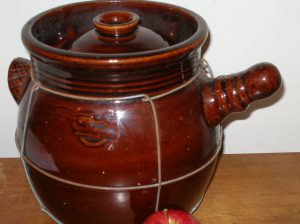
Consider this a little post script, if you will to my rather well trodden entry a few posting back on Marmite Vs Vegemite. As I mentioned in the course of the feedback, I happen to own a marmite- the French cooking vessel that, through rather murky means, gave its name to the better of the two great yeast spreads [yes I’m being biased but this is my posting, so shut up]. And here it is: [pictured].
I bought my marmite at a school jumble sale several years ago, and used it to cook a few soupy, stewy things and to roast [very successfully I might add] a chicken or two. And it does a very good job, acting in many way like a deep and capacious tagine.- I rather suspect this resemblance is more than coincidental as the Moorish influence pops up in architecture, food, and cultural traditions throughout Southern Europe.
Trouble with the marmite [pronounced marr-meet in France] is that it’s big, awkwardly shaped and a total arse to clean. It was rather quickly banished to the ‘seemed like a good idea at the time’ section of my garage, a veritable elephants’ graveyard of kitchen follies. My very fetching ceramic tagine on the other hand does just as good a job in the oven [if not better] and can be thrown in the dish washer afterwards.
The superior spread, by the way was so named because it tastes [theoretically] like the sort of slow cooked reduction attainable from such a vessel and is also a nod to the fact that Marmite was originally pushed as a vegetarian alternative to Bovril, which is little more than super-concentrated boiled cow.
Finally -and most endearing I think- the name marmite is thought to come from an old French colloquialism for cat or ‘meow’. I prefer to think that this is a reference to the whistling sound omitted from the marmites vented lid during cooking, not as some have concluded that it was originally the preferred vessel for cooking cats.

Closer, my little dumpling

Virgil Evetts

Thanks to a weekend of truly foul Auckland weather, involving all day fog on Saturday followed by an all day deluge on Sunday, I had little to do but think about food. Not that the weather really changes much in that regard.

The upside of such hideous atmospherics is that one has both the time and appetite for heavy-weight cooking. So, for the first time this season, I hauled out the croque chasseur and christened it with a rather excellent (even if I do say so myself) rendition of Bœuf Bourguignon. I doubt this Gallic stew needs much of an introduction, but just in case you’ve missed its 200-odd years of slavish célèbre,  Bœuf Bourguignon  is a slow-cooked stew composed of beef, onions and mushrooms, cooked in a great deal of red wine and a generous splash of stock. I’m probably oversimplifying things – there’s a basic mirepoix and the usual suspects of herbs in their somewhere too. But it’s a throw-together one pot wonder (which appeals hugely to my in-house scullery slaves) and it tastes trés, trés sophisticated to boot. It takes a special kind of stupid to screw up this sort of dish. It pretty much cooks itself, and turns out dandy every time.

But if I’m honest, I’m a dry food sort of person. The real reason I make anything vaguely stewy is that it gives me an excuse to make dumplings, a delicious and fluffy foil to the richness and weight of the stew. Plus, I REALLY like dumplings.  There is something quite magical about the way the batter is transformed from sticky gloop to perfect billowy rafts in a few short minutes, under the lid of a nice heavy crock pot.  In essence they’re sort of like steamed scones, but are so much more in practise, and the secret to true  dumpling perfection is all in the suet [usually sold as Shreddo in New Zealand], a processed fat made from the webbing (or ‘caul’) surrounding beef kidneys. Used in pastries and baking, it produces a distinctive silken texture, and delicate, short flavour. I know it’s tempting to use cheaper alternatives like dripping, or, dare I say it, butter, but take it from someone who knows their fats – it’s suet or death when it comes to dumplings.

As it looks like winter will be putting on a gala performance all week, I’m keen for some seasonally-appropriate kitchen inspiration – particularly more excuses to make dumplings.  A little help?

Desert Island Cook Books

Virgil Evetts

How many times have you heard it? Usually from the young and fervent, or the bored and vapid: ‘this book changed my life!’ I tend to stop listening at about that point, because what follows is usually a florid description of the latest self-help tome from the Oprah list. You know the sort of thing- three hundred pages of that very American brand of uber-politeness all to state the bleeding obvious: stop whining and pull yourself together. Not a bad title for a book actually.

So I won’t be offended if you decide to quietly back out of the room when I tell you that these books – the ones described below – really have changed my life. This is Foodlovers, so, yes, they’re all food books, and it might sound shallow and trivial when I say these titles have not just informed how I cook, but how I think about food, life and the world in general.

I don’t expect you to agree – nor do I claim that this is any kind of essential reading list. These are just the books that helped shape me into the sad little food-o-phile I am today. These books make me happy, hopeful and hungry.

 The Edmonds Cook Book -1970s editions

I was a weird kid by kiwi standards. I didn’t like sports, my wardrobe was heavily influenced by my mother’s hippie-dippy sensibilities (I thought nothing of going to school in cow-skin moccasins, gold silk jeans and a red velveteen sweater), I was forever chasing butterflies – literally – and my idea of recreational bliss was an afternoon spent baking.

The first book that really opened my eyes to flour, butter and a nice hot oven, the one that taught me that the kitchen wasn’t a scary place at all, was Edmonds. Every Friday after school (once Ollie Olsen had signed off) was baking time, and slowly but surely I worked my way through each and every recipe – several times.  Of course, I still needed my mother’s hands-on instruction to learn what was involved in creaming butter, folding-in flour and bringing egg whites to stiff peaks (that was assumed knowledge in even the most basic cook books back then), but otherwise it was all straight forward and easy to follow stuff, even as a total kitchen virgin.

Another of my childhood abnormalities was a precocious fondness for flower gardening. Oh, how I longed to visit the Edmonds factory with its garish, twee plantings out-front, but my dreams were dashed, unrealised, when a developer knocked it down back in 1990.

I’m not mad on the updated, slightly la-de dah new version of Edmonds, which features all manner of supposedly modern recipes involving pesto, hummus and other things done better elsewhere. I think I’ll just stick with the copy I learned to bake from – complete with oil stains and a liberal dusting of flour – if you don’t mind.

 Elizabeth David- Italian Food

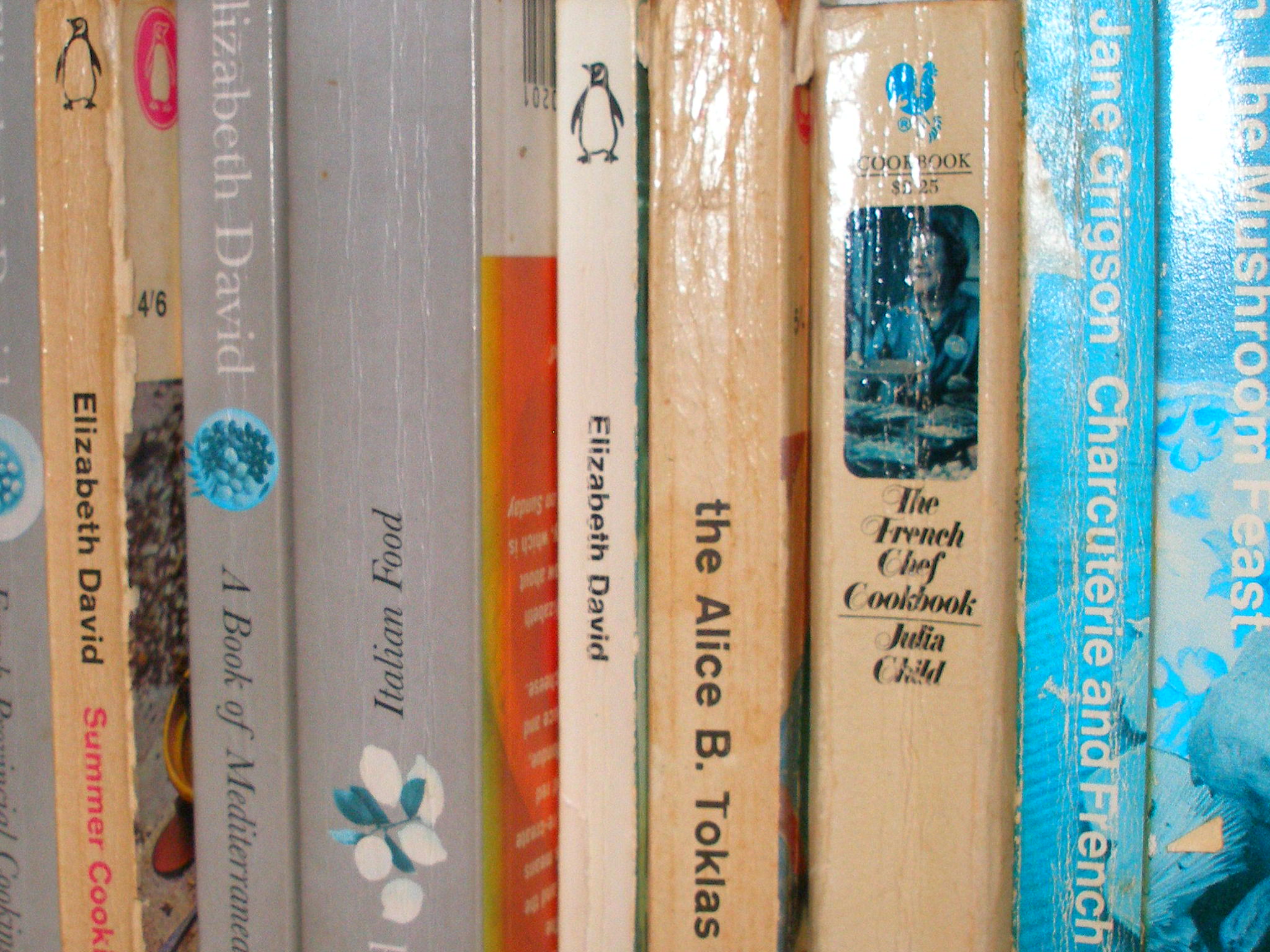
My first copy of this, perhaps my favourite food book of all time, was a rather dog-eared 1960’s edition with charmingly kitsch cover art. I was in my late teens before I found it, long-forgotten at the back of a wardrobe, but was instantly hooked. It taught me that la cucina Italiana is a whole lot more than the ‘spaghetti and sauce’ idea I had in my head, and that glossy photos aren’t necessarily the measure of a good cook book. Save for a few line drawings, Italian Food is all text, cover to cover. Instead, the emphasis here is on the quality of the writing and the authenticity and reliability of the recipes.  Although published in 1954, Italian Food is still, in my opinion, the greatest English-language book on the subject ever written – and I’ve read more than I care to recall. Unusually for the time, Elizabeth David writes with a deep respect for the Italian people and their cuisine: patronising pomposity was the usual tone in those days.  Her work here is at times laugh-out-loud funny, but unerringly intelligent throughout. I remember being shocked to the very core of my know-it-all teenage being to find recipes for such modern and fashionable delights as pesto, saltimbocca and gelato, in a book that was nearly as old and moth-eaten as my parents.

 Jane Grigson- Charcuterie and French Pork Cookery

There is natural progression from Elizabeth David to Jane Grigson. The two often referenced each other in their work, and both had a similarly authoritative, waspish tone and reverence for their subject matter. French Charcuterie and Pork Cookery was the book that first demystified the murky, frankly frightening world of charcuterie for me, and thereby triggered one of my most enduring food passions – home-cured meats.

Again, this book highlighted that all food fashions are really just revivals, featuring as it does recipes for Spanish style hams, pork rillettes, potently seasoned suacisson, and many other a la mode meaty pleasures. This book, more than any other, taught me to be brave in the kitchen, to take risks for good food – after all, the difference between a good ham and a bout of botulism is only a few grams of salt. I can think of no greater virtue for a food book.

 Maggie Beer – Maggie’s Farm

This was the first book I found which successfully brought together my biggest extracurricular obsessions – growing good produce and cooking great food. Sure, there are plenty of other books for cooks who garden and gardeners who cook, but most seem to be either soulless affairs aimed at trainspotter types, or overly obsessed with pulses and respect for the Earth Mother. Maggie’s Farm is definitely a food book first and foremost, but it’s written with not just a cook’s love of good food, but a farmer’s love of the land.  And although written from a decidedly Australian perspective, with a good measure of German-influenced Barossa cooking, I found a lot of familiarity here. The seasons were around the right way for one thing, so it didn’t make me feel excluded from the cool clique in the way northern hemisphere cook books sometimes do. And apart from just extolling the pleasures of cultivated food, Maggie’s Farm also delves into foraged food, another pet passion of mine. Using Maggie Beer’s instructions I even collected, purged and eventually poached a pot full of fat garden snails (which taught me I do not like poached snails). Forget A Year in Provence: this is the book to make you long for the lifestyle block idyll.

 Australian Women’s Weekly Home Library: Chinese Cooking Class Cookbook

In the 1980s this series of books was everywhere. The glossy, magazine-style publication presents mouth-watering, accessible Chinese cooking in an idiot-proof format, and with competent but unintimidating photography. Admittedly many of the recipes are rather tame by today’s standards, but when I was growing up this book was like training wheels for Chinese cooking to me. Mum worked nights throughout my teens, so I had plenty of time to experiment with its many excellent, mostly Cantonese, dishes. While my friends and their families were presumably supping on stew and packet-mix macaroni-cheese, I was home alone, gorging myself on homemade crispy-skin chicken. Those were the days.

The Chicken with Lychee recipe from the Chinese Cooking Class Cookbook is still a much loved part of my family’s food repertoire, and the deep fried toffee apples… oh my God the deep fried toffee apples! This book looks a little sad and dated now, but I’m yet to find a more clearly laid-out beginners guide. Not only are the instructions simple and reliable (with step-by-step photographs), but the dishes taste great too.

Antonio Carluccio- The Carluccio Collection: Antipasti, Vegetables & Salads, Pasta, Mushrooms & Truffles, Fish and Shellfish, Meat, Poultry & Game, Desserts, Baking.

Although actually a serious of small books, I tend to think of these as one title, and it’s a shame they haven’t been released that way. I have a lot of time for Antonio Carluccio; he writes so lovingly of his native Italy, but with none of the patrician haughtiness of writers such as Lorenza de Medici. The phrase ‘salt of the earth’ comes to mind. This might just be the carefully crafted public persona of a shrewd businessman (which he surely is), but I’ll buy it.

Rather than just regurgitating clichés of Italian food, these books present reliable recipes for the sorts of dishes you might find in a small village trattoria, including tofeja del canavese (pork and beans), insalata di neonata (salad of baby anchovies),  fichi al forno (baked figs) and many more.

Whereas Elizabeth David made me fall in love with Italian food, Antonio Carluccio, through these books, made me fall in love with the idea of Italy, and over successive visits and successive re-reads, in love with the land itself – maddening, breathtaking, filthy and gorgeous as it is.

 And there you have it. My big 5.

And certainly, there are  many other food books I have loved and learned from in various ways, but so far only this modest selection have actually changed my point of view. I hope this list will grow.

 So have you too been moved by a cook book? Has Delia rocked your world or has Julia shown you the light?

Time to share…

Brand Wars- Who do you trust?

Virgil Evetts

It was nice to see that of the 85 local personalities who made it on to the 2009 Reader’s Digest New Zealand’s Most Trusted list are 2 Queens of the culinary world- Alison Holst at number 11 and Peta Mathias at number 36. Putting aside the fact that such lists are meaningless popularity contests, I can’t argue with the inclusion of the venerable Mrs Holst or Ms Mathais – both have contributed substantially to the local food industry and our knowledge of food. I’m not really sure this equates to trustworthiness though.  I respect them both immensely but that doesn’t mean I’d give them my spare house keys. Interestingly they are both placed well above either the current or previous Prime Ministers. Sounds about right.

What makes such surveys so nebulous is that they ask us to judge the merits of people we don’t know.  

So here at Foodlovers, I’d like to propose something a little more relevant to our predilections and upon which we are all qualified to comment:

What are the most trusted food brands in New Zealand?   

If I was going to guess I’d probably say- Watties, Sanitarium, Cadbury, Sealord, Anchor, Pams, but I’m basing that purely on supermarket shelf saturation. I could be way off.

As an adult, I’ve steadily moved away from blind brand loyalty and am moved more by value for money, country of origin, ingredients and of course, flavour.

But that’s just me.

Are you a brand groupie?

To which brands are you most loyal and why?

Tell me!!! 

Curry favour

Virgil Evetts

Nothing quite so disagreeable as durian or vote splitting as the great yeast spread debate for this posting. Just a quick and easy meal I threw together the other night and rather enjoyed. I thought you might too.

Normally Thai curries are a lazy weeknight meal for us, but on Saturday night our plans changed suddenly and we found ourselves at home without sufficient time or by that stage inclination to get truly creative in the kitchen. I wanted takeaways, she wanted to eat in, and as usual I lost. Being a dab hand in the kitchen can be a double edged sword sometimes.

So I threw together a Thai red curry, of the fabulously fast [and lazy] ready made paste variety, which thanks to a few minor deviations from my normal routine left us almost dazed with delight. Well it left me dazed with delight anyway. My best beloved takes a rather clinical approach to my cooking  these days [having been subjected to it for over a decade] so is never exactly gushing in her feedback. It’s usually ‘nice’ or ‘well…’ She declared this one a success, which is high praise indeed.


Thai red curry of chicken, lychee and peas.

1 tablespoon + Thai red curry paste

1 can coconut milk

1 can lychee [including syrup]

1 cup frozen peas

2 breasts skinless free- range chicken

Peanut oil

Fish sauce

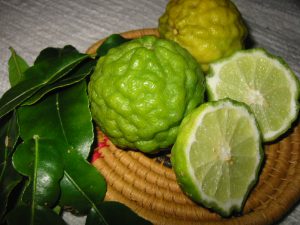
2-4 fresh kaffir lime leaves

Cut the chicken into small bite sized pieces. Add a good glug of peanut oil to a wok or deep pan and heat. Add the curry paste and stir for moment until fragrant and starting to melt and splutter.

Add the coconut milk and kaffir lime leaves. Boil on high until the coconut milk splits- the Thais call this ‘cracking’ the curry. Add the chicken and stir. Add the lychees and ¾ of the syrup. When the chicken is cooked add fish sauce to taste. This is the only source of salt in the dish, so don’t be too stingy. Add the peas and simmer until just heated through.  Add more fish sauce or syrup as required. The finished curry should have a good balance of sweet to salty- depending on your personal taste.

 Serve with jasmine rice and roti.

Try it out, see what you think.

 If anyone else has a great Thai curry recipe- please do share, and also as a brief survey- let us know what colour Thai curry you prefer?

Red, green or yellow, orange????

Fresh Durian- at last!!!

Virgil Evetts

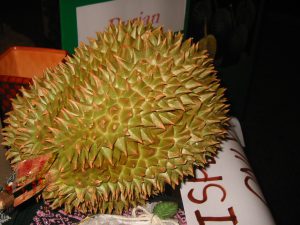
Anyone with a taste for the truly exotic should head down to their nearest Asian fruiterer. Hot on the heel of my article last week about tropical fruit, the very first [ever] shipment of whole fresh durian has arrived from Thailand. They’re selling for a rather steep $15.95 per kilo [each fruit weighs at least 2 kilos]. I couldn’t resist and I’m now facing the deliciously daunting task of devouring an entire durian on my own [my best beloved won’t even have them in the same room as her]. Even if you can’t bring yourself to buy one its’ worth the trip just to breathe in that deliciously fetid aroma. If you’re in Auckland central head over to the fruit shop under the Rialto car park in Newmarket. Go on, I dare you…

Marmite Vs Vegemite

Virgil Evetts

The news that Kraft are launching a new smoother and as yet unnamed version of Vegemite reminded me more than a little of the Coca Cola corporation’s ill fated and patently ill advised New Coke embarrassment of the mid 80s. In an attempt combat slumping sales, the world’s biggest purveyor of Type 2 diabetes in a can decided to reformulate the iconic ‘drink’. It failed spectacularly, nearly ruined the company and went down in the history books as one of the greatest marketing failures of all time.

The lesson one could take away from this is pretty simple- don’t screw with icons. Kraft have at least had the good sense to launch this new apparently ‘no butter required’, super spreadable Vegemite alongside the original and fiercely loved product rather than simply replacing it altogether- as was Cokes big mistake with New Coke.

But anyway, does the world really need a new Vegemite? 

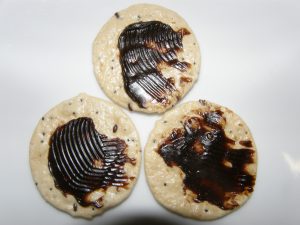
Personally I’m not even convinced it needs the current Vegemite- I’m a Marmite person through and through. I know however, that a lot of you will violently disagree, because for reasons unknown, we take our salty, yeast based spreads rather seriously in this part of the world. There is no greater divider down under than the Vegemite Vs Marmite debate.

I’m very fussy about my Marmite too. I only buy very small jars because I like it best when it’s very fresh. I don’t like others to use my jar because I can’t stand it being contaminated with crumbs and butter. My all time favourite way of eating Marmite is on crunchy slices of fresh, thickly buttered baguette, but I also enjoy it on Vogel’s toast with scrambled eggs and on toasted hot cross buns.

So in my little sphere there is no yeast spread but Marmite- and I mean New Zealand Marmite [have you tried the ghastly UK version?], all others are mere pretenders.

But this is a deadly serious topic- just ask around. New Zealanders are some of the most reserved- and dare I say it apathetic people you will ever meet- the only two topics that really get us hot under the collar are sport [based on distant memories of us being good at it,I suppose] and yeast spreads. What does this say about us as a nation?

So- let’s put it to a vote:

Vegemite or Marmite?

Nuts to you


Virgil Evetts

I can think of few harsher deals in life than a nut allergy: I eat so many nuts, in so many ways, that the thought of being unable to indulge is enough to make anaphylactic shock seem like a blessed release.

Before I start, as a responsible writer, I should probably point out that most nuts are high in both protein and fat. So theoretically they should be eaten in some sort of moderation; but I don’t recall ever having heard of any cases of nut – induced morbid obesity. Anyway, I like to think that the benefits – aforementioned protein as well as various vitamins, minerals, trace elements and general deliciousness – outweigh any negatives. Although I can report, with a regrettable degree of authority, that consuming 1kg of pistachio nuts in a single sitting can make the following 12 hours rather interesting.

To a botanist, a nut is a seed that cannot grow without its husk or shell. But by that definition, most of the things we call nuts in the culinary world are not true nuts at all. Fortunately we are not bound by biology in the kitchen.

Despite the hard time we give our prehistoric ancestors for being all rough and tumble and lacking in finesse, we owe them a serious pat on the back and a nice thank you note for identifying and eventually cultivating all the various nuts and tasty seeds we enjoy today. Considering that most wild almonds are loaded with cyanide, and cashew trees spurt skin-blistering caustic goo at the lightest touch, there must have been a pretty brutal trial and error process along the way.

Many of the more popular nuts are now grown in New Zealand, and when available offer by far the best eating and value for money. Waikato-grown almonds, for example are some of the best I’ve ever tasted, being at once both sweet and savoury with a delicate almondine fragrance.

Personally, with even the best of intentions, most nuts I have in the house end up being eaten –by me – straight from the bag, but given the opportunity they can enhance, and in many cases make, a dish.

Some of my best friends are nuts

Actually that’s true. I seem to be a magnet for the mentally unhinged, but that’s another and mostly non food-related, story. And when it comes to edible nuts I’m none too fussy either – I’ll eat whatever you’re offering. But I certainly have my favourites, and when I can resist my natural inclination towards nut-gluttony, some favourite ways with them too. With a few notable exceptions, nuts are greatly improved with roasting. This can be done on a dry tray in a low oven or in a little oil in a hot pan. If you go with the latter, work quickly and carefully. Nuts burn with a scary momentum; the difference between a perfectly roasted pine nut and a carbonised one is about 30 seconds.

So without further ado, a roll call of my favourite nuts…

Peanuts

Far more pea than nut, the peanut is the seed of a low-growing legume. Once pollinated, the flowers de-frock (drop their petals), lean over and bury their heads in the sand(y soil). A very back to front way of doing things if you ask me.

The little double barrel pods then discreetly swell subterraneously, and are eventually harvested by giant clattering machines. Peanuts are pretty much your entry-level nut. They’re very cheap, and to be honest can be about as dull as a slow day in Hamilton. But don’t let me put you off. Roasted peanuts, either chopped or whole, are vital ingredients in many classic Asian dishes. They add texture and interest to fried rice, are essential as part of the great Malay breakfast dish nasi lemak (coconut rice with a chicken sambal, crispy deep fried anchovies, boiled eggs and peanuts: Oh. My. God!), and just try serving satay without a rich and spicy peanut sauce.

Cashews

You’re moving up in the world now. The cashew is a definite step up from the pedestrian previous entry, costing a good deal more but tasting a whole lot better. Growing on a tropical tree in the same family as the mango and pistachio, the nut forms almost like an afterthought directly beneath a juicy, fruit-like swollen stem. These cashew ‘apples’ are considered something of a delicacy in their own right, and are used to make a rather beguiling spirit. The steep price of cashew nuts has nothing to do with the tree being difficult to grow and everything to do with the nuts being extremely fiddly to process. Not only is the shell rock-hard, but it spurts forth a highly caustic sap which causes skin blisters and even blindness if you don’t have your wits about you. But you’d have to agree, cashews are worth the effort- especially if it’s not your effort.

The cashew nut is a classic addition to Cantonese style cooking- the mainstay of Chinese takeaway joints and yum char palaces the world over. My favourite use of cashews is in pesto ala Genovese– that classic basil gloop of culinary super stardom. Sure, the recipes invariably stipulate pine nuts, but have you seen the price of pine nuts lately? Not to mention the quality. I guarantee you won’t notice the difference here – if anything cashews improve the texture and bring an extra meatiness to the sauce.

Cashews are also used in a number of Indian dishes – most famously lamb korma – as a thickening agent and to add a sweet, nutty richness.

Pistachios

The true queen of nuts, and just about my greatest food weakness. So pathetically frail is my self control when it comes to pistachios, that I am often forced to plead with my best beloved to take them away. I just can’t break free of that hand-to-mouth rhythm. But I’m really not ashamed. These nuts are about as good as snack foods get. Salty, sweet, and crunchy with a distinctive, almost resinous flavour. And that colour!

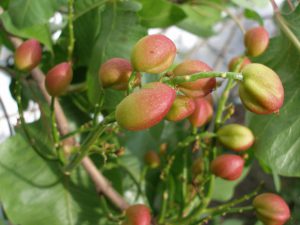
Pistachios are grown on a very small commercial scale in New Zealand, but I’m yet to see any of the results. On a (very) amateur scale they are also growing in my garden (pictured). The majority of pistachios sold in New Zealand hail from California, but the best – if you can find them – are grown in Iran. Unfortunately U.S foreign policy has done a very good job of making Iranian produce, including fabulous saffron, halva, sour cherries and pistachio nuts, notably scarce in most of the western world over the last several decades. Thanks to a few enterprising Iranian expats this is starting to change, so shop around.

The characteristic saltiness of pistachios comes from the nuts being washed in a brine solution prior to roasting. It is however possible to find unsalted ‘raw’ pistachio nuts. These are usually pretty pricey but have the added advantage of being shelled- so you’re only paying for pure nutty goodness.

It’s very, very rare that I can control myself long enough to get as far as cooking with pistachios, but when I do, I lean towards luxury. Pistachio gelato is my preferred summertime use: grind about a cup of raw pistachios to a fine powder and soak, overnight in 400mls cream. Use this cream (unstrained) in any standard gelato recipe. The finished product won’t be emerald green or taste of bitter almonds – as is de rigour with most commercial pistachio gelato, but it will totally knock your knickers off.

In winter, when gelato is a bit out of place, try using roasted pistachios in a warm pilaf made with basmati rice, saffron, roast lamb, dried apricots and plenty of sautéed garlic. Serve with a good dollop of garlicky raita and a few extra pistachios.

Walnuts

If autumn had a flavour it would be of walnuts- mellow and warm but with a slight edge of bitterness, and a fragrance like fallen leaves. Walnuts have a devoted following all over Europe and parts of Asia, featuring in both sweet and savoury dishes. The English have a particularly ancient affinity for the walnut, and aged trees of tremendous height and girth grace the gardens of many a stately home. The English, bless them, also coined the following little proverb which manages, with masterful medieval brevity to be offensive to pretty much all living things: ‘A dog, a woman and a walnut tree, the more you beat ‘em the better they be.’ Charming.

Walnuts are almost unique amongst nuts in that they are quite delicious raw – particularly when they’re really fresh. New season walnuts are a true delight and have none of the mustiness or overwhelming bitterness typical of bulk bin offerings. They can be used in any number of sweets, from the classically kitsch afghan to the sublimely sophisticated baklava. But for me the walnut is a dinner nut. Try them lightly roasted and added to a salad of baby spinach leaves, gorgonzola picante and pear – I know it’s a bit last decade but I still love it. Walnuts also work very well in various pestos (pesti) – Rocket pesto made with walnuts and pecorino is particularly pleasing.

If you’re lucky enough to have access to a walnut tree you can make your own pickled walnuts -try these pureed and folded into whipped cream – a show stopping addition to any bread and dip platter. But my favourite use for green walnuts (and the one that has me scouring my neighbourhood every January) is nocino – Italian walnut liqueur. Split about a kilo of green walnuts and cover with vodka. Add the zest of 1 lemon, a quill or two of cinnamon and a couple of cloves. Seal and leave outside in the sunniest corner of your garden until midwinter. Strain the liquid (it will now be blacker than midnight) and add strong sugar syrup to taste. This spicy, chocolaty, almost medicinal elixir is just the drop on a cold winter’s night.

Almonds

It may come as a surprise to you to know that the almond is the seed of a pithy, inedible (except when very young) peach. As I mentioned earlier it must have taken some pretty hardcore experimentation to select the first almond cultivars, as the wild form of the nut usually contains large quantities of cyanide. Curiously, the flavour we think of as almond comes from either the bitter almond (an inedibly bitter and mildly toxic nut banned in many countries) or apricot kernels (a slightly safer and similarly flavoured alternative). One or other of these is used (in very small quantities) in amaretti biscuits, marzipan, amaretto liqueur and pure almond essence. True dessert almonds don’t taste of much at all really; they’re just sweet and nutty.

I use a lot of almonds in biscotti, sprinkled over salads and in some oil-based pasta dishes. The Spanish make a rather exquisite, dazzlingly white almond soup which is served ice-cold.

Macadamias

Native to Queensland, mostly grown in Hawaii (with New Zealand making some admirable inroads), and bloody delicious. Trouble is, I’m yet to find a recipe that does any sort of justice to these delicately-flavoured nuggets. So leave well alone I say and eat them au natural. They also yield the most underwhelming ‘gourmet’ oil known to man.

Pine nuts

Fiendishly expensive, frequently rancid and not nearly as indispensible as they like to think. As far as I’m aware pine nuts are not being grown commercially in New Zealand, but I’d be thrilled if someone could correct me.

Hazelnuts

Delicious? Yes. Can I be bothered with all that fiddly peeling? Hell no. Europeans have an unhealthy obsession with hazelnuts. They will sneak them into anything if you don’t keep a close eye on the kitchen. This is best seen through the almost religious devotion Italians show towards Nutella. Nutella gelato I can handle. Nutella ravioli is a nut too far.

Chestnuts

Make your mind up – are you a nut or are you a rather dry lump of kumara? Because of this ambiguity, I can never quite decide if I like chestnuts or not. They taste great when eaten on a London street corner on a freezing January evening, but when removed from these atmospherics chestnuts can be pretty ho-hum. They do, however, make an outrageously good Italian jam, confettura di castagne, which is really more like soft, earthy fudge. Best eaten as dessert with a healthily slug of cream. Note: Always prick chestnuts before boiling or roasting unless you want to deal with a pot or oven full of small hand grenades. I’ve heard of oven doors being blown off their hinges. Note again: Chestnuts are an enormous pain in the backside to cook and peel. Let me know if you do it more than once.

So that’s my take on nuts, in an um… nut shell. So I’d love to hear what nuts you use regularly, how you use them and gosh, why not? – Some recipes too!


Would you like sighs with your order?

Virgil Evetts

Despite my grumblings about the very average level of service found in the local hospitality industry, I have had some truly excellent service here, a lot that was simply poor, but only a very slim minority that was really bad. The latter examples are usually pretty funny, even if they didn’t seem that way at the time.

Here are a few of my favourite bad experiences in local restaurants:

A maître de wagging her finger and berating me for having the audacity to arrive at her (almost empty) restaurant without a booking.

Being warmly invited into a shiny new establishment, shown to a table, given menus and brought water, but then told (about 15 minutes later) that the restaurant wasn’t actually open. The owner just thought we’d like to see the menu.

Being told by a waitress- when we questioned the restaurants peculiar booking rules [no bookings for less than 3 people, no bookings at all after 7:30]- that she was sure there were plenty of other restaurants that would have us if we didn’t like their policy.

I’m not too keen on waiters calling me ‘mate’, ‘buddy’, ‘bro’ or ‘dude’. There’s familiarity and then there’s just plain yokel.

In some cases bad service can be strangely appealing. I used to frequent a particular café  because the waitress was so hilariously surly. She would roll her eyes at any request and snap irritably at customers. The only words I ever heard her utter were ‘what?’ and ‘no!’ She was kind of like a belligerent floor show.

But these are all pretty mild really. My mother tells utter horror stories from her chefing days, including a cocaine-crazed head chef throwing a live crayfish at a diner, [attempting] to urinate on another and regularly shouting ‘well you can just f### off!’ at anyone who sent their meal back to the kitchen. Apparently he wasn’t big on criticism.

But I’m sure we all have treasured memories of shocking servive, so let’s have a little friendly competition- worst service experiences ever:Helen says – we have a foodlovers gift for the best story on this blog.


Tropical Delights

Virgil Evetts

I’m usually the champion of buying local, seasonal produce, but in the depths of winter, when the choices are pretty slim (there are only so many apples, pears and mandarins a boy can eat) I allow myself to clock up a few extra food miles and stray into the rather beguiling territory of imported tropical fruit.

I know, how unfashionably unethical of me. Well, if I cared to justify my position, I’d reason that it was ok because the food miles are offset by all the fruit, vegetables and eggs I produce in my garden. So what’s your excuse?

Anyway, until recently, fresh (a pretty relative term when applied to imported food) tropical fruit in New Zealand meant mangoes (often of the under-ripe, tasteless Peruvian and Mexican kind); papaya (dependable enough); pineapple (highly variable); and coconuts (good for church fetes).  So a bit of a mixed bag really.

However, that was then. Since 2005, thanks to the diplomatic wiles of Labours’ Jim Sutton the-then Trade Negotiations Minister, New Zealand has practised a Closer Economic Partnership – a free-trade agreement of sorts – with Thailand. Now usually my reactionary, liberal leanings compel me to object to free-trade agreements, but in this case, I just couldn’t be happier.

I have no idea what we flog off to Thailand – I dread to think actually – but the most obvious benefit to anyone motivated by food is fabulous tropical fruit. Thailand is, you see, one of the biggest exporters of tropical fruit (exceptionally good tropical fruit) in the world. Unlike the offerings of many of their competitors, such as Hawaii and Australia (where the emphasis is on good looks and long shelf life) Thai fruit is all about the flavour. It just so happens that it looks great too.

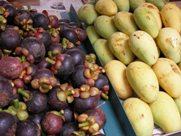
The Thai people are famously fussy about their fruit.  It’s a big part of the Thai diet (the preferred dessert of most Thais) and they will accept nothing less than perfection. This attitude is certainly reflected, if not amplified, in the produce reaching our shores. Take mangosteen, for example, just about my favourite fruit in the world. I’ve eaten a lot of this fruit overseas and have developed a fair idea about what constitutes a good mangosteen.  Well, surprising as it may seem,  the imported mangosteen I’ve been buying in Auckland lately are a good deal better than most I’ve eaten abroad (I think of this as akin to our best lamb only reaching the export market). It’s pretty standard that imported fruit looks great, but texture and flavour often disappoint (think imported Californian stone fruit). Not so with these mangosteen. They’re a truly world class fruit.

But mangosteen are just one of the succulent pleasures coming to us from old Siam; lychee, longan, mangoes, fresh durian and young coconut can all be found locally, if you know when and where to look, and they’re at their best during our gloomy southern winter – just when our taste buds desperately need a little excitement.

I’m a bit of fruit geek (yes there such a thing, check out http://www.cloudforest.com/cafe/ )so I’ve gone out of my way over the years to try most of these fruit both in my mouth and in my garden , but to many New Zealanders these will be quite  unfamiliar, and in at least one case, rather intimidating territory. So I’d like to take moment to impress upon you the many virtues of my favourite tropical fruit.

Lychee

Most of us at least know these as tinned fruit. They are, along with peaches, one of the few fruits that actually survive the canning process with some of their dignity intact. But as good as they are, canned lychees are but a shadow of their former fresh selves.

Of all the fruits described here, fresh lychees are the most likely to appear in your supermarket. With their gorgeous rosy flavour and juicy, meaty texture, it’s easy to see why they’re a so revered throughout much of Asia and increasingly the rest of the world. They’re dangerously more-ish popped out their crimson leather skins and eaten as is, but also figure into some damn fine savoury dishes. Try a handful thrown into a fiery Thai red curry with prawns or duck. Too good for words.

Rumour has it that lychee trees will fruit outdoors in New Zealand and a few of us local fruit-anoraks are expectantly nurturing seedlings, so why not join the club and give it a whirl.  Of course if you manage to get one fruiting before us we’ll have to kill you.

Keep an eye out for the jumbo sized, soft skinned Emperor lychees: by far the best of a very good bunch.

Longan

Looking at a glance a bit like a pale, unshelled macadamia nut, longan are a very juicy, super-sweet relative of the lychee. Like their better-known cousin, they pop put of the skin and into the mouth with the greatest of ease. Although lacking the lovely Turkish Delight notes of lychee, they still have a pleasing muskiness. Dried longans are a popular snack in China but bear little resemblance to the fresh fruit, or food for that matter if you ask me.

Longan are best eaten as is, perhaps as a mystery guest in a fruit salad for friends.

Durian

A fruit that is both revered and reviled, depending on who you ask.  Personally I hold to former persuasion – it’s easily among my favourite foods, on par with white truffles, foie gras and well-aged Parmigiano Reggiano. The funny thing is, durian shouldn’t taste good at all. In fact I’d predict that  the first time you come anywhere near fresh durian you’ll be almost physically repelled by the pungent, open-sewer like odour. If you happen to find the courage to taste the stuff, you’re bound to be appalled, if not violently ill. It’s sweet but savoury, fragrant but pungent, and warming like whiskey, with an unmistakable undertone of onion.  Not a bit like you understand good food to be. But for some unfathomable reason, it draws you back in. Next time you’ll notice some good beyond the horror – the smooth, creamy texture, the undertones of banana, pineapple, maple syrup and … well, durian. From then on in its pure love, obsession, infatuation, lust.  Against all odds it’s utterly addictive.

It’s not just humans who enjoy durian either. Orang-utans have a sixth sense for the fruit; they can detect a ripe specimen from kilometres away and will happily cut their finger to ribbons tearing through the viciously spiky rind.

Fresh durian is available in New Zealand (seasonally) but costs a bomb.  Frozen segments or whole fruit can be found at most Asian supermarkets year-round and are an affordable alternative. A very good introduction to durian comes by way of ice cream. I use the very easy recipe from Sri Owens’ excellent book Indonesian Food. I defy anyone – who gets past the initial olfactory assault – to resist total addiction to durian.

Mangosteen

Ah, the mangosteen. Known in my house as the oh-my-god fruit, on account of the rather AO sounds made while eating them, and described by other seemingly-rational people as the Queen of Fruits. Hyperbolic and subjective though all this may be, make no mistake: the mangosteen really is something special. Looking a little bit like a dusky purple persimmon, although this resemblance is only superficial, the mangosteen is classic example of not judging a book by its you-know-what. The succulent, pearl-white flesh within the pithy (indelibly staining) rind is exquisitely juicy, heartbreakingly tender, and packs a flavour combining all the best parts of strawberries, grapes, pineapple and citrus with the precision of an expert wine maker.

There is but one way to eat mangosteen: as-is, out of hand and as soon as possible – they’re just too good to leave sitting around.

Traditionally mangosteen and durian are eaten together. Durian heats the body and mangosteen cools it. One is rich and creamy, one is fragrant and refreshing. Yin & yang on a plate.

Thai Mangoes

According to some sources, the mango is the most widely cultivated fruit crop on earth (others say apples), so it’s a crying shame that until very recently the examples that made their way to our shores were such a ho-hum lot. It’s rare to find a truly bad mango. At worst they’re just ‘nice’. But compared to the best Thai mangoes – now thankfully available in New Zealand – even the best of the motley mangoes of Mexico and Peru just don’t rate at all.

The Thais take mangoes very, very seriously. They have developed many of the most revered varieties worldwide (there are hundreds), including the magnificent Nam Doc Mai. This yellow, stretched looking fruit, with its distinctive re-curved ‘body’ (its more than a little reminiscent of the female form) has a rich, musky flavour, a fine, sorbet texture, and a floral, yet alluringly turpentine fragrance, with an almost physical presence.  This is the very best mango for eating with Thai sticky rice pudding (Kaow Niaw Mamuang); actually it’s just the very best mango full stop.

Young coconut

I’ve often wondered what all those cannon ball-like coconuts sold in our supermarket are being used for. They obviously have a following because unyieldingly hard and sporadically rancid through they may be, they’re just about the most consistently stocked item in any produce section nationwide. These do however bear little resemblance physically or in terms of flavour and texture to fresh young coconuts. Throughout the tropics just about every market and street corner has a coconut vendor. You place your order, the top of the nut is lopped off with a couple of blows from the ubiquitous machete, and you’re good to go. The flesh of these emerald green, young coconuts is deliciously gelatinous, almost like panna cotta, and the reservoir of water within is gorgeously sweet and nutty. In sweltering tropical heat this is the ultimate thirst quencher – even if you do look like a bit of a tragic tourist cliché in the process.

Until very recently young coconuts were strictly a luxury of the tropical get away. Weighing several kilos each and potentially harbouring all sorts of undesirable entomological stowaways, importation was quite unfeasible. Until that is, some bright spark in Thailand developed a way of lathing the nuts down to a light-weight, hygienic and eminently shippable form; looking oddly like squat, fat candles, these are now available in many supermarket chillers. For me, young coconuts are strictly an au naturale affair, but if you’re feeling extravagant the flesh and water can elevate a humble Thai curry or Malaysian sambal to a dish worthy of a sultan’s palace.

All of these fruit are available – mostly over the winter months – from your nearest Asian supermarket or specialist fruiterer. This might mean a bit of hike to our rural readers, but it’s well worth the effort next time you’re in the big smoke.

Just in case any of you share my enthusiasm for foolishly ambitious food gardening, and fancy trying your hand at growing lychee, mangoes, jack fruit etc, I have included links to my favourite fruit-geek nurseries.

www.subtropica.co.nz

www.nestlebraeexotics.co.nz

www.subtropical.co.nz

Steak a claim – Virgil Evetts


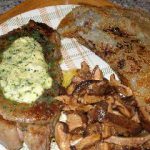
I’ve been indulging in more than a little bovine excess of late. Pity my poor arteries. For various reasons,  many of my Best Beloveds colleagues have been abandoning their posts lately , so she’s been out every other night at some farewell do or another, leaving me to cook a bit of whatever I fancy, and just lately I’ve been totally crushing on steak.  Dear Best Beloved doesn’t do stand -alone meat, so I can only indulge in the forbidden flesh [so to speak] if she’s off supping elsewhere.

Right now I’m vacillating between scotch fillet and New York-cut sirloin and just can’t decide which I prefer. The scotch fillets is almost meltingly tender, but very mild on the palate, where as the sirloin is a little more toothsome but makes up for it with a real depth of flavour. Oh, but of course the sirloin also has that luscious band of fat…

Anyway, my own philosophy about steak, is keep it simple. Very simple. I always buy my steak from my local butcher. This way I can choose the specific piece I want rather than the ’you’ll get what your given‘ results of the supermarket. I dust the meat liberally with ground white pepper and salt and then leave it to sit at room temperature for at least an hour before cooking.  Chilled meat can cool the pan, resulting in a tough mouthful. BTW- oil the meat, not the pan.

Unless I’m lucky enough to have some of that stupefyingly good [and cripplingly expensive] wagyu beef, which is best served rare, if not raw, I always go for medium-rare with my steak. This gives the best balance of flavour and texture in my opinion. I realise however that steak cooking preferences are a highly controversial topic and we’ll get to that shortly…

In terms of accompaniments, I stick with the whole simplicity theme. The only sauce- if you can call it a sauce- that I allow anywhere near my steak is herb butter- nothing more than crushed fresh thyme or oregano, and a little garlic  mashed into lots of butter. I normally pair the meat with a crispy potato galette – you know the sort of thing- grated and squeezed potato pressed into a thin cake and fried in a well oiled pan. Rather like a hash brown I guess.

And finally, bringing a little piquancy to the whole affair, I’ve recently stumbled upon a clever little mushroom salad- of sorts.

Soak a good handful of dried shitake in warm water for about an hour.  Squeeze out the excess water and slice very thinly. Now dress with a little rice vinegar, light soy sauce, sesame oil, chilli and salt. Mix thoroughly and leave to marinate for at least 20 minutes. This has just the right mix of spicy, sharp, nutty and earthy flavours to complement the flagrant masculinity of the meat. It was one of those great little discoveries, born out of an almost empty pantry one night not so long ago. Even if you don’t have it with steak, give this one a go.

Anyway, I’m not quite sure where I was going with this… Mostly just a desire to share my current joy for a nice piece of meat with others who might appreciate it. It’s a joy that falls on profoundly deaf ears in my house.

Everybody of a meat eating persuasion has pretty big opinions about steak, so let’s have a bit of a vote; Sirloin or fillet? Rare, medium-rare, medium or well done?

Until next time…

Virgil

Here’s what I think of your surcharge, sir! – Virgil

Can somebody please explain to me, why, oh why does the hospitality industry persist with their idiotic statutory holiday surcharge carry-on? Don’t get me wrong, I understand their reasoning. I manage a large team of staff in a 7 day operation and it’s certainly true that staying open [a voluntary act, remember] on a stat is far from cheap. You’re obliged to pay all staff working these days at time and half rate and if it’s their regular rostered day, they get a day-off in lieu too.  So sure, I get it, pulling coffees on Queens Birthday costs management a low-rent king’s ransom.  But what I don’t get is why these businesses only attempt to recoup the extra costs of staffing, on the actual day. We have a very funny approach to service in New Zealand per se, and this another great example.  The surcharge- often 20%- just comes across as greedy and totally puts me off eating out at all on such days. It’s not that I can’t afford it- I just don’t see why I should. Lots of other businesses open on stats and they seem to get by without charging a stupid surcharge.

While I boycotted all of Devonport’s [mostly deeply mediocre] cafes yesterday, I did call in at the excellent Evergreen Books [a brilliant local second-hand book shop with a very decent food section www.evergreenbooks.co.nz ] and picked up some bed-time pulp for the week. Guess what? No surcharge! Later on I went to New World. Again, no surcharge. So what’s so bloody special about the hospitality industry?

By all means, recover the unquestionably steep costs of opening on a stat but do it incrementally across the whole year.  In other words, charge a wee bit more every day rather than a big greedy lump a few times a year. And if you don’t like that, just don’t open! Nobody’s forcing you.

Then again, this could just be the ravings of a misinformed  cantankerous git. Any café or restaurant owners should feel free to put me in my place right about now…

Virgil

A Very Special Blossom


Virgil Evetts

 Back in the good old days of the 90’s, when most television was still scripted and mercifully free of Ryan Seacrest, Sharron Osborne and ball-room dancing,  the phrase ‘a very special Blossom…’  was  tongue-in-cheek industry jargon, used to describe any episodes of your favourite show (most famously Blossom) that had been briefly hijacked by a topical cause- suicide, teen pregnancy, AIDS etc . In other words, brief bouts of socially responsible propaganda.

Although TV has long since lost any sense of social responsibility, it’s pretty much the agenda behind my article this week. Pure unadulterated propaganda for a cause I happen to believe in. Hopefully by the time I’m done, you will too, whether it’s out of guilt, peer pressure or nausea.

So, tonight on a very special Blossom- the Free Range debate

Let me start by saying I LOVE MEAT. I will always enjoy eating the flesh of a wide variety of animals. I have no interest in ethically based vegetarianism and no guilt about my appetites. I happen to have a certain amount of expertise on the subject of Human Evolution, so I could explain to you in hypnotically dull but authoritive detail, how and why our bodies are designed for at least partially predatory behaviour.  But I don’t need to- just run your tongue around your teeth. Those pointy ones aren’t for the nonchalant nibbling of leaves, you know.

 So yes, I fully advocate the eating of meat, have no quarrel with farming per se and although I’ve not yet done it, I’m prepared to kill an animal for a meal. I believe all of us meat eaters have a moral obligation in this regard- to at least once in our lives endure the full emotional impact of taking an animal’s life for our own pleasure and sustenance.   As a group we’re far too willing to abdicate that responsibility to some anonymous third party.

What does concern me, what I passionately care about, is how we manage and maintain the animals we consume, and the chilling ease with which we turn a blind eye to the horrors of industrial farming. The last week or so has seen the country up in arms about the state of the pork industry, or more specifically the conditions many farmed pigs are forced to endure. Yes this is deplorable, sickening, a gross indictment of our species. But so too is our ignorance of the issue. The realities of the intensive pork and poultry industry have been widely publicised for decades.  That so many of us were unaware of these horrors is very troubling indeed. It’s my belief that most of us disassociate our favourite cuts of meat with living, breathing animals. We have no interest in knowing how these animals were kept, what they were fed or how they were killed. We prefer not to think about it.  Its pork not pig, drum sticks not hen legs.

So shame on you New Zealand: shame on those of you who treat other animals with such callousness and cool detachment in the name of high returns per kilo; shame on you who have eaten pork, chicken and eggs all your lives and never questioned their origins or worse still, have known and carried on regardless; shame on Mike King for attaching his name and dubious celebrity to an industry he apparently knew nothing about; shame on me too for repeatedly supporting much of the above.

 The defining characteristic of our species is sentience: I think therefore I am. This unique ability, a veritable super- power, allows us to manipulate our environment and exploit all other species. A well-won spoil of the evolutionary war perhaps, but one that comes with great responsibility.  Unlike any other species, we are capable of compassion- so compassionate we must be. We are the very definition of humanity, so humane we must be.

Rationalism and scientific reason (not to mention deep cynicism), are my usual modi operandi. But on the subject of animal husbandry (or wifery) such an approach is insufficient. That we are emotional, empathetic creatures makes us morally accountable for our actions. As it stands right now our 21st Century treatment of animals could well be viewed by future generations with the same horror and disbelief that we view slavery and apartheid today.

But it’s all very well and simplistic for me to say ‘buy free-range’.  The term conjures up scenes of happy hens and pigs, scratching and rooting respectively in wide open paddocks under halcyon skies.  But is this the reality? What does free-range really mean in New Zealand and how does it compare to the conventional, dare I say it, norm?

Put simply, and rather alarmingly, the term free-range has no legal definition in New Zealand.  It’s little more than PR spin. Rather successful spin too. Although not a legally binding term, it’s a brand that both the pork and poultry industries have a vested interest in protecting and self-regulating.  So at the very least you can rest assured that any pork , chicken or eggs labelled as free-range will have been raised in lower densities than  the alternative,  and with some access to the great outdoors.                            Playing Chicken
To most of us, the conventional end of the poultry trade equates to torturous battery-farming.  But this is only half true. Meat chickens or broilers are never kept in battery cages; these are used exclusively for laying birds. Broilers, even in the worst situations of 45,000 birds per barn, can still move around, scratch and perch – after a fashion. But they are not given this extra ‘freedom’ out of any consideration for their happiness or wellbeing. It comes down to pure economy. Caged hens habitually rub their breasts raw against the bars of the battery cages. In the case of broilers this would mean ruining the most valuable cut of meat. Furthermore, being largely immobile the bird’s muscles atrophy, leading to a rather scrawny roast.

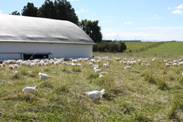
By comparison, free-range broiler birds have a much easier time of it. Paul Jackson, Manager of Heuvels Organic free-range Chicken runs a modest 15,00 birds per barn (as opposed to the 45,000 high-density norm) and the birds have free and unrestricted access to the outdoors. These certainly appear to be happy birds (admittedly a rather difficult thing to measure in a creature of such limited personality).  Jackson also makes the very important point that his operation is Organic free-range. This means the farm is subject to ongoing audits by AsureQuality, who have their own guidelines, regulations and definition of free-range.

Probably the best known and some might say suspiciously affordable, free-range chicken in New Zealand supermarkets is Tegal’s Rangitikei brand. These birds are marketed as corn-fed and free-range, but considering the reputation of the parent company involved, I had always wondered what this actually meant.  So I swapped a few emails with Brenda Galbraith, a marketing manager with Tegal, who despite a hectic schedule, responded to my questions promptly and with an openness I didn’t expect. Rangitikei birds do, she assures me have free access to the outdoors during daylight hours. They are, as is evident in the yellow tinge to the flesh, fed large quantities of maize.  Despite persisent rumours to the contrary the birds are not conditioned to fear going outside, although being food-obsessed like all chickens, they prefer to spend most of their time near the feed-hoppers, which are kept inside.  The flock densities are kept at around 15-16 birds per square metre indoors and 4 per square metre outside. This is a long way short of the luxurious open space afforded to the Heuvels birds, but like anything in life, you get what you pay for.

There is of course a bit of a dilemma attached to free-range chicken produced by a company that produces most of its birds under conventional high density conditions. There’s no easy answer here and I suppose it’s a matter of choosing you battles.

Unsurprisingly I was told it was not possible, due to MAF regulations and in the interests of disease prevention, to visit the Rangitikei operation in Taranaki. The caginess- please excuses the pun – of the poultry industry around media enquiries, particularly requests for site visits, is well known.  I don’t really blame them either. They have a business to protect and industrial farming is never a very photogenic affair.

Egg-zactly
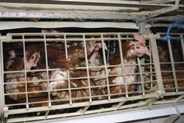
Unless otherwise stated all eggs in New Zealand come from battery operations which, as is well known,  allows each bird an area about the size of an A4 sheet of paper, with usually around 6 birds per cage. Chickens kept in these conditions become bored, often lame and prone to casually cannibalising their neighbours- or bits of them anyway.  Around 88 % of all eggs sold in New Zealand are produced under these conditions.

The next level up from battery are barn eggs, a system which does not, as I used to think, mean barns full of battery cages. It’s very similar to the situation described above for high-density broilers, but with provision for egg laying. Although a vast improvement on the former, it lacks the marketing cache of free-range, and the overheads are significantly higher than battery, so frankly- why bother?  Apparently all but 1.5% of the egg industry agrees.

Free-range layers are kept in barns very similar to those describe above -in quite varying densities- but also have access to an outdoor space during daylight hours, where they can forage for insects, graze on grass and dust bathe- the high point of any hen’s day. Currently only 9.7% of all laying hens in New Zealand are kept under free-range conditions.

The egg industry is often criticised for the short lives afforded to laying hens [around 18 months] and the swift and seemingly brutal destruction of all male and inferior chicks. I take a fairly practical view point here. Free-range or battery, eggs are still a business. After a year, egg production in hens starts to decline. Unless the farmer is getting an egg per day, the hen is not paying for her feed and thus costing the farmer money.  So they are ‘retired’, and fair enough. Male chicks or roosters are completely useless to egg farmers. They are quickly identified as hatchlings and are either gassed or subjected to what is known in the trade as instantaneous fragmentation. This means the chicks are tipped live and cheeping into a machine that bears a striking resemblance to an industrial sized food processor. Sounds utterly repugnant, I know but the process is so quick that it’s unlikely the birds have time to register what is happening, let alone feel anything. Hopefully.                                                                                                              A pig in a poke
Despite the wide publicity and endless debate this subject has received in recent days, it’s an altogether more straight forward affair than that of poultry and eggs. We only keep pigs for one reason- meat. Therefore there are only really two approaches to managing them- conventional and free range.

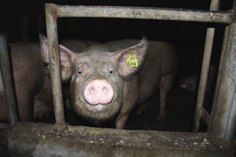
Until relatively recently, the majority of all pigs farmed in New Zealand were kept in high density factory situations. This is the well known barn-based system where breeding sows are kept in tiny stalls for long periods of time, and piglets are fattened in crowded, apparently unsanitary conditions. I have personally witnessed such an operation and it was indeed unforgettably awful.

Where as I can, at an extreme push, accept the barn raised approach to laying hens, I cannot muster the same broadmindedness when it comes to pigs. Unlike the nice but dim chicken, the pig is an intelligent (easily on par with a dog), social animal. They appear to exhibit fear, pleasure and depression. Although I have no qualms about eating pigs, a crowded, stinking bunker is no place for such a creature.

The percentage of local pigs kept under these conditions is thankfully on the decline (currently around 45%), due largely to public pressure. But this will not be an overnight transformation and nor can we reasonably expect it to be. Changing from barn based high-density farming to free-range is a prohibitively expensive and logistically, not to mention bureaucratically, challenging process. This may sound like tacit defence of what is an unquestionably repellent practise, but we must accept that we have supported the pork industry and all that goes with it, either knowingly or otherwise for decades. That we have suddenly grown a collective conscience doesn’t give us the right to almost literally bite the hand that has been feeding us. So I urge a little patience here. Keep objecting, keep being angry, but be realistic and reasonable too. The best way to protest is to shun all but free-range pork. Nothing speaks louder to an industry that sliding profits.

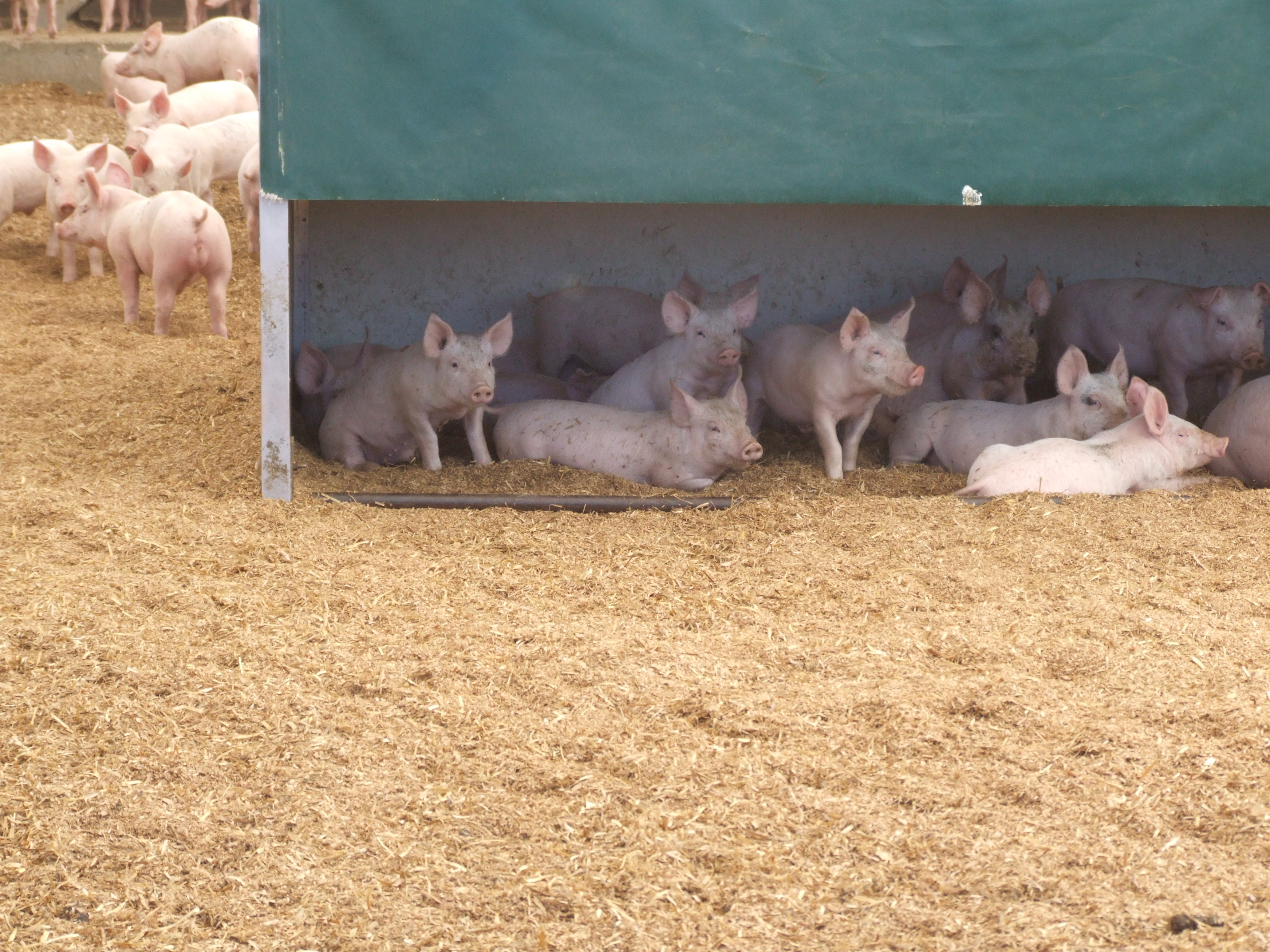
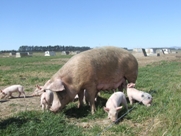
 And those of us of a pig-friendly persuasion have obviously made some impression already. As of 2009, around 55% of all pigs farmed in New Zealand are either free-range or free-farmed. The latter usually equates to relatively low numbers of pigs kept under large, often open-sided shelters. Since my own dietry conversion to free-range pork a few years back I’ve been a big fan of Freedom Farms. This South Island-based company has rapidly become a big player in high-end corner of the local pork market. Company co-founder Gregor Fyfe tells me that Freedom Farms uses neither sow stalls nor indoor fattening sheds.  Piglets are instead kept with their mothers until they are naturally weaned, in spacious paddocks where they can wallow, root (not what you think) and snuffle around in true piggy fashion. The piglets are then fattened in low-density, open-sided, deep-straw shelters. In both situations the animals get plenty of space, fresh air and company, which is very important for such a social animal as the pig.  Certainly the images Gregor supplied are a far cry from the very disturbing shots of a conventional piggery as supplied by SAFE. At 20 weeks the piglets are slaughtered and processed into fabulous bacon, ham and other pork products. Delicious, guilt free eating- unless you happen to be a practicing Jew, Muslim or vegetarian
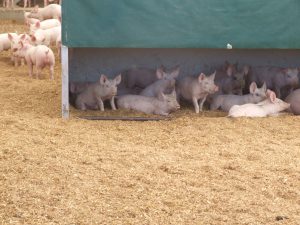
 But this could all read like some middle class conceit. It’s been said before that a social conscience is a luxury of the financially secure. And absolutely, free-range products are more expensive than the alternative, but the consumption of pork, eggs and chicken is not essential to human survival. Beef and lamb, for example are exclusively free-range in New Zealand (the same cannot be said in other countries- for a shocking glimpse of industrial beef farming in the USA, read Michael Pollan’s excellent and sobering book, The Omnivore’s Dilemma) and are a relatively affordable alternative.

So there you have it. Hopefully these last couple of thousand words have helped sway at least few of you from the cheap moral bankruptcy of conventional pork, chicken and eggs. I’ve been there too.  If nothing else, you can rest assured that this is probably the only time you’ll catch me evangelising. I’m just not the preachy type.

Choosing free-range pork, chicken and eggs is, in my opinion a responsibility, not a choice.  There is no doubt that many of the practises of these industries are barbaric, yet they are only reactions to a demand we as consumers have created. It is time to withdraw that demand.

 Special thanks to SAFE, Freedom Farms and Heuvels Chicken for images

http://www.spca.org.nz
 

Http://www.havocfarm.co.nz

Making Stock -Virgil

Time to take stock

This was supposed to be an article about soup. I certainly started off with soup in mind, but the words have a mind of their own sometimes and seem to have veered off on more of a stocky tangent instead.  I guess you can’t talk about one without the other, so it’s all good.
I’ve never really considered soup to be a food, and certainly not a meal- having, as I do, a natural suspicion of things that don’t require chewing. But thanks to some very good restaurant examples of late, and a particularly stunning pumpkin soup executed by my best beloved [from the one and only pumpkin our garden saw fit to produce this summer], I’ve been revisiting my stance.
I’ve been starting to think that I might have been a bit unfair to soup and perhaps just a little ignorant too. While pondering this recently I came to the conclusion that it was all my mother’s fault. You see there are many advantages to being raised by a chef- you have the house to yourself for all sorts of monkey shines several nights a week, and you learn to cook from a professional. The down side to that though is you learn to cook like a professional- in other words complete meals: an unbreakable formula of protein, carbs, plants and sauce.  The idea of soup as a meal doesn’t really exist in the restaurant world, so it never really featured in my schooling.  At least that was my brilliant theory.
My mother however reacted rather strongly when I accused her of neglecting my souply needs.  She was able to tersely rattle off a comprehensive list of soups she made regularly for me when I was wee, including a couple I was taught to make.  Is there some bizarre reason I have suppressed memories related to soup?  That may be a question best left to a therapist at a later date, but what I do remember is being taught the importance of a decent stock. If there is one kitchen skill every adolescent should have under their low slung belt before they leave home (if they leave home), it’s stock making. And on that my mother didn’t disappoint.
Stocks are another one of those great culinary commonalities. They exists everywhere, probably always have.  They are the basis of multitudinous dishes, and the parent of all soups and stews.  Even the most ornate and elaborate soups are only as good as their stock base. 
There are only really 4 types of stock in my books- chicken, beef, fish and vegetable and every cook needs to know how to make them. Dashi, the super-subtle Japanese soup stock, is not without virtue, nor is miso, which is used as a stock in some situations, but while I appreciate both of these, they don’t often fit with my own style of cooking.  The less said about pork stock the better. Horribly piggy stuff- just try to get that smell out of your curtains. Ultimately it’s the big 4 listed above that really count.
 
Chicken
I find chicken to be the most useful of all stocks and therefore worth a bit of toil.  It can be used in practically any soup, risotto, pasta and many other situations. It’s best made from browned chicken frames or the leftovers from your last good roast. The latter is my only source of chicken stock these days; since acquiring my own laying hens I won’t touch anything chicken-related if it’s not free range. No problem when it comes to your roasting fowl leftovers, but I’m yet to find a butcher who carries free-range chicken carcases. This is a gap in the market just waiting to be filled.  Chickens are astonishingly stupid creatures, but they certainly don’t deserve to live shoulder to shoulder in smelly, cramped barns, under blinding artificial light with nothing but death to look forward to. Call me arrogant and judgmental, but if you can’t afford free -range you shouldn’t be eating chicken at all.
Anyway, boil the browned bird -bits in a litre or two of water with an onion, a carrot and couple of sticks of celery (Avoid celery leaves as they make for bitter stock). I don’t bother with herbs at this stage; they bring little to the stock and can always be added later.  Simmer for a couple of hours, topping up with more water from time to time. Your stock’s  done when it tastes rich and chickeny and has perfumed the whole house. Strain and use immediately, or freeze for a rainy, soup-worthy day.
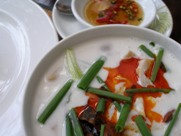
My favourite uses: Tom kah gai [Thai chicken and coconut soup, pictured], Hainanese chicken rice
Beef
The same technique (described above) is used with browned beef bones to make beef stock. You’re going for a deep, caramelised flavour from the bones, so don’t skimp on the roasting and be sure to deglaze the tray. There is no moral dilemma about free range versus intensively reared with beef in New Zealand, as all our cattle roam free in the valleys and dales. What exactly is a dale?
I’ve been known to use those bags of dog-bones for making my beef stock (is this something I should admit to?), but any bones of a bovine origin will do.  If you can find them, marrow bones will add an exquisite richness to your stock- (if you can resist slurping out the marrow straight from the oven-hot bones. -this goes wickedly well on bruschetta).
Again, I digress. Traditionally it’s the French sauciers who are thought of as the master of stocks, which form the basis of so many classic sauces, soups and jus. However when it comes to beef stock I consider the Koreans to be the true virtuosos. Korean beef stock [Tang], used in many of this [grossly underrated] cuisine’s hearty, warming soups and noodle dishes, is as complex and multi- layered as a good wine or  whisky.   There’s not much to the recipe- it starts off as above but also includes star anise, ginger, cinnamon and cloves. In the hands of skilled Korean chefs this combination yields pure magic, almost too good to adulterate in any recipe.  In my far lesser hands it’s a pedestrian imposter but still an impressive step up from the usual boiled beef water.
My favourite uses: French onion/shallot soup, Swedish meatball sauce
Fish
Fish stock is a slightly different beast to beef or chicken.  According to most authoritative texts, it should be boiled for no more than 20-30 minutes. I’ve actually made excellent fish stock by boiling it for upwards of an hour, but it’s probably better to err on the side of caution here. Worst case scenario is [apparently] that the stock becomes bitter and unusable. I’ve never had it happen in my kitchen but I’m just sayin’…
A good fish monger will carry fish heads and frames.  They should be super-fresh and super-cheap. Accept nothing else. To make a gorgeous, richly flavoured stock, cover about half a dozen raw, medium sized fish frames with water. Boil for 30 minutes or until the fragrance makes you drool into your saucepan, and it tastes like a pure distillation of very fresh fish [which it basically is]. I don’t add vegetables to fish stock. The fish flavour is delicate and best left untouched. But thats just me.
To shunt your fish stock through the taste stratosphere, smash up a couple of crayfish carcases [also available at some fish shops] in a pan of sizzling butter.  Use a masher to work out all that gloopy brown gunk.  Add half a cup of hot water, half a cup of white wine and simmer for 10 minutes. Strain and add to the stock as described above.  Used in chowder this will bring even a jaded palate to its knees.
Fish stock is best and most definitely safest when made and used on the same day. Overly cautious though it may be, I don’t mess around with seafood.
My favourite uses: Chowder, Bouillabaisse
 
Vegetable
This is probably the most neglected of all stocks, which is a shame. It’s more versatile than any of the above, and is the only stock I can be bothered making of a week night. Vegetable stock can be made with just about any vegetables you have in the fridge or garden. The only essentials are onions and carrots. I usually go for something like 2 or 3 onions, a couple of carrots, some celery, a couple of silver beet leaves and a handful of fresh herbs. Be careful with brassica leaves- two or three are ok but too many will make your stock smell decidedly flatulent, and may convey this special quality on to the consumer.   Cover with water and boil the buggery out of it. As always, use your taste to tell you when it’s done. Alternatively,  roast vegetable stock can be made with well browned onions, carrots, pumpkin and parsnip.  This can make a make very good substitute for beef stock.
Vegetable is now my stock of choice for risotto.  It produces a lighter dish with clearer, better defined flavours than the usual chicken stock versions. Believe me, I was surprised too by this discovery. You may have noticed my generally carnivorous leanings in previous articles, but I must concede that in the right place- and risotto is such a place-a good vegetable stock can be just the ticket.
My favourite uses:  Asparagus risotto. Roll on spring.
 
Note: Never salt a stock until it’s finished. Due to reduction from boiling it can end up tasting like the Red Sea.
 
Stock Cubes/Powder
Although I have been known, in a tight spot to make do with organic vegetable stock cubes, I don’t for a minute advocate their use. Their saving grace is that they contain little more than onion powder, yeast and a few herbs. The same cannot be said for chicken, beef and fish stock cubes. The fact that I have no idea what is in them, nor do I recognise their dominant flavours is most disturbing. I have a personal rule of only eating things I understand. Stock cubes are an enigma to me and I’m happy for them to stay that way. Avoid.
 
Carton Stock
A variable group but certainly more acceptable than cubes or powder. Basically, you get what you pay for here. I’ve tried some that were very close to home made and some that tasted more like [in the case of chicken stock] a chicken had bathed in the liquid rather than boiled in it.
Well, the soup article this was supposed to be will just have to wait for another week. There’s still a whole lot more winter to go, so I’m sure I’ll get to it eventually.
 In the mean time, what I’m keen to hear about is how many of you still make your own stocks? Do you have any particular stock tricks or gimmicks up your sleeves?  How and where do you use stock?
Over and out.