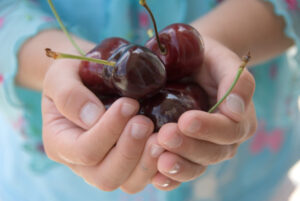
Jam, Jelly & All The Rest…

Virgil Evetts

Along with cooler, clearer days and nights, autumn also brings with it the year’s greatest avalanche of produce. Eagerly anticipated fruit of every kind overwhelms our appetites and overflows our fruit bowls. But it doesn’t last long. Soon enough the gloomy fruit famine (excluding citrus) that is winter will be upon us, so before the best of the season spoils and moulders away, stock up on sugar, dust off your preserving pan and get busy. Continue reading

Chocolate Fudge Sauce


Virgil Evetts

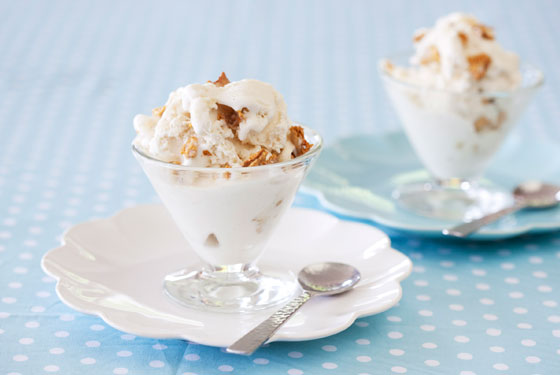
I’ve been chasing chocolate sauce for nigh-on 25 years now. A sauce so rich, sticky and perfectly unctuous that it’s haunted me all these years. At last, I think it’s with my grasp.

Back when I was about eight or nine the then-great American-themed (but Canadian owned) ice cream chain Swensen’s arrived in New Zealand, to much fanfare and a swag of outlets decked out with wooden panelling, marble counters and branded tiffany lamps. They served a quality of ice cream at the time unseen in New Zealand, with flavours that made boysenberry ripple and hokey-pokey seem like inbred country cousins. Blueberry cheese cake and chocolate peanut butternut are two that I grew inordinately fond of, over successive visits. My mother took a shine to this place too, on account of a congenital weakness for frozen fats, but also because they did very decent sit-down food, of the American-diner style. So, often of a weekend evening, mum would take me by bus to Takapuna and we would throw back our fries and burgers (actually I doubt very much that Mum ate burgers…I just can’t remember what else they served), followed by Swensen’s trademarked (literally) hot fudge sundae. From first appearances this was nothing special- vanilla ice cream, chopped nuts, the ubiquitous maraschino cherry, a wafer biscuit and hot fudge sauce. But my God, that sauce…

Well, I got older and less inclined to eat out with mum of a Saturday night, while Swensen’s fortunes faltered. Branches closed down and they eventually retreated from New Zealand altogether.  Curiously this uber-American themed ‘experience’ is now huge in Asia and the Middle East.

But throughout the unpleasantness of adolescence, the fumbling of early adulthood, to the mortgaged, baby-bounded reality of whatever I am now, the thought of this sauce continued to pop into my head, taunting me and unwelcome regularity. 

Over the years I’ve tried to recreate it, from off-the-shelf products claiming to be hot fudge (but falling well short), to various recipes from books and the net, without anything approaching success –  until this week.  I finally decided to conquer the sauce. Take no prisoners, no defeat, no surrender. My head deserves to be haunted by rare and sophisticated foods, not franchised hot fudge sauce.

You see, it turns out, I just haven’t been thinking American enough. I was busy trying to make a sauce from real chocolate, cream, soft-ball sugar syrup, and by other legitimate and authentic means. But those are not the paths to post-war American food.  Short cuts and chicanery are the way and the light to the stomach fillers of this era.  Cheap cocoa powder, not real chocolate; evaporated milk, not cream; flour, not soft-ball syrup; sugar by the sack full; and enough butter to sink a ship. So what if fat floats?

These things shouldn’t work together. They shouldn’t taste good, and they most certainly shouldn’t taste appallingly great. But they do. My God they do…

Too many years have passed for me to say for sure if this taste exactly like the Swensen’s sauce, but it certainly tastes – and feels – like the sauce of my memory.

Hot Fudge Sauce

Ingredients:

1/2 cup cooking cocoa
1/2 cup  (125g) butter
1 heaped tablespoon flour
generous pinch salt
1 1/2 cups sugar
1 cup (250ml) evaporated milk.
2 tsp vanilla essence

Method:

Sift together the flour, salt and cocoa. Mix to a smooth paste with a little hot water. Combine with butter and melt over a medium heat. Stir constantly.

When all the butter has melted add the sugar. Once simmering add the evaporated milk and vanilla and stir until the sugar has completely dissolved

Remove from the heat and decant to a glass bottle of preserving jar. Allow to cool completely before sealing. Store in the fridge.

Place jar/bottle in a bowl of hot water five minutes before using.

Pour over ice cream, or use as saucy dip for hot doughnuts and churros.

Salmon Sycophancy

Virgil Evetts

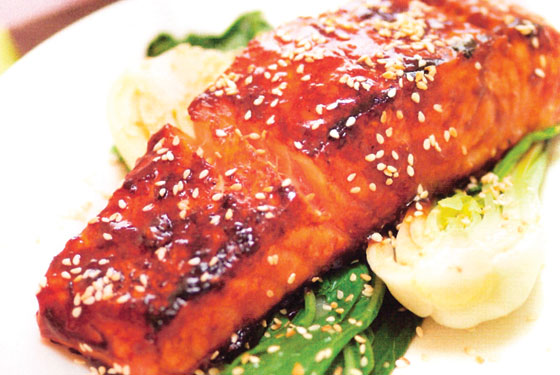
We have a back-to-front way of looking at our seafood these days: salmon – flavoursome, farmed and fairly priced – is still viewed as a luxury product, while wild-caught snapper remains the stuff of ho-hum ( if extravagantly expensive) fish and chips. Our attitudes are based on a long-gone era, and are as such out of step with some cold, hard economic and ecological realities. Continue reading

Tromboncini

Virgil Evetts

This summer, as always my zucchini plants have been producing more fruit than any of us (including the chickens) can handle. I love zucchini, either raw in salads, scorched over the bbq or tossed into curries and soups. But there are only ever so many one can eat, and a single day’s inattentiveness in the garden results in giant and largely useless marrow-beasts.  You can’t even give these things away. So we eat our fill, preserve a few, and toss the rest to the chooks, and finally in desperation, the worms.

Elsewhere in the food garden my Tromboncini squash (kindly supplied by food writer Lisa Loveday) have performed superbly. Looking more than a little like vegetable trombones, I’m assured on Lisa’s very good authority that they taste like butternut squash, only sweeter. They’re still a week or so away from what I assume will be perfection,but I’ll let you know. It’s no weather for roasts or soup right now anyway. Being a ‘winter squash’ they will supposedly store well for months, which considering their size and our modest appetites is another strong selling point.

In their native Italy, tromboncino are eaten at two stages: small and tender, when they’re like meaty and flavoursome zucchini; and as a pumpkin when they’re fully mature. The vines like nothing better than climbing trees, fences or drain pipes and are about the toughest, most rampant member of the pumpkin clan I’ve come across yet. Despite having produced half a dozen stonking-great fruit, my plants grow on unchecked and are pushing out female flowers with wild abandon.

Other squash and cucumbers planted at the same time renounced their femininity and vigour some weeks back, and are now begrudgingly clinging to life with only the occasional flourish of useless masculinity. Although I like the idea of stuffed and/or battered squash flowers, I think they’re rather overrated. Yes they’re delicious, but no more than a deep fried lettuce leaf given the same treatment I suspect. What little flavour these flowers actually offer probably comes from the inevitable insect stowaways.

Meanwhile, as my trombincini harvest piles up, I see a winter of soups, roasts, gnocchi, ravioli and… baby food. Babies like pumpkin, don’t they?

Tromboncini seeds or ‘Zucchini Rampicante’ are available from Kings Seeds Ltd

Heirloom Tomato Hit & Miss

Virgil Evetts

With the summer food garden now on the downward slide towards autumn, I’m starting to assess my hits and misses in the tomato patch.

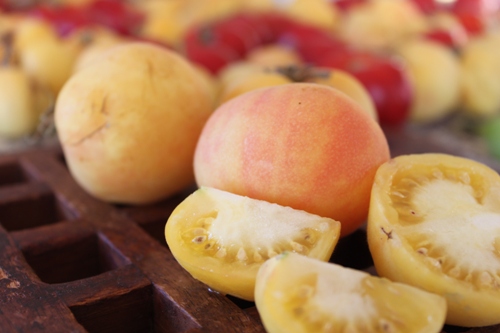
On the whole it’s been a good growing season. Lots of sun, lots of heat and not too much rain (lately). I planted four varieties of tomatoes – all ‘heirlooms‘(‘’ because I didn’t inherit them): Garden Peach, Bloody Butcher, Ox heart, and Black Krim. All but the latter performed well and have been keeping us in toms for some weeks already, with no immediate end in sight. My favourite of the lot is Garden Peach (pictured), a beautifully sweet yellow truss tomato with a velveteen-fuzz skin.  Such a charmer of a fruit and tough as old nails in my neck of the woods.

But that’s just the trouble with so called ‘heirlooms’. Sure, they often look and taste great, but you can never be sure that a particular variety will perform where you live, until you try. They’re so nerve wrackingly hit and miss. Some thrive for me here in maritime Auckland while others – like Black Krim – sulk like teenagers scorned until winter finishes them off, or sooner if one of the local bovver-boy blights catches up with them.

The reason for the fickle temperaments is very simple, but rarely expanded upon by seed merchants. Heirloom tomatoes are mostly varieties that were developed over time to suit the conditions of very specific locales.  Black Krim originated near the Crimean peninsula, and like nothing better than growing in a spot that reminds them an awful lot of the Crimean peninsula.

But because most of us cut our tomato growing teeth years ago with (mostly) fuss-free varieties like Beefsteak, Roma and Grosse Lise, we expect the same versatility from  heirlooms. Take comfort though in knowing, if your heirlooms failed it wasn’t your fault. The variety just wasn’t suited to where you planted them. Oh, you could probably squeeze a few fruit out of them if you doused the garden in various toxic sprays all summer, but that’s rather like keeping a person on life support when they’re brain dead.

It would be great if we could slowly build up a database of heirloom tomato growers’ experiences New Zealand-wide, but I doubt enough of us actually care about the issue. Thing is, I’m greedy – not just for volume, but for flavour and variety too. I want to grow as many different tomatoes as I can, but only if I know I’ll have something to eat at the end of my toil.

Let us know what you grew this summer. What worked? What failed? What slowly fizzled?

Heavenly Blood Oranges!

Virgil Evetts

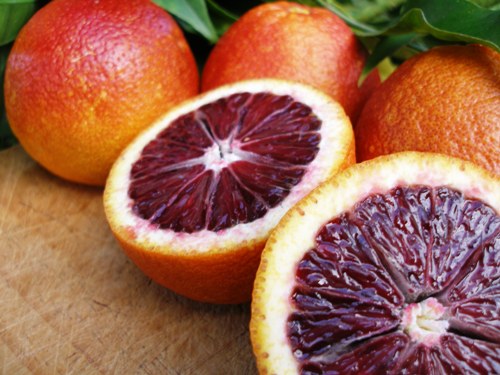
I’m always a bit iffy about singing the praises of imported produce, especially when it’s something we could be growing locally. But some things are just too good to forsake on principle. Californian blood oranges are once again hitting the shelves of supermarkets and fruit-shops nation (and probably world) wide, and as always I can’t help but buy up large. Continue reading

Carrot Sweets

We borrowed a Chilean cookbook from the library recently and it had some intriguing recipes. There was Huevos falsos (false eggs as a dessert). We thought the kids would love that – will write about those in a later blog. The book was great because it was written by a Chilean woman who now lived in the USA. Another Chilean had also borrowed the book from the library and where they disagreed with the paragraphs about Chilean life or a recipe, they had left their own comments.

There was also an intriguing recipe for carrot sweets. We had carrots growing in our garden so I thought we would give this recipe a try. I dug a couple of carrots out of the garden and grated them. The recipe said one cup of grated carrot was needed. That was about two carrots from our garden. It also called for a pound of sugar. Which is 450 grams of sugar. This was a lot of sugar and I think having made them, next time I would add a little less, maybe 350 grams because they really were sweet! The recipe also required the juice of one orange (and the zest which you add later).

Into the pot went the carrot, sugar and orange juice and then it was just a matter of boiling it down to a really thick syrup. This took quite awhile, over forty minutes. By then it was bedtime so we stirred in the zest of the orange and after some wee tastings, left it to cool off. By the next morning it was much firmer and we rolled it into balls and then rolled them in coconut.

We kept them in the fridge. They were really nice, very sweet and still carroty. The kids loved them and I will definitely make them again for parties. It was neat to make a sweet out of a vegetable and they were a lovely orange colour too.

Summerfields Foods

207 Waimairi Road, Ilam, Christchurch

open 11am-7pm Tues – Sat

[email protected]

ph 03 357 0067
www.summerfieldsfoods.co.nz

Chillies in a Curry

Ray Street

When you think of chillies, you usually think of a curry. But, believe it or not, chillies did not originate in India. Nor did they originate in Asia. Chillies came from the New World of Central and South America.

And guess who brought chillies back from the New World? Why, Christopher Columbus of course. Columbus sailed west from Europe, in 1492, to find a passage to Indonesia, one of the spice centres of the world. But instead, he landed in the Caribbean. And he found the local population spicing up their food with what he thought was pepper.

Columbus took seeds back to Europe where they became known as pimento, which is the Spanish word for pepper. But they weren’t pepper seeds at all – they were chilli seeds. And the chilli seeds germinated and grew more easily than real pepper.

Before the 1500s, the main hot spices in use in India were the long pepper and the more expensive black pepper. The main arrival point for chillies in India was in the Portuguese colony of Goa. The Portuguese sailed between the New World and Europe, trading spices and anything they could lay their hands on. And chillies were not only easier to grow than the traditional long pepper, they were easier to store and, because of this, chillies were cheaper than the long peppers. So it was not surprising the chillies swiftly took over from the long pepper in India.

And it didn’t take long for the chilli crops to be dried, turned into powder and then shipped to the spice lovers of Europe.

Today there are hundreds of varieties of chillies and more are being created each year.

Chillies belong to the capsicum genus of plants. In this genus are the sweet capsicums such as Bell Pepper (which have no “heat”) as well as the hot chilli peppers such as Anaheim, Jalapeno, Cayenne, Serrano, Bird’s Eye, Habanero and Scotch Bonnet (a Jamaican favourite).

Chillies come in all colours (green, red, yellow, purple and all shades in between) as well as lots of different shapes (short and straight, long and straight like a finger, curved, round, lantern shaped and lots more).

So where does the heat come from in the chilli fruit? It’s in the membrane. If you slice open a chilli, you’ll see the flesh (the outside shell), the membrane and the seeds. The seeds are attached to the membrane and the membrane is attached to the outside flesh. If you want to remove the hottest part of a chilli then cut away (and discard) the membrane (and seeds) so you are left with the outside flesh.

And what are the hottest chillies?  Currently, varieties of the naga chilli are the hottest but people are continually trying to breed ever-hotter chillies,usually so that they can make the “hottest curry in the world”. Although I’ve eaten really hot curries in the past, nowadays I prefer to be able to taste what I’m eating rather than sit with my mouth on fire. I’ll leave the “hottest curry in the world” well alone.

The first scientific measurement of the heat of varieties of chillies was undertaken by Wilbur Scoville around 1912. Extracts from different chillies were put into a water and sugar solution and tasted by brave panellists. The solution was diluted more and more until the chilli heat could not be detected and the amount of required dilution was recorded. The resulting measurement scale was known as the Scoville Scale. This scale seems pretty haphazard but was really quite accurate. Nowadays, chilli heat is measured using liquid chromatography. But no matter what system is used, the scales are for indicative comparison purposes only and the scales always have a lower and upper value (for example, the Jalapeno has a Scoville range from 2,500 to 10,000). A range is used because the heat can vary widely in chillies of the same variety and even between chillies from the same plant.

Here in New Zealand, the supermarkets and vegetable shops tend to stock only a couple of types of chillies – green and red!

When using chillies in a curry the one thing you need to work out is how hot a chilli will make your curry. When confronted with a new recipe, I tend to cook the curry as written and make a note of how hot I thought the curry was. If the curry is too hot then I can take several actions to lower the heat the next time I cook the curry. Firstly, I can reduce the number of chillies – if the recipe calls for two chillies then I can use just one. Or I can remove the membrane and seeds and just use the flesh. Or I can use a combination of these methods. The reverse process makes the curry hotter so I can just add another chilli (or even more than one more) and leave in the membrane and seeds. It’s really down to trial and error. One thing that I’d recommend is that you make sure you know how chillies in a curry affects the taste before you invite somebody round to dinner to sample your cooking – the last thing you want is for friends or relatives to be sitting clutching their throats and gasping for something to soothe their throat (a raita is one of the best things you can have on hand to counter the chilli heat).

Just be careful when you’re handling or cutting chillies. It will hurt a lot if you get the active ingredients in chilli (the main one being a compound called capsaicin) in cuts, your eye or in your mouth. Pouring water (or beer) into the area will not alleviate the pain – you need to use something like a raita, or yoghurt, to ease the pain.

Chillies did not originally come from India but it’s hard to imagine any Indian kitchen without chillies and chilli powder. It is a powerful spice and one to be enjoyed, not to be feared.

Curry Focus
Great curry recipes and recipe reviews
[email protected]

Capulin Cherries

Virgil Evetts

I get peeved when I see cherry trees for sale in Auckland garden centres. There should be a law against selling false hope. Come to think of it I think there is…

Although a sweet cherry might do alright in the odd frost-prone corner of the greater Auckland region, in most areas they will remain lushly leafy but largely fruitless year after year. Knowing all that I tried anyway years ago, and unsurprisingly to no avail. A waste of time, space and money. Leave cherries to the mainlanders I say; and anyway (ok so I’m a little jealous) let’s see them grow bananas or cherimoya!  I guess it’s only natural to want that which we just can’t have. I remember once seeing an excited crowd of locals jostling to gawk at a weedy, heat-ravaged apple tree in a Malaysian botanical garden. Nearby and utterly ignored by all but me was a colossal and fruit-laden mango tree.

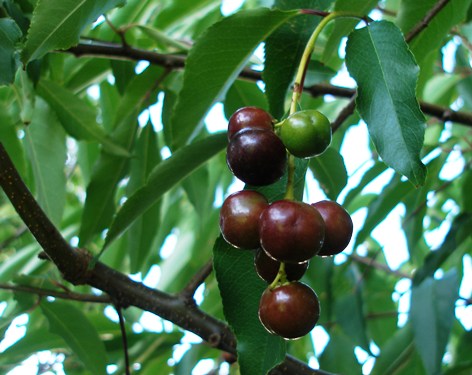
So although in the (ah-hem) ‘winterless’ north we can’t grow true cherries with much success, we do have a pretty good substitute at our disposal. The capulin or capuli cherry (Prunus salicifolia) produces small, green-fleshed cherries on a fast growing and mostly evergreen tree. Closely related to European cherries, the capulin has been a popular fruit in its native Central and South America for thousands of years. In its natural range the fruit is enjoyed fresh, in jams, preserves and a number of potent alcoholic drinks.

The fruit of the capulin are about half the size of a European cherry, thin skinned, juicy and sweet, with a strong cherry flavour and a slight but fleeting bitter finish.  Many sources claim that the frothy white blossoms are ‘sweetly scented,’ but they smell like wet Labrador to me. (Then again I think Eternity smells like car shampoo, so maybe my nose is on the fritz. Maybe.)

Unlike European cherries, capulins are produced in loose sprays or bunches, and on a staggering scale. My six year old tree fruits so heavily that I only bother netting about a third of the crop. The birds have a fine time working through the remainder, growing fatter and slower by the day.

The trees appear to be disease and pest-free in our climate, and if anything the only downside to them is that they grow too fast. To stop them disappearing into the clouds with their fruiting wood, they need close supervision, and a brutal prune every other year. Each summer I intend to make capulin liqueur and jam but never seem to get past scoffing them by the chilled bowlful.

Like caigua, the needlessly rare vegetable I banged on about last week, Capuli really deserves to be better known and far more widely available. At present, trees are available on Trademe from time to time, or online from Russell Fransham Subtropicals

Hibiscus Tea

Recently we did some experimenting with hibiscus tea. It seems most of the world already knows about this stuff and loves it – from Africa and the Middle East, to the Caribbean. It also has many names; Roselle in Saudi Arabia, karkade in Egypt. Flor De Jamaica in South America and other countries have their own name for it too!

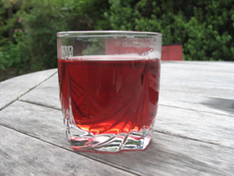
I was taken with it because it is made from flowers and tea from flowers is just neat in itself. Then when you make it the colour is just beautiful – such a glorious deep red. Being a non caffeinated drink, it is good any time and you can also make it hot or cold.

The basic recipe I went with was a teaspoon of the dried flowers steeped in boiling water for five minutes. Then I poured it off into a cup and added about two teaspoons of sugar. You can also use honey. It was really nice and reminded us of hot blackcurrant drinks. The flavour is subtle but not unpleasant. We then also tried it cold. I did the same recipe of a teaspoon of dried flowers per cup but I also added a slice of fresh ginger while it was steeping. After adding the sugar and making sure it was dissolved, I added lemon juice and put it in the fridge to cool. The recipe I was trying to follow, I found here[http://www.101cookbooks.com/archives/000172.html]. I didn’t have it handy at home but I thought the liquid sweeteners such as agave nectar would be perfect for making this drink.

I made the ice version on a Canterbury Nor’wester day with the temperature sweeping over 30 degrees. It was a very nice refreshing drink on such a day. It would be perfect as a non-alcoholic drink at a barbecue. It is so refreshing and the colour is very dramatic. Though apparently it does stain quite badly so perhaps not one for the children.

Summerfields Foods

207 Waimairi Road, Ilam, Christchurch

open 11am-7pm Tues – Sat

[email protected]

ph 03 357 0067

www.summerfieldsfoods.co.nz

Growing and Eating Caigua

Virgil Evetts

As a flavour chaser from way back, and a gardener whose tastes run to the fanciful, I’m forever trying new things out back.  But despite this rather naive enthusiasm, it’s not very often that I stumble upon a climatically feasible new food crop that is worth anything more than novelty value. Oh, I’ve had my successes: so-called tropical food plants that will grow here in Auckland in bold defiance of conventional wisdom. Some even offer up a few edible morsels (winged beans and cassava fall into this category) in a good year. But more often than not – a LOT more often than not – they prove more trouble than they are really worth. The chances are that if something grown for food overseas could be grown here it would be, either commercially or for the home garden racket.

A rare exception to this rather gloomy truth is the wonderful, delicious, hardy and rampant caigua (Cyclanthera pedata). This locally, and frankly inexplicably obscure member of the cucumber family, has been cultivated in the Andes for thousands of years, and is regarded as one of the finest native food crops of the region. That’s quite some billing too, considering potatoes, peppers and tomatoes come from the same part of the word.

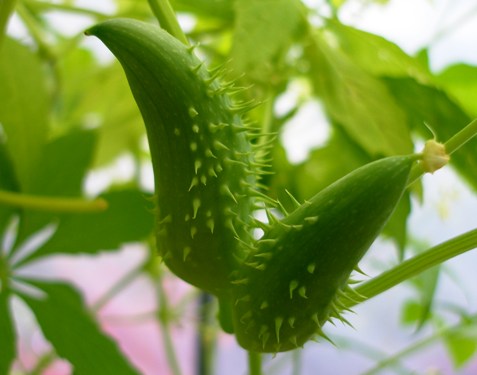
Although all parts of the caigua (said: kai-waa) plant are edible, the curved and mostly hollow green pods are of the most interest and value in the kitchen. Around the size of a jalapeno pepper, with a scattering of soft, ornamental spikes (although some fruit are quite ‘baled’), caigua pods tastes like a perfect fusion of green beans and cucumber. They have a crisp, succulent texture and are utterly delicious, either raw or used anywhere you would use green beans. In parts of South America they are popular stuffed with curd cheese, battered and deep fried as a bar snack.

Caigua plants grow at an alarming rate, and will quickly escape up into the nearest tree if not kept in check, putting on many metres of growth in a season. Fortunately they are strictly annuals in our climate, and sulk into submission once the cool weather kicks in.

Besides being easy to grow and uncommonly good, caigua are believed to offer a number of potent health-giving properties, including reducing cholesterol levels. That said, there is not much in the way of hard evidence to back this up, so don’t pin your hopes or health on it just yet.

For my purposes all that matters is that the plants are seemingly pest- and disease-free, thrive on neglect, and produce buckets full of great tasting fruit/vegetables.

At the moment caigua are only available in New Zealand through a single seller on Trademe, but I expect this to change. As a future darling of the restaurant scene, caigua have huge potential. I can well imagine chefs falling love with them – however briefly. Caigua can be steamed, fried, stuffed (see above), eaten raw and even turned into soup.

I’m pretty reserved and cautious about jumping on bandwagons, but in the case of fabulous, fruitful caigua,  I’m more than happy to start one. Hop on board.