What Do you Bake for ‘Old’ People?


Irene Field

Don’t panic, it is not me asking that question. This was a legitimate question posted on Twitter. When I spied that post, my jaw dropped and my fingers were ready to pounce. Fortunately I engaged what brain matter I posses, and used restraint. I ignored. And stewed away, nonetheless.

Is age a pre-requisite for the type of baking we enjoy. I have in my possession a copy of ‘Helen Jackson’s Kitchen’, penned obviously by Helen Jackson. Let’s use Helen’s book and some of the recipe selection therein.

Golden Coconut Meringues – sorry darling, coconut gets caught in my teeth. Old age has caused my gums to shrink and I have gaps that resemble canyons. Better pass on that one.

Coconut Ice Slice – ditto with the coconut dear.

Raspberry Frangipane Tarts anyone? Sweetie, I just came in from the garden. Do you really think I now want to eat a frangipane?

Lemon Cupcakes? I don’t know if my sight is good enough to peel off the paper cup dear. Be a dear and pass me the magnifying glass.

Luscious Chocolate Tart? I was just about to hit you with my walking sick. I thought you were calling me a lushy old tart. Where did I place my hearing aid?

In conclusion for the sweet, adorable young things amongst us (including myself):

I may not know my Harissa from Clarissa

Or know the difference between sumac and a tarmac

I thought Jus is juice just spelt wrong

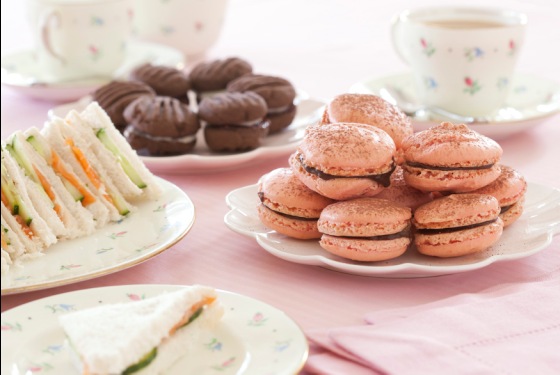
And what do you mean by Macaron?

At end of day, food is food

To enjoy and savor, even if you have a brood

Age is not a pre-requisite for pleasure

Just swallow each mouthful at your leisure.

Vegetables

Irene Field

The one word that can strike fear into a child’s heart. Well not only a child’s heart, but my heart as well. I believe there are some of shorter stature than me that like vegetables. I bow to those in homage. That they can not only eat, but also enjoy a humble vegetable, is worthy of a medal. Or at least a certificate on a wall.

I don’t know when my aversion to plain green matter commenced. I know my childhood years were marred by the fact I did not like vegetables. Most children grow out of this aversion and find they enjoy the odd brussel sprout, an asparagus or two, or at the least, a green salad.

My thoughts? If God had wanted me to eat those dry looking salad greens, I would have been blessed with two large front buck teeth. But he didn’t and I won’t.

For someone that supposedly enjoys food, I know this is not healthy. I enjoy cabbage, red particularly and green cabbage slightly wilted in butter is nice. Peas, served with mashed potato or at the very least a gravy. Cauliflower – hidden under a cheese sauce. Stir Fry I can live with.

This year, now that I am older and into my cough cough…***ties, I thought ok. This can’t go on. If I carry on this way, my gravestone will carry the epitath: ‘Here lies Irene, she did not eat her Vegetables’. So I hope you will join me on my vegetable journey.

My first attempt was the dreaded Brussel Sprouts. I chopped them finely, lightly steamed and then sautéed in butter. My verdict? ‘Bleurgh’ I did down the equivalent of maybe four sprouts, and George enjoyed the rest. You will catch me in Brussels, before you spot me buying sprouts again!

This week, I was determined to enjoy cauliflower that was not swimming in a fat inducing, hip swelling cheese sauce. A googling I went and with some modifications, I found a recipe.

If you have other vegetable aversion people sharing your homestead, I suggest this way of serving cauliflower.

Take a head of cauliflower, and place florets into a dish. Juice a small lemon. I then took 3 cloves of garlic (that is a vegetable isn’t it?) and chopped finely. I left the chopped garlic to ‘marinate’ in the lemon juice for a few hours. Drizzle olive oil over the cauliflower and then the garlic/lemon juice mixture. Crack black pepper over. Place into a hot oven and roast until the florets are softened – approximately 45 minutes. I then took out of the oven. I had crumbed a ¼ loaf of stale bread in the processor, and lightly toasted that in olive oil. I sprinkled these crumbs over the cauliflower, and then some Pecorino cheese.

The verdict: I am rushing out to buy another cauliflower.

Why Do We Eat?

Fiona Summerfield

On Monday our children had their yearly dental check up, all was well and as we left the lovely dental nurse gave us the latest info sheet put out by the district health board on eating for healthy teeth. It was on a bright red piece of paper and had a green light traffic light picture on one side with everyday foods underneath it and on the other half of the page was a red light and underneath this, it said “food for special occasions”. Many of the foods in the special occasions section were fair enough – fizzy drinks, sweets and chocolate,  but then we also noted biscuits, cake, honey, jam and “dried fruit eg raisins” were there too. This sheet sparked quite a rant in our house. What were the people who wrote this sheet thinking? Our lovely homemade jam only on special occasions? If they had already thought up the idea of using traffic lights, why not use the orange caution for foods that you need to watch but still have regularly?

Last week Karl had happened to watch a NZ made cooking show on Kidzone. They were making pasta-bake with broccoli and other extremely healthy foods. There was even dietician who came on to tell viewers that they shouldn’t be cooking with fat or oil, and should try steaming instead. Steaming food is a valid and lovely way to cook food, but it has to be done carefully. I can’t think of a quicker way of reducing food to a bland soggy mess than just bunging it in a pot and steaming it! And yet the other night when we flicked past the food channel the chef was making a baked Alaska with ice cream, egg whites, sugar and slices of raspberry sponge roll. A dish our kids would have had a ball making. It seems that such cooking is for adults only these days.

Our question is this – Why? Why is all information directed at children’s food pointed at health and not balance? Why are we not teaching our children to enjoy food, the huge variety it comes in and appropriate portion sizes? Food is more than just fuel for our bodies, it is emotional, it is about sharing, it is about relationships as we cook for each other and it is about tastes and smells and delighting our senses. It is art, it is memories, it is comfort and adventure.

It seems that if you ate the way the dental nurses and dieticians advocate food would cease to be a joy, and instead would be scientifically calculated to do you the least harm. This is not the attitude we want our children to have about food! It’s really hard watching our skinny, active 6 year old worrying about fat in her diet, and getting confused about why her parents (of all people) condone this dangerous daily consumption of jam.

Sometimes it feels we have become so afraid of food we miss the point. Sure salt can be bad, but the western style of cooking food without salt is awfully bland. If salt is an issue you can always cook like parts of India where flavours are balanced by putting in a lot of spices, garlic and onions rather than bringing out subtle flavours by adding salt at the end of a dish. We cook things in fat for a reason – it is tasty and satisfying. Of course too much is bad, but in places such as the USA they are finding offering low fat alternatives doesn’t help the problems of obesity. People just eat more to be satisfied or treat themselves more often because they think they are eating low fat all the time. This article from Nature suggests moderate fat reduction in the diet is much more likely to be sustainable and thus beneficial. We find it slightly offensive that maybe by letting our kids taste oil or fat we’ll immediately abandon our wonderful, varied menu and instead get fish and chips every night. Our kids eat well. And yes, we add salt and cook food in oil where appropriate. We enjoy sweet things as well as savoury.

One of the things I loved about our shop was a couple of local primary school boys who used to come to all our tastings and cooking demonstrations and dare each other to try stuff. We always encouraged them and asked them what they thought. One of them in particular had a very good palate. It was great to see them become increasingly confident to try the Mexican cactus strips, the cold sour cherry soup or the stuffed vine leaves or buckwheat pancakes.  Talking to the mother of boy with the great palate she said he was a very fussy eater at home but had become increasingly less fussy and open to try things since he began visiting our shop. I think that is more the attitude we need to foster – a love of trying foods, their flavours and cooking them, then takeaways from conglomerates have less appeal. We should be teaching variety and balance, not stripping everything down to the least harmful components.

A favourite quote which seems so apt for the silly red sheet (now in our recycling bin) is the following:

“Food these days is often identified as the enemy. Butter, salt, sugar, eggs are all out to get you. And yet at our best we know better. Butter is… well, butter: it glorifies almost everything it touches. Salt is the sovereign perfecter of all flavours. Egg are, pure and simple, one of the wonders of the world. And if you put them all together, you get not sudden death, but Hollandaise – which in its own way is not one bit less a marvel than the Gothic Arch, the computer chip, or a Bach fugue.” Robert Farrar Capon – The Supper of the Lamb

Visit our online shop for amazing global ingredients http://www.edibleplanet.co.nz

The Case of the Exploding Eggplant

Yes you read that right. This blog is about a historical event. The event remains firmly entrenched in my memory. An experience which kitchen novices should be prepared for. Just as households need to have a natural disaster kit prepared, they also need to be aware of errant eggplants. If it can happen to me, it can happen to you.

Eggplant or Aubergine – they are one and the same. Aubergine sounds very exotic, but is now entrenched in my memory as a paint colour. Think of a sentence in a novel reading: ‘Her kitchen walls were painted in a slight aubergine hue.’ Now I refer to the once humble aubergine as an eggplant. You can call it what you will.

Enough of wordsmith meanderings. My wonderful husband George is Romanian. So our meals are a fairly eclectic mix. George was homesick for an eggplant salad/dip. Phone calls to Mama, safely ensconced in Romania, ensued. And this is where, sometimes, instructions get lost in translation.

I had the eggplant. I was told to roast it, skin and all. Over yonder, they pop the eggplant on a hotplate. I wasn’t going to plop anything on a hotplate – “Hello. Who has to clean up afterwards?” So I decided the said eggplant could go in the oven. After all what is the difference between a hotplate and an oven – approximately 12 inches if that?

Time passed. The clock ticked. A peek in the oven – a knock on the eggplant. It was solid. More time passed, more waiting and more peeking – you get my drift. Well close to an hour later that eggplant was still rock solid. It didn’t feel roasted or even just a smidgeon soft. George was summonsed from his garage duties. Like a damsel in distress, I cried ‘Help!”

Just as he would lift a baby from a bassinet, George took the eggplant from the oven and placed it on a board. He gingerly poked a knife in. Well faster than you can say “Kapow, Boom, Whoom” – it exploded. The noise effects were actually quite spectacular. Not that George appreciated them, as he was splattered in burning hot eggplant. Oops. We are still married. Evidence he is prepared to overlook my kitchen foibles.

Lesson learnt. Pierce the eggplant first. Unless you want to make like you are at a rock concert. Or if there is a person in your life you are not terribly fond of, invite them over. And say ‘could you test this eggplant for me?’. Not that I would do anything like that!

Now that I have mastered roasting a whole eggplant, I often make the following recipe. After 30 minutes or so in the oven, take your ‘PIERCED’ eggplant and peel off the skin. Lay it on a board, and raise the board slightly so any residue liquids drain into the sink. You can leave overnight. Finely chop the eggplant and red onion. Place into a bowl and stir in mayonnaise.

Uses? I have served this as an eggplant dip. Instead of tomato paste or a tomato sauce on the base of your pizza, layer the eggplant dip instead and then top with what you will.

But please always remember. Pierce the eggplant!

When Homemade feta turns to Gloop – Irene Field


I have a dream. Not in a Martin Luther King inspired way. I have a dream to be able to cook. To reach the giddying heights of a Nigella, to become a mother of the nation in an Alison way, or to have people clamoring to buy my recipe books in a Helen Jackson way. And then I wake up. The realization hits. I am much better at words and dreams, than I am at recipes.

Every now and then however, there is a magical moment. We sit down to eat a meal prepared by she who prefers reading and writing to cooking, ie myself. A forkful is placed in one’s mouth and we look at each other in a moment of awe. The other being my adoring guinea pig husband, George. The taste tester who is often too polite to say ‘what is this?’

I want to share with you  ‘Irene’s Head Lasagna’. Why head? Because it came henceforth from this head, the one sitting astutely on my shoulders.

Surprisingly I am a dab hand at cheesemaking, feta to be exact. But one batch was determined to test me.  Instead of lovely round solid blocks of feta, I had gloop. Lovely feta, but a gloop. You cannot serve ‘gloop’ to  guests.  So I pondered. What to do with my gloop, aka Feta.

That is when  ‘Head Lasagna’ was born. Take a large sized dish . Pasta sheets – I use dry because I never know when I intend to make pasta dishes, so dry it is. Heathen I confess.  Frozen spinach – a must have in any freezer. Thaw a 500g bag of spinach, squeezing out any water, and mix in your feta. If said Feta is not a creamy gloop, I would stir in sour cream until it has reached a gloop consistency. Grated pecorino or parmesan – I have a year’s supply of pecorino – another tale for another day.  The meat of choice was Pork mince.

More heathen ways to follow. Read on if you dare.  I know I should attempt making my own pasta sauce. I will go down that road one day. But until that day, I sauté a finely chopped onion and garlic, add mince, brown it. Finally add pasta sauce.

That is it. Now to assemble ‘Irene’s Head Lasagna’.  Pasta in a greased dish, meat sauce topped with a layer of creamy feta spinach, grated cheese, repeat your layers and I finish with a sheet of pasta and finally grated cheese over that.  Ah ha! I hear you say. The Pasta will be a dry upper layer. Not so. Because once the dish is ready for the oven – I pour water in until the top layer is covered.

Note to self… next time place a dish underneath to catch messy spills. I wonder if a cleaner would agree to cleaning my bottom. The bottom of my oven thank you.