Breaking the breakfast fast

Virgil Evetts

My best beloved has spent a lot of time scolding me in recent days for my apparently shoddy daytime eating habits.  Of particular concern is my wanton disregard for breakfast, by far her favourite meal of the day, and yes, arguably the most important one.  She may have a point. The trouble is I’ve never been a breakfast person. My stomach takes a good deal longer than the rest of my body to wake up, and even then it often gets up on the wrong side of the bed. Continue reading

Annual Spring Rant

Virgil Evetts

After a ‘good’ month of beating around the bush, Spring is definitely upon us up here in Auckland, with blossoms a-plenty, birds singing saucily and bees buzzing about the place in that knowing way. Oh, and it’s raining. A lot.

It’s funny how we spend every winter longing for spring, and then act all surprised when it finally arrives in the company of a solid month’s worth of rain. Rather like the pain of childbirth (apparently) our memory of it is mysteriously erased.

But rest assured – it’s supposed to rain in Spring. Warmer days and copious precipitation kick-start the growing season, forcing fruit trees into bloom and bedraggled winter herbs and salad greens into their crisp, new season’s attire. It’s  a time to walk around the garden – preferably in gumboots – surreptitiously sampling the those first  peppery rocket leaves , heartbreakingly tender neonatal broad beans, and imagining the luscious rewards that will follow the frothy, fleeting displays put on by the prunus and malus clan. It may be sodden but it’s all on in the garden right now.

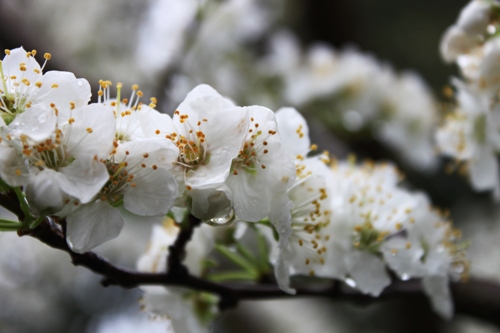
Judging by the excited buzzing coming from my plum tree (Dans Early – a luscious, red-fleshed plum from Koanga), my investment in a honey bee hive last summer is starting to pay off. The tree put on an incredible display of snowy white blossom this year and the dense, honey-like fragrance drew the considerable interest of my girls very quickly. I’m anticipating a bumper crop and am already planning plum wine, jam, sauce and paste…not to mention the ensuing honey.

My early peach (Orion – another winner from Koanga) has now finished flowering, and is once again awash with fuzzy peachlets. It always delivers the goods, bees or no bees.  Ripening round early December these, succulent white-fleshed peaches have been and gone long before the disease-laden humidity and heat of high-summer arrives.  A tough, reliable tree, and most importantly a delicious peach. Next up will be my River peach – a late-season and somewhat disease-prone tree in my region, but I can’t imagine a summer without these obscenely juicy, headily perfumed fruit. After that, in a steady procession of flowering and later fruiting will be the apples, damsons, pears, capulin cherry, boysenberries, raspberries and tayberries. Always something to look forward to, sniff and sample out there.

The bees have done good work in my broad bean patch too, cheerfully pollinating during even the cooler, months and now delivering me a super early crop. Without honey bees in the vicinity broad beans can be a bit of a non event. Although bumble bees love the flowers, they’re stuff-all use when it comes to broad beans. They bite holes in the base (with an audible ‘pop’) to gain easy access to the rich nectar supply within, thus bypassing the pollen and much hope of pollination. Thieving little bastards.

With so much going on outdoor right now, after  what seemed like and endlessly drenched (as per normal) and frigid winter, I’m finding it very hard to stay at my desk. I wonder if my WiFi works in the garden…

Earthquake Eating

Summerfields

It is not every day that you find yourself huddling under a door frame at 4.30 in the morning while the house shakes violently around you in a 7.1 magnitude earthquake. After the shaking had stopped, we found we had no power and were too shook up to go back to bed, especially since large aftershocks kept shaking us anyway. We are quite well equipped in the cooking without power department. We have a Kovea gas cooker and we also have a cobb oven – because we saw them being used by the Hairy Bikers and coveted one! The little Kovea gas cooker is great because it is flat and stable, so not affected by aftershocks. In the darkness we boiled our camp kettle on it and made ourselves some very sweet mint tea. It was so nice having something warm and sweet inside on such a cold and scary morning. As dawn broke we decided to make some breakfast and again on the Kovea we a got a big pot of porridge cooking. It was delicious with brown sugar while we decided what to do, now we had no power and no water.
As evening approached we were still without power so we got out the cobb oven. The cobb is great because you can use it both as a grill or top of the stove and then you can put the lid on and use it as an oven. You can use charcoal briquettes for fuel, but we tend to use the recycled coconut husk rounds you can buy to fit in it. The rounds give you two hours cooking time before they lose their heat so it works best if you can cook several courses on it as you go along. There is no smoke, smell or fumes. Just a nice even heat. The cobb was originally designed as a way for people to cook in rural Africa, that was not reliant on electricity, but reduced the risk of out of control fires. They got their name from the abundant corn cobbs in Africa that were used as the fuel. On our cobb oven, we made a Dutch nasi goreng, a rice dish with spices and vegetables. We had mince in the now not running freezer so we used that to make a satay beef to go on top of the rice. Satay with mince was not something I would have considered before but it turned out to be really tasty. While we ate our dinner, Karl had concocted an eggless (we had run out of them) chocolate pudding that  cooked inside the Cobb. We were a bit worried we might have  overcooked it but it was fine and a very chocolately, homely pudding.  Then to our relief the power came back on. Hot, tasty food sure makes a difference when your world has been  turned upside down.
 
Cheers,
Fiona Summerfield
Summerfields Foods
207 Waimairi Road, Ilam, Christchurch
open 11am-7pm Tues – Sat
[email protected]
ph 03 357 0067
summerfieldsfoods.co.nz

Life is sweet: A guide to the finest sugars.

Virgil Evetts

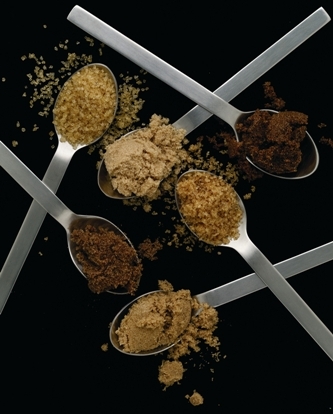
Cane sugar is one of the most widely used ingredients in our pantries today. Its popularity and use is pan-cultural and it ranks as one of the most important tradable commodities on the planet. We stir it into our tea and coffee, add to it cakes, curries, jams and juices day every day, but how much do we really know about sugar? Continue reading

Dirty Habits Revisited

Virgil Evetts

Over the weekend, for reasons mostly unknown (but at least partly because of Wendyl Nissen), I broke a 20-year habit of shunning uber-fake snack foods of the Twisties, Rashuns and Cheezles kind.

To explain what, at a glance, might seem like a rather epic boycott of junk food, I need to take you back to the ‘halcyon’ (i.e. mostly horrid) days of Takapuna Grammar School, circa 1990. I was 14 years old, skinny as a rake and with an unhealthy penchant for hair gel. Like all teenage boys I was a creature of base interests, not least of which was an inordinate fondness for aforementioned crap-tastic snacks, in all their luridly coloured and synthetically flavoured glory. It was around this time I befriended a guy – let’s call him Bubba – with a mouthful of metal and passion for junk food to rival even my own. He seemed to subsist almost exclusively on my most beloved Burger Rings. On top of this he laughed at my jokes, so for a time I was platonically smitten.  The trouble was, on account of the veritable Chrysler grill clamped to Bubba’s teeth, a good percentage of everything he put in his mouth was waylaid, in the form of a wet, cakey grimace which leered back at you. Worse still, whenever he became over excited in conversation – which was frequently – dollops of this foul porridge would break free and hurtle towards you.  After many lunch breaks and morning teas of politely enduring this sodden, stinking mortar fire I finally snapped. It was around the time he scored a direct hit into my mouth as I recall. Extremely harsh words were exchanged – and being teenage boys quickly forgotten. I learned to avoid Bubba around meal times and developed a stomach churning aversion/mild nervous complex related to all of my previously favourite faux-foods.

For 20 long years the disgusting eating habits of a 14-year- old boy kept me on the straight and narrow (well ‘ish’ anyway). All until I opened the Herald on Saturday morning and found an article by Wendyl Nissen (part of an excellent ongoing series), which presented a layman’s breakdown of what goes into Bluebirds’ Twisties.  Rather surprisingly the news wasn’t too bad. The classic cheese(esque) curls may not be a health food per sé, but they contain nothing too terrible either-with the possible exception of m.s.g, which isn’t anywhere near as evil as some would have you believe.

A little later on that day, while treading the aisles of New World and still thinking about Wendyls’ revealtions, I walked past a display of Bluebirds’ other old classic,  Rashuns. A quick scan of the ingredients list revealed them to be very similar to Twisties, in other words not all that bad. I hadn’t even thought of Rashuns for years. I used to think about them rather a lot. Basically, whenever I wasn’t eating them. Rashuns, with their bacony, cheesy and blatantly fake flavour! I started to wonder… could I?

Well as it transpires, yes I could and they were every bit as gloriously synthetic as I remember. It took the contents of an entire bag (don’t they come in small bags anymore?) to convince me of this. But as they settled in my stomach and the inevitable self-loathing set in I started to wonder, why do I like these?  I have wonderful free-range streaky bacon in the fridge and a veritable library of outrageously good cheeses.  So why do these horrible little chemical-puff proxies still appeal? Wasn’t I raised better than that (yes- sorry Mum)?  Aren’t I too sophisticated, too well groomed for such things?

Of course not! I am painfully aware, that as someone who spends a lot of time writing, thinking and talking about food, there is a danger of taking oneself, and the whole fluffy business of food, a little too seriously.  So it’s quite reassuring to learn that I still have a few common-as-mud, shameful tastes.  And don’t we all?

Love That Liquor!

Virgil Evetts

Apologies for what could be perceived as a somewhat morally-challenged title, but after nine months of self-induced sobriety, I’m really rather enjoying the pleasures of a tipple or two. But I wouldn’t want you to think I’m roaring-drunk and swinging from the rafters – actual inebriation has never really been my gig. My brain never really gets properly sozzled and ends being annoyed with drunken limbs. I do have a history of being savagely honest with people when in this state, which isn’t always wise or welcome.

No, all I mean is that I’m once again enjoying the way certain drinks complement food and, at least in my house, mark the division between night and day.  I don’t enjoy drinking during the day at all and have always kept pretty doggedly to an after-six routine.

When I finally got home the night Olive arrived, in an elated but frankly shattered state, I somehow managed to cook a meal  and then poured myself a stiff grappa. This is one of the few hard drinks I really like, and it most certainly helped to settle my wildly buzzing head and send me off to sleep. It was very welcome and very lovely.

My best beloved after the birth craved not a glass of Veuve or Moet, but a sip of crisp and fruity new season’s sauvignon blanc, her very favourite wine. In the interests of our wee whelpling, she allowed herself only the tiniest sip, but along with the Kikorangi, Kakariki Brie, smoked salmon, salami and other formerly forbidden foods I laid on, it felt like a very personal ceremony to both of us.

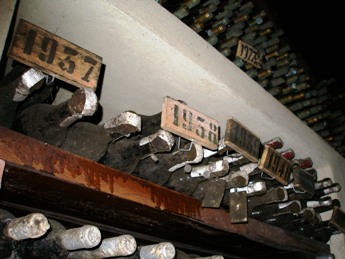
Apart from the shop-bought drinks now back on my menu, I have also been rediscovery my various homemade concoctions, which have been gathering dust and quietly aging in my cool, dark garage.

My 2009 vintage apple wine, made from my own Braeburns, is drinking very well. Dry as a desert wind with a subtle fruity flavour and an almost oily ‘mouth feel’, reminiscent of a good gewürztraminer. My Braeburn tree is somewhat biennial in its fruiting habits and produced such a meagre crop last year that I didn’t bother with winemaking. It should be back on top for 2010 though, which will mean about another 30 litres of this very drinkable drop.

Whilst cleaning out the pantry the other day I also stumbled upon a large preserving jar of damson plums steeping in 80% proof alcohol, forgotten for a couple of years. I strained off the dark red elixir and diluted it to a safe level with strong sugar syrup. The resulting damson liqueur is quite magnificent – richly plumy with a strong note of almond. Beautiful, beautiful, beautiful.

As a look out the window right now I see that I might have just enough lemons to make a small batch of limoncello for summer. Summer really isn’t the same without this yolk-yellow drink poured ice cold and syrupy from the freezer.

Time to fire up the still methinks…

Blessed are the cheesemakers

Summerfields

We have a fantastic next door neighbour. We hang out at each other’s houses from time to time, we BBQ, and we occasionally brew beer. We have named our brew ‘Summerstiejn’ (a portmanteu of our last names).  It was one night while we were sitting around enjoying the fruits of  our brewing labour that we got talking about cheese. You see, we’ve always had a hankering to make some. How hard can it be? It turns out that Lenny has also had a hankering to make some cheese, and being Dutch, he has the right heritage and all! So we decided to give it a go. It would be rude not to make a Dutch cheese and because (according to Lenny) Gouda isn’t a very nice place, we settled on Leiden. We got a pile of books out of the library and read up on a few recipes. This is where we hit our first snag. All the recipes were different! Some  of them were incredibly complicated, specifying the pressure the  cheese needed to be pressed at (40lbs for 12 hours, turn the cheese  and press for another 12 hours at 50lbs sort of stuff). Some of them just said “press the cheese overnight”. About the only thing that was consistent was the temperatures and I think this had more to do with not killing the helpful bacteria. We eventually settled on a middle- of-the-road approach. First we had to order the special cheese bacteria from these [http:// www.cottagecrafts.co.nz/] guys. Some of the more simple cheeses don’t need a culture, but we needed it to make our cheese taste like gouda  (sorry, leiden). The culture isn’t too expensive, and you get enough to treat 100 litres of milk! The culture is called Flora Danica and it’s a cocktail of specific helpful bacteria. The next step was the milk. I know there is probably something wonderful about making cheese with milk fresh from the cow, purchased at a farm gate from a ruddy-cheeked farmer, but we’re urban cheesemakers, so we did what urban people do to get food. We bought ours from the supermarket—homogenised, 6 litres. Now comes the actual cheese-making bit. Making cheese takes months,  but almost all of it is waiting. The first bit is where all the hard work is (and, to be honest, most of that is waiting too!).

We heated the milk in a water bath to 32ºC and added our Flora  Danica. We left it to sit for 30mins or so so the bacteria could de- freeze dry themselves and set to work turning the lactose in the milk into acid. Then we added some rennet—an enzyme that causes the milk to set like a giant white jelly. The curds get cut with a knife into 1cm cubes. This causes the milk to split into curds and whey. There is a phenomenal amount of whey released once you cut the curds up. Following this was the tedious and slightly stressful process of ‘washing the curds’. This technique is important for the style of cheese we were making. You have to drain off a 1/3 of the whey, and replace it with warm water, trying to bring the temperature slowly up  from 34ºC to 38ºC over half an hour or so. If you go too far then you  kill all the bacteria, and cook your curds. This was easily the hardest bit, and I’m sure it just takes a bit of practice (and it wasn’t THAT hard really).Once the curds were washed we strained them into a cheese-cloth lined colander and then packed them into some dinky wee gouda moulds we bought from trademe. Lenny had made a cheese press out of bits of timber with two huge Frankenstein bolts on the top, so we loaded the moulds into the press and cranked up the pressure. Light pressure for  10 minutes or so, then you turn the cheese over and press again with slightly more pressure. Whey pours out of them at first, then slows to a trickle, then drips. We pushed the pressure up quite high and left them overnight. In the morning we had two perfect little wheels of leiden cheese.  They went into a 20% brine solution for a few hours to start the rind  forming, and to get some flavour into them. From here they go into  the butter conditioner in the fridge to mature. It needs to be warmer  than the fridge (about 10ºC) and reasonably high humidity (put a  glass of water in there too).They can be eaten any time after about 3–4 weeks, but if we can wait,  they’ll be best after 3 months or so. Making cheese means you’re  playing the long game! We have named our cheese Arkefield—the  opposite portmanteu of our names, and a much better name for cheese. At the end of our cheese adventure we discovered that making it is  NOT hard. It’s actually pretty easy. In fact, we had started right in  at the medium level. There are cheeses that are a lot easier to make  than the lieden. If you want to get started grab a book from the  library, some rennet, some milk and get cracking!

Cheers

Karl & Fiona Summerfield

Summerfields Foods

207 Waimairi Road, Ilam, Christchurch

open 11am-7pm Tues – Sat

[email protected]

ph 03 357 0067

summerfieldsfoods.co.nz

Dinner on the wards- Hospital food.

Virgil Evetts

I’ve always said that my blind terror of hospital food is what keeps me healthy. All that overcooked cabbage. But to be fair to the much-maligned kitchens for the poorly, it’s been a few years since I’ve spent much time around hospitals. The punctual arrival of my impossibly perfect first-born last week saw me loitering in the wards though numerous dinner services, so I took some time out from my new vocation of full time Baby Adorer to sniff, prod, taste and photograph whatever turned up on the dinner trolley. Continue reading

Nice Guy, that Rick Stein

Virgil Evetts

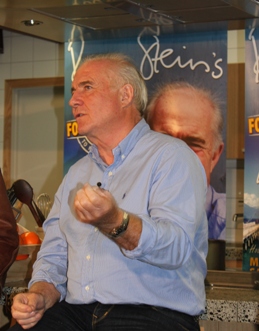
As you probably know, Rick Stein was in town last week to tread the boards in his first ever live stage show.  Unfortunately a scheduling clash (i.e. my best beloved is obscenely pregnant and due to pop any day now) prevented me from attending, but I did go along to the associated media conference on Tuesday and sat within spitting distance (I know this because a little fleck of his saliva hit my nose) of the great, and as it turned out really rather nice, man.

It’s always a bit risky meeting ones heroes. Too often they are so drearily…human, but Rick Stein didn’t disappoint at all. How could he? He’s TVs most human chef.  He doesn’t throw pans (on camera), he doesn’t swear (much). But unlike certain Essex boys and angry Scotsmen, his public persona, as the no-nonsense champion of quality ingredients and honest cooking, appears to be entirely genuine.

Dressed in one of his ever-present blue shirts, effectively the Stein uniform, he sat about happily chatting to all and sundry as we waited for the AV people and various invitees to get themselves organised and seated.  Despite the somewhat excessive stage management going on around him (full lighting, sound, orchestral theme music, prickly negotiations about product placement…) in support of Rick Stein ‘the brand’, Rick Stein ‘the man’ seemed unflustered, and even a little amused, by the fuss.

He has been quoted saying nice things about New Zealand many times, and spent some time travelling and working his way around the country in the 60s. He talked quite frankly about his memories of the dire state of New Zealand food at that time, but acknowledged that this was largely attributable to a slavish adherence to indigestible British middle-class food traditions. The great exception to this was apparently ice cream, which by the 60s in the UK was a mass-produced travesty, lacking much in the way of cream, eggs or anything else that was very real. Down here however, it was still made the old fashioned way (let’s be honest -we probably didn’t know alternatives existed) with our trademark pasture-enriched cream, and loaded with real fruit. He obviously missed the decades when ice cream of a rather dubious nature reigned supreme.

He spoke excitedly about the transformation of New Zealand cooking into the mature, world-class cuisine it is today, influenced by our proximity to South East Asia and the tropical Pacific, and our access to wonderful seafood, meat, and other first-class produce. He also praised the sophistication of our cafe culture and most specifically the quality of our coffee, and by contrast bemoaned the state of coffee in Britain. Anyone who has tried to find a decent cup in London will know exactly what he means.  Starbucks suddenly becomes very appealing.

He admitted to having a ’grumpy intolerance of overly chefy food,’ of the sort that sounds rather lot like the work of Heston Blumenthal , but also (and rather conflictingly) spoke very highly of his previous evening meal at The Grove, an Auckland dining spot known for its rather cerebral,  molecular-inflected menu.  Go figure.

With a not-so-small empire to manage in Padstow, a new series being filmed in Spain and his latest series Far Eastern Odyssey (starting on Prime this week) still being plugged, it’s a wonder he has time to breathe let alone deliver a live show at the bottom of the world, but somehow he manages to pull it off while still looking calm and relaxed. But then chefs are the archetypal suckers for punishment.

Despite plans for ‘slowing down a bit’ in coming months, he does promise to be back in the near future to film a series travelling and cooking around Australasia. Can’t wait.

Rick Stein comes across as a keenly intelligent, but very ordinary man who simply loves good food. Despite his tenure, fame and probable fortune he still considers himself to be a student of the art rather than a master: “I’m always trying to fry the perfect piece of fish, but never quite get there” I know exactly what he means.

New Zealand: Edible National Treasures


Virgil Evetts

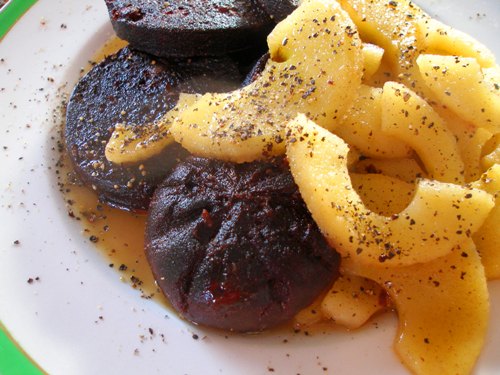
Rick Stein got me thinking. After attending his all-too-brief press conference last week, where he praised the rude health of the New Zealand food scene, I started compiling a mental list of the  flavours that really set us apart. This job wasn’t without its distractions and pitfalls either. Does one go down the obvious path of classic New Zealand dishes? Could do, but, most of these are just climatically inappropriate British leftovers (the often penitential weekly roast for example). Continue reading

Historical Eating

Summerfields

A while ago while perusing the cooking section of the library we  found some interesting books about historical recipes. Some of these recipes went right back to Biblical times! We decided to attempt some of the recipes and have ourselves a true taste of history. To round out our Biblical experimentation, we got out some Jewish cookbooks too. One of the books admitted that it was mostly speculation (it was a really, really long time ago), but we thought it would be fun to try the dishes anyway. Our first recipe was Megadarra which is burgul and lentil dish. We had to make this because supposedly it was the dish Esau gave up his birthright for. How could we pass up a dish worth giving away your inheritance for? We followed the recipe in the book and combined burgul wheat, red lentils, onions and olive oil. It was definitely hearty but not as tasty as we expected. We were left thinking; “You would have to be pretty hungry to give up your birthright for this!” We tried adding some natural yoghurt (a serving suggestion) and it made all the difference. The tang of the yoghurt and nuttiness of the burgul wheat made it quite moreish. We have since found many varieties of this dish online using different lentils and we are keen to try these more modern versions as they sound very tasty. One of the books suggested that sometimes ‘honey’ as referred to in the bible was actually fruit syrups like date syrup. In the Ancient World there were very few natural sweet things. Honey is definitely one candidate but, for many people, dates would have been the sweetest thing they ever ate. Date syrup can easily be made from dried dates. We placed the dates in a pot and covered them with water and boiled it away for about thirty minutes, then we blended the dates and strained it through some cheese cloth. The resulting syrup
was thick and dark and very sweet. It also tasted surprisingly honey like. Date syrup[http://www.edibleplanet.co.nz/durra-excellent-date-syrup.html] is currently enjoying a resurgence of popularity in recipes instead of sugar. We also couldn’t pass up the opportunity to have zaatar on pita bread since zaatar is also a Palestinian spice blend. We tried matzo – which is the Jewish unleavened bread made from flour and water, cooked then dried out so it is like a cracker. To add to the feasting we also had olives, figs and hummus. It was a lot of fun cooking up the recipes, unsure how they would taste. With the left over matzo the next night, we made a chicken dish similar to this one[http://busycooks.about.com/od/chickenbreastrecipes/r/matzochicken.htm] which was very tasty too. Our experiments may have been of dubious historical accuracy, but we had a huge amount of fun making them. Next stop, Saxon England?  Ancient Rome?

Continue reading

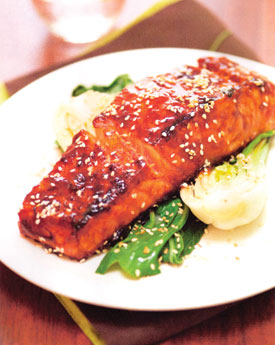
Sizzling Salmon with Steamed Pak Choi

Serves 2

Prep 10 minutes, plus marinating

Cook 35mins

Ingredients

50g Billingtons Light Muscovado Sugar

2 tablespoons tomato sauce

1 tablespoon soy sauce

4cm piece of fresh root ginger, grated

1 garlic clove, crushed

Juice ½ lemon

2 salmon fillets

2 heads pak choi, cut into quarters and steamed, to serve

1 tablespoon sesame seeds

 Method

1 Mix sugar, tomato sauce, soy sauce, ginger, garlic and lemon juice in shallow non-metallic bowl. Place salmon fillets in the marinade,  turning  to coat completely, then leave to marinate for at least 30 mins, but no more than 2 hours. 

 2 Heat a heavy-bottomed pan, then cook the salmon for 4 mins on each side.

3 Serve the salmon on a bed of steamed pak choi, sprinkled with sesame seeds.

Continue reading