Asian Style Warm Fish Salad
1


One of the culinary highlights on my recent cycling trip of Cambodia was a visit to a pepper farm in Kampot. I must admit that before I visited Kampot I had never bothered to think about variances in the black peppercorns I buy and simply bought a box as required to top up my pepper grinder.
Kampot pepper is known as being one of the finest peppers in the world. It has a spicy fragrant aroma and the spicy yet almost sweet flavour lingers on the palate.
Kampot pepper has a Protected Geographical Indication meaning that it must be grown in Kampot and by traditional methods. Artificial fertilisers or pesticides are not allowed and the farm we visited uses cow dung and bat droppings as fertiliser. The bat droppings are collected from caves in the hills and actually are not dissimilar in look to black peppercorns!

All peppercorns regardless of the final colour, start off on the same plant which grows as a vine.
They are all originally green, they grow in “grape” clusters and can be incorporated into dishes when immature and still in the in their cluster. Fresh green peppercorns need to be consumed within 3 days of picking.

Once the peppercorns are fully mature they become red in colour. The berries ripen at varying times so when a cluster is picked there will be some red peppercorns on it but the others will still be a greenish yellow colour.
The mature green peppercorns are sun dried for 3-4 days and turn from green to black.

The red peppercorns must be picked at an exact time before they spoil and as there are less on each cluster, they are much rarer than black and while sun dried in the same ways as the black peppercorns they have a sweeter and less spicy flavour.
White peppercorns are the product of ripe peppercorns that have been soaked in hot water until the skin falls away. These are then sun dried. The white peppercorn changes flavour with the loss of its skin but it is valued for its ability to blend into pale dishes without spoiling the colour.

I brought some Kampot pepper home with me (with NZ Customs approval of course).
Even in Cambodia the product is not cheap and a 160g bag retails at around $10 US.
If you would like to be the recipient of a bag of Kampot Pepper then please do comment below!
A winner will be drawn November 30th.
Has anyone else already tried it?

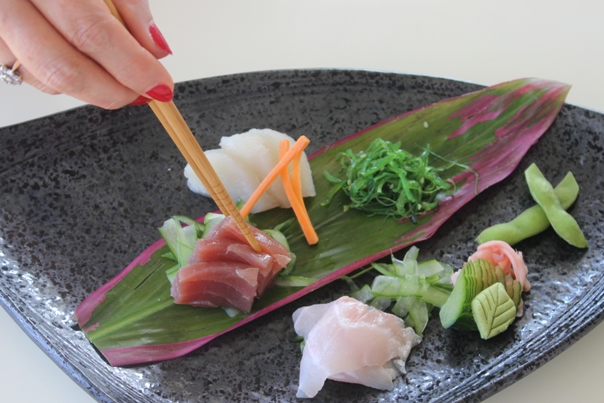
Sitting here eating fresh from the ocean delicate tuna sashimi it is easy to shut my eyes and imagine I am somewhere fancy in Tokyo, whereas in fact I am here in Niue, the Pacific island only a few hours from NZ that so many of us know little about.
The Japanese Kaiika restaurant is just one of the many gems of Niue and over my 5 day trip there are plenty more to discover.
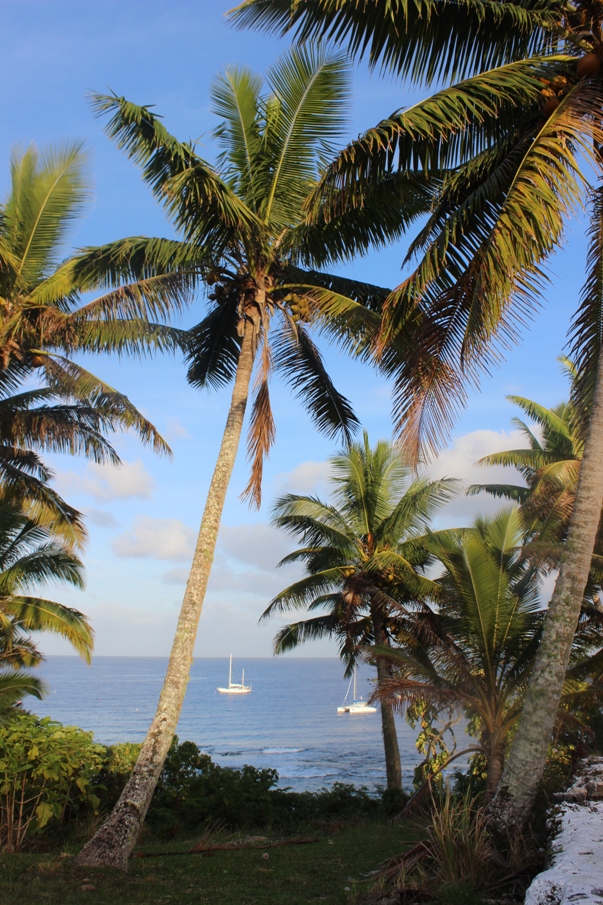
Often dubbed “The Rock of Polynesia” Niue is essentially a volcano that rises 70 metres out from the ocean, it is 269 sq km in size and has a local population of somewhere round 1600. You don’t come to Niue for expansive white sand beaches but you do come with a sense of adventure to explore the rugged coastline and an opportunity to experience things that you possibly won’t find anywhere else.
Swimming with sea snakes (well there were two which makes it plural) was a highlight for me. I had heard that they are curious and often come up to your mask to say hello, thankfully my two “friends” stay a comfortable distance away but still close enough for me to observe their graceful dance as they surface for gulps of air and then retreat to the bottom again. There are few snorkels in sight as I potter in the almost bath temperature water at Avatele beach, watching fish of many shapes and colours and feeling completely at peace.
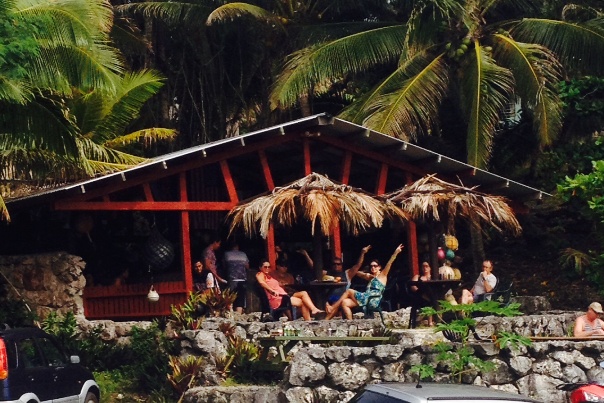
If you happen to be at Avatele on a Sunday you can visit the popular Washaway Cafe, enjoying food and drinks while looking out over the bay. Here, honest food is cooked and your honesty is relied upon as the bar is self service, write down what you drink and pay at the end!
Avatele is within an easy walk from Matavai, the island’s resort (there are also motels available). Perfect for those who want a base to drink, eat and sleep and also for those who are happiest relaxing beside the pool with a book. The ocean views from Matavai are magnificent and the rooms modern and immaculately clean. There is a good chance of spotting the small local spinner dolphins from the extensive cliff face deck, these dolphins can appear in numbers that are pretty much impossible to count and frolic in the water for hours at a time. Humpback whales are regular visitors over the winter months but these must be viewed as a bonus as of course they don’t stay in one bay for long.
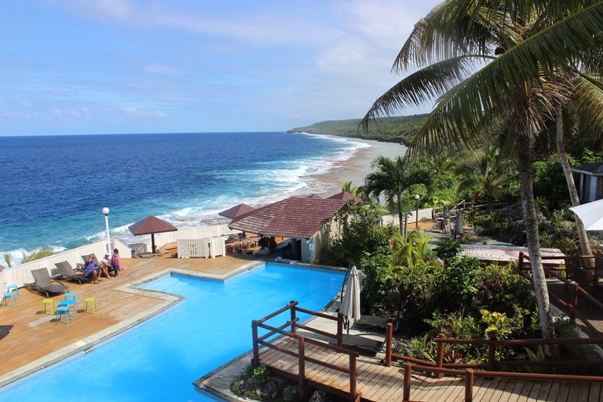
Dive boats offer both snorkelling and scuba diving opportunities where dolphin and whale interaction are sometimes possible.
As I am not the sea faring type I am happy exploring the many caves, chasms and a few of the hundreds of sea tracks that lead to the shore from the road. Most of the approachable coastline is on the west of the island, this is where Alofi township is and also the popular spots of interest.
A car, motor bike or cycle (for the fit) are you best way to see the sites of Niue at your leisure and get a sense for this relaxed pace of life where time isn’t measured.
Matapa chasm is one of the amazing places to swim or snorkel but be prepared for a refreshing swim as the cold fresh water meets the sea water lowering the temperature somewhat. The visibility is gin clear although the merging of the waters can give the illusion of looking through an ice cube. The water is possibly too cold for many of the smaller tropical fish but there are still plenty to see.
Along from Matapa are the Talava Arches, a place not to be missed. Although it is a bit of a walk to get to them, the caves and majestic stalactites and stalagmites are almost prehistoric in their grandeur.
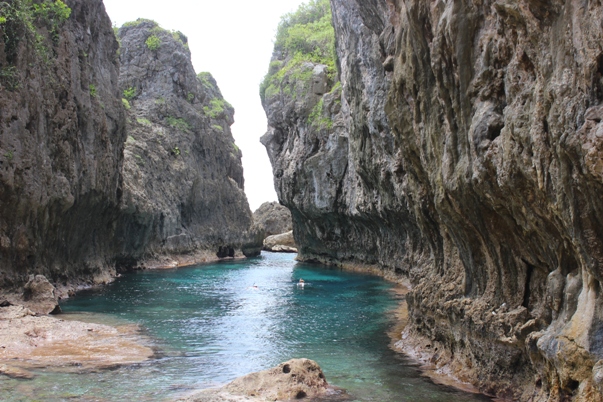
Limu pools are one of the most popular snorkelling spots in Niue and it is easy to see why. The clear blue water is reasonably shallow and home to an array of coloured tropical fish. The walk from the car park is short but perhaps a little steep in parts making trainers a sensible footwear option.
Most of Niue’s walks require something sturdier than jandals due to the sharp volcanic rock and coral landscape that has very little soil covering it.
With all this exercise, of course there is a need to refuel and Alofi is generally where this happens. While you won’t find bars, nightclubs or restaurants with glittering lights, you will find the freshest of fish, salads put together with produce from the local hydroponic farm and drinks at competitive prices.
Aside from our sashimi and sushi at Kaiiki we had fabulous fish at both Falala Fa and The Crazy Uga.
The latter named after the famous Uga (coconut crab), a staple feature of island food. These land loving crabs can grow to a massive size and if you don’t spot one out on your adventures there is sure to be a local who will point one out.
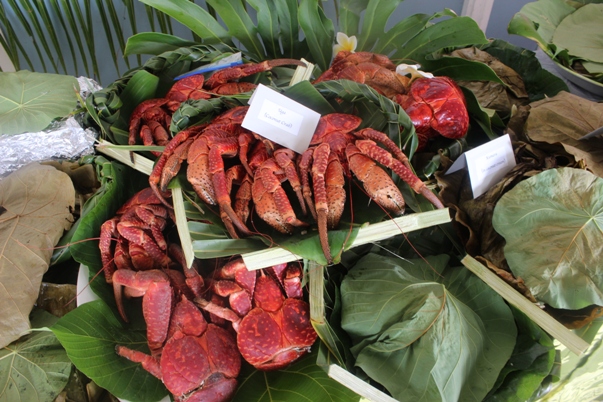
Another local food feature is the Luku (fern) that is stir fried or cooked in coconut cream and is incredibly delicious. A taste that is somewhere between fresh green peas and asparagus it is apparently the same fern that many NZ households had as pot plants in the 70s….
Shopping in Niue is pretty much local handcrafts or souvenir tee shirts and a supermarket that stocks essentials. For those who love cooking, some fresh local vanilla pods or extract are a great purchase and make a lovely gift to take home.
Our departure day is one that is typical of relaxed Niue style, check in bags to the airport and then off to the Crazy Uga for fresh battered Mahi Mahi, salad, chips and a glass of chilled wine before an easy trip home to NZ.
Air New Zealand flies Auckland to Niue, flight days vary by month so check availability.
Take: reef shoes, snorkel gear and a smile!
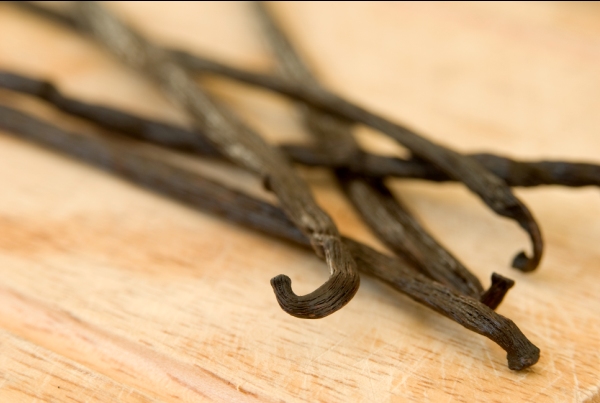
Making your own vanilla extract is ridiculously easy. It needs just two ingredients – alcohol and vanilla.
Generally vanilla extract is made with vodka due to its neutral flavour but it can also be made with other alcohol such as bourbon, brandy or rum.
The vanilla pods are split lengthwise and then immersed in a bottle of alcohol and left to mature for several months.
The amount of vanilla for a good full flavoured extract is around 3-5 pods per 250ml (8 fluid ounces) of alcohol.
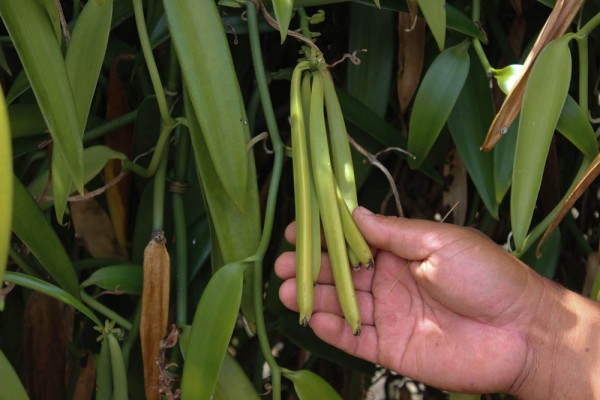
Pods are generally graded, with A being the best, this grading is based on size and moisture. For vanilla extract you can use any pods and the cheaper B or C grade pods are fine.
Once the vanilla is ready it can then be decanted into smaller bottles and perhaps given away as gifts. You can also add a pod to the decanted vanilla.
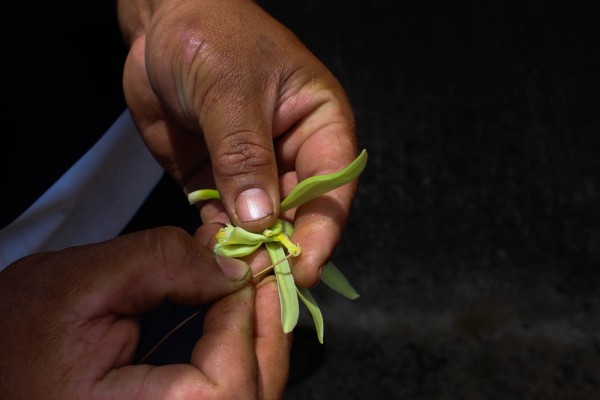
Vanilla is one of the world’s most expensive spices and when you watch workers hand pollinate each and every flower, that will then eventually form a pod that needs to grow for some months before it is harvested and dried, you understand what the price is all about.
Generally in NZ we have two varieties of vanilla to choose from, the Madagascan Bourbon vanilla or the Tahitian.
Madagascan vanilla tends to be rich and spicy whereas the Tahitian has a more subtle and floral flavour.
Tahitian vanilla as the name suggests, is the variety that grows in Pacific islands such as Tahiti.
Vanilla is an orchid that grows as a vine, it needs a tropical climate to flourish.
Vanilla extract should never be confused with vanilla essence. Essence is made with synthetic vanilla flavour as opposed to real vanilla.
Have you made vanilla extract before and if so do you have any tips to share?
I have been lucky enough to travel to other shores of late, a special birthday treat to Turkey (no kids) and hosting a fabulous food tour to Niue. Turkey was of course amazing and you can read my taste of Turkey below. I have never ever seen tomatoes that look or taste so incredible, have you?
Niue was a surprise gem and there will be a feature up as quickly as possible on this idyllic rock in the Pacific.
This month we have some fun prizes up for grabs on our win pages and do check our new feature on how to achieve perfect poached eggs.
Happy Cooking!
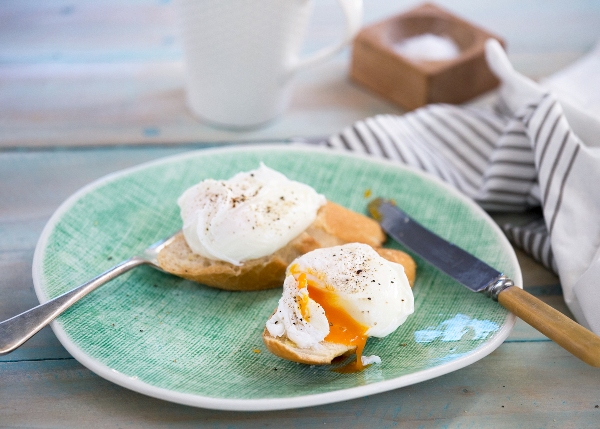
Achieving perfect poached eggs should be simple but for many of us it can prove a challenge to get them looking as good as they taste and also tasting as good as they look.
Everyone seems to have an opinion as to exactly what you should or shouldn’t do and it has been a recent topic of conversation on our foodlovers forums.
While creating cafe style “snowball” eggs takes some practice there are a few key things to having eggs wrapped in their whites and looking pretty good.
Choosing your eggs. For perfect poached eggs your eggs must be at room temperature and as fresh as can be. This helps the egg white to stay intact and and not disperse all through the water (I am sure many of us have had that happen before).
Poached eggs cook best in near boiling water, some use a frying pan whereas I find that a large saucepan with water depth of at least 10cm works best. Bring the water to the boil and then reduce the temperature until the water is at a rapid simmer as opposed to a rolling boil. Too low a temperature and too hot are equally detrimental. There should be gentle small bubbles but not a rapid boil.
Adding a splash of vinegar or lemon juice to the pan is popular as the acid helps the whites to set quickly and not disperse. Lighter style vinegar such as white wine vinegar is best, malt is too strongly flavoured.
However, not everyone agrees with this and there are some that say the whites become too firm and poaching in pure water makes for softer egg white.
Never add salt to the water.
Breaking the eggs into small cups first is recommended – espresso cups are ideal. This means the whole egg is quick to reach the water and will help the white to stay with the yolk. Hold the cups close to the water and drop the eggs in quickly in one movement, sending them on a high dive into the water will almost definitely scatter the white into the pan.
Creating a whirlpool in the water first will also help the egg whites to fold over the yolks.
Make sure you stop stirring before the eggs are slipped in and add them quickly.
Allow the eggs to cook in the water for 2 1/2 minutes – assuming you like soft yolks that is.
Some turn the heat off and place a lid over the pan but I find that 2 minutes of simmering is ideal.
Lift the eggs from the water with a slotted spoon and sit to rest on a folded paper towel or tea towel to drain off any excess water before transferring to your toast.
Do you have any tried and true methods for poaching the perfect egg?
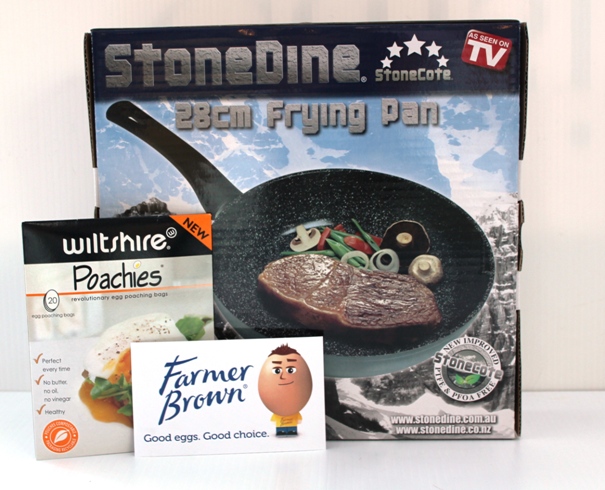 Farmer Brown is giving poached egg lovers the chance to crack the perfect poached egg! Simply ‘Crack, Dunk, Drain, Slide’ with Wiltshire Poachies to create poached egg perfection! From end of September two free Wiltshire Poachies will be available in supermarkets in the Farmer Brown Colony laid 10 and 20 packs. To celebrate the arrival of Farmer Brown Wiltshire Poachies in-pack promotion we’re giving away a complete pack of Wiltshire Poachies, a $50 Farmer Brown Colony laid voucher and a StoneDine pan – the culinary revolution that brings the unbeatable flavour of cooking on stone into your home.
Entry details are here.
Great accompaniments to poached eggs include;
Avocado and Dukkah
Easy hollandaise sauce
Smoked salmon and potato roesti