Good things take time


Debbie Byrom

I am slow. Almost slow beyond belief except that this is quite clearly backed up by evidence in multiple forms.

Exhibit A – I initially offered to write some blog postings for foodlovers earlier in the year when Helen asked for offers from the floor. This is several months later and I’m finally churning it out. Slow.

Exhibit B -I’ve clearly been working on it for quite some time because I wrote about quinces which have such a definite (and now long since past) season. Naturally everyone else also wrote about quinces so I am neither unique nor timely. I can only say that it is an achievement of some kind that I am not right on time for quince season 2011. Next time I will write about canned tuna and save myself the heartache of a slipping deadline.

Of course I am still in a position to resign from my topic, or at least I was before I had written the above paragraphs, and no one would have been the wiser. Unfortunately (to clarify – unfortunately for you) I am also quite lazy and my will to cook is on low ebb so if I cannot be novel I will at least have to attempt to be interesting.

My fellow bloggers have explained more or less what a quince is – a sort of apple trying to look like a lemon and smell like a rose. No one else has mentioned that the down on a quince is known as pubescence. I do feel like I am adding some value.

As other people have mentioned the quince is inedible in its natural form (unless bletted – partially decomposed often through exposure to a light frost) and is often turned into paste and jelly, or in my case, poached. I have made quince jelly and paste in the past with mixed success, the paste being delicious if not somewhat time consuming and the jelly being horrific and also somewhat time consuming. I was both a quince and jelly virgin and the finished product was a thick, tasteless, band-aid hued syrup. I gave an unlabelled jar to my then mother in law who promptly forgot what it was and produced the jar at breakfast time when we were visiting some months later. She assumed something awful had happened to her redcurrant jelly. To my shame I did not disabuse her of this notion.

I got my recipe for poached quinces some years ago from the venerable Judith Cullen of Dunedin cooking class fame. I clearly should have taken her advice and poached them rather than make the aforementioned jelly but better to be a slow learner than no learner at all.

Judith Cullen’s Poached Quinces

6 Quinces (peeled, quartered and cored)

1.5 litres water

1kg sugar

2 star anise

1 stick cinnamon

2 cloves

1 lemon, thickly sliced

Combine everything bar the quinces and bring to the boil. Add the quinces and poach in the oven for 6 hours at 160°C.

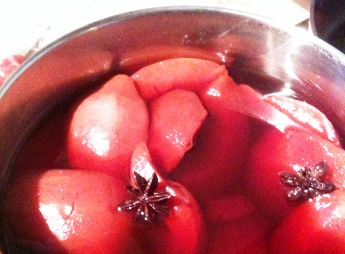
Now, Judith’s instructions are to put it in the oven at 160°C for 6 hours. Unfortunately the first time that I read this instruction was as I was typing this up. I’m afraid you will notice this is a recurring theme. I did 4 quinces and prorated the syrup down and I didn’t use cloves (too lazy to find them in the spice box) or the lemon (didn’t have any), cooked it on the stove top for 4 hours – by which stage they were looking ominously band-aid-esque and then left them overnight on the cooling hotplate. They were perfectly ruby red by morning. Queue the sigh of relief. I suppose the moral of the story is that the recipe is relatively foolproof.

So what to do with 4 perfectly poached quinces. I thought about making a cake but getting the mixer out of the cupboard seemed like too much work. Somehow this thought process led to me making a brioche tart. Hardly a labour saving decision.

While this is called a tart in reality it is more like the best possible version of a Danish – sweet doughy goodness melding into abundant custard cut with the acidic juiciness of the fruit. Naturally you can make this using any fruit at all, the original recipe was cherries but I also think apricots would go nicely. Whilst it was not quick in the making nor the writing, I’m going to fall back on the somewhat cheesy mantra of “good things take time”.

Golden Custard and Quince Tart

Based on a recipe from the book Tarts; Sweet and Savoury by Maxine Clark.

Brioche Pastry

1 tsp surebake/breadmaker yeast – to use normal (active) yeast see advice in pastry method

1 tbsp caster sugar

250g high grade flour

1 tsp salt

2 large eggs (room temperature)

¼ C milk

180g unsalted butter (room temperature)

Custard and Quince filling

150 ml milk

150 ml cream

Pea size lump of vanilla paste (or use a whole bean and remove before baking)

2 large eggs plus 1 yolk

125 g caster sugar

¼ C standard flour

1 large poached quince cut into 1” cubes

Extra beaten egg to glaze


Brioche Pastry Method

Sift flour into a bowl, add yeast, sugar and salt (if using normal dried yeast add 2tsp to the warmed milk and leave for 10 minutes until frothy then proceed as per the recipe).

Put the eggs into a bowl, whisk well, then make a well in the flour and pour in the eggs and milk.

Mix and knead the dough – it will be really quite soft and will not form a ball as such, I found the easiest way to mix was using one hand to push the dough against the bowl. Once the dough is well mixed slowly add in lumps of the room temperature butter and continue to knead until the dough is stretchy and silken.

Leave the dough to rise for 2-4 hours or overnight in the fridge – be aware that if you put it in the fridge the butter will make the dough go rock hard so I would advise letting it rest on the bench or in a sink full of lukewarm water for an hour to get a decent raising effect.

Knock back then wrap and chill until the dough is firm enough to roll out – about 30 minutes, which gives you time to make the custard filling.

Custard and Quince Filling Method

Put milk and cream in a saucepan and heat until almost boiling. Remove from heat, mix in the vanilla paste and allow to cool to for 10 minutes. In the meantime whisk the eggs, egg yolk and sugar together until pale. Beat the flour into the egg mixture, then the warm milk and cream mixture.

Assembly

Preheat the oven to 200°C on a non-fan forced bake function

I will not lie and say that working with this pastry is easy but it is relatively forgiving and easy to push around. Line a suitable tin (I used a small aluminium roasting dish approx 20×30 cm – if smaller the custard will be thicker but will otherwise be fine) with baking paper up the sides in case of holes in the pastry and subsequent custard leakage. Chill the dough until it is reasonably firm, work quickly and use a lot of flour – if disaster strikes do not be afraid to patch.

Pour the custard into the pastry and place in your hunks of quince. Leave to rise for 20 minutes then fire into the oven. Bake for 15-20 minutes or until the custard is just starting to set then turn the oven down to 160C for a further 45 minutes or so until golden and set. Cool in the tin, serve room temperature.

Bee Proud!

Virgil Evetts

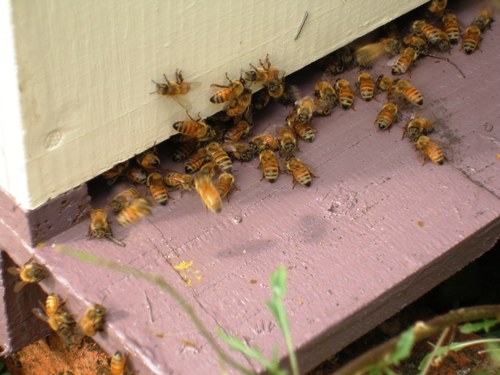
I’m currently feeling massively smug and self satisfied (not really sure that these are different things, but anyway), having just harvested my first sneak preview crop of honey from my beehive.

 I’ve had the hive for a couple of months now, and along with my chickens it’s about as far I’m likely to get away with taking the whole ‘gentleman farmer in suburbia thing’ (And no you are NOT having a goat- Proof-reader and ‘best beloved’.)  My primary interest in keeping bees was to improve the pollination of my fruit trees and those in the surrounding area, but the bonus of 30-50 kilos of delicious raw honey each year wasn’t exactly a turn-off either.

Bees  are really no trouble at all – far less maintenance than chickens, or cats for that matter. They also add a certain buzzing charm to the garden.  Unlike wasps (who are nasty bastards), bees don’t come looking for trouble.  If you get stung, it’s probably your own fault.  So far I’ve learned the hard way that bees don’t enjoy being trodden on, caught under clothing or roughly poked with your finger.  Fair enough.  Anyway, bee stings – providing you aren’t actually allergic (which is EXTREMLY rare) – while not exactly pleasant, are only a momentary flash of pain which passes very quickly.

I have a full bee suit (which makes me look like an extra from a 50s sci-fi film) and a smoker for when I open up the hive, but most of the time the suit isn’t really necessary.  The smoker however is essential.  Only an apiarist with a death wish (or a whole- world-of-pain wish anyway) would open a hive without one.

Once you get over the initial shock of being surrounded by hundreds of loudly buzzing, but actually pretty placid bees the most noticeable thing about an open  hive is the overwhelming fragrance of honey, so strong you can taste it in the air.  It’s hard to resist the temptation to tear off your veil and start eating.  This wouldn’t be terribly smart.

After many weeks of being tempted by this gorgeous aroma – and the cascades of golden honey that inevitably spill fourth when the frames are prized apart – I finally weakened.  It’s a bad time of year to take from the bees, just when they’re putting down their stores for winter, but they seemed to have enough to spare and I couldn’t help myself.  I  removed a single frame (replaced with a frame of empty comb) about ¾ full of capped honey.  After brushing away several hundred rather indignant bees I proudly marched inside clutching my prize. The response from my best beloved was not quite the praise and admiration I had imagined.  It turned out I was still covered in bees, most of whom started excitedly hurtling around the living room.  SHE retreated in an animated and rather alarmed grump.

Sometime later…

Lacking a proper honey extractor (yet) I  scraped the honey and wax from the comb by hand and strained it through a sieve, eventually yielding nearly a litre of crystal-clear, dark amber and quite ambrosial honey.

The flavour was rich and complex (owing I suppose to the many different flowers available to city bees) with hints, of lemon, liquorice and toffee. I’m sure there are technically superior honeys out there, but this stuff, made by my bees and from flowers in my locale (in a 5km radius of my house that is), stands as the nicest honey I’ve ever tasted and my proudest food moment in recent memory.

Who else has achieved a little bit of Foodie magic lately ?

Footnote:

Prone to numerous parasites and diseases, bees are now in crisis worldwide.  Today in New Zealand honey bees can only exist in human-managed hives.  A backyard hive will benefit not only you but your whole neighbourhood, and keeping bees is not nearly as scary or difficult as you might think. However, as part of the Governments’ bee disease prevention strategy it is compulsory to register all bee hives in New Zealand.  This is an easy and very affordable process (about $30 per annum).  Hives are usually available through Trademe or local beekeeping clubs.

Follow these links for more information about Beekeeping

http://www.nba.org.nz/

http://afb.org.nz/performs/3

http://www.nzherald.co.nz/nz/news/article.cfm?c_id=1&objectid=10643425


Homemade Ketchup with Pumpkin “Fries”

Janet Chang

I’ve been really into making my own condiments. It’s generally cheaper and I know exactly what goes in it. I wrote recently about how much I love ketchup and that I used to slather it on everything. I still love the taste of ketchup but just not the high fructose corn syrup that is is most commercially made brands.

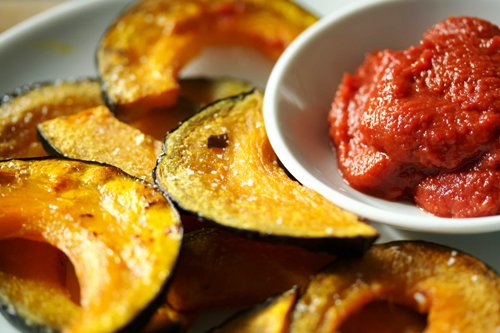
This recipe for Homemade Ketchup (or tomato sauce as they call it in New Zealand) requires no cooking and tastes pretty close to the real thing. And what’s ketchup without some fries to dip it in? Pumpkin is currently in season and they are cheap and readily available. I’ve been getting buttercup pumpkins and slicing them into thin crescents for homemade Pumpkin “Fries.”

The trick to getting them to taste good is to use a bit of dripping when baking it in the oven. I am well on my way to getting over my fear of saturated fats as I’m now a firm believer that we need to get back to eating real, whole, traditional foods. This means eating traditional fasts such as butter and animal fat over low-fat margerine which really is a modern chemical concoction.

Homemade Ketchup

Recipe adapted from Creative Homemaking

300 grams organic tomato paste
1/4 cup water
1/2 tsp salt
1/4 tsp cumin
1/4 tsp mustard powder
1/4 tsp cinnamon
1/8 tsp cloves
2 tbs apple cider vinegar
5 drops stevia

Put all ingredients in a jar and shake until mixed through.

Will keep in the fridge for 1 month.

Pumpkin “Fries”

1/2 buttercup pumpkin
1 tbs dripping
1/2 tsp salt

Preheat oven to 175° C.

Cut pumpkin into 1 cm thick crescents.

Melt dripping. (I use a cast iron skillet).

Coat the pumpkin crescents with the melted dripping and sprinkle on the salt.

Bake for 40 minutes until cooked through and crisp on the outside. Continue reading

Ridiculously Easy Pastry Dough

Laurel Watson

This is one of the strangest recipes I’ve ever come across in my travels through the internet… it intrigued me immediately.. a French woman posted it (always a good start) and claimed it made a lovely short, sweet crust for a filled tart.. but when I read the recipe it went against all conventional pastry wisdom…so I had to try it…and the results…Fantastic!

So I am spreading the love, if you have ever had fear issues with pastry, give this a whirl, stress will be a thing of the past.

Ridiculously Easy Pastry Dough

90 g unsalted butter, cut into pieces

1 tablespoon vegetable oil

3 tablespoons water

1 tablespoon sugar

1/8 teaspoon salt

150 g (1 slightly-rounded cup) flour

Preheat the oven to  210 C

In a medium-sized ovenproof bowl, such as a Pyrex bowl, combine the butter, oil, water, sugar, and salt.

Place the bowl in the oven for 15 minutes, until the butter is bubbling and starts to brown just around the edges.

When done, remove the bowl from oven (and be careful, since the bowl will be hot and the mixture might sputter a bit), dump in the flour and stir it in quickly, until it comes together and forms a ball which pulls away from the sides of the bowl.

Transfer the dough to a 23 cm tart tin with a removable bottom and spread it a bit with a spatula.

Once the dough is cool enough to handle, pat it into the shell with the heel of your hand, and use your fingers to press it up the sides of the tart. Reserve a small piece of dough for patching any cracks

Prick the dough all over with the tines of a fork, then bake the tart shell in the oven for 15 minutes, or until the dough is golden brown.

Remove from the oven and if there are any sizable cracks, use the bits of reserved dough to fill in and patch them.

Let the shell cool before filling. Continue reading

The Reluctant Baker


Virgil Evetts

I’m a cook, DEFINITELY not a chef, and barely or at least very reluctantly a baker.  It’s not that I can’t bake,  I can hold my own given a bit of persuasion and arm twisting,  but I’ve always been put off by the rigid chemistry aspects of the art.  Admittedly this is largely due to ignorance and a lingering hatred of high school chemistry. Continue reading

The one-track lunch loop

Virgil Evetts

After many years of treading the 9-5 commuter grind, I’m now working from home. So far it’s a welcome change and I’m liking it more every day. I could get quite used to the hours of uninterrupted silence to just work, the freedom and time to do unpleasant but niggly cleaning chores that haven’t made the grade over my previously precious weekends (like washing the windows inside and out), and most importantly the time to really focus on the next chapter of my professional life.

It’s strange and exciting and pregnant with possibility (just as my best beloved is pregnant with person). The only downside I’ve discovered so far is that I’m not very good at remembering to stop and eat, and when I do surface from the keyboard , I don’t really know where to start. In a real job, there are either designated break times or friends and colleagues (not necessarily the same thing) to knock on your office door and shake you from your reverie. There are also, if you’re lucky, plenty of options on the reasonably-priced-but-lip-smackingly-good lunch front.

At home, on one’s own-some, it’s all too easy to sit down to work at 7:30am and not stand up again for many, many hours. I live close enough to the local cafes to pop out for a pick-me-up, but the local cafes are mostly pretty blah and at any rate that’s no way to be frugal. So then there is the fridge. I don’t do left-overs. Never have. Once I’ve cooked a meal, then eaten it, I’m done with it altogether. My best beloved likes a hot lunch anyway, and these days I feel her needs are greater.

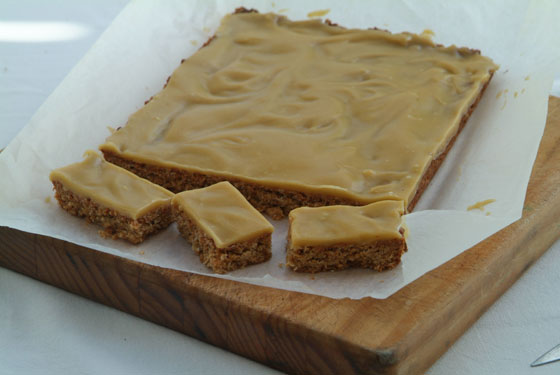
So at the moment I’m struggling to find inspiration. By day I’m subsisting mostly on toasted sandwiches (Vogel’s bread, a little Gruyere and a smear of sweet chilli sauce). Once a week I might treat myself to sushi or a bagel with salmon in the village, or if I’m in the city something cheap but brilliant like roast duck on rice, bulgogi or ramen and gyoza. But most days, at home alone, I’m stuck on a one-track lunch loop. Gruyere toasted sandwich. Repeat. Morning and afternoon tea, if I remember them, are taken care of thanks to a bout of baking I’m working out of my system (after a brief and ill-advised flirtation with store-bought chocolate-covered doughnuts). I’m loving Louise cake just now, but it really isn’t lunch. I can’t be the only person caught up in this dilemma. What does one do about lunch when home all day?

Sugar-free Dairy-free Chocolate Ice Cream

Janet Chang

I’ve been having major cravings for ice cream. Maybe it’s because summer is on its way out and I’m trying to hold onto the last bits of summer in denial of winter’s arrival. I bought an ice cream maker earlier this year and have tried a few recipes but without much success.

I’m not interested in the traditional ice cream recipes where I have to create a custard using egg yolks and cream as it’s just too time consuming. This recipe for a Sugar-free Dairy-free Chocolate Ice Cream is super easy to make and completely natural. It uses full fat coconut milk for the custard and frozen bananas with a bit of stevia (a natural sweetener) as a substitute for sugar. Bananas are naturally high in sugar and although it’s not ideal to consume too much fructose, I think this recipe is a nice compromise for satisfying my ice cream cravings in a less processed manner than commercially manufactured ice creams.

I always keep a supply of frozen peeled bananas along with my ice cream maker’s freezer bowl in the freezer which makes it easy to whip up a quick batch of ice cream whenever I’m in the mood.


Sugar-free Dairy-free Chocolate Ice Cream

2.5 cups full fat coconut milk chilled 
2 frozen bananas chopped 
3 tbs cocoa powder 
1 tsp real vanilla extract 
5 drops of stevia (more or less to your liking) 
1 tbs vodka

Blend all ingredients in a blender.

Pour into your ice cream maker and follow the manufacturers’ instructions.

Makes 4 servings.

www.pantrybites.com

Continue reading

Coffee Posers

Virgil Evetts

What is it with people and their coffee preferences? Once upon a time coffee was either white or black, filter or instant. Sure it tasted bloody horrible, but at least there was little room for pretensions and misguided dietary convictions on the part of the punter.  Nowadays New Zealand has one of the world’s more sophisticated coffee cultures, and our roasters and baristas conspire to produce some pretty extraordinary cups.  However, as with any movement in fashion, there are myriad posers.

Continue reading

Why do we do it?

Laurel Watson

I admit it, I’m a Masterchef fan, I watched the Australian show and I’ve just watched the grand final of our home grown version (can someone tell me the difference between a final and a grand final?) and I have to admit to getting a wee bit emotional for both contestants .

But then I ask myself why…..why I would watch a show like this week after week, I’ve been in this industry for over 25 years, I know how hard it can be, do I really want to see these optimistic innocents being put through horrific tasks in front of the nation, watch their stress levels reach life threatening levels, watch their best efforts, at worst, torn apart (shame on you Peter Thornley) or maybe even harder still, being dismissed as bland or uninspired. And waiting through those hideous pregnant pauses was downright inhumane for all concerned.

Now I consider myself to be quite an empathetic person and every week I’ve felt their pain, their stress, their disappointment, their time pressure and their pure frustration, So WHY did I put myself through it? Am I just a sucker for punishment?

Well many would say that if you choose to go into the hospitality industry, that has to be one of your main personality traits, after all, talk to any Chef and they will happily regale you with a long list of terrible tales about the workplace, which not only seem draconian but absolutely against all civil rights imaginable.

And then I realised, I watched for the Naked Chef effect… all that joyful enthusiasm, all that passion when you start to learn how to really cook. The amazing comradery of a commercial kitchen, the thrill of a great nights service, it all came back to me, but is that what most viewers see?

 Glimpsing our world through the TV has become a huge industry, with whole channels being devoted to cooking shows alone, but it’s really only these competitions that give you any insight of what it’s really like starting off  in this industry, the sheer terror of your first day in a big kitchen and all the hard things about the job.  But then they also capture the moment, the contestants faces, when a judge smiles…you feel the elation, the pride, the pure joy in their achievement,  and that’s what keeps them (and us) in the game .

So sitting here tonight, seeing the admiration on my 11 year olds face, as he realised I could make him a Croquembouche,  made me remember why I love this maddening difficult and very unglamorous trade so much.

 it’s addictive,  because, If you do your job right, you can create something , a small piece of magic, that can put a smile on any face, that’s why I watch Masterchef, to see contestants put themselves  through great travails for the chance to make people happy every day, what a job description!

P.S The timeframe for the Croquembouche construction is now in negotiation, how much dog walking/chore doing is a choux puff worth? Maybe this could be the next Big Mac index? We will see…. Continue reading

A pig in a poke: Things you didn’t know about food.


Virgil Evetts

I’ve always been fond of useless information- especially if it’s in anyway food related.  In my previous life as a museum educator, such miscellany was an essential tool of the trade. Compelling little bytes of knowledge that could be regurgitated into the minds of passing strangers. But more about regurgitation shortly.  Continue reading

Mellow Fruitfulness, Etcetera

Virgil Evetts

So much fuss is made over Summer in food circles, but essentially it’s all just spin.  Sure, the season starts with some rather good berries, offers up some fetching salad greens and some splendidly sanguine tomatoes along the way, but Summer is really a time of growing, ripening, charmless hot nights and not much more.  The real eating, the premium cru if you will is entirely Autumnal.  Mellow fruitfulness and all that. Continue reading