Peking Duck Dinners

 Summerfields

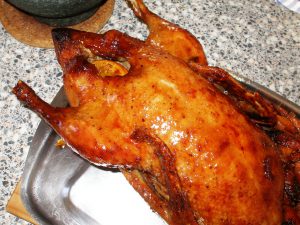
There is little debate that Peking Duck is a delicious dish. While being a Chinese dish/icon, it really seems to have a special place in the hearts of Brits. It is another one of those recipes that the more you delve into it, the more variety there is over which sauce (plum or hoisin) should be served with it and exactly how to prepare your duck. If you saw Heston Blumenthal’s efforts in “In search of Perfection” you may think eating out is the only option.

Continue reading

Growing Minds

Virgil Evetts

A few years back, HRH Prince Jamie of Oliver did a sterling job bothering UK schools, parents and politicians into making some pretty far-reaching changes to the way they approached child nutrition, through his super-hyped School Dinners campaign.

Yes there were budget blow-outs, yes there were subversive mothers peddling chip-butties at the school gates, but overall, this was a sincere and groundbreaking success, not to mention a herculean effort from a man who doesn’t really need to get out of bed anymore.

Continue reading

Kiwis Used To Eat …..What?

Lois Davey
 
Almost daily, I trot down the steep hill from the uppermost reaches of Dunedin to purchase something or another from the local dairy. During the slow and torturous plod back up my personal Everest it’s good to find neighbour Noel at home – always ready with a chair and a cuppa. We chat about this and that and always what he has planned for tea – this time: curried sausages.

Which took me back almost 30 years to the time I arrived in New Zealand from the UK with Kiwi husband and toddler in tow, and blissfully ill-prepared for the onslaught of nightmarish fodder laid on for me by well-meaning relatives and friends of my husband.  It began in Christchurch where we stayed a night with his old friends before flying on to Invercargill. ‘Twas a hot February day and after being shown his mate’s terrifying gun collection we all sat down to a salad. Plain and pre-plated – 1 slice ham, 1 tomato, cucumber slices, half a boiled egg, and lettuce from memory – so far, so innocuous. “Help yourself to salad dressing”, instructed our hostess.  So I did just that, pouring liberally from a large jug and in consequence dousing my lettuce and egg with one the foulest concoctions ever to sully my taste buds.

A stiff upper lip prevailed as I enquired, “an interesting  flavour, what’s in it?” We departed from Christchurch the next day after I mentally made a note that whatever items on New Zealand food shop shelves were new to me I would make a point of never purchasing sweetened condensed milk. We arrived at Invercargill airport mid-afternoon and were whisked to my sister-in-law’s “property” in Otatara for a meet ‘n’ greet with the “rellies”. A late afternoon tea saw me eyeing-up, with some suspicion, pieces of rolled white bread with green stuff poking out the ends. Yes, you guessed it, but I didn’t at the time because never in my wildest imaginings back in London would I have hit upon the idea of extracting pieces of soggy asparagus from a can and rolling them in bread. But that’s Kiwi ingenuity for you!

The food shocks came thick and fast after that as, for a couple of months, we stayed with my in-laws before a house became available. My mother-in-law’s first meal in my honour was curried sausages concocted, I believe, from an Edmonds cookbook recipe circa 1950. The sausages cost about nought cents per kilo which I suppose was a bargain as they fair tripled in size once thoroughly pre-boiled. Added to water, a tsp of curry powder, sliced onions and the whole mess thickened with flour… no wonder I took to the sherry bottle for two days.

Then came the beef bone stew which in comparison was slightly more palatable (if that’s the right word) but whatever was left over stayed on the stove for a few days and had things added to it; predominantly leftover cooked bits ‘n’ bobs from ensuing days’ meals. Then we had the “mutton ham” which I didn’t get at all. It’s either mutton  or it’s ham to my way of thinking – which has always been literal. An invite was extended to an afternoon at the property of one of my in-law’s old friends. The “he” of the elderly couple had just finished renovating an old steam engine which occasioned a “start it up” gathering (yawn).  I was asked to bring a plate. I took three. One for me, one for my husband, and a bowl for my toddler daughter. I naturally assumed it was because they’d be short of crockery…

Continue reading

Merediths- 4 Hours, 7 Courses And Only 1 Dud


Virgil Evetts

The other night I had dinner at what many have claimed to be Auckland greatest restaurant (of the moment anyway): Meridiths.  It was fab.  Really.  But I’ve gotta say, the lack of possessive apostrophe irks me deeply.  Can I take from this that the premises not only house the much lauded eatery of one Michael Meredith, but also  numerous other persons named Meredith?  Apparently restaurants have diplomatic immunity when it comes to punctuation. Yes, I love your food, but this ain’t over Michael. I have a long and proud history of annoying people with my pedantic pro-apostrophe leanings, including a run-in with the Hellers (again, no apostrophe) marketing team over the bewildering inclusion of said punctuation in their Purplo’s sausages brand. My email to them went something along the lines of: Purplo’s what? And who is this Purplo?  

Anyway. Meridiths.

Damn fine restaurant however you choose to punctuate it.

We turned up on a Saturday night – well ‘turned up’ makes it sound like we just wandered in off the street as an afterthought, but actually it was a carefully planned occasion – we were there under the auspices of our 13th arbitrary anniversary (we’re a bit vague on the actual date, we were friends for years first and can’t agree on when the lines blurred). Getting a table at this place within the space of a month has become impossible to all but the seriously la-de-da lately, thanks to the endless accolades laid upon it, but also due to the very justified cult following of owner/executive chef Michael Meredith and his often remarkable cooking.  Meredith’s food is simple, uncluttered, but often startlingly sophisticated.  His most recognisable hallmark is the deep and – I kid you not – often moving reverence he shows for quality ingredients.  There is a sense that every piece of the plated puzzle- from the perfect, shelled, broad beans to the bijou baby beets – has been carefully selected and coddled like a new-born babe, from the moment it arrived in the kitchen until it is released to the table.

The seven course degustation menu is the only option on Friday and Saturday nights, and at $100 per person (not including wine recommendations), represents quite remarkable value by high-end Auckland standards.

We had told them in advance that one of us was up the duff, and accordingly fussy in the dietary department. They happily agreed to modify her food accordingly – and did so, I might add, very creatively on the night.

The service started as it was set to continue – discreet, observant and perfectly pitched, if a little paint-by-numbers at times.  The décor and ambiance of Merediths have that slightly austere anonymity favoured by a certain end of the Auckland restaurant scene – it’s fine really, but is perhaps just a little too anonymous.

Although worrying at the time, it was ultimately for the best that the only really bum-note of the evening turned up in the guise of the first course, because the jarring experience was quickly overlaid with the pure brilliance that followed.  This dish does, however, deserve mention as being one of the most egregiously ill-conceived mistakes I’ve ever paid to eat:  tomato consommé – very nice in itself – with white chocolate and sorrel ice cream. I tried to like it, tried to see it as whimsical and inventive and something… but eventually had to concede it was just bad.  Horrible actually. Even the best chef is entitled to eff-up occasionally; less forgivable is the migration of such a mess from the test kitchen to the set menu.

But it’s ok; I can let it go, along with any grammatical frustrations, because the following courses were charming, prodigious, exuberant and great. They were also quite numerous, so here goes:

Tuna sashimi with tempura oyster, iodine-rich seaweed and lightly pickled cucumber. To paraphrase Rick Stein – it tasted like a rock pool.

Cured ostrich loin with a tres luxxe duck liver parfait.

An astonishing trio of quail, including a confit-stuffed tortellino which left me quite speechless, served with a quivery froth of coconut mousse,  tiny enoki mushrooms and flecks of toasted peanut.

An exemplary and generous portion of salmon, served with longitudal slices of perfect, seasonal sweetcorn, prawns, well-textured chorizo and crustacean foam which has forced me to reconsider my previously scathing stance on all things plated and frothy.

A trio of free-range pork, including loin, belly and unctuous black pudding, very bravely and successfully served with kohlrabi

Dessert arrived as a perfect, sopranic high, in the form of a barely composed milk chocolate mousse served with fresh blackberries, blueberries and cherries, contrasted with shatteringly crisp and stridently flavoursome freeze-dried strawberries and raspberries.  In a final flourish of point/counterpoint charm, the whole business was underscored with a sphere of intense and distressingly good sour cherry sorbet.

A highly misguided first course, and some slight niggles about the pacing of dishes aside (half an hour between courses dragged the meal out to nearly four hours), this was an experience that served only to reinforce the accolades of many others.  All too rarely am I left short of breath and confounded by brilliance when I eat out these days – but Merediths delivered on both fronts.

PS

The strangest kitchen dynamic I’ve ever observed is at play here. The chefs work in almost complete silence in the open-plan kitchen, and in a state of methodical, Zen-like calm.  There are no (visible) stress-fests, machismo or adrenalin-fuelled Ramsay-esque  fisticuffs here. It’s a wonder to behold and just a little bit disturbing.

http://www.merediths.co.nz/

Bookings essential.
Ph: 09 623 3140

The boys are back in town

Virgil Evetts

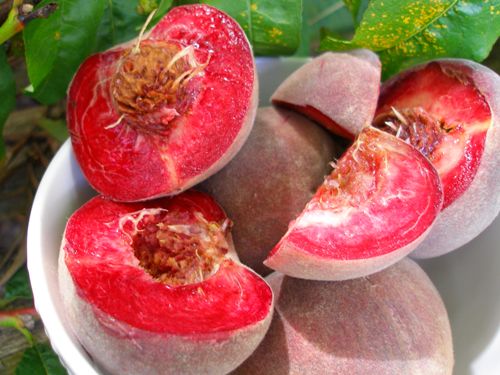
And as we bid a fond adieu to another summer (technically speaking anyway, still plenty hot around my neck of the woods), the final flurry of fruitfulness arrives on shop shelves.  Among the season’s last orders are some of its very finest, including my all-time favourite summer fruit- the Black Boy peach.

Continue reading

A Pregnant Pause…

Virgil Evetts

Is it possible that pregnancy is just a ruse invented by women as an excuse for being über-pernickety about food? I’m beginning to think so.

You might as well know then, that my best beloved is currently in possession of a small concealed human. Yes, we’re very excited and all that, but those damn-it-to-Hamilton dietary restrictions are turning our lives upside down. Turning my life upside down anyway. She’s just happy if she can eat without sequels.

Continue reading

Zucchini Zeal

Virgil Evetts

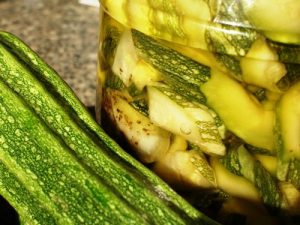
After the slowest start to summer in living memory my food garden has finally exploded into production. Until a week or so back, I was still gorging on sugar-snap peas – which really do live up to their name with exquisitely crunchy, tooth-achingly sweet pods, and the lesser-known bonus of delicious shoots and young leaves. My climbing butter and round-green beans are now replacing them with excellent crops of tender, sweet beans, heady with lovely grassy, green flavour. Continue reading

Getting Over Christmas


Now don’t get me wrong, I love Christmas, I really do – but in terms of writing with any sort of originality it’s somewhat…limiting.

The widely accepted rule about Christmas cooking – and writing it would seem – is ‘don’t mess with the classics’. Sure you might offer up an exciting new glaze for the ham or a daring new nut in the turkey stuffing, but beyond that actual innovation and experimentation just aren’t too welcome with the Christmas crowd. While it’s forgivable to muck up the odd favour-reciprocating dinner party through an overestimation of one’s culinary prowess, doing so with Christmas dinner will be talked about behind your back until you die – no matter how polite the family might be at the time.

So most festive food writing and recipes tend towards the usual suspects chosen by annual lottery methinks, with a few (yawn) ‘new twists’. In terms of the furtherment of the gastronomic arts, it’s perhaps a bit depressing, but I suppose traditions only work if you do them pretty much the same way every time. Anyway, without tradition, why bother with Christmas at all? God knows what else it’s about if not predictable food and disappointing presents (ok that last one isn’t true in my case – I was and always am spoiled like a piglet. Did I ever mention my best beloved proofs all my work?)

But what is weird is how quickly the food media banish Christmas as if it never happened at all. You’re bombarded with weeks of ‘ways with ham and turkey’ with wall-to-wall holly leaf garnishes, but as soon as Boxing Day rolls by its ‘Christmas? What Christmas?’.

So just before I drive Christmas out into the woods and make it dig its own grave at gun point (figuratively, more or less), I thought I’d offer up a brief eulogy, if you will, to the highlights of my Christmas 2009. When I’m done it’ll be you turn to share, so be prepared.

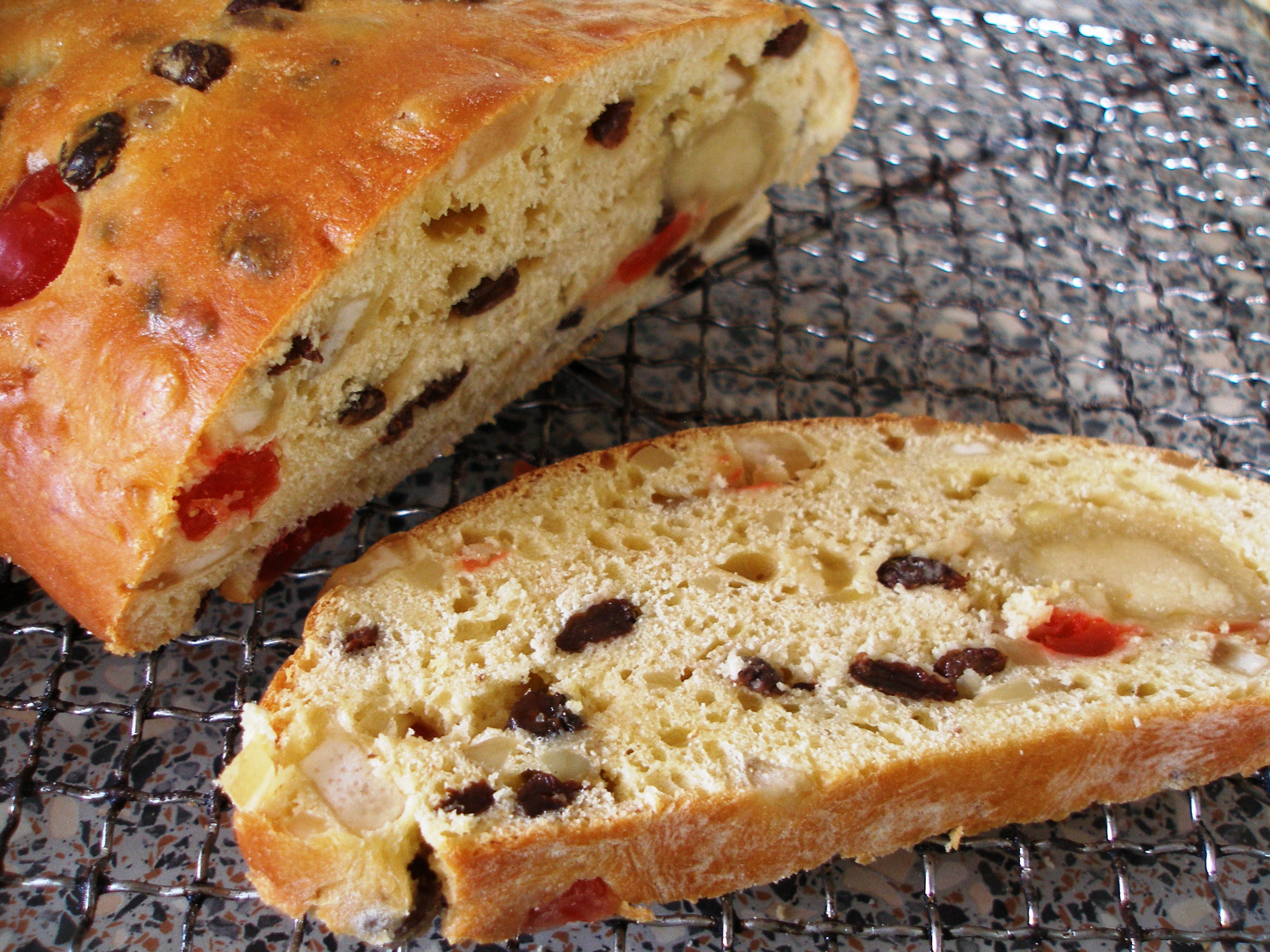
Every year I spend the festive season munching my way through a lovingly and extravagantly homemade stollen or panetonne. This year it was the former – stuffed with fudgy and fragrant German marzipan and studded with glace peel, cherries, brandy-soaked raisins and toasted almonds. It was all the better too for being made with a sour-dough starter which I bred from the yeast bloom on my plums (try as I might I just can’t find a way to say that which doesn’t sound revolting and wrong). Not only did the volatile, almost vinegary yeast gloop bring a new complexity to the flavour and texture of the bread, it also appeared to at least contribute to a considerably extended shelf life. I’m mad on my sourdough right now – look out for a dedicated article in the near future…

Normally I leave the mince pies duties to my mother, as she is the master craftswoman in that regard (excluding the time she gave an unsuspecting marine biologist third degree burns to his tongue – long story). But this year, as she was tied up making great slabs of ginger bread and short bread for various aged, infirmed, needy types, I volunteered to do the deed. Now this will no doubt annoy a few of you, but I’m of the opinion that for any reason other than economy, making pastry from scratch is for suckers. Yes it’s an art and a skill. Whatever. Why bother with all that temperamental toil when you can find excellent ready-made stuff in the supermarket freezer? That’s what I used for my mince pies, it worked beautifully and that’s that. I would have preferred however, to make my own fruit mince (and will next year), but just didn’t get to it in time. So I turned again to that cardinal evil of the modern kitchen – readymade. Actually it’s perfectly passable stuff, after a fashion, and certainly a good base for your embellishments. I added a hefty glug of brandy, a couple of grated apples, plenty of ground nutmeg and clove, the juice of a lemon and a very generous cup of suet. As always, it was the suet that saved the day. It’s the king of fats and I’m its most loyal subject. Sneaky stuff though suet, having no taste or texture of its own, yet able to fuse otherwise disparate flavours and impart the most silken, rounded texture. Anyway, my rather lazy mince pies were so very good – especially when thickly smeared with dangerously volatile brandy butter – that I just couldn’t bring myself to share them very far at all. I begrudgingly sent a few off with the neighbours, a few to the parents, but the rest remained a very private pleasure.


We have established something of a Christmas Eve tradition in our house of dining on the quick-and-easy, not to mention very fine, Roast Seville Orange-glazed Duck with Port Wine Sauce, featured on Delia Online the official web presence of the usually rather sensibly shod Delia Smith. (Poor Delia, she was recently described by Antonio Carluccio as “the most boring person in the world”.) The sticky rich bird (the duck that is) almost cooks itself, and goes down a treat with a pile of carrots cooked slowly in the fatty pan, and a drift of watercress on the side.

My main contribution to the family Christmas lunch (picnic on the beach – very nice, very hot) was a colossal free-range ham from Freedom Farms. Dense, flavoursome meat and luscious thick fat slathered in a russet glaze of apricot jam, mustard and 5 spices. Few pleasures in life compare to those sticky chefs perk-morsels of glazed ham fat, torn hot from the oven.

I received a small but perfectly formed selection of food-centric gifts from my nearest and dearest this year. The most conspicuously hefty parcel under my tree concealed Thai Street Food – David Thompson’s glorious new book. This is an exceptionally beautiful publication, loaded with recipes and fascinating insight from Thompson and exquisite photography by Earl Carter. An essential – if rather pricey – addition to any Asian food lover’s library. From family in the UK I received a subscription to Waitrose Food Illustrated. Although ostensibly just the in-house magazine of the Waitrose supermarket chain, this is to my mind one of the finest food periodicals around today, with a veritable who’s who of UK food personalities contributing, and gorgeous design work throughout. I couldn’t be happier with this one!


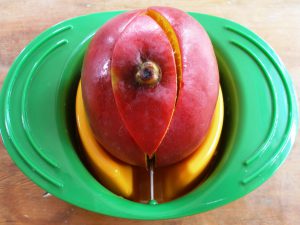
On the gadget front I finally got one of those very dinky pineapple slicers – I should have picked one up years ago. This very simple, but devastatingly effective, little device cores, skins and slices whole pineapples in a few effortless turns of the handle, taking all the work out of preparing one of my favourite fruits. As if that wasn’t exciting enough I also received a mango corer (available from the excellent Jessica’s Design store in Napier), which makes quick and tidy work of that notoriously fiddly but sublimely lovely fruit. Now I’m usually pretty scathing of gratuitous kitchen clutter, but these two deserve a place in any fruit lover’s arsenal.

There were others gifts too – some edible, some not. There was the most welcome company of my sister and her children (who have been away from us for too many years), of my parents (divorced for decades but still the closest of friends), of my perfect and ravishing best beloved, and of my funny and thoughtful baby brother in law. There were halcyon skies and a blazing sun, cicadas rattled, and the summery perfume of the sea filled the air. Overwrought cliché perhaps, but a fine Christmas indeed.


Tell us about Christmas in your neck of the woods…


Sweetening The Season

Virgil Evetts

It’s that time of the year once again when I’m forced to put aside my loathing of shopping and head to the nearest branch of Sodom or Gomorrah – aka a mall. I feel almost soiled after tramping around a mall for any length of time. All that money being spent on so much tawdry shallowness… it’s just so vulgar.  (So said the man who thinks of little more than, and blithely spends a fortune on, food.)


I must be an absolute horror of a shopping companion sometimes – I don’t handle crowds very well, what with my tendency towards impatience and gross intolerance of people who aren’t me.  I usually tread the terrazzo muttering (often louder than is altogether wise) about how vey stupid and ugly my fellow shoppers look.


But I have discovered that there is one thing that makes the whole sordid affair of mall-trawling tolerable, if not quite worthwhile.  The sweets shop.  Every mall in that best-left-unnamed-uber-chain has one of these free-floating rafts of happiness, selling forgettable chocolates but an excellent range of iconic kiwi sweets, of the sort that every dairy sold when I was a kid: Glow-hearts; mint leaves; milk bottles; false teeth; nameless red-and-black, flattened-ovoid gummy-things.  I have never outgrown my love of sweets – if anything it’s got stronger over time because as an adult there is nothing but a thin veneer of self control between me and wholesale gluttony.


For some reason, perhaps it’s nostalgia, I don’t apply my usual disdain for over-coloured and artificially flavoured gunk food, when it comes to these kinds of sweets.  Such is my weakness that if I have them in the pantry I’ll spend the whole day salivating with anticipation.


When I think about it, I’m not even sure what some of the sweets taste of.  Mint leaves and milk bottles are pretty obvious (although milk bottles used to have more of a yellowy hue and obviously milky flavour), but what flavour are glow hearts – aniseed? I don’t know.  I think false teeth might be mint flavoured, but I’m not quite sure because the colours throw off my perception.  Strangely, in Australia false teeth are given a strong strawberry flavour.  I think those red and black things are supposed to be raspberry and blackcurrant flavoured, the latter being the most realistic of the lot.


The only other sweets I can’t be trusted around are those blackcurrant and lemon pastilles found in the cough lozenge isle of some pharmacies.  These are always sold in plain-label bags, are relatively expensive, but taste fantastically authentic.  They’re quite possibly New Zealand’s best-kept confectionary secret.  As far as I can tell they have absolutely no medicinal properties whatsoever, so their appropriateness alongside ‘real’ lozenges is somewhat dubious, but I just adore them.


I can’t be  the only out-and proud confectionary addict around these parts, so I challenge you: name your poison.

Let them eat cake


Virgil Evetts

There is danger in declaring one’s passions too noisily. At certain times of the year friends and family will be carefully taking note of any subtle clues you may unwittingly drop about your likes and dislikes. This is a very dangerous time, because if you’re not careful you may end up trapped in the festive ground-hog day that is the unwanted gift loop. Every Christmas and birthday forevermore you will be kindly inflicted with well-meaning op-shop fodder. The trick I have learned is to be quite specific. Children send lists to Claus of the Arctic, so how come we lose that right as adults? The injustice of it…

Gift buying is a ghastly business at the best of times, so people are bound to work with what little information they have on your personal predilections. You can’t blame them if they pick a theme and stick with it. My best beloved has a very public penchant for the colour green, which for many years was interpreted by family as “give me green frog ornaments”. This eventually got quite out of hand, and frankly irritating. I know, Christmas is about giving not receiving, or something, but there’s no point giving or receiving unwanted amphibians for all of eternity.

In my case, people know I’m interested in food, and most gifts are themed along those lines. A select few, my inner sanctum if you will, know my la-de-da tastes inside out and rarely fail to dazzle. But a number of other kindly souls swamp me in ‘clever’ gadgets and jars of not-as-clever-as-they-think-they-are pickles (quince, horseradish and 2005 Marlborough Sauvignon Blanc relish etc). All I can say is that egg-masher industry is clearly in a state of wild and unchecked growth, and the home-spun condiment trade is (as ever) swooning under the influence of its own misguided sense of usefulness.

So I offer up the following list, for the sake of anyone who knows me and was planning on “surprising” me with any of the above redundant nonsense, or for those of you who are shopping for the food- fixated (and I don’t mean people with eating disorders – these items might not be the best choices for them), and don’t quite know where to begin. Of course, if you’re bothering to read this drivel (take note person who accused me of writing ‘dribble’ recently), you are probably a well-informed Foodlover who needs no steerage from me. In which case either skip to the bottom and add your own list, or follow this link to Heston Blumenthal’s wonderful Christmas special (hosted by Google videos) of a couple of years ago . Truly delightful.


Panettone/Pandoro

Not to everyone’s tastes, but to fans of festive baking (like me!), a good-quality Italian panettone or pandoro will be very gratefully received indeed. Price does to tend equate to quality with these generally artisanal products- expect to spend no less than $20 if you really like the person, and upwards of $50 if they seem like a keeper. Brands to lookout for are Flamigni and Fiasconara.

No written description really does justice to the charms of a well made panettone. By definition it might just be a big old fruit-studded brioche sort of thing, but by taste, aroma, texture and provenance it’s so much more. There is a sublime sophistication to this bread. I make quite a ritual of eating the stuff and find it a strangely hypnotic and personal thing. My whole body relaxes and a smile spreads across my lips. When I’m eating panettone the rest of the world just isn’t important.

 Apart their possible psychotropic properties (which might be more to do with my lack of perspective around food), they also make a beautiful focal point on the Christmas table. In the following days when the bread starts to lose its supple spring, panettone is still fabulous toasted and spread thickly with butter. As I’ve said elsewhere recently, those of us who spend a lot of time in the kitchen just love it when others cook for us, so if you fancy baking you own panettone to give away or just for the hell of it, here’s an article (with recipe) I wrote on the subject last year.

Meat

Meat might not be the most obvious choice for a gift, but personally I’d be thrilled to receive a nice piece of eye fillet or a great slab of sirloin on Christmas morning. Good-quality red meat has become quite the luxury item, and for the most part is outside of the realms of my normal weekly budget (and I suspect many others’). Go to a butcher you trust (I’m currently wildly in love with Westemere Butchery in Auckland), tell them your budget and go crazy.

If you really shop around its possible to find fabulously marbled wagyu and ethereally tender South American grain-fed beef, but keep in mind these come at something of an ethical (not to mention crippling fiscal) price, as both are usually raised in intensive feed-lot or barn-based systems.

Personally I’m more than happy – often quite ecstatic, if truth be known – with local, pasture-run Angus or similar. Also worthy of consideration  is the new and ethically permissible Rose veal from Gourmet Direct . The result of careful, selective breeding, Rose veal is produced from fully weaned calves, unlike its’ traditional counterpart, white  veal, where the calves are dragged to slaughter, kicking and bawling from the udder. The result here is a pink-blushed, sweetly flavoured and butter-tender meat of a calibre (both ethically and gastronomically) previously unseen in New Zealand.

For some reason I can’t quite imagine giving pork for Christmas. It just doesn’t seem appropriate. Merry Christmas, here’s some pig I picked out for you.

Chocolate

I can think of very few people who wouldn’t appreciate a decent bit of chocolate under the tree. But Jesus H, we’re fed a lot of subjective puritanism about chocolate these days! Apparently the only chocolate worth eating is 85 % (minimum) bitter-sweet, preferably single estate and Fair Trade (ok, so I agree with that last one). While some of my favourite renderings of the bean fall into this category, I angrily reserve the right to eat milk chocolate, and dare I say it white chocolate, if and when I bloody well want to In fact, I think it would be in the interests of furthering a nay-saying loved one’s theobromic education to give them some very good examples of either of the above.


There are myriad premium chocolate brands to choose from these days and each has their own special quirks and nuances, so it might a prudent – and so very torturous, I’m sure – to try before you buy. For the record my favourite imported chocolates brands are Caffarel , Valrhona and Lindt – and I certainly wouldn’t kick Green and Black out of bed either. On the home front my favourite chocolatiers (bad pun alert), bar-none are Greytown based Schoc. These guys take a unique and most agreeable approach to chocolate – as a legitimate form of therapy- and produce some of the smartest flavour combinations around, such the very opulent Frankincense, Myrrh and Gold Christmas block. Magical stuff.

Cheese

Cheese is among my greatest pleasures in life. Be it gooey and fungoid, mouldering and piquant or dense and crystalline, I’m anyone’s for a decent wedge. And who isn’t? Just quietly, this is probably the best item on my list. It’s something we don’t tend to splash out on for ourselves very often (usually only for dinner parties and specific recipes), and a carefully selected wedge or two of something special can make for a touchingly thoughtful gesture. The possibilities are endless here, so go somewhere that allows you to taste the cheeses, be sure to ask about country and region of origin, style of production, age and wine matches. All of this adds to ambiance of the gift. If you’re shopping for me, you’ll be well on track to my good books with Gorgonzola Piccante, Roquefort, Parmigiano Reggiano, Pecorino Romano , Taleggio, Meyer vintage Gouda… go on, surprise me.

Fruit

Fruit can either be insultingly dull as a gift (think hospital lobby fruit baskets), or breathlessly good (think Otago cherries). So with a little thought and sadly no lack of dosh, fruit can make you very popular indeed under the mistletoe.

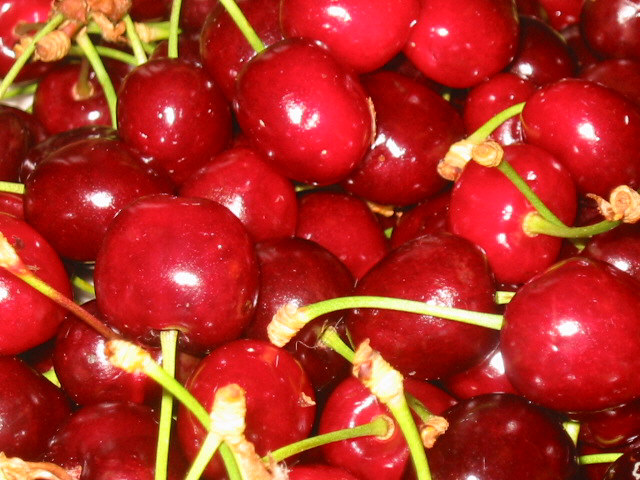
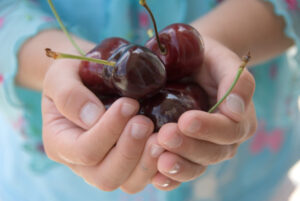
Cherries are probably the best choice for a Christmas gift. The season peaks right around Christmas, and you can buy handsome 1-kilo cases from you local fruiter (watch the price double on Christmas eve), or better still, order directly from the grower and have them posted to your dear one. Cherries are a very sexy fruit and could be seen as a somewhat suggestive gift, so you might want to think carefully about who you give them to. I’m sure whole books have been written about flirting with fruit. Another good choice for the fruit lover who has everything is a case of fresh lychees, mangosteen or brazen Thai mangoes. You might have to hunt around a few Asian fruiters for these, but you can be assured they will not disappoint.

Novelty

Last year a friend gave me a couple of geoducks for Christmas. They looked like penises in the half shell and scared me silly (no, the Freudian implications haven’t escaped me either). Although I can’t say I enjoyed eating them, they were nowhere near as awful as I expected and, more importantly, represented that very rare thing for the well versed consumer – a genuinely new experience. So, judging from my own reactions here (not that I’m the most reliable compass of normality), a well-thought-out novelty food gift got can be just the ticket.

A whole Durian (available frozen and fresh from Asian supermarkets and fruiterers) would test the mettle of many, and at the very least will clear the room of noxious in-laws. For a less intimidating and odiferous choice you could track down a fresh bread fruit (try Otara market in Auckland), or perhaps a mutton bird (carried by some fish shops), and a whole pig’s heads wrapped in pretty paper would definitely cause a stir. I, for one, am hoping for something freaky and fetid under the tree again this year.

Restaurant gift vouchers

Ok, so vouchers, like cash can make for a rather crass and unimaginative gift. They have that whole ‘here is how much I like you in money-form’ vibe about them. However, I don’t think this applies to restaurant vouchers. Issued by the Restaurant Association of New Zealand these are available in $20, $50 and $100 denominations and can be used pretty much anywhere of note.

Splashing out on a really special night is something most of us reserve for only the most important of occasions – if at all. These vouchers not only subsidise (or if you’re really lucky, cover) the sometimes staggering bill, but they also give us permission to treat ourselves, just because. You know what I mean?

So where would I redeem a restaurant voucher or two?

Well, I’m pretty staid in my tastes, mostly because very few places meet my terribly unreasonable expectations of exceptional service, intelligent, well executed food and consistency throughout (the last one is a real bug-bear of mine). Likely suspects in Auckland right now are The Engine Room, The French Café, O’Connell Street Bistro and Antoine’s.


So, what’s on your Christmas list this year? Share your tips, list and advice on shopping for the fickle-Foodlover below.



Wild About Rocket


Virgil Evetts


Unlike more than few people about these parts, I have not been caught up in kiwi rocket fever this week – I couldn’t be less interested.  They shot a big stick into space – sort of – for a few minutes.  Meh.  Star Wars has permanently ruined me for the realities of space exploration.  Until they’ve got Super Star Destroyers seeking strange new worlds and then blowing them up, I’m just not interested.


The only rocket I care about is decidedly more earth-bound, and infinitely more useful than anything hoiked into the stratosphere lately.


I get like this every year; I’ve probably even bored you with it before. But right now I am all about rocket – the plant.  It’s just about the sexiest damn thing in the garden.  Now I’m not talking about that namby-pamby, blousy common rocket here either; I’m referring to its dashing and flamboyant cousin, perennial wild rocket (Diplotaxis tenuifolia). There’s just so much to love about this plant: its mustardy heat and lovely sesame flavour; its carefree penchant for self-seeding (ensuring a veritable life-time supply)… What’s not to like?


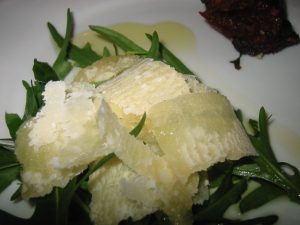
Although in the relatively mild Auckland climate wild rocket stays in leaf almost all year round, the most succulent, flavoursome leaves are produced in spring and early summer.  And, rather like asparagus, they have that indefinable taste of spring.  I just love them. Tossed with a little lemon juice and olive oil, gently seasoned and finished with a few shavings of parmesan they’ve got the makings of what might just be my all-time favourite salad. The leaves are also excellent scattered over a pizza (scalding-hot from the oven), or folded into pasta dishes at the last minute.  Although a little wilting can be rather fetching, rocket is altogether spoiled by cooking. Wild rocket can also be used in place of basil in a rather punchy pesto, which works particularly well with oily fish.


The plant grows very easily from seed (available from Kings Seeds, and others, as Wild Rocket, Rucula or Arugula), and will survive for 2-3 years under favourable conditions.  Unlike many salads greens, you can allow wild rocket to flower freely -just try stopping it- without any risk of the plant carking it.  Apart from being edible and quite pretty, the buttercup-yellow flowers attract many beneficial insects into the garden – especially hover flies, which make fast work of aphids and their various ilk. Scatter the resulting seeds far and wide. You will never regret having an abundance of this plant.


So if you enjoy a bit of bite and a real depth of flavour in you salads, then wild rocket is absolutely the plant for you.


Annual or common rocket has a similar, but somewhat milder, flavour and only lasts for one season – if that.  In hot weather it has a habit of going to seed and dying with quite startling haste. Don’t get me wrong, it’s a very decent salad green, but just isn’t quite in the league of its perennial cousin.


I’m not much moved by lettuce (although I’m quite enjoying Iceberg at the moment- sort of like crunchy water- and predict a bit of a revival in the near future), but I know it’s the tried and true salad green of choice for many.


What’s your favourite salad green?

Saffron- Like Sun On The Tongue

Virgil Evetts

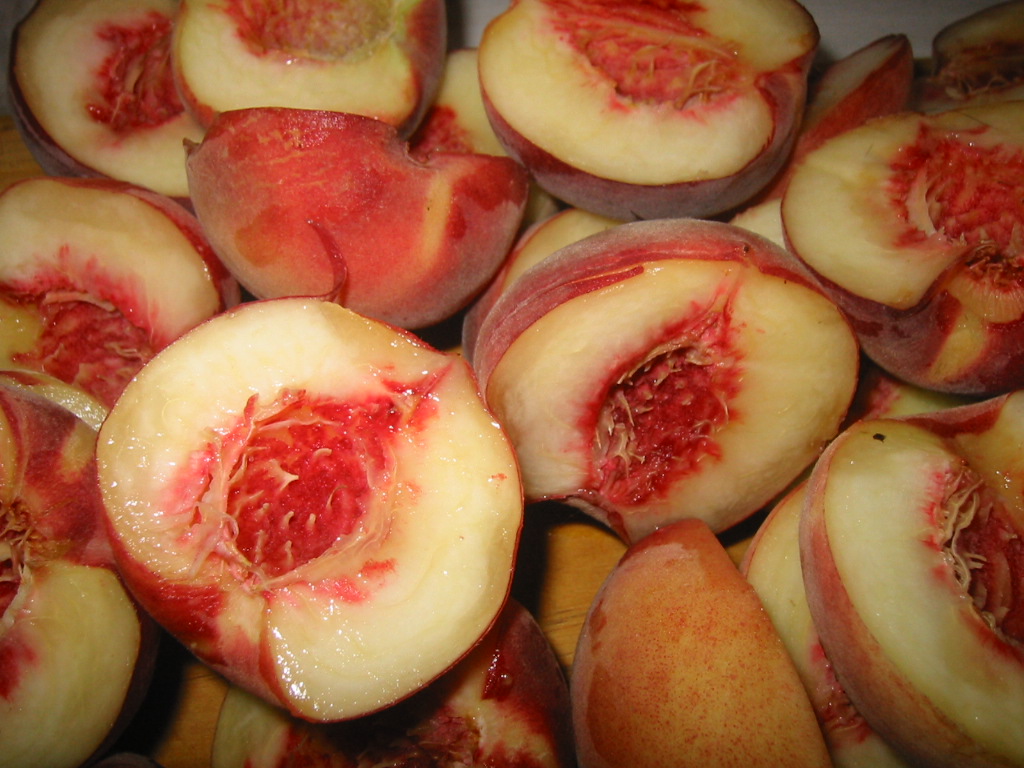
The other night I threw together a dessert quite shameless in its simplicity – five ingredients and no cooking; yet it turned out to be among the best things I’ve eaten in months, serving both literally and figuratively as an entrée to summer. White peaches, plucked warm from the tree, a sprinkle of icing sugar, a splash of grappa, a glug of cream and most importantly, as it turned out, a crumble of gorgeously musky, improbably yellow, saffron meringue.

Somehow the bittersweet flavour and almost medicinal fragrance of the tres luxe spice pulled everything into line. It was one of those all-too-rare moments with food where the flavours just snap into place, almost of their own accord. It was a roughly assembled, lazy affair and I claim no credit for its grand success. That accolade belongs solely to the quiet grace of saffron.

And this is so often the way with saffron; the subtle complexities of flavour never clamour for attention, they just discreetly go about the business of pushing a good but earthbound dish straight through the stratosphere.

Much has been written about saffron being the world costliest spice. This may be perfectly true, but it’s rather missing the point, because although the proceeds from the sale of ten kilos of saffron would probably clear the average mortgage, few cooks could ever use this quantity in a lifetime. Saffron is very much a ‘less is more’ sort of spice, as anyone who has the extravagant audacity to overdo the stuff in a risotto ala Milanese or paella will find out. What in moderation was delicate and flirtatious becomes pungent and brash in superfluity.

The spice saffron is derived from the dried stigmas of variety of crocus (Crocus sativus), thought to have originated somewhere in South West Asia as a result of careful hybridising and selective breeding over 3000 years ago. Since then it has infiltrated the many cuisines, belief systems and pharmaceutical repertoires of Asia, Europe and the Middle East, by way of the various religious, political and later colonial movements that have shaped and shaken the modern world.

Saffron has always been a precious, exclusive commodity. Its use in food and as a fabric dye has long been a means of flaunting ones wealth, and in various religions (through the anointment of god-figures etc) it serves as a gesture of selfless devotion. Certainly the appeal of saffron in these situations is in part due to its irrepressibly golden hue – gold being another perennial and rather clankingly obvious emblem of prosperity; but most of all, saffron is symbolic of wealth because it’s really, really expensive – depending on how you look at it anyway.

Right now, the international price of saffron sits at well over NZ$10,000 per kilo. That may seem a little steep but it buys over 100,000 stigmas (each saffron flower contains only 3 stigmas), all picked by hand from a planting site which will exceed the area of 2 football fields. All things considered, not bad value really. Despite thousands of years of saffron growers attempting to improve yields and cut costs, there is simply no easy way around these production costs. Although many commercial plant breeders would give up their first born (and yours too for that matter) for the secret to breeding new and improved strains of saffron, they’re probably chasing a pipe dream, because as a result of its parent species’ genetic inability to play nicely, saffron is infertile- it cannot set seeds. This means that all saffron plants in the world today are almost genetically identical, having all been produced from corms which divide asexually each year. In other words, they are all clones of the original saffron plant bred 3000 years ago. As with any species – bananas being another good example – this makes saffron extremely vulnerable. With their limited gene pool, a single disease could theoretically eradicate the entire species.

As well as being a few cards short of a genetic full deck, saffron is also a rather fussy plant. It won’t grow just anywhere, preferring a fairly dry Mediterranean climate, with hot summers and cool (but not overly wet) winters. The international market leaders in saffron production (Spain and Iran) are able to provide these conditions in abundance; and better still (from the growers point of view anyway), both have access to very cheap labour forces – both legal and otherwise. The vast majority of imported saffron sold in supermarkets today will have originated in one of these countries. Until recently, US trade sanction restricted the flow of Iranian saffron (along with anything else the poor buggers had the temerity to produce), onto the world market; this has fortunately started to change. If you really must purchase imported saffron, it’s worth seeking out Iranian (Persian). As with Persian pistachios, dried figs, mulberries and sour cherries, the quality is usually very high.

But that said, why bother with dusty imports when our home-grown product is so very good?

Saffron has been grown commercially in New Zealand since the late 90’s, with production centred around the Hawkes Bay region and a few similarly suited locations in the South Island.

Terraza saffron – owned by Janice Potts and Mark Tyro – oversee a small network of growers managing a total of about 5 acres around the Hawke’s Bay. As the Terraza network expands, and individual corms multiply, the company’s annual harvest is steadily increasing – weather permitting. The total 2009 harvest was a little over 3 kilos, with early predictions for 2010 at around 5 kilos. These figures may seem but a drop in the ocean compared to the 300-odd tonnes that represents the average global harvest, but when you consider that most consumers purchase only a gram or so at a time, this is more enough to supply high quality saffron to discerning cooks and chefs around New Zealand.

New Zealand-grown saffron has an exuberance and freshness far surpassing the various mass-market supermarket brands. Described most aptly by Charles Noville (former chef at Parliament Buildings), as “like sun on the tongue”, the rich, iodine/hay bale fragrance penetrates the packaging; and in cooking both flavour and colour are released with free and copious abandon. Janice and Mark have a policy of only selling the current season’s harvest, which to my way of thinking is testament to just how seriously they take their business, and how passionately they believe in their product.

As well as selling pure dried saffron stigmas, Terraza also produce a small range of saffron-based products. The mini- meringues mentioned earlier are one of Terraza’s newer lines, and are so far just about the most interesting off-the-shelf saffron products I’ve come across (closely followed by saffron pashmak– divine Persian candy floss). Once again, eggs prove to be the perfect vessel for flavour. I’m always saying that. Also in development – and eagerly awaited by this shameless fan – are saffron lemonade (!!!) and saffron pasta.

I have used Terraza saffron on numerous occasions over the years, and thoroughly recommend it to true saffron-heads, for use in risottos, paella, korma, mayonnaise and most exquisitely gelato –ala Antonio Carluccio. Yes, you can get by with imported saffron, but on so many levels, local is simply better.

Because of its freshness and intense flavour, locally grown saffron can be used even more sparingly than its imported equivalent. For maximum flavour extraction, soak gently crushed stigmas in a little warm water or stock. For slow-cooked dishes such as tagines, add saffron towards the end, as the flavour can be destroyed by prolonged heating.

Be aware that adulteration is still a problem with some imported saffron; usually through the addition of ground or finely sliced safflower petals. Although these will yield a similar colour to real saffron, they posses none of the genuine articles flavour or fragrance. Basically, suspiciously cheap saffron probably isn’t saffron.

Saffron corms are available to the home gardener during the summer months from Terraza, various other growers and via Trademe. With great excitement I threw myself into growing a small patch for a couple of years, but for a variety of reasons am now happy to leave it to the experts. The fragile mauve blooms were indeed a lovely sight on crisp autumn morning, and the thrill of harvesting and eventually using the precious stigmas was something very special, but it was to be a short-lived endeavour. The dependable wetness of Auckland summers caused most of the corms to rot, my cats took a uniquely feline pleasure in uprooting the remainder, and the near microscopic yields of saffron in no way justified the space the plants occupied. But that’s just me. If you have the room, climatic advantage, better-disciplined cats (mine are famously naughty), and a more than mildly obsessive nature, you should definitely lay down a saffron bed.


What’s your greatest kitchen extravagance?


Seeds of change and a Bellini or two

Virgil Evetts

Spring is my favourite time of year. Sure it rains enough to rattle Noah, but for a little while the world is so green and full of potential.  I’m such an anticipation sort person – finding more pleasure in the unwrapping than the prize.  Which is a good thing, because spring is like a particularly mean-spirited game of pass the parcel food-wise i.e. just a whole lot of pretty paper with no rewards!


In my vegetable garden (actually I have two, which allows for crop rotation), the only thing ready for picking just now is silver beet – and very nice it is too, either torn-up and thrown into a curry at the last minute, sautéed with garlic and chilli in olive oil, or very simply steamed. It’s a good workhorse veggie and I’d never be without it, but it’s not exactly exciting.

The warm flavours, energy and abundance of summer produce are still a long way off.  But that’s ok.  Half the fun of spring comes from fantasising about the literal fruits of your labours, from watching the steady growth of seedlings in to stout young plants.  This make for particularly compulsive viewing when you grow from seed.

I never used to bother with seeds, preferring the quicker results of shop-bought seedlings.  The down-side to such impatience is price – seedlings do not offer good value for money, and what’s more, the range available grows smaller and duller each year. For example, I’ve found climbing bean and pea seedlings frustratingly difficult to come by in recent years.  Dwarf versions abound and are now the norm in city garden centres.  They’re fine, and probably the most practical option for the average sub-divided section, but they lack the yields and variety of their taller kin.


So this year, having exhaustively poured over various seed catalogues, I’m growing everything from seed.

I have rows of black cherry tomatoes (a wonderfully sweet and flavoursome variety I trialled last year and fell in love with), piquillo peppers (the definitive  Spanish pepper bar none), butter beans, sugar snap peas, pumpkins, rock melons (which I’ve never had much luck with before, but we’ll see), zucchini, Lebanese cucumbers, basil, coriander and bulls-blood beetroot.  All of these have zealously burst forth from their beds of chicken manure-fortified volcanic soil, and are surging upwards and outwards almost visibly before my eyes.


Apart from providing an abundance of lovely manure-laden straw, my chooks (Becky, Sophie and Ophelia) are also in full egg production right now, which at 3 a day is more than enough to keep us well-stocked and satisfied, with enough left over to charm the neighbours.


My favourite lazy meal of the moment, which makes good use of their daily tribute, is bacon sandwiches – made with crispy free-range bacon, just-cooked scrambled eggs, loads of slowly sautéed red capsicum, a generous splatter of Tabasco sauce, and lightly toasted white bread. I know – white bread, gasp!  Yes it’s over-processed, its pappy, it’s evil, I know; but when it comes to bacon, egg and pepper sandwiches, nothing else will do.


On the home-orchard front my early white peach has once again delivered a heavy crop of gorgeously blushing, obscenely juicy wee fruit. Bellini’s! Bellini’s for everyone!


As the season progresses I plan on hijacking the blog every so often to update you on the happenings in my ‘all-from-seed’ veggie patch, and perhaps share a recipe or two as things plump up and ripen.  Hopefully ya’ll feel compelled to do likewise.

So- how does your garden grow?