The Rise Of Risotto

Virgil Evetts

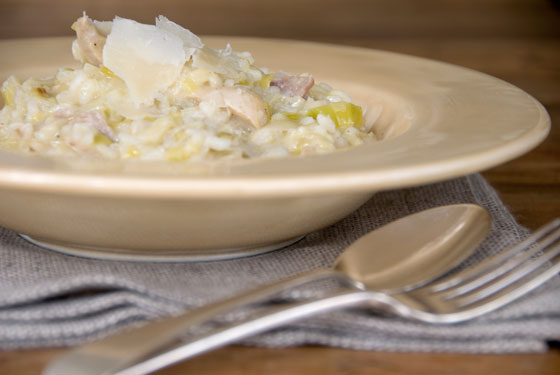
Where would I be if it weren’t for Elizabeth David?  She nurtured and coddled my love of great food from beyond the grave and across time.  She figuratively led me by the hand as I tried so many strange and glorious new things, like pork braised in milk, ragu alla bolognese and risotto – a dish which, up until the point I read ED’s seminal work Italian Food, I had disregarded as a dodgy monstrosity favoured by students and other food-as-sustenance types.  Continue reading

Micro-eggs and the winter garden

Virgil Evetts

We’ve finally past that much-anticipated seasonal tipping point, the winter solstice, meaning the days will start to draw out again.  And somewhere down the track – well alright, quite a long way down the track – the nation’s gardens and orchards will start to yield delicious things. My own garden is full of such distant promise right now: broad beans that will hopefully have flowered and fruited before I have to dig them in to make way for the summer tomato and peppers crops; sprouting broccoli and Chinese cabbages that are still a wee way off picking; and beetroot and silverbeet that just might be ready for the pot or pan in the next month. Not much amongst that lot to keep my bees on the property right now, but judging by the overloaded frames of honey they have stored, they are doing perfectly well elsewhere in Devonport.

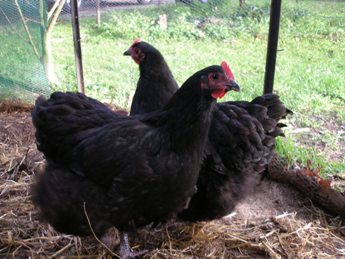
My 2 new chickens – absurdly fluffy black Orpingtons called Phoebe and Amelia – have been very slow to commence laying, but being an old breed and not designed for high-volume commercial laying, this isn’t too surprising. They’ve had a lot to contend with lately anyway – the move from a flock full of their sisters to a new run, already occupied by 2 very unwelcoming Red Shavers.  These old girls (Ophelia and Becky) were appalled by the arrival of  a couple of black whippersnappers and spent several weeks making their lives as unpleasant as possible, with much squawking, chasing and feather pulling. Fortunately chickens have short memories and attention spans, and they eventually lost interest in the fight. Sounds a bit rough but such is chicken politics and it’s more ritual than actual violence.

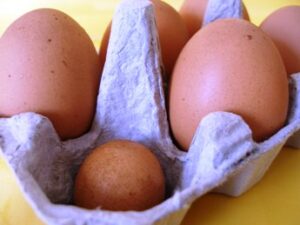
Anyway, finally, last week one of the newbies delivered her first ‘experiment’ egg, which as you can see (above) was so small she probably didn’t even notice it falling out. This isn’t unusual with first attempts, as the bird’s body gears up for full scale production.

As I’ve said before, keeping chickens is a genuine pleasure and I never tire of watching their charming and prodigiously dim-witted antics. They continue to produce a regular supply of magnificently creamy, flavoursome eggs, which are much in demand among our friends, family and neighbours, as well as the very welcome by-product of wheel barrow loads of rich, manure-laden compost for the garden. If you have even a small backyard you can and should keep hens.

Inspired by a freakishly late crop of gorgeous red pequillo peppers , I was going to talk you through my method of chargrilling and preserving red peppers in this posting, but on reflection I think it warrants a bit more space. It’s such an easy technique and the finished peppers are simply spectacular.  So, next week…

The Cookie Monster


Virgil Evetts

When I was a pup, biscuits were mostly regarded as a treat food for children. At least that was my self-serving perception. There always seemed to be a packet of shrewsberries, digestives  or their various average kin in the pantry, ready for inclusion in school lunchboxes and as a quick pick me up – or, as was more likely the case,  to shut me up after school. Continue reading

The setting of the babymoon…

Virgil Evetts

I’ve learnt to ignore guide books when it comes to eating out abroad. They date quickly and I suspect kick-backs are often involved.  A more reliable method is to stalk the average Joe and Josephine on the street. Just don’t be too obvious about it; some people are a bit funny about being followed by strangers.

On our first day in Noumea it became abundantly clear that the preferred breakfast, lunch and dinner among the locals is bread.  A great deal of bread.  Although, in many ways the various peoples of the third-largest island in the Pacific (after Papua New Guinea and New Zealand) are barely French at all, they have held on to or acquired some decidedly Gallic traits. The most apparent of these is a prodigious appetite for bread, most specifically the baguette. You can’t walk ten paces without encountering someone munching on one au natural as they stroll along and/or carrying a couple home for breakfast. Perilously overloaded baguette-delivery mopeds sway through the traffic at all hours, refreshing the supplies of every restaurant, cafe and corner shop.

The Noumeans are very fussy about quality too. Very few of what we know as baguettes in New Zealand would pass muster, and certainly none of the so called French sticks produced by most supermarkets.  The typical Noumean baguette is gorgeously fragrant, with a dense crunchy crust and a slightly sour, chewy centre. Fresh from the oven and spread with the ubiquitous cultured French butter, this is a sparse yet un-missable moment of foodlover’s Nirvana.  Fresh croissant spread with local papaya jam is also up there .

 No surprisingly the fine French art of pastierrie is taken very seriously too.  Exquisite tarts, cakes, croissants and myriad sweet pastries are available everywhere and are quite reasonably priced. The more popular boulangerie and pâtisserie sport long and orderly curb-side queues every morning.  (This is in itself indicative of how very ‘French yet un-French’ these people are.)

It took us some time work out where the locals were lunching, because for the most part it wasn’t in the many upscale cafe and brasseries around town.  The preferred choice for most Noumeans is instead a style of eatery known simply as Le Snack. These are, I suppose, something akin to a greasy spoon or truck stop sort of affair. The important difference being that they offer very good, and reasonably priced food. Filled and toasted baguette, croque-monsieur, steak frites, various salads dressed with homemade mayonnaise and (rather incongruously) tuna carpaccio are all standards and are generally very good indeed.  A typical filling of toasted baguette is roquefort, jambon cru (raw ham) and basil leaves.  Rather a lot better than anything you will find at a New Zealand “lunch bar” but at very comparable prices.

We were give a valuable piece of advice by a Dutch family we met by the hotel pool – avoid restaurants at night. They are for the most part heinously expensive and in many cases are churning out adequate but hardly innovative food.  A far better plan of action is to eat at your hotel for breakfast (most do very decent breakfast buffets) and for lunch pop into a Le Snack or call by one of the fabulously well-stocked supermarkets for lunch. These carry every conceivable variety of French cheese and small goods, as well as wine and anything else you might need (and quite a few you don’t). Prices are far better than you might expect too – especially considering almost everything is imported from Europe.  

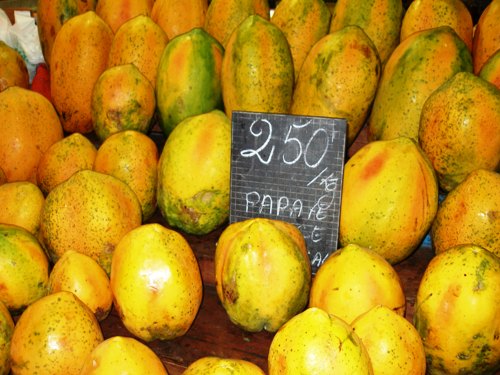
For fresh local produce the daily wet market, known simply as le marché, is your one-stop shop. Whatever is swimming on the reef or fruiting in the hinterland will turn up here sooner or later. Because we were visiting during the winter months (not that you could tell) the variety of tropical fruit available was limited, but most of the essentials were there, including a plethora of banana varieties (from ludicrously fat, sugar bananas to huge starchy plantains), small, spiny but super-sweet local pineapples, papayas, of course, which grow like weeds in the tropics and fruit all year around.  My favourite papaya variety is the torpedo-shaped and very musky red papaya – served ice cold and with a generous squeeze of lime juice this the perfect start to a tropical day, and a great digestive after a heavy meal.

I was particularly delighted to stumble across a large, spiky soursop- one of my all-time favourite fruits.  A strictly tropical relative of the cherimoya, the soursop (otherwise known as the guanabana)  is always sold rock-hard and unripe. This is because the fruit has no in-between stage between ripe and collapsed in a sticky putrid heap. So you take your unyielding spiky green cannon ball home or back to you hotel room and wait. Approximately 24 hours later it will abruptly change from very hard and unappetising to soft, fragrant and ready to eat. There is no polite way to eat a soursop. You simply have to cut a great wedge and be prepared to get very messy. The flesh has a texture very similar to wet cotton wool and instead of eating it as such, you draw it through your teeth, releasing the copious fruit-smoothie like juice. The flavour is rich and remarkable, tasting of grapes, strawberries, apple and guava.  It’s obscenely inelegant, sticky and wet but utterly and indecently delicious.

So, while I must report that Noumea is not immediately obvious as a great Foodie destination, if you look beyond the tourist traps, and are prepared to eat basic but good fare, it has much to offer.

Pork Cutlets With Cauliflower “Rice” Pilaf

Janet Chang

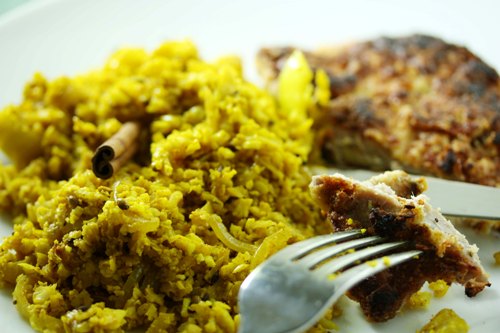
This was tonight’s dinner. Not bad for a quick put together on a weeknight.

I found free range pork cutlets on sale and immediately thought of making tonkatsu I used to love making tonkatsu with my mom when I was growing up. Tonkatsu is a Japanese style pork cutlet dish. My mom used to let me help by pounding the meat with a meat mallet to get it super thin. I skipped the pounding and adjusted the recipe to be grain-free and gluten-free.

The Cauliflower “Rice” Pilaf is an Indian style recipe which I free-styled with various spices I bought from the Indian grocer. It’s a nice change from the usual green vegetables and is super easy to make. 250 grams of cauliflower (about 1.5 cups of grated cauliflower) has only about 60 calories, 5 grams of carbohydrates and 6 grams of fiber, which makes it a much healthier alternative to rice.

Pork Cutlet

300 grams pork cutlet
salt and pepper
1 egg beaten
1/2 cup or more of almond flour to coat
2 tbs of pork lard to fry

Heat the pork lard in a cast iron skillet on medium to high heat.

Season the pork cutlets with salt and pepper.

Dip the pork cutlets in the beaten egg mixture.

Coat evenly with the almond flour.

Fry until cooked through on both sides.

Drain on a paper towel before serving.


Cauliflower “Rice” Pilaf

500 grams grated cauliflower “rice” ( about 3 cups)
1 medium onion sliced into crescent rings
1 tbs ghee
1 tsp fennel seeds
1 tsp yellow mustard seeds
1 cinnamon stick
2 tsp turmeric
1 tsp paprika
1 tsp cumin
1/2 tsp cardamom
1/4 cup chicken stock

Melt ghee in a large skillet over medium heat.

Add the onions, fennel seeds, and mustard seeds, and cinnamon stick.

Stir until until onions are cooked and spices are fragrant.

Add in the cauliflower and the remaining spices.

Add in the chicken stock.

Stir until everything is mixed through.

Season with salt and pepper.

Makes 2 generous servings.

www.pantrybites.com


By the light of the babymoon…

Virgil Evetts

With a baby on the way, and the local weather growing ever more wintery, we decided to take a wee break abroad – but not too far mind – a sort of sun-soaked swansong to our freedom if you will. I’m told this is called a ‘babymoon’. Shudder.

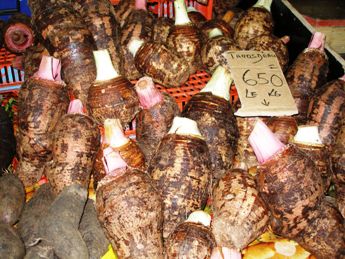
Both of us are I suppose reasonably well travelled – it’s how we choose to spend our meagre monies; but for one reason or another we’ve never visited any of the tropical islands of the Pacific. My main reservation about this part of the world has always been the food. I’m just not mad on taro, yams, gallons of coconut milk, fatty pork and corned beef. I swoon for raw fish salads but you can’t subsist on these alone. I can hear some of you wailing in protest , but you needn’t bother – it’s just not my thing, and I’ll not be moved. Fiji, with its ample Indian offerings, has always sounded closer to my cup of tea. But according to my reliable (if rather judgemental) sources the place is practically a suburb of Auckland during the winter months, and not a nice suburb either – one of those ones where they perform indecencies upon their vowels.

Oh sure, if I was willing to eschew the local fare and stuck to the resort buffet, any of the islands would do, but that’s hardly to point of travel. Buffet food is the same repetitive piles of prawns, platters of cold cuts and strangely soapy cheese the world over. You might as well go to Denny’s. Actually I’ve never been to Denny’s but their embarrassing advertising says it all. And what kind of a name is Denny anyway?

 We eventually settled on Noumea, New Caledonia, mostly because it’s close to New Zealand and has a well-equipped hospital should baby get up to anything untoward in utero . As it turned out baby behaved impeccably (save for few late-night parties), which is a good thing because we’ve grown quite fond of him/her, and we discovered rather late in the piece that you can’t insure a very pregnant woman for love nor money.

Apart from offering decent healthcare, I thought French Polynesia might be a good alternative to the pure pacifica or buffet fare of other islands. Pacifica food, with a French inflection, right? Well, sort of. Sometimes.

Noumea is the capital city and most populated part of New Caledonia. It’s the gateway to the country and a perfectly pleasant place to spend a few days. The local tourism spin doctors like to present the place as a ‘slice of France in the South Pacific’ and this isn’t entirely disingenuous. It’s certainly full of French-speaking people (a mixture of Europeans, Kanaks , Polynesians, Vietnamese, Chinese and others), and it has the look of French provincial town too – but more the sort you pass through than stop at. It’s not ugly or dirty or dangerous. It just never quite gets going, if you know what I mean.

Most guide books talk about the wonderful ‘gourmet’ (a criminally overused word) French food available in Noumea. Such food certainly exists there, but in the balmy tropical heat I could not be tempted by heavy, high-French offerings. The concept of fusion cooking has either bypassed local chefs or has been disregarded in favour of dogged traditionalism. Considering Gallic sensibilities surrounding food, the latter is quite likely. Because of this, almost everything in high-end Noumean restaurants is made from imported ingredients and therefore costs the earth. Well-heeled locals seem to dig it though.

But dining after dark in New Caledonia is relatively pricey no matter where you eat. There are however some more affordable options among the non-French cuisines represented. The most widespread of these is Vietnamese, which offers some of the best-value night time fare around, and the excellent local produce and seafood are more than welcome in what is already a tropical cuisine. Vietnamese food is not widely available in New Zealand (most war time refugees settled in Australia), and no holiday in French Polynesia would be complete without a decent survey of its many charms, which include Green Papaya Salad, Phō and Vietnamese spring rolls. But, as I’ll explain next week, Vietnamese cuisine is just the tip of the iceberg of what Noumean cuisine has to offer….

To be continued

Pizza Feature

Virgil Evetts

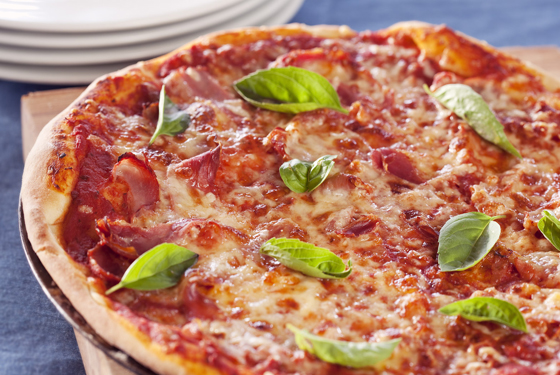
I find  that analysing people’s pizza preferences is a useful, if highly unscientific, means of personality profiling. For example, people who favour thin-crust wood-fired Margheritas are typically dashing, intelligent and in possession of the most discerning tastes and rapier-sharp wit. At the other end of the spectrum, the less said about fans of grease-sodden franchise-extruded Hawaiians (pizzi that is) the better. Have I ever told you that I really like a well executed Margherita (pizza that is)? Continue reading

Breast Feeding Hullabaloo

Virgil Evetts

“THOU SHALT NOT BREAST FEED AT THE TABLE.  Yes, I have seen table-side breast feeding at a four-star restaurant. If at all possible, take it to the ladies room. (Note: most upscale restaurants have really nice restrooms!)”

So began the ‘10 commandments of dining with little kids’, published in that bible of genteel fustiness, Better Homes and Gardens magazine, this week – to massive international outrage from mothers and parenting groups. The publishers back-peddled like crazy, removed the offending/offensive passage from the web version, and issued a formal apology. All is forgiven.

Well no, there are still throngs of seriously pissed-off mothers out there who will be unlikely to pick up a copy of BH&G anytime soon. Fact is, this was a startling stupid, offensive and prudish statement to make in a publication read mostly by women – particularly ‘nesting’ new mothers. It shouldn’t have made it past the editors.

The rest of the highly offending article is actually made up of some pretty good advice, so one wonders how the writer, known only as Heather W(apparently a mother herself), made such an egregious, poorly judged blunder.

Having worked for many years in a public venue popular with families, I don’t bat an eyelid at the sight of breast feeding; I couldn’t care less if it’s going on at the next table in a restaurant. The adults are eating, so why not the baby too? Although I guess it could count as bringing in outside food.

I do however question the appropriateness or wisdom of taking a baby to a four-star restaurant. Doing so is hardly considerate to your fellow diners and is not likely to be much fun for you either. Baby WILL get bored/tired/hungry/ and cry; other diners WILL give you disapproving looks and the braver ones may even complain.  Is it really worth the stress for all involved?

Get a bloody babysitter.

What do you think? Is tableside breast feeding in restaurants ok?  Do babies even belong in restaurants?

Soup Yourself

Virgil Evetts

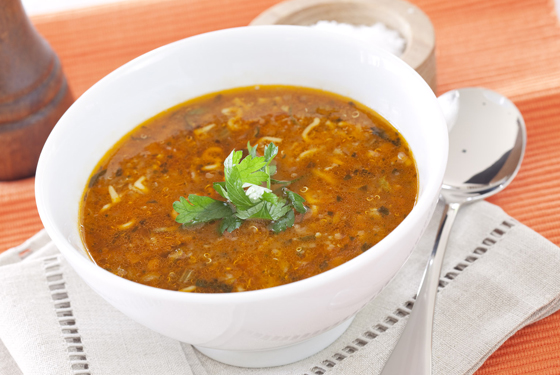
There is plenty to dislike about winter – the rain, the cold, the gloomy grey skies – but it does bring out the best in those of us of a food-centric disposition. While others spend the winter in sulky hibernation we busy ourselves in the kitchen, making the most of robust winter produce, and doing our very best to fill the house with the welcoming, homely aromas of stews, casseroles, pies   and soups. Continue reading

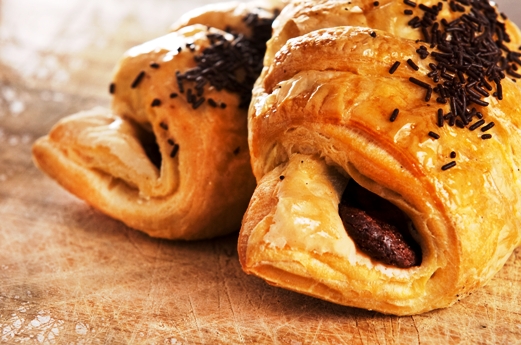
“It’s Complicated” Chocolate Croissant

As featured in “It’s Complicated” from Universal Pictures.

These are best eaten fresh but if you do want to keep them for a day or two, store them in an airtight container once fully cooled and gently reheat before serving. You can try substituting white chocolate for a special treat.

Ingredients

170ml cup milk

4 cups to 4 1/2 all-purpose flour,divided

60ml vegetable oil

3 mini chocolate bars

250g butter, softened

2 tsp salt

2 large eggs

¼ oz fresh yeast

3 tblsp caster sugar

125ml warm water

Place butter into a rectangle on wax paper and place in fridge to chill. Add yeast, 1 tablespoon sugar, and water to a bowl and mix, leaving to stand for 5 minutes. Whilst heating milk, add remaining two tablespoons of sugar, half the amount of flour, vegetable oil, salt and eggs into the yeast mix and mix ingredients together until smooth. Gradually stir in remaining flour until you have a soft dough. Sprinkle flour onto a hard surface, turn out dough and knead until smooth and elastic. Place in a well-greased bowl and turn dough over, so the top is greased. Cover and place in a warm place to rise for 1 hour or until doubled in size. Push dough down. Cover with plastic wrap, and chill dough for a further 1 hour. Turn dough out onto a lightly floured surface, and roll out. Place chilled butter rectangle in centre of dough, and carefully fold dough over butter. Pinch the edges to seal. Roll dough out again; fold into thirds, beginning with short side. Cover and chill for 1 hour. Repeat rolling and folding procedure two more times, chilling dough 30 minutes each time. Wrap dough in aluminium foil, and chill for 8 hours. Divide dough into equal portions and roll into balls. Take 1 ball and roll flat on a floured surface, and cut into wedges. Put 3 pieces of chocolate in the wide end of the wedge of dough and roll the wedge to meet the thinnest part, curl the edges of the dough into a crescent shape and pop onto baking tray. Cover over and keep in a warm place for 30 minutes or until doubled in size. Repeat for all wedges and remaining dough. Put in oven on Gas mark 7/220°C for 8 minutes or until lightly golden. Place on wire rack to cool and enjoy! 

It’s Complicated. Buy it now on Blu-ray & DVD


©2010 Universal Pictures, All Rights Reserved

  Continue reading

Comfort Food


Debbie Byrom

Last night the oil heater had to be creakily wheeled out from under the house, filling the house with that concerning burnt dust smell of appliances that have been lying dormant. A whole day had past, I was cold, it was 6pm and up to that point all I had eaten was two weetbix (not a wise move nutritionally I realise but sometimes these things just happen).

The blonde tried, in vain, to convince me that eating out was in order – that nesting in a warm restaurant somewhere, marinating in the fug of someone else’s cooking would be preferable to coming home to a cold house. I can see his point but I had tunnel vision.

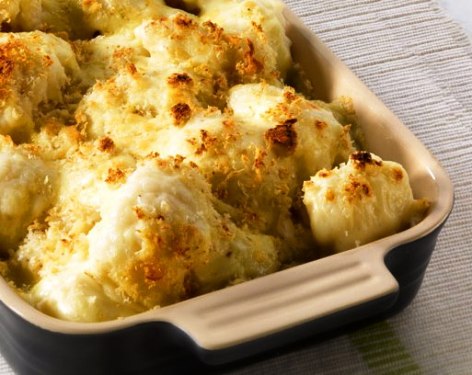
I needed cauliflower cheese.

I was in need of comfort and I required comfort food. I made a big bowl of cauliflower cheese, wrapped myself in a rug on the couch and stuffed myself with hot cheesy goodness in front of the TV. It was true happiness, like a hug from the inside, if lacking a little something nutrition wise.

Comfort food is a very personal thing – my needs occupy a relatively narrow space incorporating starch and dairy. I am a self confessed potato addict – A good noodle soup would be the only outlier, particularly the beef dumpling soup from the T-mark lunch bar in Newmarket – I am so emotionally reliant on this soup that I feel I would be unable to move too far away from Auckland.

I lived in Dunedin for nine long winters. As a student with a weekly grocery bill of $20, culinary options were limited. I lived off these –

Ultimate comfort food potatoes

Baking potatoes

2 parts hoisin sauce

1 part whole grain mustard

Preheat oven to 200C.

Microwave potatoes until cooked or almost cooked. Remove and cut slices across the top, hasselback style (using a tea towel to hold the potatoes and prevent burns!). Place on a foil or baking paper lined plate. Mix together hoisin and mustard and spread mixture over the top of the potatoes, pushing it into the cuts as you go. Place in the oven and cook for approximately 15 minutes or until the tops have started to caramelise Allow to cool at least slightly before wolfing down in front of bad day time TV.

Real comfort food is quite primal and often not the healthiest or most glamorous and while emotional eating as such is considered a bad thing there is something deeply fulfilling about a bowl of exactly what you needed, just when you needed it most. What is your personal comfort food?

Let them eat (chocolate) cake

Virgil Evetts

Chocolate. Cake.  Two words with such a natural affinity for each other, they almost roll of the tongue as one.  Though there are many, many different types of cake in the world, in the end there is really only chocolate cake.  In the presence of a perfect slice, the rest of the world simply fades away. Continue reading

Cat Food-How bad can it be?

Virgil Evetts

I once met a man who from time to time ate cat food. He was neither crazy (well, not dangerously so)  nor destitute, he just liked the flavour of a certain brand of cat-sardines better than their pricier human-aimed counterparts. He also claimed jelly meat wasn’t bad…

I wasn’t convinced and have not, and probably will not, put these endorsements  to the test anytime soon (although we live at sea level, about 100 metres away from the water’s edge and are woefully ill prepared for a tsunami, or similar, so wait and see…).

But what I wonder is, apart from a rather laid-back approach to food hygiene standards on the production line, is there any reason why we shouldn’t eat cat food? Cats are fussier than most people when it comes to food, so you have to assume the stuff tastes ok.  Most of the expensive little cans my cats favour are full of intriguingly lurid ingredients (many of which I quite like too), such as duck, shrimp, chicken liver, “flaked white-fish”, “wild game,” various vegetables and even cheese…quite a bit better than most of what I eat.  You might well say I’m falling straight into the marketers’ trap by buying for my cats with my own tastes, but even if these seemingly ‘haute cuisine’ products are mostly bulked out with horse meat I’m still interested (I don’t trust horses – too much snout – but I’m very happy to eat them, and have done so on several occasions.  That is to say I’ve eaten horse meat on several occasions, not whole horses).

When I think about it all that really puts me off eating cat food is the way it looks, the horrid, wet shucking noise it makes when it slides out of the can and that pervasive bully-beef odour. Oh, and the whole social taboo thing too I guess.

Dog food, however, I wouldn’t go near if you paid me. (Well maybe if you paid me.).  Dogs are classless, crass and indiscriminate creatures. They will just as happily eat a pool of vomit as a nice piece of sirloin, so any food aimed at their dubious tastes should be approached with caution.

So. Am I the only person who has glanced at the ingredients in  Señora  Cat-o’s dinner and thought… could I?

Creamy Mashed Swede

 Janet Chang

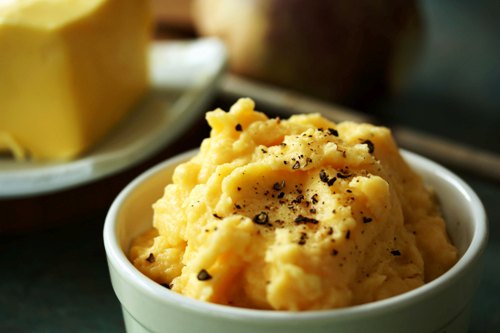
I recently discovered swedes at my local green grocer. I believe they are called rutabagas in America, but I don’t recall ever seeing it there. They seem to be more commonly available in New Zealand and I can’t believe it took me this long to discover this vegetable. It looks like a cross between a beetroot and turnip with a slightly yellow creamy color with the slightest hint of a deep beetroot like color on the outside. Compared to a potato, a swede is much lower in calories and carbohydrates making it my new favourite root vegetable. I’m generally not a huge fan of mashed potatoes but I loved the taste of this recipe. It’s super rich, just slightly sweet with the perfect amount of buttery goodness.

Creamy Mashed Swede

450 grams swede

3 tbs cream

2 tbs butter

1/2 tsp salt

Peel and chop the swede into small cubes. Boil the cubed swede in water until tender. Drain. In a food processor, add in the remaining ingredients and process until smooth. Serve warm. Makes 4 very rich servings.

(www.pantrybites.com)