Roast Beef with Yorkshire Pudding

 Roast Beef – Alison McKee

It can be daunting, even for experienced cooks, to ‘turn out’ the perfect Roast Beef as everyone has an opinion on the correct degree of ‘doneness.’ I like my beef to be rare – medium rare but often my guests like their beef to be medium – well-done. No-one, in my opinion, likes to see meat swimming in a pool of red juices!

The secret is of course to rest the meat for approximately 5 minutes for every 500g meat before carving and serving. Resting enables the temperature of the meat to even out causing the meat fibres to relax and reabsorb some of the juices. Remember that the internal temperature will continue to rise after the meat is removed from the oven and during the resting time. So you need to allow for a ‘carry-over’ cooking time.

The cuts of beef most suited to roasting at a high temperature, 200° C, are fillet (tenderloin), rib-eye (scotch fillet), standing rib, wing rib, sirloin (porterhouse), and rump. Before cooking the meat should always be brought to room temperature and the oven preheated. Trim the excess fat and silverskin if necessary. Tie the beef with cooking string to help maintain the shape during the cooking process. After seasoning brown the meat in a medium hot pan before placing the meat on a rack to roast. A rack allows even heat circulation and browning. The degree of ‘doneness’ can be judged by touch – soft and springy (rare), slightly firmer (medium), firm (well done), by sight – testing the colour of the meat juices or by using a meat thermometer – 60°c is medium rare. Remove the string after resting and before carving.

A roast of beef is, for me, a celebration and would not be complete without Yorkshire pudding. Yorkshire pudding or ‘dripping/ batter pudding’ dates from the mid-eighteenth century. Hannah Glasse’s The Art of Cookery made Plain and Easy 1747 is cited as containing the first known recipe. Traditionally Yorkshire pudding composes of egg, flour, and milk, mixed to a batter then rested and cooked in a large shallow tin under the roasting meat containing a layer of very hot beef dripping that enables the pudding to puff. Strictly speaking the pudding should be cut into squares and served with gravy before the meat, to take the edge off the appetite. Left over Yorkshire pudding was served cold, as a treat for children, sprinkled with sugar or drizzled with golden syrup.

Like all recipes Yorkshire pudding as evolved over time. Today Yorkshire pudding is most often baked in muffin tins, similar to the American version of popovers, and served alongside the roasted beef with gravy. Modern interpretations include baking in dariole moulds, adding sun dried tomatoes, black olives, grainy mustard, pesto or fresh herbs to the batter, and of course, Nigella Lawson’s Yorkshire pudding served as dessert with Golden Syrup and pouring cream. My favourite variation on this classic dish is, however, ‘Toad in the Hole’ – sausages in Yorkshire pudding batter with gravy and pea puree!

Yorkshire Pudding.
1 heaped breakfast cup flour 1 pint milk, good measure ½ teaspoon salt 3 eggs 1 tablespoon dripping
Sift flour into a basin, sprinkle salt over it, and make a hole in the middle. Break each egg separately, and stir gradually in, add sufficient milk with wooden spoon until thick batter, then add and mix remainder of milk, and allow the batter to stand for half-an-hour. Place the dripping into a baking dish, make quite hot, and pour in batter; bake slowly for half-hour.
A layer of raisins put in bottom of tin before pouring in batter makes a nice raisin. Batter Pudding; try this. (quoted from The ‘Sure to Rise’ Cookery Book T. J. Edmonds, 1914.)

Pea Puree or Squishy Peas
2 cups frozen peas
Chicken stock or water
1 tbsp butter
Cream (optional)

Cook the peas in chicken stock or water until tender. Drain into a bowl reserving the liquid.
Either: Add the butter to the peas and roughly mash with a potato masher.
Add the cooking liquid back to the peas spoonful by spoonful, beating with a wooden spoon until the peas have absorbed enough liquid to be moist and squishy.
Or: Combine the peas and butter with 2 tbsp of the cooking liquid in a blender. Blend until pureed adding additional cream or stock to reach the desired consistency.

Soup Recipes

Soup must be one of man’s oldest foods since it would have been discovered at the same time as boiling was used as a method for cooking.

I love the versatility of soup – it can be thin, thick, smooth or chunky and even hot or cold. 
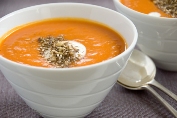
Soup can precede dinner or be the hero of the meal itself.   At this time of year I tend to gravitate to the thicker varieties such as roast pumpkin soup,  (pictured), leek and potato, garlic soup, mussel chowder or cream of mushroom

I often make soup first thing on a Sunday morning and the aroma from the gentle simmering soup permeates through the house and by early afternoon it is enjoyed with warm cheese scones.

Soup is restorative to those not feeling well in particular chicken soup is often given to those feeling under the weather. A large saucepan of traditional vegetable soup simmering on the stove can also create a feeling of wellness to any home.

Asian noodle soups generally have a wonderful array of flavours and textures.  If you are lucky enough to be able to buy BBQ duck then try this duck and noodle soup.  This Thai noodle soup is also great as are wonton noodle soup and pork noodle soup.

There are a few tips to good soup making.  A rich flavoursome stock is essential, either homemade or purchased, the flavour will determine how good your soup is. 
Sweat your base vegetables – onions, celery, carrot, leek etc… in oil or butter prior to cooking.  This helps to intensify the flavour.
If you are using fresh herbs in the soup add them again at the end as often herbs lose their flavour during cooking.

 Garnishes and accompaniments can be as varied as the soup itself.  I love dukkah and have been sprinkling that on my pumpkin soup along with a good swirl of greek yoghurt.

Popular soup garnishes

Sour cream, cream or yoghurt
Fresh herbs or edible flowers
Crisp fried onion,
Parmesan cheese
Croutons – plain, garlic, cheese, bacon
Fine strips of omelette
Pan fried sage
Finely chopped fried leek or parsnip
Toasted nuts or seeds
Salmon roe
The first restaurant to open was in Paris in 1765 by M. Boulanger a soup vendor.  Above the entrance to his shop was inscribed Venite ad me omnes qui stomacho loaboratis et ego restaurabo  (come to me all whose stomachs cry out and I will restore you).

Upside Down Cakes

There is something very comforting about an upside down cake.  Perhaps it is its homely rustic qualities that differentiate it from many other cakes.

I don’t know what started my fascination but this winter upside down cakes and puddings have featured high on my list of favourites.

My mother in law has a lovely recipe for a variation with walnuts and my own repertoire includes blueberry, banana, apple and of course the ubiquitous pineapple.  While I prefer to use fresh pineapple, for years the very sweet canned pineapple version has graced many an afternoon tea or supper.  Historically, it is likely that the first oven baked upside down cakes were made with canned pineapple, records date back to the early 1900’s sometime after the opening of the first pineapple canning factory in the US.  While other upside down cakes featured as early as the Middle Ages, they were cooked in a frying pan as opposed to an oven baked cake.

While most fruits or nuts can be used on their own or combined the general idea is that brown sugar and butter form the important caramel that coats the topping and gives the cake its sheen and ultimate appeal.    Visual appeal rates highly with upside down cakes so when you are arranging your fruit or nuts in the base of the pan remember that they are eventually the star of the show and organise them accordingly.

This upside down pear cake is delicious although I am about to do some more experimenting with gingerbread style cakes.

Cooking with Chickpeas, Beans and Lentils


Chickpeas, Beans and Lentils – Lynley Ruck

There are many very good reasons to eat Lentils, Chickpeas and Beans, they are nutritious, inexpensive and very versatile. Many of us feel at a loss as to how to prepare and cook these powerhouses of protein, but with thousands of variations of traditional recipes available – they can be easy, cost-effective, rewarding and most importantly delicious. Although they make pretty good eating in their own right – I like the combination of beans and pulses with meat, they are a perfect receptor of meat juice and flavourings.

Dried vegetables are almost as old as time, broad beans and lentils were known to the Egyptians, and chickpeas were part of the ancient Roman’s daily diet. Beans and legumes were an important alternative source of protein throughout old and new world history, and with food prices headed in the direction they are, why not incorporate a few into your weekly menu?

Chickpeas are also known as garbanzo beans, Indian pea, ceci bean (where the name “chickpea” originates), bengal gram and channa; they are high in protein and are grown in the Mediterranean, western Asia and India.

Oozing with versatility, chickpeas can be used successfully in salads; I particularly like the marriage of chickpeas, pumpkin and feta. They make wonderfully creamy dips – need I mention the ubiquitous hummus? I like to add mystery ingredients like olives and sun-dried tomatoes. Chickpeas can also form the foundation of vege burgers, falafels and often accompany meat and vegetables in traditional soups, tagines and cassoulets. Harira is a one dish meal with both chickpeas and lentils and is traditionally served in the middle east during Ramadan, when Muslims fast between sunrise and sunset, a delicious, velvety and nourishing way to break a fast.

If you have that rare ability to plan meals ahead of time, chickpeas are easily soaked overnight and boiled in fresh water* for about 2 hours – or until tender – but beware that some imported beans and legumes are now heat treated and may not soften so easily – it’s a bit of a gamble. When spontaneity overtakes me, I always have a can or two of chickpeas in the cupboard, combine them with steamed couscous and vegetables with a sprinkling of chopped herbs – they provide sustenance almost instantaneously!
* don’t add salt to the cooking water as this can prevent beans from softening.

The lowly lentil has been sustaining man for thousands of years. Some considered lentils to be poor man’s food and refused to eat them. Although they may be inexpensive, lentils are very nutritious, filling, and more importantly, flavourful.

Lentils were one of the first crops domesticated in the Near East and with 26% protein is a very important part of the diet in many parts of the world, especially in India, which has a large vegetarian population. A variety of lentils exist, with colours that range from yellow to red-orange to green, brown and black. For the most part, you can substitute any colour lentil for another, although some cook up firmer than others. The red lentils soften quickly while the sophisticated French du Puy and the sexy black Beluga lentils tend to retain their shape for longer.

 Lentils make hearty savoury winter fare; they are warming, comforting and highly nutritious. Teamed up with a spicy sausage this Chorizo & Lentil Soup is a favourite of my family – serve with simply crusty bread, butter and plenty of sea salt and freshly ground pepper. Omit the sausage and the meal is completely vegan.

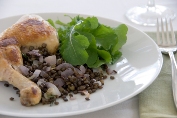
Lamb and lentils cooking slowly are absolutely unctuous. I have teamed up lamb shoulder steaks and glamorous (read: twice the price) French du Puy lentils in this ragout, but you could use either brown or green lentils and any cut of lamb would be fine.
Beans or legumes are again an ancient form of sustenance known from prehistoric times and are also packed with protein. After soaking overnight, dried beans can be cooked in a pot on top of the stove, in a pressure cooker or in your microwave. Again many different varieties are available tinned and pre-cooked, eliminating the time-consuming stigma often attached to preparing these valuable, versatile legumes.

Black beans or kidney beans are used to perfection in these Spicy Bean Patties, which teamed up with a salad and the lemony fresh mayonnaise makes a perfect mid-week meal that the kids will love.

Bean sprouts are extremely good for you, and although we are used to seeing mainly mung beans or alfalfa sprouts sold in supermarkets, you are actually able to sprout any legume and include it in your diet for extra vitamin B1, B2, C and all important iron. Choose from adzuki beans, mung beans, soya beans, chickpeas or even du Puy lentils or green lentils. Wash, pick over and soak your chosen beans in a jar or bowl, and rinse and drain morning and night until sprouts appear – it is that easy!

Often beans respond very well to long slow cooking; it enables them to take up flavour and to become really tender. I adore Nigella Lawson’s recipe for slow cooked leg of lamb on beans, and have used her recipe as inspiration for the following using pork, kumara and black beans instead. Again it is heart winter fare with a hint of citrussy sweetness. Made in a slow cooker, or in the oven, this dish is a perfect Sunday night “hunkering down against the elements” kind of dinner.

Don’t be afraid to use chickpeas, lentils and beans, these versatile staples have been around for thousands of years and something tells me they are going to become a lot more popular with people in all cultures.

Balsamic Vinegar Uses

Balsamic Vinegar – Alison McKee

Balsamic vinegar is the aristocrat of vinegars. Unlike other vinegars made from sour wine balsamic vinegar is produced from must, freshly pressed grape juice, which is boiled and reduced concentrating the sugars before aging in barrels. The barrels also play an important role in the flavour profile of balsamic vinegar as different woods – oak, chestnut, juniper or cherry, ash and finally mulberry are used during the aging process. The most famous and authentic balsamic vinegars are produced from Trebbiano grapes in the Modena region of Italy and can be aged up to 25 years which makes them an expensive pantry item. So exquisite are these vinegars that they once formed part of a bride’s dowry.

There are several balsamic vinegars available on the New Zealand market at various price points. Often specialty stores and delis will allow you to taste before purchase. Look for dark fragrant balsamic vinegars that are smooth and syrupy in texture and taste of delicate sweet and sour flavours. Avoid those that are heavy and musky, smelling and tasting of acetic acid. The better the quality of balsamic vinegar the less you need to use.

Balsamic vinegar transforms simply roasted vegetables into stand-alone dishes.

Tomatoes roasted with olive oil and a drizzle of balsamic vinegar served alongside slow roasted stringy lamb with White Bean Puree would have to be one of my favourite food combinations.

Roast Carrots in olive oil until soft. Drain on absorbent paper then combine with 1/8 cup balsamic vinegar, or to taste, and 1/3 cup of chopped mint. Season with sea salt and black pepper. Serve warm.

Slice Potatoes and Red Onions into quarters. Sautee in butter, tossing frequently until lightly browned. Transfer to an ovenproof and add 1/4 cup of balsamic vinegar and fresh thyme. Season. Cover and bake 200° for approx 20minutes. Remove the cover and add a further 1/4 cup of balsamic vinegar and continue to bake until the thyme is crisp and the potatoes take on the colour of the vinegar.

Roast Beetroot cut into chunks or whole Baby Beets in olive oil until tender. Heat a small frying pan with 3 tablespoons of balsamic vinegar and reduce until sticky. Toss the beets until coated and serve with your favourite goat cheese or vine-ash camembert and crusty bread.

Fresh Asparagus Tossed In Sticky Balsamic
Roast Pumpkin & Feta Salad
Caramelised Red Onion Tart
Eggplant, Goats Cheese And Pesto Stack

Strawberries macerated in balsamic vinegar is a classic dish but be warned unless your vinegar is of good quality this dish can be a disaster! Serve with a crisp biscuit, such as cat tongues or biscotti, and a good quality vanilla bean ice-cream or mascarpone.

Balsamic vinegared Dried Figs in red wine are a perfect accompaniment to blue cheese and chunks of ciabatta. Add 1/4 cup of balsamic vinegar to the Foodlovers recipe Dried Figs In Red Wine Syrup. The affinity between fruit and balsamic vinegar is not just limited to red or dried fruits.
Balsamic provides the perfect foil to enhance Pears and Nectarines. Simply slice nectarines and arrange on a platter with crispy prosciutto and thyme. Drizzle with balsamic glaze and serve.
Pear, Parmigiano, Prosciutto And Walnut Salad

Balsamic Glaze
90gm sugar
185ml water
90ml balsamic vinegar
Over a medium heat combine the water and sugar and cook until syrupy. Add the Balsamic vinegar and reduce by half. Reserve until required.

Ricotta, Pepper And Rocket Rolls
Citrus Glazed Regal Marlborough Salmon
Walnut Vinaigrette
Asparagus With Poached Egg

Lamb Shank And Parsnip Pie

Cooking Leeks

Leeks – Alison McKee

Leeks have a great affinity with potatoes and many traditional dishes such as Scottish Cockie Leekie soup and the Welsh Cawl Cennin are based on broths containing leek and potato. The secret to making a tasty Leek and Potato Soup is to make sure the vegetables are ‘sweated’ in butter, but not coloured, and to add a flavoursome stock. If you are feeling a little indulgent add oysters. Leek And Potato Soup (with Oysters!) Vichyssoise a chilled and creamier version of leek and potato soup is said to have been created by French chef, Louis Diat early in the 20th century at the Ritz, New York and is regarded as a component of American cuisine not French!

Leeks are much more than just a soup ingredient. Try roasting leeks trimmed into lengths with olive oil and fresh thyme. Roast until caramelized. Add ¼ cup currants and dress with a Walnut Oil Vinaigrette. Steam baby leeks or leeks trimmed into lengths over a layer of fresh bay leaves in a steaming basket until tender. Drain and arrange in baking dish. Melt 50gm butter with 1 teaspoon of orange zest. Baste the leeks with the butter and grill until brown. Serve with the orange butter spooned over. Sauté sliced leeks in butter then add one tin of cooked Butter (Lima) beans. Heat and add grated parmesan to taste. Season. Serve with roast meats.

Leeks are robust enough to braise especially in wine. The wine keeps the leeks firm for a longer time than if they were braised in stock or water. Trim the leeks into lengths and cook in butter over a low heat, approximately 5 mins until the leeks are coated with butter. When softened add one clove of finely sliced garlic and one tablespoon of flour. Cook gently on a low heat for a few minutes. Add red wine to cover and bring to the boil. Cover and simmer until the leeks are tender. Season and sprinkle with chopped parsley and serve, again, with roast meats.

Nothing beats a Chicken and Leek Pie as a family favourite. Adapt the recipe on Foodlovers by using pre-purchased pastry, convenience stock and substituting a whole chicken for boneless chicken thighs if you are short on time. Make your favourite Quiche recipe using sautéed sliced leeks, Parma or shaved ham and grated Gruyere or Emmental cheese. Alternatively create a rustic tart by crumbling goat or cow’s feta cheese over caramelized leeks and pitted black olives on a sheet of pre- purchased puff pastry. Drizzle with olive oil and bake until golden.

Chicken With Basil And Leeks
Bacon, Leek and Potato Tart
Chicken, Leek and Mascarpone Risotto
Bouillaisse

Chicken and Beef Stock

Last week on the Radio Live kitchen and Garden show Hester Guy and I discussed the merits of a good homemade stock and how we make them.
Good stock is the basis to a well flavoured dish, if you use inferior products then the end result will not be as good.
I generally use chicken or beef stock for all of my cooking – at times I have made fish stock but after hearing Martin Bosley (Yacht Club, Wellington) at Savour New Zealand say that he only allows chicken stock to be used with fish and seafood I have changed my mind. 

While there are times (and lots of them) that I use good quality commercial stocks such as Essential Cuisine, I do like making stock and also I think there is a satisfaction that comes with making the meal from scratch.  I am still working on growing my own vegetables and can’t imagine that I will be rearing our meat anytime soon!

With the rising prices of food making your own stock is also really economical and in the case of chicken stock it can be made with carcasses that would be otherwise thrown in the bin.
Salt is something that should be avoided or used very sparingly when making stock – reason being is that once the stock is reduced the flavour is concentrated and you don’t want to end up with something over salted.
Chicken Stock
After I have roasted or poached a chicken and removed the flesh I then add other chicken frames to a roasting pan as well and then gently roast them all at 150 C for 30 minutes or so.  These frames are then placed in a large saucepan and covered with cold water (also pour in anything from the roasting pan).  Add sliced carrot, onion, celery, leek, piece of lemon rind, bay leaf and parsley stalks and simmer for 4 hours or so.  Skim any solids off the surface of the stock as they rise.  After 4 hours, strain the stock and then refrigerate, lift of any fat that rises to the surface.  At this stage I will perhaps use some of the stock for soup or I will reduce it further to make a concentrated stock and then freeze it in plastic tubs.

Beef stock is made with either sliced shin or you may buy a bag of beef soup bones.  These I scatter into a roasting pan along with a drizzle of olive oil and a good squeeze of tomato paste.  Onion, carrot, celery and garlic are added to the roasting pan with the bones.  Roast at 180 C for 1 hour and then transfer to a large stock pot and cover with cold water.  Bring to a simmer and skim off any sediment that rises.  Continue to simmer this way for 8 hours and then strain, cool and remove any fat.  This is then great for vegetable soup or can be reduced for a more concentrated flavour and frozen for later use.

Quick and Easy Pad Thai

A couple of weeks ago we had the parents of Daisy’s year 2 class to dinner.Often the working parent/s doesn’t get to meet the adults attached to the little people who come to play and we thought it would be a good idea to get together.

Getting a parent organised and out to drinks at 7.30 on a week night can take a bit of juggling so dinner was a more practical option. 

We were lucky to get a good response and at last count our numbers tallied to 30.  Numbers like this can be intimidating but it really is all about working out a menu to suit and preparing ahead of time.  I opted for an Asian style meal, Asian dishes are suited to buffet style eating and it also gives people good choices.

Thai chicken curry is the easiest of dishes to make for a crowd and there are great supermarket curry pastes in sachets with comprehensive instructions on the back.  Rice can be steamed hours ahead as long as it is quickly cooled and then reheated as needed.    Peanut sauce is popular, can be made a good day or more advance and the accompanying kebabs quick to cook at the last minute. The only dish we had that required cooking at the time was Pad Thai. 
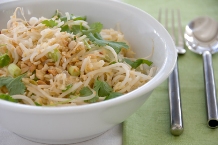
Pad Thai is popular with everyone and kids love it.  You can vary ingredients to suit and aside from the 15 minutes to soak the noodles, the rest of the dish is literally made in 10 minutes.

The dinner was a great success and maybe after a break I will do the same for Jemima’s class.

Pad Thai


Slow Cooking Meat

Braising or Stewing?  Alison McKee
It can be a little confusing defining the culinary terms Braising, Stewing, Casseroling, Pot Roasting and Hot Pot. However, what they all have in common is long slow cooking in liquid making them perfect rich and hearty winter fare with the added bonus of being able to adapt them for slow cookers or crock-pot cooking.
One sign that braised or stewed meat has been heated gently and gradually is that the meat, although ‘well done’, retains a distinct red colour.

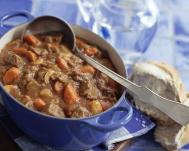
Casseroles originate from the ancient practice of stewing meat slowly in an oven and then serving it in its earthenware cooking container. Types of casseroles include ragout, cassoulet and carbonnade – a traditional Flemish beef stew made with onions and dark beer. Duck and Pork Cassoulet. Duck Ragout. Braising is similar to casseroling except the meat and vegetables are cut larger and are cooked in a smaller amount of liquid. Beef Braised with Onions and Mushrooms. Stewing is regarded as a cooking process whereby heat is applied to the bottom of a cooking vessel.

So where do Pot Roasts and Hot Pots fit in? Pot Roasting can be described as the cooking of a ‘roast’ sized piece of meat, usually beef, with root vegetables and small amount of liquid in a covered dish and again heat is applied to the bottom of the cooking vessel. In the early stages of cooking the meat exudes juices that gradually evaporate and the meat then begins to take on a rich roasted colour. Hot Pot, such as the traditional Lancashire Hot Pot, consists of lamb and root vegetables – as much food can be added as will fit in the pot – covered with sliced potato or pastry. Lamb Hot Pot. What makes these dishes even more attractive is that they use tougher and often, if you are prepared to shop around, cheaper cuts of meat.

There is nothing heartier than topping your casserole or stew with Dumplings or use your favourite scone dough with the addition of freshly chopped herbs, grated cheese or a dusting of paprika. Gremolata – finely chopped garlic, parsley and lemon zest – sprinkled on top of your ‘casserole’ just before serving adds a fresh zing. Vary your ‘mash’ – add wholegrain mustard or winter greens to potato. Substitute potatoes for mashed parsnip, celeriac or Jerusalem artichokes. Roast whole heads of garlic in olive oil until soft but still plump and serve halved and squeezed onto your favourite baked or brought artisan bread. Think soda bread, baguettes and cob loaves, and most of all enjoy sopping up the meat juices.

Osso Buco
Beef and Parsnip Casserole
Beef Guiness and Mushroom Pies
Lamb Shank and Parsnip Pie
Tasty Crockpot of Lamb

Indian Curry Cooking


Indian Food – Lynley Ruck

Describing “Indian” food is like describing “Italian” food, you don’t. Indian cuisine reflects the many diverse geographical regions, cultural and religious beliefs with each offering various tastes, textures and aromas. The combination of fresh ingredients, ancient spice mixes, and centuries of knowledge often culminates in food that not only offers great flavour depth, but is often extremely healthful also.


Pulses or beans and lentils are a main source of protein for the millions of vegetarians in India and are very versatile. My favourite when eating out is Dahl Makhani and it is easily recreated at home for a quick nutritious curry. I like to serve cumin rice  with curries.

Lentils, chickpeas and kidney beans can be bought pre-cooked in tins or dry – in which case they often need soaking overnight and then simmered for up to 1-2 hours depending on the variety being used. Asafoetida, a powdered herb that smells like, and sometimes replaces, onion is often added to combat flatulence.

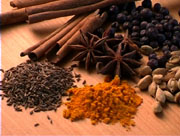
To anyone else walking into the Aladdin’s Cave that are the Indian Supermarkets it can be a little overwhelming, the sheer number of spices on offer, the exotic aromas and foreign labels may seem difficult to comprehend.  But forget the labels and just enjoy the experience, you can be sure that most common spices are recognisable and extremely fresh, most often due to the high turnover of stock. This is important if you prepare your own spice mixtures from scratch, the incredible flavour garnered from freshly roasted and ground spices just cannot compare to a cardboard packet that has vegetated in your pantry for any longer than 6 months.

But for those of us a little less adventurous these stores a chock full of ready made spice pastes and powders, it just takes a little investigation and imagination and you can walk out with a number of semi-instant meals for very little outlay. Chickpea curry or Chana Masala  is another favourite of mine and if you buy some premixed garam masala you are half way to a very tasty vegetarian dinner. Garam Masala means hot (Garam) spice (Masala) and is not a spice in itself. It is a spice blend used throughout India. This blend of spices is usually fried at the beginning of cooking to add a subtle flavour, garam masala is added in small quantities or it can be overpowering. Many different recipes can be found depending on the region and personal preference. Garam Masala does not however keep well for extended periods and you are advised to buy it fresh as required.

Of course the gorgeous spice mixtures go perfectly well with various types of meat. A particularly tasty Chicken Curry  comes to mind – and well worth trying with chicken thigh cutlets that are often at a good price in the supermarket. Bone in gives more flavour and is a more traditional way of eating chicken. Ensure you allow plenty of time for marinating and you will not be disappointed.

I think in these times of increasing global food shortages, food miles with an ever increasing amount of land being used to produce feed for animals as opposed to humans – a couple of vegetarian meals a week will go a long way to mitigating our impact – and these recipes not only give spectacular flavour – but wonderful health benefits as well. Enjoy.

 Butter Chicken
Naan bread
Onion Bahjis


Unbaked Slices

Unbaked Slices – Tammy McLeod 

Unbaked slices are one of the easiest things to make but can look the fanciest depending on how you present them. They can be made anywhere, anytime and with the most rudimentary of cooking equipment – all you need is a bowl, a spoon and something to set your slice in. They are also a great way to get kids baking as there are usually not too many tricky components.

One of the most popular unbaked slice is chocolate fudge cake. My Mum’s recipe is fail proof and is simply butter, condensed milk and cocoa powder melted together, with crushed plain biscuits (eg wine biscuits) stirred through. For an everyday slice you can ice it with a simple chocolate icing made with cocoa, icing sugar and water. But to dress it up you can add dried fruit and /or chocolate chunks to the mixture and ice with real chocolate melted with a little oil.

Fudge cake is also very versatile. Try citrus slice by leaving out the cocoa and adding some lemon or orange juice and zest and topping with matching icing, or make a fruit slice by adding dried apricots and coconut for a difference. Adding some chopped walnuts and strong espresso makes a wonderful coffee slice. For a touch of decadence, try covering your slice with cream cheese icing and topping with toasted flaked almonds or chopped walnuts. This is great served as dessert with lightly whipped cream or yoghurt.

Lolly cake in its log shape is another perennial un-cooked favourite. Try something different along the log theme, by using shortbread broken into large chunks combined with good quality dark chocolate and use dutched cocoa when mixing the condensed milk and butter together. Use a loaf tin to mould your log and when firm, cut into thick slices, dip half in melted chocolate and you have an elegant nibble to have with coffee.

Cafés often have huge wedges of slice, but at home I prefer narrow fingers. Using a ruler is a good way to get uniform pieces. For a platter of sweet nibbles I like to cut slices into bite size squares and alternate rows of different slices or other sweet treats. You can even roll your slice mixture into small balls and roll in coconut or chocolate hail, or chill until firm and dip in melted chocolate.

Coconut and Apricot Fudge Squares
Ginger Fudge Slice
Chocolate Rock Slice

Lamb Shanks

Up until a month ago I have always cooked lamb shanks in my Le Creuset as a braise and have always been happy with the result. The shanks were always dusted with seasoned flour and then browned in oil in frying pan first and then transferred to the casserole along with onion, carrot, tomato paste, thyme, garlic, a can of tomatoes, beef stock and a splash of red wine. This is my basic family recipe although if cooking for adults I often add anchovies or olives and a much bigger splash of red wine.I also really like lamb shanks taken off the bone and turned into a pie topped with parsnip.

After interviewing Hester Guy on Radio Live a couple of weeks ago my shank cooking has turned another direction. Hester’s slow cooked lamb shanks are delicious. The whole dish is cooked in roasting pan so the meat is more roasted than casseroled. Rather than using a splash of red wine Hester opts for the entire bottle – although there is a lot of reducing going on.
I also like thickening with kneaded butter – in this method butter and flour are rubbed together or you can make a bulk amount in the food proccessor and then freeze for further use. The butter crumbs are then sprinkled over a hot (not boiling dish) and gently stirred. This method of thickening makes a more smooth and luscious sauce than the traditional flour and water thickening.

Which ever method you choose for your shanks they are delicious when accompanied by kumara, parsnip or potato mash.

Winter Vegetables

Of cabbages and other things…   Alison McKee

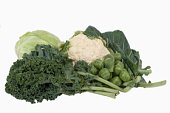
Winter is a feast for those who like to eat their greens – especially leafy greens melted into hearty soups such as Minestrone. Curly Kale belongs to the Brassica family and is sometimes described as ‘wild’ cabbage. Curly Kale is available all year round but it is more flavoursome and tender during the winter months. Curly Kale can be steamed, blanched or sautéed and has an affinity with potatoes, white beans, chickpeas, barley and spicy sausage. Before cooking the tough stalk and the central rib need to be removed. Chickpeas with Vegetables

Cavolo Nero is probably the tenderest of the Kale family despite its bumpy texture. It is also known as Black Cabbage, Black Tuscan and Dinosaur Kale. It’s nearly as tender as cabbage, but without the crunchiness when raw or the wateriness when cooked. When cooked Cavolo Nero has a rounded almost nutty flavour. Cavolo Nero has an affinity with pork, lamb, venison, pumpkin and mushrooms. Again the tough stalk and central rib need removing before cooking.

Collard Greens date back to prehistoric times and are one of the non-head forming members of the Brassica family along with broccoli and cauliflower. They have a very mild, almost smoky flavour. Collard Greens are an integral food in traditional Southern American cuisine and an essential ingredient in ‘soul food’ along with black-eyed peas, grits, ham hocks, cornbread and rice. However, they are also used commonly in Brazilian and Portuguese cookery as an accompaniment to fish and meat dishes. Lightly cooked Collard Greens can be used as a bed for poached eggs or as a filling in omelettes and crepes. For a ‘southern ‘inspired dish serve sautéed Collard Greens alongside Corn and Polenta Fritters with fried tomatoes and bacon. Corn and Polenta Fritters. Best of all Collard Greens make great ‘mash’. Fold blanched and chopped Collard Greens through creamy mashed potatoes and serve with succulent roast pork. Traditional Roast Pork.

A Sweet Loaf

Sweet Loaves – Tammy McLeod

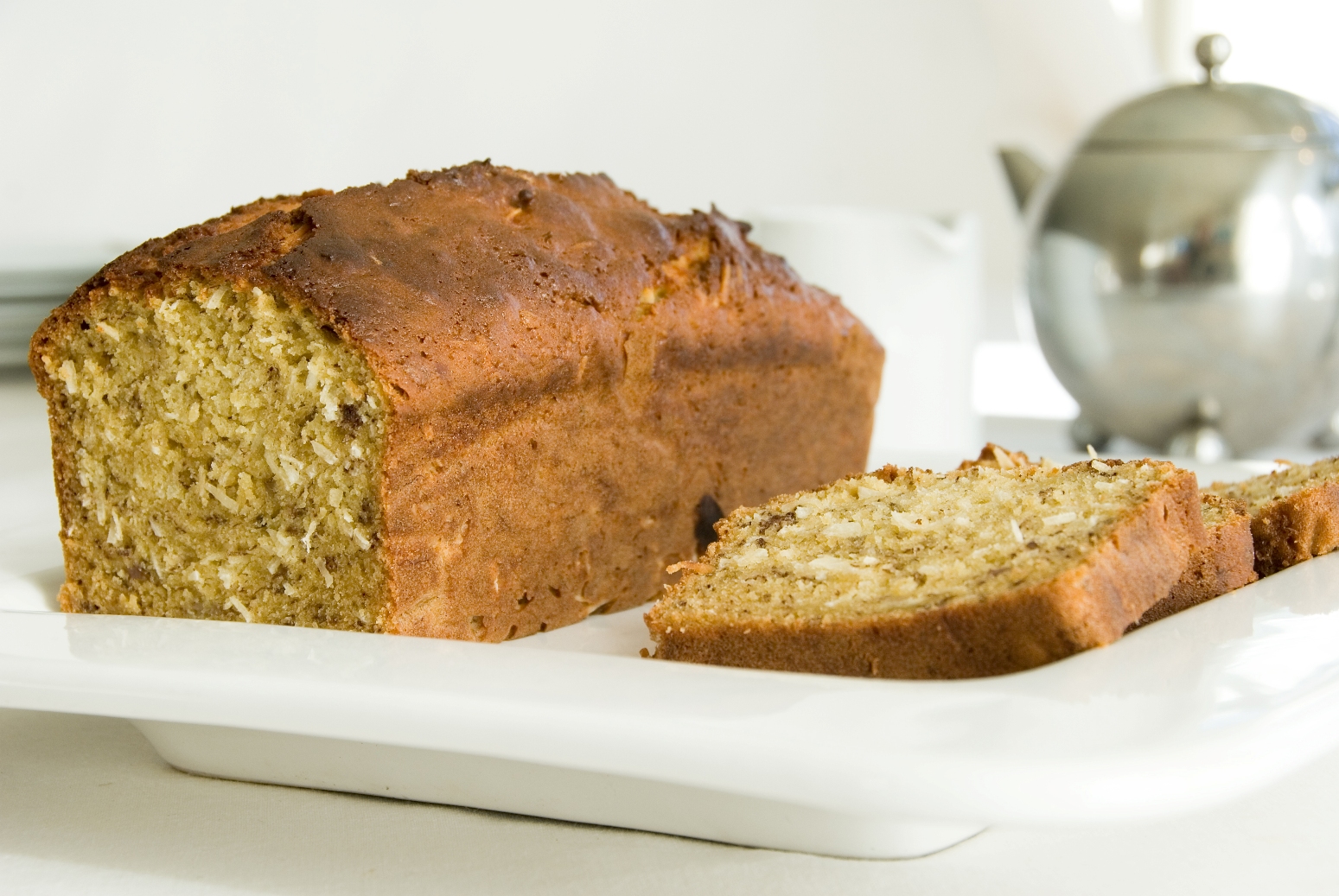
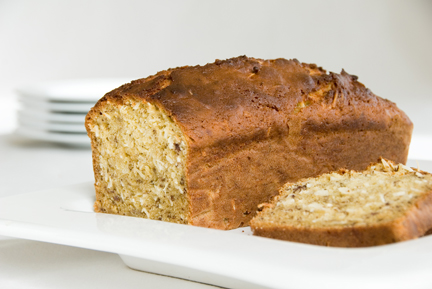
In my view, loaves are an under-estimated baked item. Loaves are quick and easy to make, very versatile and the mixture is forgiving – you don’t have to be too gentle when mixing up a loaf. Loaves are usually made by creaming butter and sugar, adding eggs and then the dry ingredients. I sometimes use a flavourless oil, such as rice bran, instead of butter. You can also vary the flavour of a plain loaf by swirling through jam or putting layers of cinnamon sugar or streusel through the loaf. A drizzle of icing made simply with lemon juice and icing sugar can dress up a loaf for a more special occasion.Banana loaf is probably the most popular loaf – a great way to use up those bananas which seem to languish in the fruit bowl. Try adding walnuts, chocolate chunks, chopped dried apricots or sunflower seeds to jazz up your banana loaf. Gingerbread is another favourite and keeps well in an airtight container. I love a rich, syrupy gingerbread and while delicious warm with lashings of butter, my preferred way of eating it is with thick wedges of blue cheese or strong cheddar.

When I make a loaf, after we have eaten a few slices hot from the oven, I let the loaf cool, slice it into thick slices and freeze the sliced loaf in a freezer bag. It is easy to pull out a slice or two of loaf as you need it. A slice of loaf is perfect in the school lunch boxes and makes a great afternoon tea treat. As with muffins, you can butter a slice or eat it plain.

Try toasting slices of loaf either in the toaster or in the oven to give a crispy exterior. Baked or toasted, a slice of loaf make a nice after dinner treat with some yoghurt. Or try slicing loaf into thick wedges, warm in the microwave and serve with custard or ice-cream for a more substantial pudding.

You can substitute loaf for bread (Madeira is particularly good), in bread and butter pudding or dip slices of loaf in egg and milk and pan fry in butter for a decadent version of French toast. And if you are feeling pushed for time, spoon the loaf mixture into mini loaf tins or muffin tins to speed up cooking time.

Try your own spin on some of the following recipes:
Apricot and Sunflower Seed Loaf
Banana Loaf
Coconut Ice Loaf
Feijoa Loaf
Moist Date Loaf
Chocolate Zucchini Loaf
Lemon Nut Loaf
Aunty Margaret’s Madeira Loaf
Lemon Syrup Loaf