Picnics

As each season arrives there is a huge pleasure that comes with the firsts of everything, whether it be daffodils, asparagus, lambs or in this case picnics.

Last weekend had its bumps, our 4 very active and strong minded children were treading on top of each other and there were way too many rumbles for anyone to put up with.
Sunday afternoon came and tired of trying to resolve tensions I decided instead to put my energy into a family picnic dinner.
The kids were almost unanimous their food choice of sausages in bread – “but mum do we really have to have pork and fennel or can we have those really good sausages on white bread like we have at school on sausage sizzle day…?”
How can a battle worn mother argue with that? Especially too when Ed looked at me with beseeching eyes wanting to know if he can have the same. 

Off I went on a quick trip to the supermarket for the most processed sausages I could find, sliced white bread as well as the strongest bottle of white wine…. Yes I am making the last bit up but I was really in need of something strong.
The sausages were cooked in record time, the bread buttered and the picnic rug set up.

We all sat down to eat – me to my asparagus with boiled free range eggs, nice cheese, wine and ciabatta and the rest to their sausages with tomato sauce in bread.
Suddenly as if my magic the grumblings and rumblings stopped and it had little to do with the sausages.
We were all sitting together at the end of a sunny afternoon, cosy on the picnic rug enjoying something we hadn’t done for many months.
After eating, we all played hurdles, high jump over the broom and ball catching and there were no fights!

While we are only a few days past – 3 year old Freddie says at least twice a day “remember when we had that lovely dinner outside…”

There really is a lot to be said for quality family time and sitting down together to enjoy food – regardless of what the food is!

Creamy Desserts

Creamy Desserts
Tammy McLeod

It really does feel like spring has sprung and with the lighter evenings and warmer days comes a longing for fresher, lighter desserts – desserts which complement the other tastes of spring (lamb, asparagus and strawberries) and leave you feeling pleasantly full, rather than weighted down like the comfort puddings of winter.We often order delicious desserts such as panna cotta, crème brulee and crème caramel in restaurants, but are too timid to try them at home. However, these desserts are incredibly achievable and you will delight your guests and yourself with your cooking prowess.

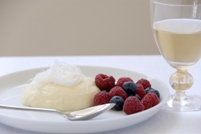
Panna Cotta is one of my favourite summer puddings. The name literally means “cooked cream” in Italian. There are hundreds of rich variants, but my standard panna cotta recipe has a yoghurt base, which makes the finished product slightly tart and a little less heavy for those watching their waistlines! It is simply made by heating cream and sugar with a flavouring (a split vanilla pod is my favourite but you could also try crushed cardamom pods, cinnamon, dissolved espresso coffee, lemon or orange zest) until it reaches boiling point, then once this mixture has cooled a little, add either soaked gelatine leaves, or gelatine powder dissolved in a little warm water and thick natural yoghurt equal to the amount of cream you use. I find the ratio of 1 tsp gelatine or gelatine sheet to 100ml each of cream and yoghurt gives the desirable “jelly wobble” set – you don’t want your panna cotta set hard.   Remember also that gelatine firms with time so if you are making a day ahead then start out with more wobble than you would like.  Strain out your flavouring, pour into ramekins and chill for at least four hours. You can serve these delicious puddings with little dipping biscuits such as biscotti or tuiles.

Crème Anglaise is a “real” egg custard. Once you have mastered the art of making custard (bring your cream, milk (if using) and sugar to boiling point, pour over whisked egg yolks and then re-heat in a double boiler until a thick custard forms), the world of ice-cream, crème brulee and crème caramel is at your feet.

Crème Brulee is a delicious twice cooked version of crème Anglaise, with a crunchy toffee coating. To turn your crème anglaise into a crème brulee, pour the cooked custard into little ramekins or a shallow baking dish and bake, covered in tinfoil, in a bain marie until set. You then chill the custards, cover the tops liberally with sugar and caramelise them with a brulee torch or under a hot grill. The more shallow your baking dish, the greater the proportion of toffee to creamy filling. Crème Brulee is extraordinarily versatile and you can ring the changes by adding different infusions to the cream (as for panna cotta), placing berries or other dried or stewed fruit in the base of the ramekins or even replacing some of the cream with coconut cream or a little espresso coffee. You could also try cooking the custard in a shortcrust tart case and bruleeing the top.

A traditional Spanish dessert, crème caramel, also uses crème Anglaise as a base, but is almost like a crème brulee in reverse – the caramel is on the bottom, so that when you invert the puddings, you are left with the delicious cooked custard surrounded by a pool of caramel. As with panna cotta, the best crème caramels are set with a slight wobble and smooth, creamy texture. My preference is to cook the crème caramels in little ramekins, as it is easier to keep little puddings in one piece when inverting them. These are fabulous as is or served with a fresh fruit salad (think passionfruit, berries or kiwifruit) to cut through the richness.

Making Mustard

Making Mustard – Alison McKee

Revealing the contents of your pantry is the same vain as unpacking your handbag in public. I feel I need to justify why I have wholegrain mustard, Dijon mustard, Coleman’s mustard power, sun-dried tomato mustard, olive mustard, mustard seeds – brown and yellow, tarragon mustard (fabulous colour) and red wine mustard.
I like mustard!
There is no denying that mustard has an affinity with cheese, is a classic with roast beef and the humble ham sandwich, and is an important ingredient in vinaigrette and mayonnaise. Mustard seeds or prepared mustard makes an appearance worldwide in most cookery, which is not surprising since the seeds of the mustard plant have been used as a spice, a condiment and a medicine since 2,300BC.

The degree of heat found in prepared mustard is dependent on the type of liquid the seeds are soaked in during the first stage of the mustard making process. Water and beer for example produce a hotter style mustard, whereas, vinegar, verjuice or white wine (champagne) produces milder styles.

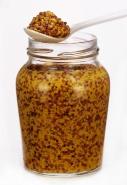
Wholegrain mustard is simple to prepare as it requires no cooking but does require time for soaking. The great thing about this recipe is that you can vary the type of vinegars, wine, verjuice, beer, honey and flavourings to produce a mustard that is truly your own creation.

Honey Wholegrain Mustard – Basic recipe
500gm yellow mustard seeds
500gm black mustard seeds
1 litre soaking liquid (verjuice, wine, vinegar, beer)

125ml oil
375ml honey
2 tablespoons salt

Mix to combine the seeds and soak overnight. Stir at least once during the soaking process. The next day combine the oil, honey and salt and add to the soaked mustard seeds. Mix well then add your own flavouring – spices (chilli), garlic, herbs (lavender), chopped olives, sun-dried tomatoes, green peppercorns, orange rind, or cherries (great for duck). Spoon into hot sterilised jars and seal tightly. Makes approx. 10 x 275gm jars.

Strangely enough mustard it is also delicious when combined with fruit. I frequently make the following recipe  created by Alexandra Denton and serve it with cheese, sliced ham off the bone and fresh bread.

Mustard Fruits

1.2 kg combined dried fruit – figs, pineapple, peaches, nectarines, pears.
1 litre white wine vinegar.
1 cup water
2 ½ cups sugar
4 tablespoons wholegrain mustard
2 teaspoons yellow mustard seeds
½ cup lemon juice
4 cloves of crushed garlic

Soak the dried fruits in warm water for ½ hour. Place the remaining ingredients in a non reactive saucepan – stir and bring to the boil. Add the soaked fruit and simmer until the fruits are soft. Ladle into sterilised jars and seal. Makes 2 litres.

Many Indian recipes begin with the frying of spices, including mustard seeds, to release flavour and aroma. Mustard seeds pop when they are ready. Serve these Mustard Seed Fried Potatoes  hot or cold with Indian breads, as a side dish or as part of a “small-bites” menu.

The Coleman’s Mustard Club 1926:
Rule No. 4 – Every member who asks for a sandwich and finds that it contains no mustard shall publicly refuse to eat the same.

Chicken and Mustard Pie
Bacon and Leek Tart
Croque Monsieur

Delicious and Easy Italian Spring Recipes

“When the moon hits your eye, like a big pizza pie…..that’s amore….”
Lynley Ruck

When Spring has really sprung, I get all Italian on the family. They know to run with this, as it means that the quantity of quality food increases and more often than not it has an Italian theme. I have never been to Italy, nor am I Italian, but on some level it feels very right for me to use the freshest of fresh vegetables in conjunction with olives, tomatoes, seafood and pasta (and wine). I feel very self-righteous when I am standing before a risotto or drizzling quality olive over steaming bowls and I feel quite driven to make do with what bounty each season has to offer. Italian food always celebrates the seasons and I, in turn, celebrate Spring with Italian home style cooking and eating.

The style and spirit of Italian eating shows itself in the varied ways a meal may begin, a communal dipping bowl or collection of hot or cold savoury foods – the antipasto platter, baked vegetables or salads – always fresh and always seasonal.

One of the loveliest aspects of Italian style feasting is the atmosphere created by friends and family who gather to eat together. Great big bowls of steaming pasta lend themselves perfectly to casual communal dining, and after winter’s heavier offerings, fresh pasta, lemons and light sauces, herbs and baby greens are anticipated with glee.

An important consideration when cooking Italian at home is the quality of your basic ingredients. At first glance ingredient lists seem simple, a bit of pasta, a few tomatoes, herbs and olive oil. Do not be fooled into thinking that your average everyday supermarket olive oil will suffice. In most places in New Zealand, you can acquire Extra Virgin Olive Oil that has been produced locally at very good prices – this is the olive oil you should be using. Fresh pasta in New Zealand is also often inferior to Italian dried pasta, buy this whenever you see it to ensure a continuous supply.

Zuppa di Cozze is a simple Italian style mussel soup. This recipe works well as a first course, served with slices of toasted bread to mop up the drippings, or as a pasta sauce. Or, you could serve it with a light salad. If one of the mussels fails to open do not eat it! It was already dead when it went into the pot, and eating it could make you very ill.

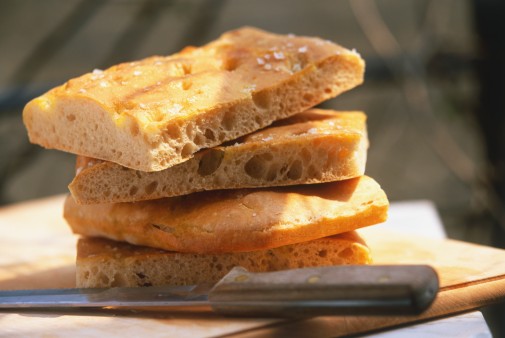
I really enjoy making my own focaccia bread to enjoy with dips and salsas, soups and alongside any soupy saucy Italian dish. I have discovered a very delicious version of this flatbread that includes potatoes, it is easy and really fun to make with children and adults!

Potatoes are also the main ingredient in a type of gnocchi. Gnocco means “lump” and comes from nocchio, a knot in the wood. These soft little noodles may also be made from semolina, flour or bread crumbs. Use a waxy potato, new potatoes are perfect, and experiment with your own sauces and flavourings. I have suggested a method whereby the gnocchi is poached in a deep roasting dish as opposed to a stock pot, which enables a single layer of Gnocchi to be cooked all at once. Gnocchi drizzled with nutty sage butter is one of the most memorable meals I have made.

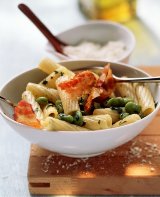
One of the loveliest things to do on a warm spring evening is to prepare a simple light pasta dish using everyday ingredients. The word fusilli means “little spindles” in Italian. Fusilli (pasta spirals) with Tuna and Broccoli is a great dish to prepare mid-week when time is of the essence, if feeding children omit the chilli. Elizabeth David extols the virtues of a particular Sardinian “tunny fish” in her book Italian Food, and although I’m sure tuna in Italy in 1954 is quite different to the tinned tuna available in New Zealand in 2008 it is still a lovely dish. For a creamier delicious pasta meal, you can’t go past Pasta Primavera – with new asparagus and baby peas this dish celebrates spring like no other in my opinion.

If you want to go to some effort for a dinner party or luncheon dish that incorporates many classical Italian flavours, I implore you to try your hand at Panino, I have been cooking Italian food since I was about 16, and my handwritten oil stained copy of this recipe was given to me by an old friend of my mothers who had lived in Europe. It is basically a hollowed round loaf of bread, crammed full with layer upon layer of roasted vegetables, cheese, oil olives etc. and pressed overnight to create a symphony of taste and colour. Stunning.

To finish on a simple sweet note I am including a recipe for biscotti. I do not spend alot of time in cafés, but when I do – I am drawn to a quick bite to have with a morning coffee. Biscotti or twice baked cookies, will satisfy your sweet tooth without sacrificing lunch plans. If you have many visitors, say during family occasions or during the festive season, biscotti are ideal as they can be made in bulk and stored for longer periods than most sweet biscuits. Many Italian households will have their own special variation and they are now a perennial favourite worldwide.

Of course I haven’t even mentioned risotto, wine, pizza or tiramisu……watch this space

Take a look at Pasta Vera for fresh pasta….

Light and Tasty Recipes

Light ‘n’ Tasty – Lynly Ruck

As spring is here, my thoughts turn to lightening up the fare at dinner time. I am nearly done with the slow-cooked heavy comfort food of the wet dreary months just past and I want to give my digestive system a rest.

Nothing speaks more to me of spring than the first green shoots, whether it’s asparagus, broad beans or the first salad seedlings, pushing their tendrils and above the ground. As it’s still a little early for well priced spring vegetables,  I like to make the most of whatever I can find to wean my body off the slow cooked meaty meals, before it must contend with raw salad vegetables again.

Tofu fits nicely into the category of lighter protein, though many people shy off using it – casting tofu aside as bland and tasteless. Yet, that’s the whole point! Tofu is the Eliza Doolittle of the culinary world, totally dependant on schooling by dominant sauces and marinades. I freeze the tofu, and squeeze on defrosting, which changes the texture to become even more spongy and receptive to flavour. Lemon Chilli Tofu & Egg Noodles is a quick, easy week-day pick me up that is light on the palate.

Cheese is another good replacement for meat, packed full of protein and with spring grass nourishing our dairy herds, dairy products are never more nutritious. Blessed are the cheese makers, yes, but I think there is a little cheese maker in all of us, and although strict hygiene and stainless steel abound in a modern dairy, you too can make simple cheese at home. One of the easiest to make is Ricotta.

Use Ricotta in lovely fresh pasta dishes such as Spaghetti Carbonara, as a stuffing for rolled peppers or eggplant, on top of lentil salads or as a sweet treat with freshly roasted fruit such as bananas, peaches or rhubarb or with French toast with brown sugar and cinnamon.

Lemon Chilli Tofu & Egg Noodles

½ cup sweet chilli sauce
2 tsp grated lemon zest
¼ cup lemon juice
450gm packet fresh egg noodles
1/3 cup flour
2 tsp Chinese five spice
300g firm tofu, diced 2cm square
2 tbsp oil
1 large onion, chopped
3 cloves garlic, sliced
1 yellow capsicum, sliced thinly
300g sugar snap peas (or frozen peas)

Combine sauce, zest and juice in a small pot, bring to the boil and remove from heat. Place the noodles in a large bowl, cover with boiling water, separate and drain. Combine flour and five spice in bowl, add tofu and toss to coat. Heat 1 tbsp oil in wok, cook tofu in batches until nicely browned. Heat remaining oil in the wok, stir-fry the onion, garlic and capsicum until the onion softens. Add the noodles, peas and half the chilli sauce, stir fry until peas are just tender. Serve noodles topped with tofu and drizzled with remaining lemon chilli sauce.

 
Ricotta Cheese

2 litres fresh whole milk, with a pinch of salt
4 tsp rennet

Scald a large stainless steel pot with a kettle of boiling water – to sterilise it. Add the milk, heating gently until blood temperature (you can use the thermometer you use to take the kids’ temps, washed of course!). Remove from the heat, add rennet and stir well. Leave for about 15 minutes, while the milk separates into curds (at the top) and whey (at the bottom).

Use a slotted spoon to skim off the curds, in large pieces if you can, place them into a colander lined with a large doubled-layered muslin or cheesecloth. Tie up the corners of the muslin and hang to drip above a bucket or sink for at least 3 hours, unwrap the cheese place in a bowl, cover and refrigerate. This will stay sweet for about 2-3 days after which it will take on a cheesy tang and will be more suited to savoury cooking. Use within a week.

Tasty Thai Fish Cakes

Years ago I gave up on Thai fish cakes wondered why anyone would waste their time eating anything with a texture akin to rubber.
  The Thai fish cakes in question were served at Thai restaurants or ordered as takeaways.
What I didn’t realise was how delicious homemade Thai fish cakes could be!

The thing about Thai fish cakes is that to obtain a lovely light puffy texture they must be served as soon as possible after being cooked. They don’t cope with sitting around and nor do they survive a reheat otherwise they become instant rubber.

There are a few simple tricks to getting really good Thai fish cakes. Firstly, don’t over puree your fish mixture, instead pulse it in a food processor until it comes together but is not over mixed. Also, to get a great texture you need to aerate the mixture prior to cooking.

David Thomson in Thai Food suggests forming the mixture into a ball and then “slapping” it in and out of the bowl until the mixture becomes firmer and stickier. This will help the fish cakes to puff when cooked.
Make sure you have a dipping sauce ready to serve with the cakes prior to cooking.
While a dipping bowl of sweet chilli sauce will suffice, a fresh cucumber relish is far more exciting and provides a good contrast in flavour.

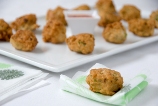
Thai Fish Cakes500 g white fish fillets
1 egg, lightly beaten
2 tablespoons Thai red curry paste (sachet varieties are fine)
3 tablespoons fish sauce
1 teaspoon sugar
2 spring onions, finely sliced
1 tablespoon lime juice
oil for frying
Place the fish, egg, curry paste, fish sauce and sugar in a food processor and pulse until the mixture is blended together.
Add the spring onions and lime juice and pulse again until well combined.
Turn the mixture out into a bowl and gather into a ball. Lift the mixture out of the bowl with your hand and then slap it back into the bowl. Repeat this process until the mixture is firm and sticky.
Form the mixture into cakes approximately 3-4 cm in diameter.
Heat 4-5 cm of oil in a wok or saucepan and fry the fish cakes in batches until golden on each side. Drain on paper towels and then serve immediately with your favourite dipping sauce.

Makes 16.

Sauce Recipes

Sauces
Alison Mckee

Of all the traditional sauces re-classified at the beginning of the twentieth century as Grand Sauces or Mother Sauces the three that remain in common use today are Tomato Sauce, Hollandaise Sauce and Béchamel or white sauce and their variations.Bolognese Sauce is sometimes taken to be a tomato sauce although authentic recipes from the Bologna region of Italy have only a small amount of tomato included in the dish. Despite the lack of tomato, Bolognese sauce still remains a great dish to hide “offending” vegetables in for children. Kid’s Bolognese Sauce. Pasta Puttanesca – “pasta the way a whore would make it”- is said to have originated as a quick cheap meal that prostitutes could prepare between customers is another modern variation. Puttanesca is a tomato based sauce consisting of anchovies, capers, black olives, dried hot peppers, garlic and whole chopped tomatoes or passata (tomato puree) that results in a sauce with a hot, spicy flavour and pungent smell that some say that also contributed to the naming of the dish.

Once mastered Hollandaise Sauce will quickly become a favourite, especially as asparagus season is on the horizon. Forget going out for weekend brunch and invite your friends around and whip your own Eggs Benedict (ham), Eggs Florentine (spinach) or Eggs Pacifica (smoked salmon). Smoked Salmon on Potato Rosti with Poached Egg. Add chopped sun-dried tomatoes or fresh herbs to the finished sauce and serve immediately with broccoli and carrots or over grilled fish. Hollandaise sauce cannot be reheated or the sauce splits and the butter runs out. If left to cool the sauce solidifies into a buttery sludge. To overcome this, hold the sauce over a warm, not boiling, water bath or in a vacuum flask. Variations on this sauce include Beurre Blanc and Béarnaise Sauce.

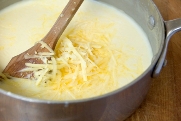
Lasagna, Chicken and Mushroom Lasagna, Macaroni Cheese, Cauliflower Cheese, Corned Beef with Mustard or Parsley sauce are all standard Kiwi family fare. The basis of all these dishes is a Béchamel or white sauce. Béchamel and an early version of Hollandaise sauce is said to be invented in the 17th Century by French chef La Varenne. Mornay sauce, the addition of cheese, is just one derivate and other Kiwi traditional favourites include Crayfish Mornay and Scallop Mornay.

Although some dishes made with Béchamel Sauce may be considered as being stodgy when properly prepared Béchamel is creamy in flavour with no taste of flour and creamy off-white in colour. The sauce should be smooth and thick enough only to coat the back of a spoon.  Thick Béchamel is, however, the base sauce for savoury soufflés. By simply adding egg yolks, whipped egg whites, a touch of mustard and cheese the most delicate culinary creation can be baked to puffed golden perfection.


Hollandaise Sauce

6 crushed peppercorns
1 tablespoon vinegar (white wine or champagne)
2 egg yolks
200gms butter melted
1 tablespoon lemon juice

Place the peppercorns and vinegar in a small stainless steel saucepan and reduce to one third. Remove from the heat and add 1 tablespoon of cold water. Allow to cool.

Whisk in the egg yolks in a bowl and add the reduction. Place the bowl over a simmering pan of water and continue whipping until the yolks form ribbons.

Gradually add the warm melted butter whisking constantly until thoroughly combined.
Add the lemon juice and season.
The sauce should be pale lemon in colour and have a buttery smooth texture.

Note: Hollandaise Sauce is an emulsion, not quite a true mixture but a suspension of one substance in another. Take care not to add the melted butter too quickly or the sauce will curdle and split

The Demise of the Dinner Party

The napkins are nicely folded in the cupboard, as is the tablecloth and the silver gets polished periodically. I think they came out last Christmas but maybe not – even then we did it casual.
Has the dinner party really gone – never to be seen again or is it just a passing phase?

I used to blame it on pregnancy, young children and an early Saturday morning radio show but as the kids grow and no longer need attending to at 6 am there is still a distinct lack of enthusiasm and invitations to dinner.

15 years ago I used to spend all of Saturday shopping for produce, preparing courses and making dessert. Come 7 pm the table was set, the candles lit and we were sitting suitably attired with a glass of wine in hand and the music on. The wine was even matched to the courses!
Glasses matched, the table was coordinated and there were always flowers on the table and in the loo.

Now, we still entertain but it is likely to be a last minute call to friends at 3pm, a dash to the shops for ingredients, gardening clothes still on and a wine or two over some noodles, curry, pizza or pasta. Sometimes dinner may be a gathering around a sporting event – in which case dinner is served on lap in front of a large screen.

Do people still do dinner parties I wonder and are we, the double working parents of more than 2 children the odd ones out here?
Are there those who still spend Saturday in the kitchen preparing?
We used to do it and I wonder what stopped it?

Surely there is something quite lovely about the conviviality of a dinner party, the absence of noisy children, the ability to get dressed for something and of course the chance to pore through recipe books and cook favourite dishes.

Roasting Vegetables and Fruit

Roasting Vegetables and Fruit – Lynley Ruck

Many new arrivals to the shores of Aotearoa will ask, ‘what is a traditional New Zealand meal?’ Oftentimes the reply will be Roast (lamb, beef, chicken…) that is, the slow roasting of a large piece of meat in the oven, with a supporting cast of various root crop vegetables and one or two steamed greens – always with gravy and sometimes with popular accompaniments such as Yorkshire pudding and horseradish, mint sauce, apple sauce, mustard or fruit jellies depending on the type of meat roasted.

Roasted meat was traditionally served as a Sunday lunch because it could be left to cook in the oven while attending Church on a Sunday morning, then ready in time for lunch. A roast dinner can also have a celebratory feel and in today’s busy world it can and does solve many a weekday meal dilemma. With smaller cuts of meat available, a roast can be prepared from zero to hero in under an hour.

Moving away from the traditional meat and vegetable roast, moderns cooks take roasting to another level. Roasted vegetables create a depth of flavour that is hard to recreate using other cooking methods. Roasting seals in the flavour and then caramelises the sugars – hence the sweetness of roasted vegetables. Roasting is an easy way to add an indefinable wow! factor to dishes.

Aside from the usual root crops here are a few vegetables that really lend themselves to roasting:

Asparagus: Creates succulence and flavours are really concentrated – 15-20 mins @ 200 deg C, drizzle olive oil, salt and pepper and a little lemon juice or balsamic.
Brussels Sprouts: Much maligned, but nutty and delicious when roasted. Slice in half, drizzle with olive oil, salt and pepper, cut side down 15-20 minutes @ 200 deg C
Cauliflower: An aromatic nutty flavour is created when roasted, cut into bite sized chunks and drizzle with oil, ground cumin and coriander, salt and pepper for an Indian flavoured side dish. 15-20 minutes @ 200 deg C – turn once when cooking.
Garlic: I wrap a whole head in tinfoil, including a tsp of oil, and roast @ 200 deg C for about 30 minutes – then unwrap and roast another ten minutes to caramelise – I often do this after I have baked – utilising the already hot oven. Roasted garlic is stunning in salad dressings.
Eggplant: Roast the eggplant whole in a small ovenproof dish – prick little holes on the surface of the skin, then roast for around 35 minutes until collapsed and easily pierced with a fork – the meaty, creamy flesh is then perfect mashed with a little olive oil, lemon juice, salt and a touch of cumin.

Roasted or Char grilled Capsicums are a case in point, once roasted they are the ideal addition to any antipasto, beautiful in a salad, perfect in pasta and an amazing base to many beautiful sauces, soups and stunning dips. Roasting increasing versatility and flavour to capsicums and increases their range of uses, one of my favourites is a simple Frittata Muffin recipe, very like small crustless quiches.
Without having to char grill beforehand, a platter of oven-roasted vegetables is a wonderful dish to serve as part of a mezze, this Roast Vegetable Couscous dish highlights the magnificent sweetness of roasted vegetables and can be prepared very quickly for a nutritious vegetarian dish or as a side dish to lamb or chicken. The chickpeas add lovely texture and valuable protein.

A bowl of Herb-Roasted Olives is a good option to offer with drinks or as part of a shared meal. Nothing could be easier than tossing this all in the oven and letting the aromatic herbs and zest speak for themselves. Ten minutes to prepare, fifteen to roast, and no special trips to expensive exotic food stores required.

Even less exotic is an extremely simple dessert that utilises pantry staples and those past-their-use-by-date granny smiths sitting forlornly in the fruit bowl. Dressed and roasted, Baked Apples are delicious, nutritious and budget friendly. But why stop there? Many, many plant foods are roast-ready, and several dishes can be roasted simultaneously once when your oven is heated, making a clever energy conscious contribution.

Baked Quince

Pie Making

Pie Making – Alison McKee

Sing a song of sixpence, pocket full of rye,
Four and twenty blackbirds, baked in a pie…

Pies, for obvious reasons, were originally called ‘coffyns’ or ‘coffins.’ Savoury spiced meat fillings and sauce that were encased in a pastry shell. The pastry shell was inedible and its sole purpose was to serve as storage and serving vessel for the meaty filling. In the Elizabethan era cooks went to great lengths to make large pies that were visually exciting, moulding crusts in the shape of animals, painting and decorating the lids with leaves and flowers, ornate pastry curls and twists, and heraldic symbols. As the children’s rhyme reminds us they were held in high culinary regard and ‘fit’ for Kings.

New Zealanders’ are said to consume $130 million of takeaway pies per year. And I have to confess to occasionally consuming one usually on a cold rainy day and often in secret as pies have such bad ‘press’ these days! However, nothing beats the taste of a home baked pie and the smell of baking pastry. A cold winter’s night, a bottle of red wine, a fire, an individual serving of Beef and Oyster Pie or Beef, Guinness and Mushroom Pie , Gordon Ramsay’s Pommes puree and early to bed – bliss.

I admit for some cooks pastry making, especially puff pastry, can be a daunting, but worthwhile, all day affair. Luckily there are several pre-rolled varieties available at leading supermarkets. Pie fillings should always be at room temperature to avoid premature melting of the butter/fat content. Make sure you glaze the top of your pies, preferably with whole beaten egg, several times to ‘build-up’ colour and to seal the edges. Place pies that are not firstly blind baked on a heated oven tray to help the bottom layer of the pastry to crisp. Ensure you bake the pastry until golden brown. This allows the butter to caramelize and adds a depth to the pastry’s flavour. If you are in a rush scrunch up handfuls of Filo Pastry, pile them on the top of your pie and spray the pastry scrunches liberally with olive oil spray. Alternatively bake the pastry in individual portions, rounds or squares, and place the pastry on top of the precooked filling as you plate up.

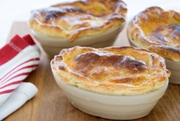
Culinary historians suggest that ‘pie’ is a derivation of the word magpie – in that the magpie collects a variety of things. Call me old-fashioned but I prefer to stick to classical recipes such as Chicken and Mushroom Pie, Chicken and Mustard Pie and Chicken and Leek Pie rather than the new ‘Pie’ flavours such as ‘Authentic Indian Butter Chicken Pie’ that commercial bakeries dream up to tempt our taste buds! Not all pies necessarily have a pastry lid as in the case of Cottage Pie, Shepherds Pie, Lamb Shank and Parsnip Pie , Helen’s Favourite Potato Top Pie and of course Fish Pie. And not all pies are best served hot; take, for example, English Pork Pies with meat jelly binding the filling to the crust, served cold and matured for several days with pickles or mustard, and of course the quintessential New Zealand picnic fare Bacon and Egg Pie.
And talking of children’s rhymes…

What! Lost your mittens,
You naughty kittens,
Then you shall have no pie!

Pasta with Broccoli

With current research telling us that certain fruits and vegetables can prevent cancer, aging and many other ailments then it makes sense to eat more of them.

For generations NZ mums have coerced, bribed and threatened children to eat their vegetables, I can’t help but wonder if this is partly due to our history of plain boiled or steamed vegetables and whether Asian and Italian mums face the same battle?

Steamed vegetables are of course acceptable on their own but lets face it they are a lot more interesting once seasoned or served with a sauce.  Gado gado,  wouldn’t rate a mention if it was solely a large plate of steamed and raw vegetables. However, once it is drizzled with satay sauce it is suddenly transformed into a recipe that features in books.

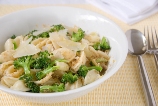
Broccoli is receiving loads of attention and praise in the world of nutrition. It is a reliable winter vegetable that grows easily and is always available at the green grocer. This simple pasta dish is delicious and packed full of broccoli. For an extra flavour dimension try adding sliced kalamata olives.

Pasta with Broccoli, Lemon and Garlic Crumbs.
Anchovies are great in this dish, they tend to melt when heated so impart a gentle richness as opposed to a strong individual flavour.
Olives are also delicious in this as are capers.

400 g shell pasta.
I large head broccoli
2 tablespoons extra virgin olive oil
¾ cup fresh breadcrumbs
3 cloves garlic, crushed
finely grated rind of ½ lemon
2 anchovies, chopped (optional)
shaved parmesan cheese for serving

Cook pasta in boiling, salted water for 10 minutes until tender.
Divide broccoli into small florets, discard thick stems. Bring a saucepan of water to the boil and simmer the broccoli for 4 minutes. Drain the broccoli in a colander and then drizzle with olive oil. Meanwhile toss the breadcrumbs, garlic, lemon rind and anchovies in a hot pan with a little oil until golden. Gently combine the broccoli with the drained pasta and serve topped with breadcrumbs and shaved parmesan cheese.

Serves 4.

Roast Chicken for Dad!

Roast Chicken for Dad
Alison Mckee

Growing up, a roast chicken for dinner was a treat for my family. As kids we all had a favourite part of the bird – no wings for me – and squabbled over the wishbone. For some reason there was always enough cold chicken left-over the next day for sandwiches. Did we eat smaller portions of chicken and more vegetables or are today’s chickens smaller?

Roast chicken was always a treat for Dad.
Having just read renowned British Chef Heston Blumenthal’s In Search Of Perfection this Sunday lunch my quest, like Heston, is to cook the perfect roast chicken. Unfortunately Heston’s version takes two days to prepare and cook and requires a chicken from the Bresse area of the Rhone-Alpes region of France. I’m buying a free-range chicken from my local supermarket and making do!

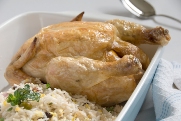
Firstly, pat the chicken dry with kitchen towel and season the bird inside and out and remove the wing tip at the first joint. Place a generous amount of softened butter under the breast skin to help keep the breast meat moist during cooking. Not being a huge fan of stuffing I place lemon halves, fresh parsley, garlic and seasoning in the cavity before trussing the legs together and securing the wings to the neck flap. Place the chicken on its side in a roasting pan and baste with oil, butter or margarine. Place in a hot 210° C preheated oven. After 25 -30 minutes turn the chicken on to its other leg and cook another 25- 30 minutes basting frequently. To test for doneness pierce between the drumstick and thigh – the juices should show no sign of blood.

Traditionally roast chicken was served with Game Chips, similar to modern day potato chips, Bread Sauce, roast gravy and garnished with sprigs of watercress, Additionally, bacon rolls, bacon fried then rolled, were also served as an edible garnish. However, all this is far too fussy and old-fashioned for me. I’m serving my chicken with a platter of Warm Potato & Bacon Salad with Watercress Pesto, a tossed green salad, crusty French bread and a jug of Sangria. If you can’t find any watercress then rocket will be a good peppery alternative.   For dessert I’m serving cheese followed by Helen’s Citrus Tart with ice-cream. Best of all I’ll still get my Sunday sleep-in.

Watercress Pesto

2 large cloves garlic
1 teaspoon sea salt
1/2 cup pine nuts
2 cups packed watercress leaves (no stalks)
1/2 cup extra virgin olive oil
1/2 cup grated parmesan cheese

Blend the garlic, sea salt, pine nuts, and watercress together in a food processor. Mix through cheese and then with motor running pour in olive oil until desired consistency.

Baking with Lemon and Limes


Baking with Citrus – Tammy McLeod

Lemon and lime flavoured baked goods are always warmly received. Tangy citrus flavours are a delicious contrast to the sweetness of a cake or slice. It is the rare person who turns down a piece of sticky lemon slice or lime syrup cake.Citrus fruit is in season now, in the middle of winter. It is as if Mother Nature is giving us something bright and cheerful to brighten up dreary winter. I always have a bowl of lemons in my kitchen, regardless of the season, as I find that lemon juice is a great way to give a flavour boost to a myriad of dishes. Limes are a little less common place, but when they are in season I juice them and then freeze the juice in ice-cubes, ready for use. Lime juice is a must in Thai cooking, but I also find the extra zinginess of limes are perfect in baking.

Lemons and limes are almost interchangeable in baking – if you don’t have limes, you can always use a lemon. The zesty flavours are perfect in desserts – citrus tart is an all time favourite, originating in France,  (where it is known as tarte au citron) lemons or limes can be used and the smooth creaminess is a perfect after dinnner touch.  Lemon meringue pie is another all time favourite along with cheesecake and mousse.

It is always good to have something lemony in the tins. Sticky lemon slice is a perennial favourite and can double as a dessert with a dollop of whipped cream or yoghurt. Lemon syrup cake is another much loved tin filler. If you have baked a plain cake or loaf you can whip up a lemon or lime syrup (use the zest and juice of 2 lemons or 3 smaller limes with ½ c each sugar and water, stir over heat until the sugar is dissolved and then simmer until syrupy), drench your cake in the hot syrup and you have a fabulous syrup cake!

A simple lemon or lime icing (mix enough juice into icing sugar to give a pourable icing) can be drizzled over plain cakes, loaves or biscuits for a tartness to match the sweet of the baking. Lemon or lime curd is the perfect ingredient to add when wanting to make something effortless look fabulous! Try putting it in mini tart cases, use to fill the middle of cupcakes or muffins, swirl through cheesecake or ice-cream, serve with pancakes, use in steamed pudding instead of jam,- the list goes on.

lemon cordial
lemon syrup loaf

Cooking with Chocolate

Cooking with Chocolate

For those that love chocolate there is hardly ever a dessert decision to be made – chocolate wins every time.  At this time of year I tend to look for warm puddings such as  chocolate self saucing pudding, chocolate melting middle puddings or chocolate bread and butter pudding.  If the dessert is to be preceded by a particularly hearty meal then I may go for a sliver of rich chocolate tart with a scoop of vanilla bean ice cream.

The secret of good chocolate, like good coffee is in its beans.  Each bean is chosen for its own characteristic – its bitterness, its perfume, its subtle flavours and then roasted to the chocolatiers taste.

The dark chocolate used by chefs and chocolatiers is known as couverture and comes from Belgium, Switzerland and France.  It is available from specialised food stores.  Look for brand names such as Varlhona and Callebaut.  It is expensive but when used for special occasions, it is worth the treat.
This chocolate has a high purity level of cocoa solids, look for a chocolate level of somewhere between 60 and 75%.  You can find Lindt chocolate with high percentage of cocoa solids in the supermarket.
As chocolate is measured on purity so too is cocoa.  Dutch processed cocoa is generally better in quality than regular supermarket cocoa.  While it is also priced accordingly I do tend to purchase Varlhona or Equagold as the results are so superior.

Chocolate burns easily, it is safest to melt it on top of a double boiler, a stainless steel bowl on top of a saucepan of water is fine.  Keep the water at a very gentle simmer and don’t let the bowl touch the water.  Never cover the chocolate or let drops of water get into the bowl or the chocolate will seize (become solid).
You can also microwave the chocolate but make sure you use a low heat and check the chocolate regularly as once again if it gets too hot it can seize.

Chocolate ganache makes a wonderful luscious icing for cakes.  Gently melt 300 g dark chocolate with 100 ml cream and stir until smooth.  Spread this liberally over cakes.

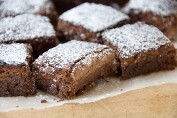
There are huge variations in price and quality of chocolate.  I tend to buy Nestle or Cadbury chocolate chips for kids biscuits and for family fare.  If I am making brownie for the family I will use regular brand chocolate and if I am making it for an adult special treat then I will go for something more exotic.

Chocolate, like life, should be approached with a passionate yet reckless abandon.
Anon

Favourite chocolate recipes
Chocolate sugared almonds
Favourite chocolate cake
Rocky Horror Slice