Cheese at its Best

The Local Girls – Cheese At it’s Best

Michal Haines

 I have had the honour for the last four years of judging for the annual Cuisine Champions of Cheese Awards and this year I have been asked back to sit beside a technical judge and consume vast quantities of cheese. As someone who would eat cheese any day over chocolate, I had no qualms when I was first invited to participate. Now, after a succession of years, I am still very honoured, but know exactly what I am getting myself in for.

 The day passes as one in which a room full of people consume what maybe the annual intake of cheese per capita for the average Frenchman all in the space of around nine hours. By the next day the sheer weight of all that cheese makes me thankful I have a pretty cast iron stomach for such things but I’m pleased to enjoy a few lighter items over  the next few days to help my afflicted tummy.

 I am surprised to in a time when so many are burdened with lactose intolerance and like to avoid those fats that can be easily denoted as fuller due to their most wonderful sloppy texture, that the awards grows in size every year.

I guess as a country with a long tradition in cheese we should expect it to be a staple in the average kiwis kitchen-at least the good old block of Colby anyway.

I am constantly delighted to see more New Zealanders asking for New Zealand made cheese of note in speciality food stores and delis rather than just buying the stock standards at the supermarket. Without these experimental folk and without the cheese awards, we run the risk of losing these very brave and talented people in our communities who have picked up one of the oldest traditions on earth and continue to bring us the curiosity that is cheese.

 I find the whole genre of cheese fascinating. A living and growing organism that changes it’s mind on a daily basis, it can give us so many different styles and flavours depending on such small factors. Those who have had the experience of eating something like Saint Agur, produced since the 4th century in the same region in France know that it can be a truly life changing experience. But that same experience could be enjoyed when consuming a lovingly handled and aged piece of  sheep’s milk made in a manner that hints at the long tradition of Pecorino in Italy. While we can speak eagerly about the incredible taste experience it was to first taste ‘real’ pecorino in Tuscany and how superior it was to anything we have tried back home, I tend to lean heavily on the side of romanticism of the taste buds here. Yes I can never deny that eating something made in the same traditional manner that is has been for possibly centuries using milk that might well be from the great, great granddaughter of a sheep way back in the day has to lend itself to a very particular flavour. What we also must forget is that the mere fact of being there, possibly on holiday, having not been at work for weeks and enjoying an adventure that will be a talking point for quite some time provides us with taste bud romanticism.

We can’t compare, we can discuss, taste and critique in order to allow those cheese makers to improve upon a product to such an extent that they have created something unique to them, unique to their region and their milk quality.

 I love with a passion those classic cheeses from France that have the perfect texture, the abundant aroma, their rind quality so high and flawless body but we must push ourselves to buy New Zealand made. Find those who are passionately and tirelessly working at bringing you something new. Sure, it will cost you near on the same as those imported French beauties but if we are ever going to build upon the traditions that are already deep seated here in New Zealand, we have to show a supporting hand to smaller producers and warrant them the time to try their cheeses and give them feedback, either directly or via your local buyer.

 There are some very good cheeses out there. Very, very good and all made from the milk of our very own local livestock. They are waiting for you to take them home and lovingly undress them so they can reveal their true body to you. Leap in and have a go.


Creating a great Cheeseboard

Tasting is the most important thing you can do before you undertake the exciting adventure that creating a cheeseboard can be.

Take advantage of good advice in stores and let yourself be guided through. A good food store will be able to discuss the important issues of:

Ripeness-what may be good for tonight might not be ok for your dinner party next Thursday

Flavours-what are you eating prior or after that may affect what you take home

Personalities-Talk about those who hate blue, cant stomach goat, don’t like wash rinds….they are your guests so it has to work for everyone and being a good host is all about getting the right fit

Price-be honest about how much you want to pay so the person guiding you can offer you what is the best within your price range, the ripest and most appropriate for your gathering

Cheese or Wine-many make the mistake choosing both elements very separately. Decide who the star is in this course-the cheese or the wine and buy appropriately.


Three isn’t necessarily the perfect number when it comes to cheese boards. Neither is the typical one blue, one white one hard rule. Some of those who are experts in the field do some of the most incredible pairings with up to fifteen cheese, some say five is the perfect number and anything in between seems to go.  

Cheese shouldn’t be a paint by numbers sort of affair. Something this wonderful deserves time and attention to detail to get it right.

There are some rules but you don’t have to abide to them too strictly. The other thing to remember when it comes to matching anything is if you like it, it makes it right.

If you are having an after dinner cheeseboard you may well be thinking dessert wines with enough sweetness and body to warrant cheese also with enough body to handle it. Think also of what you have just eaten. I shy away from anything with huge cream levels if I have just worked my way through a massive eye fillet for instance but at the same time, I might look to toward something creamy but with a more acidic tone to lighten things up particularly if I am serving it with say fresh season nectarines and peaches. Matching is about matching it all-not just one cheese to a wine but all that appears on your board as well as matching them to a cracker or bread that has the right texture, the right accompaniments and even the right guests. It can be a complex affair and this is where regularly buying from a store that you trust and know well, you will build a good relationship with the staff. They are there to set you on the right path and guide you through the flavour, milk and texture minefield of cheese so that it will be a pleasurable  affair.  


How much to buy is an often asked question and rightly so. There is nothing worse than scrappy bits of half eaten cheese hanging about in the fridge. If you simply work on this little guideline, this hideous problem will be relieved:

-tasting plate/ nibbles 35-50g per person per cheese and no more than three cheeses

-main course/antipasta style 50-80 grams per cheese per person and no more than six cheeses

-After Dinner  40-50 grams per person and no more than five cheeses

I think this is even being pretty generous gram wise so always take into consideration     what else you are serving and I always think that with cheese and those big rich flavours go smaller and enjoy rather than big and too much.


If you are thinking of getting in early and storing your cheeses for a few days there are few easy rules to bear in mind. These also are good rules just for general cheese storage than will keep them in good health.

Don’t ever freeze a cheese

Don’t let them dry out by leaving them poorly wrapped in the fridge

Don’t allow them to be exposed to extreme temperatures-back and forth from the fridge is a no no.

Do check them regularly if you are keeping them for more than a few days and make sure that if they are ripening too fast that you eat them when they deserve to be and not after -there will always be more cheese

Do rewrap them as needed

Do allow them to breathe so plastic containers are a no no and purest demand no plastic wrap just paper

Do cut to expose less of the body of the cheese to air

Do trim the edges of your cheeses prior to eating if you have had them in the fridge for a wee while


Matching for me is often around what I know has just come into season. If I know fresh new season Marlborough grown walnuts have arrived then I will likely be more inclined toward a fuller bodied blue with medium cream and a little acidity to really compliment the woody, caramel tones of the walnuts. Served with a beautiful sourdough to edge that acidity a little bit more, it is something I could easily make a meal of.

New season stone fruits can appear on the cheeseboard alongside fresh sheep’s milk cheese easily. The nature sweetness of the stone fruit as well as the lovely textures work to even up the acidity of the fresher sheep’s milk. The fruits could also be lightly grilled to really make things interesting. Matched with a syrupy gewürztraminer full of bright stone fruity flavours….. yum!


Remember that it is actually all about you and the golden rule as I mentioned before-if you like it then damn the rules!!

Cheese, like all food is about enjoyment. Sit back and really savour the wonderful texture and taste of what is available to you out there. Buy local but also buy imported. Taste, test and ponder

Too Hot to Cook

Too Hot to Cook
Michal Haines

I am in awe of those people whose adoration for the heat of the summer months allows them to roast away in the sunshine hour after hour. Sure we are told that we are not to do this these days but we all see them on the beach, bikini clad, looking a little like an old brown leather bag I once had.

I can only compare it myself to the hours of heat exhaustion one gets from working mid summer in a restaurant kitchen. If you think that your work place is hot, try working in very close proximity to ten gas burners, several ovens all on full steam and far too many people in close proximity to one another in clothes designed to keep you from the immediate danger of hot spills and spits. I wilt just remembering it!

Luckily I have hung up my kitchen whites for spending time elsewhere in the world of food but still after a hot day at work talking food all day I get home and think quite simply “It’s tooooo hot to cook!”.

 As cooking is my ultimate form of stress relief I make the effort most nights, only giving in to allow my husband some time to exercise his talents in the culinary realm.
But in the heat of February I turn more to construction than cooking to create dishes that are bright with flavour but cooling on the body.

 The Thais have it down. South East Asia is a place that reminds me of being in hot kitchens. Sweat dripping from you at 9 in the morning, the sounds of yelling and the immediate threat of danger from some irate individual parallels work in a professional kitchen oddly enough.

But they have the key to remedy the too hot to cook situation through the use of flavour, ingredients and a close eye to detail.

One of the most intricate cuisines on earth and often the mostly poorly executed, Thai food has a rich history orally handed down from mother to daughter. The Thais believe woman make the best cooks as only they have the sufficient patience and dexterity to deal with the intricate nature of Thai cuisine.

Much of the traditional fare would never have been written down, relying on the memory of those teaching others, indicating the importance of sight and taste for cooks rather than the written formulation of recipes.

Naturally variation would have occurred but I think this is more about the nuance that an individual cook brings to a dish marking it their own rather than their mothers, fathers of teachers.

True Thai food has a robust subtlety. I know this makes little sense as a statement but think of the flavours that come to mind-shrimp paste, fish sauce, chillies, mint, coriander, kaffir lime, lemongrass….big, bright and somewhat aggressive flavours that once combined artfully have a richness that cannot be matched. A delicate and well woven flavour balance that brings French cuisine to it’s knees in my humble opinion. When in other cuisines an over abundance of flavours brings dullness and palate confusion, it seems that the more the merrier with Thai cuisine. The very strict tutorage is to thank for this harmony and the Thai people even have a name for what we can only translate to mean ‘correct’ taste-rot tae. This means the balance and understanding of flavour is the most important aspect to their training, something that I have a great deal of respect for and something I feel is lacking in the education of our young chefs today.


I am in no one under the allusion that every single meal one will eat in Thailand will be a veritable adventure of taste. I myself was sorely disappointed with the food that appeared before me in Bangkok and it went a long way to shatter some of illusions I had that somehow the Thai people were the finest cooks on earth. I am sure that somewhere in Thailand I will find that clean, well balanced harmony that will make my palate sing and my brain zing with absolute admiration for the handed down talents of the chef. I truly do hope to find that and I do look forward to what will be an arduous eating adventure when it happens.

 Meanwhile, all I have is my own kitchen and the heat of summer to help me get into the right frame of mind to create unified, well balanced Thai food.

 Of all those out their writing about Thai food, David Thompson is my favourite. His book simply entitled ‘Thai Food’ is a masterpiece. Heavy enough to work as a door stop but beautiful and information rich enough that I am happy to make it a bedtime read. His sheer admiration of the Thai cuisine and wealth of information is enthralling. I refer to him for all sorts of decisions in my Thai repoitre as without a small Thai grandmother to show me the culinary way, I have to resort to reading. I could translate some this to you but I am sure you don’t have all day but quite simply, if it is a cuisine you are interested in, look him up.

 So my own Thai cooking is a mere affectation of what it could be. At least in the heat of mid summer it provides me with the clean burst of flavour that you need after a far too hot day at work and no energy to get to the beach sort of attitude.

More salad than anything else, it is all about constructing parts and them combining them right at the end.

All up a fifteen minute affair that has required very little cooking and best of all the sort of thing that is a great way to use some bits in the fridge.

Well balanced and harmonious, I feel smugly virtuous due it’s rather delicious taste but also its low fat nature. I make up for this by eating way more than what would be a fist full of food but still feel good enough to go and water the garden and do the ironing rather than sit complaining of eating too much.

Try it out sometime this week. It will take a little organising to get all your ingredients and a little time to construct but believe me in saying that it beats a bbq anyday.

Thai Style Pork Salad

Serves 4

250g pork mince

2 cloves garlic, peeled and crushed

2 cm of fresh ginger, grated ( I don’t bother peeling here)

1 fresh red Thai chilli, deseeded and chopped finely

1 large shallot, peeled and finely sliced

2 kaffir lime leaves, spine removed and discarded and the leaves very finely chopped

1 tablespoon light Chinese soy sauce

½ teaspoon sugar

1 tablespoon nam prik poy (available at good Asian supermarkets)

 Mix all ingredients together well and set aside to marinate for up to an hour.

Heat a little oil in a wok or heavy based pot and when really hot, add the pork and break up using a spoon. Stir fry till crisped and all liquid has evaporated. Remove from wok and set aside. This step can be done well in advance and set aside.

 6 tablespoon skin on peanuts

Toast gently till golden brown in a little oil and salt well. Once cooled place in a mortar and pestle and crush into irregular chunks. Set aside to use when ready.


For Pickled Vegetables

1 small packet of fresh beansprouts

1 spring onion, finely chopped

1 cucumber, peeled and either grated and allowed to drain well through a sieve or finely cut into long strips using a mandolin

1 green papaya, peeled and shredded (optional or if available- I have been known to use a ripe papaya here which is a total no no but works well with chicken rather than pork as it is quite sugary but really refreshing)

1 small bunch of fresh mint, leaves picked from stems and torn roughly

1 small bunch of fresh coriander, chopped finely

Place all in a large bowl.

 To make pickling base

1 teaspoon salt

3 teaspoons sugar

100ml rice vinegar

300ml water

 Place all in a  saucepan and heat on a high heat to a boil. Remove from the heat and pour over the vegetables. Allow to cool then add 1 -2 teaspoons fish sauce to taste. Mix well. Drain all liquid just before serving.

 To Assemble

Cook vermicelli or noodles to instructions on packet, drain well and rinse in cold water to thoroughly cool. This step can also be done well in advance and the noodles can be gently separated in cold water before placing them into bowls.


Assemble in large deep bowls with the noodles, top with pork, add vegetables and sprinkle over peanuts. Serve immediately.


Table Dipping Sauce (nuoc cham)

This can be used at the table to moisten your noodles as you eat

Makes ¾ cup that can be stored in the fridge for up to a week.

 ¼ cup lime or lemon juice

¼ cup Thai fish sauce

¼ cup water

2 teaspoons cider vinegar or rice wine vinegar

1 tablespoon sugar

1 garlic clove, peeled and finely chopped

1 small bird’s eye chilli, left whole

 Simply combine all in a jar, place the lid on and shake well to combine. Serve in a bowl at the table.

Preserving Tomatoes

Tomato Glut-ton – Michal Haines

 Summer has all the joys of easy gardening. No cold rains, frosts and lack of sunlight to worry about. Just long clear, glorious days to help process all those wonderful natural sugars to make for sweet and juicy tomatoes.

I can’t find even a single city dweller at the moment who hasn’t got at least one tomato plant in fruit in their meagre garden. In our little garden, we have a veritable forest climbing its way up trees and the rather intricate and somewhat crazed looking twine structures that have been created for them.

 But I have to admit that each year the tomato plants get more plentiful and it is as if we have forgotten the previous year’s plague of tomatoes that we inevitably get sick of, give away to those less fortunate than ourselves in their own tomato growth and eventually leave to rot on the ground. A sad reality once one gets sick of tomatoes every single night!

 As fellow gardeners begin to lose sight of their bench tops and the inside of their fridges due to the sheer abundance of their labour, they begin to almost lament that they only need one of their prized beef steaks to make a rich and flavoursome tomato based pasta sauce. The stock standard question in mid to late summer is “What can I do with all the tomatoes in my garden?”

 Last year I showed my husband how to make his own tomato sauce for bottling and now as the ‘plague’ continues to grow and amass; we will begin the process of preserving them once again.

Now I am not necessarily talking about preserving as in chutneys, relishes and sauce to have with the odd snarler. I am talking about the pure golden glory of cracking open a jar of our own slow cooked tomato sauce that is the base ingredient to any number of wintery dishes. As you sit down to that hearty rich slow cooked bolognaise on a rainy cold night, you can taste those rays of sunshine and the fullness of flavour from your own spray free fruit. Those super quick pasta dishes that you throw together after a hard day of work mid week just taste that little bit better due to your own semi dried tomatoes or ‘passata’ you have created and stored away for those leaner months. Think eggplant Parmigiana in half the time, think richly coloured tomato risotto, think braised lamb shanks, think paprika, tomato and olive slow cooked chicken…..

 There has to be a level of smug satisfaction about your own tomato sauce!!

 Don’t get me wrong, I thoroughly enjoy a good hand made chutney on the table but I have to admit, I always have a gleeful grin when I open the pantry door and see those rows of tomato sauce packed away after a long hot summer.

 I follow a few basic rules for my sauces which are pretty straight forward.

Cherry tomatoes have a burst of flavour that can’t be mistaken. A slightly more acidic taste makes them a great choice for an uncrushed, quick cooked tomato sauce where texture is the key.

Your giant beefsteaks and heirloom varieties have more sweetness as they stay on the vine ripening for a little longer but can also bring with them a tougher skin. Use them for longer cooked tomato sauces, chutney and relishes.

Any bruised fruit will still be fine but the taste can be compromised. Any thing that has the slightest look of mould I discard as you never know what might happen six months from now in the back of the pantry if that mould where to keep growing….somehow. Highly unlikely but like most things with food use the good stuff and you will be rewarded.

I use my own garden herbs to enhance and enrich some of my sauces, and certainly when I pack those little leathery semi dried tomatoes away in oil and garlic, fresh basil or oregano can’t be beaten.

You will need about 30 cherry or 12-14 medium sized tomatoes to make enough sauce for one serve of pasta for four people so make it worth your while when you make a batch. A kilo will yield enough for a few jars, dependant on a slow or fast cooked recipe. Purest will insist upon peeling, but I am happy with the rustic skins for a sauce that will inevitably be used with other big textures and flavours. For a fine ‘passata’ or tomato stock, passing it all through a sieve will do the trick to remove anything but pure essence of tomato. 

Garlic and onions are not a necessity but I like the gentle background taste that it gives and in the jar it has more time to mellow out and truly become one with the tomato flavours. Salt and sugar also can be vital to a good balance and each year the amount will differ due to your fruit. Taste test before you bottle in case you need to add a little more.

 I also like to bottle them in a variety of different sized jars. I may only need a little for a pizza base but almost a litre for a lamb shank dish for instance, so never throw away what seems like a silly little jar as it could be ideal for all sort of preserves.

 It isn’t hard so this year, as you are reading that frivolous romance novel on the deck, have a pot of tomatoes bubbling away ready to bottle. After you have finished baking leave the oven on to dry some tomatoes and find yourself a good fine sieve to make a type of passata or what is called tomato stock in my house-strained cooked tomatoes. These are great for pasta sauces, pizza bases, cassoulet and slow cooked dishes, soups….. The applications are limitless. Collect jars-it’s another form of recycling-and clear some space in the pantry somewhere cool and dark so they can sit happily and mature for a few months. Just think in the depths of winter despair you can bring one out, pry off the lid and smell that true scent of summer again.


 Recipes

Fast Cooked Cherry Tomato Sauce

Makes 2- 3 x 300g jars

1 kilo ripe cherry tomatoes, stalks removed
6-8 cloves garlic, peeled and chopped roughly
1 teaspoon sugar
Olive oil

 In a large pot, heat olive oil and garlic till the garlic has softened but not turning brown.
Add the cherry tomatoes and sugar and cook over a moderate heat for 20 minutes stirring occasionally.
Remove from heat and bottle in clean, sterilised jars with tight fitting lids.

 Slow Cooked Tomato Sauce

Makes 2-3 x 300g jars

1 kilo ripe tomatoes-any variety, stalks removed and cut into quarters or if very large, thirds
10 cloves garlic, peeled and roughly chopped
2 brown onions, peeled and finely chopped
1-3 teaspoon sugar
1-3 teaspoon salt
1 teaspoon balsamic vinegar
Olive oil
Fresh herbs-optional

 In a large pot heat a little oil and brown the garlic and onion till softened but not turning brown.
Add the tomatoes, balsamic, sugar and salt and mix well.
Cook over a low heat, uncovered at just a slight bubble for 2 hours stirring occasionally to stop any sticking. You want the tomatoes to truly cook down to so they are merely pulp.
Add the herbs just at the end of the cooking time so their flavour is kept intense. Simply stir through and then remove from the heat and bottle in clean sterilised jars with tight fitting lids.

 Cooked Passata or Tomato Stock

Makes 1-2 x 300g jars

1 kilo ripe tomatoes-any variety, stalk removed and cut into quarters or if very large, thirds
5 cloves garlic, peeled
1 brown onion, peeled and quartered
1-3 teaspoon sugar
1-3 teaspoon salt
Olive oil
Fresh herbs-optional

Follow same method as for slow cooked tomato sauce.
At the point that you would add herbs, pass all through a fine sieve to collect all the onion, garlic, skins and pulp. Pour into clean sterilised jars and add some fresh herbs if desired and fit on lid.


Oven Dried Tomatoes

Makes 1-2 200g jars

1 kilo ripe tomatoes-any variety, halved
1 kilo sea salt

On a baking tray, spread the salt out evenly and then layer the halves tomatoes on top in a single layer skin side down into the salt.

Place in a preheated oven at 100 C for 3 hours or until they are completely dried and leathery looking. You may like to take them out sooner so they are not so dried-more semi dried-so keep checking on them from time to time. Remove them from the salt. The salt can be used for another round of drying so don’t throw it away.

 To bottle Tomatoes

3-4 cloves garlic, peeled and finely sliced
Fresh oregano or basil
Olive oil

 Simply layer tomatoes with the garlic slices and fresh herbs nice and tightly into a jar.
Pour in the olive oil and push down the tomatoes to let any air pockets escape.
Fit with a tight fitting lid and store in the refrigerator for up to 2 months.

Summer Salad Recipes

One of the wonderful things about  summer cooking is that meals can be decided at the last minute and quickly cooked or just assembled. 
I am a big fan of salads, I love contrast in food and with salads it is easy to have a variety of textures and flavours that work together in one dish.

Salads are easily put together out of ingredients on hand and while recipes are not necessarily adhered to there are a few guidelines that are worth following:

  • Aways dry your lettuce after washing it, drying keeps the leaves crunchy and enables the dressing to coat rather than running off.
  • When making your own salad dressing remember that most use a ratio of 3:1 oil to vinegar.
  • Season the vinegar before you add the oil as it is easier to dissolve in vinegar.
  • Different flavoured vinegars will add variation to your salad.  As well as white wine, red wine and balsamic try raspberry or sherry vinegar.  While I recommend making your own vinaigrette, I have discovered Peplers black raspberry vinaigrette and I am almost drinking it!
  • Always use a good quality oil, it makes all the difference to the final flavour.
  • Roasted vegetables are great in salads, just take care when handling pumpkin and kumara that it doesn’t turn to mush.
  • Finely sliced brown onion can be soaked in hot water briefly to soften the flavour.  Don’t soak too long however or you will also lose texture.
  • Keep a small supply of nuts and seeds on hand, lightly toasted they add instant texture to a salad.

Salads

Raw Energy Salad
Fattoush
Brown Rice Salad
Favourite Orzo Salad
Warm Salad of Pumpkin and Quinoa
Caesar Salad

Eggplant, Mint and Feta Salad
Greek Style Potato Salad
Marinated Tomato Salad


Salads with Meat or Fish
Chicken Grape and Almond Salad
Fragrant Chicken Salad
Cerviche
Salad Nicoise
Prawn, Avocado and Noodle Salad
Thai Chicken Salad
Asian Duck Salad
Chinese Chicken Salad
Cranberry Bacon and Avocado Salad
Lamb, Beetroot and Feta Salad
Chicken, Bacon and Spinach Salad
Warm Spicy Lamb Salad
Warm Chicken Salad


Dressings
Tomato Basil Dressing
Herb Vinaigrette
walnut vinaigrette
walnut and verjuice vinaigrette
mayonnaise
aioli

The Food that Saved Christmas


My love of Christmas is far from logical. I don’t do God nor the well meaning ramblings of his son, yet I still get all warm and fuzzy come mid December. Such is the power of nostalgia I guess.  Although largely secular affairs, the Christmases of my childhood were always happy, food- filled days. The obligatory Christmas dinner was usually spent with my Dad’s family, a nice enough lot, save for the odd deranged aunt and an inordinate fondness for sherry. Food wasn’t a big motivation for them, but there was always plenty of it; and being one of the few children in their midst, I was much fussed over.  Christmas sans in-laws, grandparents, cousins et al was even better. The food was 100% Mum [a chef of formidable skill], so was unfailingly good and the mood generally jolly.

On the rare occasions that my mother’s family convened for Christmas, the food was quite extraordinary- thank God because it was the only thing that kept them civil.  Without the intervention of good food, the Evetts clan is prone to passive aggressive brawls. You know the kind- where nothing is said but everyone is violently seething.

Food is the only common ground that my mother’s people happily embrace as a group.  They [we] are all in their own ways utterly obsessive about food, and are all excellent cooks.  Hours can go by discussing the best way to make tuatua  soup, the best local cheese, even the best place to collect spring water, but Krishna  help you if you bring up the happenings at Uncle  so-and-so’s wedding 22 years ago. Yes, we are very different people, but around the dinner table, especially at Christmas, we have our own way of sharing the love. Well that’s probably going a bit far; let’s just say we get on as long as our mouths are full. 

I guess the point to this lengthy introduction is that most families have their simmering issues, gatherings are forced affairs and it’s the food, especially around Christmas that can be the best salve.

So I’ve made another list. Seems to be a bit of a habit of mine, I know  but lists are kind of apt at Christmas time don’t you think?  

The Food that saved [my family at] Christmas. 


Crayfish

The finest addition to any Christmas table and it’s worth the heinous expense of every succulent, fragrant, firm-fleshed mouthful. My mother would cook the halved tails very simply in butter, deglaze the pan with champagne and serve with a sprinkle of parsley. The carcas including all associated brown goo,  would be used to make crayfish oil and rich, creamy mornay. Shared among several of us, a tail or two never went far, but I think that only improved the flavour.   If a crayfish can’t keep your family from killing each other, nothing will.

Baked ham

Yes it’s a cliché, and it borders on being seasonally inappropriate for our sweltering southern Christmas, but even the fragrance of a well basted ham can calm the most irascible in-law.  And just try to tell me that hot sticky, clovey, jammy fat isn’t the finest thing you’ve eaten all year.   My mother and I usually form a conspiratorial huddle in the kitchen while the ham is cooking, keeping all the best bits to ourselves. Screw the rellys.  Blood may be thicker than water but it sure as hell ain’t thicker than Christmas ham fat.

Ham on the bone will always taste better than pressed and free range will afford you a little less guilt about eating the world’s most intelligent domestic animal.


Nanna’s Trifle

I can take or leave your pavlova at Christmas, but in my house, trifle is the definative dessert. My Sherry loving Nanna made a trifle of exceptional kiwi kitsch, and I mean that as a compliment. Watties tinned golden queens, Edmonds custard, Greggs jelly, lashings of cream from those small glass bottles and a near lethal measure of Corbans sherry, or ‘cream wine’ to be more precise. As the years passed Nanna gradually cut back on the alcohol content [of both her blood and the trifle] until the dish became a sadly virginal shadow of its former self. I prefer to recreate her trifle as I prefer to remember the dear lady herself. Drowning in drink.  

Smoked quail

An unlikely choice, but after all, Christmas dinner [or lunch as is our habit] is supposed to be about special food. The beauty of quail is that everyone can have their own bird, a big advantage if you have portion pigs in your midst and being conveniently thrush sized, they are can be smoked quickly and safely. Quail are best served cold to fully appreciate the sweetness of the meat and savoury smokiness of the skin. I would serve quail before turkey any day. I have a theory [in as much as I just made it up] that the almost universal dislike of turkey plays a big part in Christmas day hostilities.

Salmon

I am a great advocate of farmed salmon. Your environmental arguements will hold no traction with me; commercial fishing is infinitely more destructive. Farmed Pacific salmon is affordable and loved by just about everyone, and  despite it now being cheaper than snapper, is still decidedly luxurious stuff. I’ve yet to find a way with salmon that doesn’t please the Christmas masses:  poached, it’s understated elegance; as gravlax it’s svelte and sexy and hot smoked is a guaranteed winner with even the coarsest of cousins. Leftover salmon makes great sandwiches, samosa and fish cakes  for subduing the throngs of family and friends who seem to crawl out of the woodwork on Boxing Day.


Finger Food

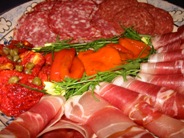
In my experience the general mood of your assembled clan will be mostly dictated by the finger food you serve. That long wait for the main attractions to roll out is when the worst disharmony  bubbles fourth,  especially if the whanau get stuck into the wine and cherry brandy to help pass the time. My mother has always been a master of such edible distractions. Lots of variety and plenty for everyone seems to be the secret. A big plate of cured meats looks fab and will probably tempt even that in-law who claims to be on some half baked pixie-dust diet. Tres passé it may be, but that Queen of the 70s, the vol au vent can be a fine thing. Filled with smoked kahawhai and bubbling cheese béchamel, mushroom, chorizo and cream and all manner of other delicious wickedness, they can be heaven [and 3rd degree burns] in a pastry pottle . Another retro throw back to the good old days of skewered snacks and ambrosia salad are devils on horseback. Salty, crispy bacon, sweet, luscious prunes. Pure bliss.


The obvious

There are certain elements of the Christmas menu you just can’t escape.  Leave these ones out and all your previous efforts at subduing the beast that is the forced family Christmas will be to no avail.

Mince pies- don’t skimp on these. Nothing cocks an eyebrow faster than a dodgy mince pie.

Christmas cake.  Little more than a table prop but you gotta have a cake. Don’t fuss too much about the quality as nobody will actually eat it. 

Christmas pudding. This steamed lump of fruit and fat is easily the most inappropriate of all the northern Christmas traditions we cling to.  If nothing else it makes  good entertainment for children if you slip a few coins into the mix. Especially if you don’t tell them. I actually like the pudd and find it makes an excellent breakfast, served hot and swimming in cream. Actually most things are improved by a pool of cream.


So that’s how we keep the peace and eat well on the big day in my house. What’s your strategy?

Edible Christmas Gift Ideas

The sesason of gift giving is almost upon us and now is exactly the right time to start thinking of gifts from the kitchen that are made with thought and care and often more meaningful than more commercial choices.
Over the last few weeks we have asked for favourite gift ideas from foodlovers readers and have had a wonderful selection emailed in.  We could still do with more so if you have any that you would like to share then please let us see them.

One of my favourite finds is this recipe for Hot Chocolate Mix sent in by Danielle.  I think it sounds fantastic and also as it requires no cooking it is perfect for children to make.  Our 12 year old is planning to do this for her friends and accompany it with a mug and chocolate spoon as Danielle  suggested.
Along the same theme as the chocolate mix is Sand art Brownie. The layered ingredients in the jar look attractive and are easy for children to make.

Christmas is the perfect excuse to indulge in shortbread and indulge I do!
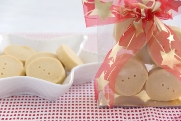
I try and moderate my intake over 11 months of the year but come December I am there ready for shortbread in all its guises.  I don’t have any fixed opinion on shortbread flavour and enjoy it with ginger, pistachio & orange, chocolate chip or the classic Ellen’s Shortbread made from an old DIC department store recipe.  This Brown Sugar Shortbread gives a more caramel flavour and colour.

Next to shortbread, nuts are one of my favourite things about Christmas food.  My mother in law Jan makes these delicious Christmas Walnuts.  You can also make them with pecans but fresh walnuts are easier to find.  Other tasty nut ideas that have come in from our readers are Spiced Macadamia Nuts, Nuts and Bolts and Sugar and Spice Nuts

Amy’s recipe for White Chocolate Rocky Road looks stunning and I am sure will taste it as well.  The colour combination of pistachio nuts and turkish delight are completely in tune with the festive season.
If white chocolate is not your thing then switch the chocolate variety or look at this alternative recipe Hersheys Rocky Road

White Christmas is popular and reasonably economical to make.  I use cranberries and dried apricots but you can vary the dried fruit to suit taste and budget.

Truffles are oh so Christmassy and great for an after dinner treat.   These Rich Chocolate Truffles are luscious and creamy or alternatively you could try Christmas Pudding Truffles,  White Chocolate Cointreau Truffles,  Chocolate Peppermint Truffles

I think I will put my energies into making the kids a gingerbread house but if anyone happens to  make this 3 dimensional Chocolate Christmas Tree then please do send us a photo as I am very keen to see how it looks!

Russian Fudge has had quite a lot of discussion on the foodlovers forum with varying recipes being looked at. I must admit to really liking this one that came from my friend Mary Russian Fudge.  Yes you do have to cook it for 20 minutes or so while stirring continuously but it makes a lovely creamy smooth fudge.

Jams, Chutneys and pickles all make wonderful homemade gifts.  If you have any to add to the list then please do so.

Butter Cookies
Chocolate Walnut Logs
Christmas Whiskey Log

Cooking with Herbs

Cooking with herbs – Lynley Ruck

“I believe that if ever I had to practice cannibalism, I might manage if there were enough tarragon around.”-James Beard, American Chef and Author

Leave your tastebuds in no doubt that Spring has arrived with the fresh, delicate flavours and fragrances of spring sprouting home-grown herbs.  Herbs such as dill, mint, or parsley, can instantly put an end to the monotony of wintery starchy comfort cooking.  In Tudor times a salad bowl would have had at least thirty different herb leaves and flowers mixed in the bowl. By mixing a few of each type of herb leaf that can be eaten raw, a gourmet salad is easily created – look no further than your own windowsill.

Herbs, that is the green leaves, stems or flowers of certain fragrant plants, are vital items in any cook’s toolkit.  Fresh herbs boost flavour and nutrition – without adding extra fat, calories, or sodium and what better way to beat the budget than to grow your own.  There is such satisfaction to be had harvesting your own herbs on demand, and many are perennials and/or self-seeders.  If there are a few fresh herbs in your kitchen garden, there is always a meal at hand… just add pasta, garlic and extra virgin olive oil.

The cultivation and use of wild and domesticated herbs is well documented.  Old tales of physicians and sorcerers, wise women and traders, of trans-continental spice routes being forged and songs, plays and poems have been passed down through generations.  Whether we grow herbs, eat them or take them as medicine, they carry us, if we stop to think about them, far back into history.

I adore the assault on my senses when wandering through the garden and brushing past the Babylonian herbal overhang, herbs have such lush green leaves and pretty flowers that introduce fragrance to the garden as well as embellishing your food.

Whether you grow your herbs in a stately geometric potager with clipped hedges, in pots on balconies, as hedging or adopt what I call jungle effect gardening, make sure you grow what you enjoy eating.  If you love Asian flavours, grow Thai basil, kaffir limes, lemongrass and coriander, if Italian is your thing then you will want flat leaf parsley, rosemary, oregano and thyme in your patch.

My favourite short-term way to keep fresh herbs is an Elizabeth David method, to make them up “immediately” into herb butters or oils, stored in plastic containers to flavour egg dishes, or grilled fish or meats.  When life hands you basil – make pesto – it freezes really well or, just trim the stems and place in a jar of water; cover the tops with a plastic bag or wrap, and refrigerate. Herbs will keep for at least a week like this, often longer. Fresh basil leaves can also be frozen fresh in plastic bags for up to six months.  Herbs such as mint, tarragon, basil, thyme, rosemary and oregano (but not parsley, chives or fennel) can be dried, on the stalk if possible, slowly in paper bags in a dark dry space and then kept in jars for later use. Use the stalks later, underneath roasting meat or as skewers for kebabs on the barbeque.

Always add fresh herbs at the end of cooking for maximum flavour. Dried herbs have more intense flavour compared to fresh, and should be used more cautiously.  Replace dried herbs every year – packets of tasteless dust in cardboard boxes will not do your cooking any favours.

There are squillions of online sources packed full of the knowledge required to successfully grow herbs for your kitchen.  My favourite purveyor of herb and vegetable seeds can be found here:   Grab a pot or a plot, some compost and get growing – it’s easy, and the benefits are manifold.

BASIL
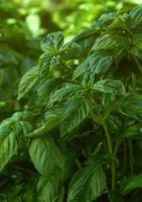
No herb quite speaks more to me of summer than Basil.  Basil is a companion to olive oil and tomatoes; it is true, but oh so very much more.  Try Basil in salad dressing, torn into mayonnaise, as a leaf in green salads and of course in the ubiquitous Genoese basil pesto. The french version of pesto is pistou – try the delightful French spring Soupe au pistou where basil is the star of the show.  Basil often features in tomato sauce and tomato soup, alongside oven roasted tomatoes, in herb breads or even curiously with fruit salad. Try this simple baked brown rice risotto, easy, nutritious and delicious.

CHERVIL
Chervil is very similar to parsley, but is sweeter and delicately scented with aniseed, it is gorgeous in mashed potatoes or scrambled eggs, is lovely chopped and roasted with vegetables such as fennel, eggplant and courgettes.  Chervil is an essential component of fines herbs (parsley, chives, tarragon and chervil) a subtle combination of delicate herbs and also the more robust bouquet garnis (which usually includes parsley thyme and a bay leaf, and may also include basil, thyme, chervil, rosemary, peppercorns, savoury and tarragon) being the quintessential bundle of various herbs utilised in long slow French recipes.  Chervil is great in roasted beetroot salads, chopped into mayonnaise or omelettes, in béarnaise sauce with tarragon, in spring vegetable soups, in stuffing for poultry or lamb and in herb apple jelly as an accompaniment to roasted meats.

CHIVES
These lovely oniony grass-like tubes are planted at intervals throughout my vegetable garden.  Use the flowers in your salad, use whole chives as interesting garnishes, tie them into bows or form them into circles or triangles, securing the shape by sticking the tip into a cut end. Try using them to tie bundles of vegetable strips. If the chives are too stiff to manipulate, blanch them for ten seconds in boiling water.  Use in all salads and salad dressings, herb butters, omelettes, curried eggs and the creamy chilled Vichyssoise Soup.  Chives will go in tomato sauce, any white sauce, fish pie, snipped into new potatoes, in hash browns, potato salads, in fact anywhere where you would use onions or spring onions, always add towards the end of cooking for maximum flavour. Chives are great with seafood.

CORIANDER
You either love or hate coriander, it’s lemon style pungency sends some into a swoon, others describe it as tasting like soap.  I think you may be able to tell on which side of the fence I sit.  Indispensible as an ingredient in dishes such as ceviche (raw fish salad) or a fresh fruit salsa, coriander goes really well with barbeques prawns and asian style soups and in particular the pungent hot sour spicy flavours of Thai cuisine.  Ceviche is fish cooked in the citric acid in lime and other juices, it’s zippy flavour and succulent texture has made it a favourite from Peru and Ecuador across the entire Pacific to the Islands,  I have included the recipe given to me by a Fijian friend for Kokoda, the Fijian version.  Use coriander with prawns, tofu, Asian dishes, fish, coriander pesto, and Thai pork balls.  Coriander grows well during the colder months, it will go to seed easily during the summer.
Growing tip – often people have problems with coriander going to see prematurely.  Coriander dislikes root disturbance so seedlings can often go to seed soon after planting.  Try growing it from seed direct in the garden and letting it to grow where it lands.

DANDELION
Often totally disregarded and mistreated, the humble dandelion is making a resurgence on the culinary scene, in the States you can buy bunches of organic, tender young dandelion leaves, I sense a gap in the New Zealand market! The greens can be bitter so use very young sprayfree leaves. Italian Dandelion Salad is very good. Long touted for it’s curative effect on the liver, Dandelion tea is a great general pick-me-up – 1 tsp per cup boiling water, steep 5-10 mins strain – supposedly also good for the gall bladder, rheumatism, as a digestive, diuretic or tonic.

DILL
Dill marries perfectly with seafood, try this lovely salmon recipe. Dill and pickles have traditional been paired, try slicing cucumber and serving with a dill vinaigrette.  Chop and rub dill on chicken and put lemons in the cavity of a roasted chicken, add to mayonnaise especially with fish, or dill seeds in cream cheese, fish soups, dill seeds with lentil dishes, this fresh tartare dressing and of course in cucumber pickles. Never plant dill with fennel – they will cross germinate.

MINT
I never plant my mint in a container to stop it from taking over the garden, I would be delighted if it did, I love the fragrance so much.  I use it as the je ne sais quois in my salads, Mint is imperative in tabouleh with parsley, in many Asian inspired dressings, a natural in potato salad, in mint sauce of course.  You can also make syrups for drinks & jellies, fresh/frozen pea soup, iced tea, herb tea, with new peas and/or carrots, new potatoes, in fruit salad, sorbets, apple jelly, and as a floater in any refreshing summer drink or tea

NASTURTIUM

Baby Nasturtium leaves add a peppery component to salad greens, and the edible flowers look, well, good enough to eat, be adventurous I also add calendula flower petals, borage, viola and chive flowers into salads during the summer months.  Mock capers can be made with the seed pods, but apparently just taste of spiced vinegar, why would you bother?

PARSLEY
One of the most common herbs to be found, easy to grow and totally indispensible, I wouldn’t be without Italian flat-leafed parsley in my garden.  Use in marinades, as a leaf in green salads, in parsley pesto, parsley butter, dressings, (herb vinaigrette) or as a garnish or over, in and through anything Italian!  Use in pates, omelettes and scrambled eggs, in gremolata, in stuffing, fry parsley in butter as a garnish for cooked fish or chicken, in savoury parmesan biscuits.  As a herbal remedy, 1 tsp per cup boiling water, cover, steep 5-10 minutes, strain, serve hot or iced, as a tonic for haemorrhoids or rheumatism, is a diuretic and a tonic.

ROSEMARY
I once lived on Onetangi beach and our front hedge was rosemary – if it thrived in that sandy soil and seaspray then it will grow almost anywhere, surely.  A Mediterranean staple that conjures skewered and roasted meat to my mind, it is great on focaccia bread, in bean soups and in soffritto (celery, onion, leek, carrot and parsley thyme and rosemary, sautéed in olive oil) – the base of many Italian and Spanish stews. A component of Herbs de provence (thyme, oregano, savory and sometimes lavender) Very useful in marinades, inserted into or under roasting lamb with slivers of garlic.  Put Rosemary into crab apple jelly for serving with roasted or grilled meats.  My favourite is oven baked potatoes with olive oil, seasalt, garlic and rosemary leaves. Always use sparingly as Rosemary is quite pungent and leathery – chop finely.

SAGE
Sage comes from salvare to be saved and means health. The Romans grew it wherever they travelled, and Italian cooks are expert at utilising sage in many ways.  Sage leaves fried in butter or olive oil are a special way to garnish meat dishes and a simple risotto.  Saltimbocca is a well known Italian dish skewering veal, prosciutto and sage.  Sage goes very well with gamey meats and cheese.  Use with Pork, in stuffing for chicken or chicken breasts, goose, turkey, roast venison, rabbit, sage jelly.  It is well worth mentioning the glorious pineapple sage, with it’s fiery flowers, a wonderful addition to the garden and chopping leaves into salad is a fine thing to do.

THYME
I use thyme as the continuity factor around the borders of my garden, ornamental and culinary.  A sun-loving and easy to grow herb, I continuously plant to replace old and woody specimens.  I use thyme when roasting beetroot or asparagus in olive oil and lemon juice and zest, when roasting tomatoes or potatoes (try kumara also) or in potato salad.  I use the lemon variety in the cavity of roasting chickens or under the skin of the breast or to flavour sweet custard (remove the leaves after flavouring the milk).   There is pizza thyme for pizzas, garden thyme for tomato sauces, in minestrone, as a base note in vegetable soups, with lamb beef, pork casseroles and in herb breads.  Add thyme to caramelised onions, mushrooms,  savoury parmesan biscuits, it can even be added to apple puddings as a surprise guest.

Medicinally, you can use thyme as a mouth wash (for sore throats & gum problems)
4 cups water, 100 g dried thyme.  Boil water and pour over thyme, strain and leave till cold. This will keep in fridge around 3 days. Gargle 3-4 times daily.

Growing and Cooking Broad Beans

This year I got very excited about the prospect of growing broad beans. 
There were two aspects to this.  Frstly I like eating broad beans,  although I probably have never had them in any quantity and most of the broad beans I have used have been frozen which I always double pod.  Secondly I heard that they were good for returning carbon to the soil and so would make a positive addition to them compost once they had finished.

I planted the beans higgeldy piggeldy in spaces around my garden and then once they were up and growing I realised that they should have been in neat rows for staking.  Neat rows were formed by transplanting some and others were left to do their thing – whatever it ending up being….

My gardening is all trial and error and I really didn’t quite know what to expect.  I also hadn’t seen too many bees around the flowers although there are often bees in the borage which is in a different part of the garden.  I had to laugh at myself heading out with brown sugar and water in a spray bottle to spray over the foliage to encourage bees and realised I was way too late and it was completely unneccessary as the beans were already growing.

I now have beans galore – I didn’t realise that there would be so many!  Even the plants that I didn’t stake have grown relatively upright and are covered in beans.

Here on foodlovers we have recipes for

broad beans with asparagus and pasta
pasta con primizie
soupe au pistou

I know also that I can steam them and serve them as I would other vegetables.

But what else???  Broad bean ideas gratefully received!

The Kitchen Garden

While I am a complete novice gardener, my year old vegetable garden has so many merits that I am wondering how we ever lived without it.

I love the fact that I can walk out each day and pick fresh spinach, carrots, silverbeet, broad beans, beetroot and herbs and know that they are fresh and untouched by sprays and chemicals.
I say “untouched” lightly, meaning that they are not sprayed in my garden and most of the compost is either organic or homemade.
I have set aside a north facing area that is not usually seen by others for “wld” herbs.  Packets of rocket, coriander and basil have been flung into the compost and left to do their thing.  I did this last year and had a continuous supply right through summer and winter.  Coriander of course is best grown this way as it tends to go to seed as soon as you transplant it – hence the difficulty with buying seedlings.

The joy of growing, picking and then cooking is so huge that I am seriously now eyeing up lots of other areas – trying to work out what else we can possibly grow and reading Lynda Hallinans article on peanuts in the lawn sounded really interesting!

As we currently have loads of spinach and silverbeet we are eating lots of spinach and feta pies.  I like to scrunch the filo over the top and scatter with pine nuts.  These are often best added either at the end or towards the end of cooking so that they don’t burn.

My glorious beetroot draws complaints from some family members although all over 12 seem to like this recipe for lamb, beetroot, feta and walnut salad. 
Make sure you use good quality NZ walnuts – they are so superior!

Lamb, beetroot, feta and walnut salad

Savoury Biscuit Recipes

Savoury Biscuits
Text by Tammy McLeod

When we think of baking and filling the tins, it is usually sweet biscuits, cakes and slices which spring to mind.  However, home made savoury biscuits and crackers are so delicious and so easy to make, they should not be over-looked.  They are a great thing to have in the tins or to serve on a cheese board, but also make lovely gifts, especially if coupled with some home made relish or pickle.

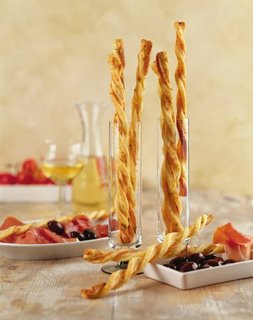
One of the easiest savoury biscuits to make are cheese biscuitscheese straws, parmesan wafers, cheese busters, parmesan biscuits, the list goes on and the varieties are endless.

My favourite way of making cheese biscuits is to place all ingredients in a food processor and process in bursts until the dough starts to form a ball.  If you don’t have a food processor, rub your butter into the flour and cheese, then combine with a knife until you get a dough which is just coming together (you may  have to add a little milk).  I then roll my dough into a log, chill, slice and bake.  The logs of raw dough freeze really well and you can slice and bake them from frozen.  Cooling the baked biscuits on the trays helps to ensure crispness.

These cheese biscuits with rice bubbles in them are super easy to make.  The butter is melted and added to the dry ingredients and the rice bubbles provide a good crunchy texture.

The different flavour combinations for cheese biscuits are endless. Some of my favourites include parmesan and smoked paprika, tasty cheese and chopped rosemary, feta with sundried tomato (drained on paper towels), blue cheese (roll the chilled logs in poppyseeds for a decorative edge) and parmesan with a dash of cayenne pepper.

Water crackers are also incredibly simple to make and just so much nicer than the store bought ones.  They are also relatively low fat!  Home made water crackers make the perfect pre-dinner drinks nibble when accompanied by a nice cheese and some quince paste.  Once again the flavour and look can be easily changed by sprinkling the uncooked dough with flaky sea salt, cumin seeds, sesame seeds or Moroccan spice mix, and cut into triangles, rectangles or irregular shapes.

Another favourite on the cheese board (or with peanut butter!) is oat biscuits.  I like to blitz my rolled oats in the food processor before making the biscuits, to give a finer texture to the finished product.  Parmesan and/or nuts (walnuts, hazelnuts and pecans) make great additions.  To me the perfect oat biscuit is thin and crisp, so it is best to roll these out and cut into shapes.  Bran biscuits are another Kiwi favourite.  I love them simply buttered, but they also are delicious with cheese and dried fruit.

Try making some savoury biscuits today – they won’t last long in the tins!

Dressings Recipes

 The Art of Blending
Alison McKee

In the late 18th century French nobleman Marquis d’Albignic, impoverished by the French Revolution and exiled in London, supported himself by making the rounds of grand dinner parties mixing salad dressings. D’Albignic became an object of infatuation travelling by carriage with a servant carrying a mahogany case containing his repertoire of oils, vinegars, soy and ketchup, caviar, truffles and meat extracts, and egg yolks for mayonnaise. During the height of his popularity D’Albignic manufactured his cases, fitted out with selected ingredients, and eventually returned to France with an amassed fortune of over eighty thousand francs.

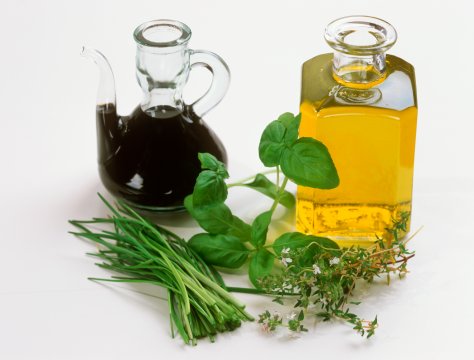
The standard proportions for vinaigrette are three parts oil to one part vinegar, however, some oils and vinegars are more suitable than others for use as dressings.  

Suitable oils include olive oil, sunflower oil (light and nutty), pumpkin seed oil (moody and dark), avocado oil (aromatic and rich in flavour), walnut oil (can be refrigerated), and pine seed oil (made from pine nuts and extremely expensive). Buy the best oil you can afford and ensure your oils have a fresh fruity aroma.

 Suitable vinegars are balsamic, wine vinegars – red wine, white wine, rose and champagne, herb and fruit flavoured vinegars. The best wine vinegars have a level of six percent acetic acid, the acid that produces the strength of the sharpness and bite, with a buttery and savoury winey aroma formed by the by-products of yeast fermentation.

Fruit vinegars may simply be ordinary vinegars flavoured by contact with fresh fruit or made by fermenting fruit wines. Popular fruit-flavored vinegars include those infused with whole raspberries, blueberries, or figs. Herb flavoured vinegars are best made with “woody” herbs, such as rosemary, thyme or tarragon and can be easily produced at home by infusing fresh or good quality dried herbs to pre-purchased vinegars. Let’s face it there is some truly ghastly vinegar on the market – if it doesn’t taste good on its own don’t even consider using it in a dressing!


The Art of Blending:

Taste is the most important factor when selecting oil and vinegar to blend for a dressing. Not only are the blend components important but also the marriage between the items selected for the delivery of the dressing.

  • Raspberry Vinegar and Olive Oil with a touch of honey is fabulous on Spinach or Watercress leaves alongside Chicken.
  • White Wine Vinegar and Walnut Oil with the addition of currants lifts a dish Caramelized Leeks and enhances the flavour of a nutty flavoured Lambs Lettuce.
  • Robust Cabernet Sauvignon Vinegar and Herb Flavoured Vinegars blend well with Olive Oil and adds a further depth of flavour to Char-grilled Vegetables.
  • Delicate Champagne Vinegar and Olive Oil is sublime with creamy Clevedon Oysters.
  • Avocado Oil and White Wine Vinegar with the addition of citrus juice adds complexity to dishes containing Pork and Seafood.
  • Balsamic Vinegar adds to the “moodiness” of Pumpkin Seed Oil – try this combination with Potatoes and Rocket.
  • Fig Vinegar and Olive Oil over Blue Cheese, Watercress and Pear Salad.
  • Sunflower Oil with White Wine Vinegar and Lime Juice over char-grilled Tuna.


Baked Eggs Vinaigrette

Cranberry, Bacon and Avocado Salad

Citrus Glazed Regal Marlborough Salmon

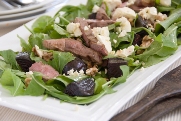
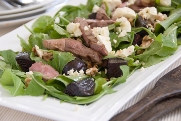
Pear, Parmigiano, Prosciutto and Walnut Salad

Caesar Salad

Salad Nicoise

Rhubarb Recipes

Cooking with Rhubarb
– Lynley Ruck

I’m a fool for good old rhubarb.  It is not until November that fresh summer fruit begins to appear, local apples are past their best, it is way too early for decent plums and apricots and berry fruits are yet to make an appearance….and then there is rhubarb, reliable rhubarb.  It makes a fantastic choice for sweet tangy desserts and delicious pies, crumbles, shortcakes, muffins and jams.  Rhubarb Sour Cream Cake (pictured) is a favourite for dessert with custard or afternoon tea with cream and Rhubarb Swirl Pavlova will wow your dinner guests.

I don’t know why, but whenever I think of rhubarb the lyrics of an old English pub song springs to my mind “We’ll drink a drink a drink, to Lily the pink the pink the pink, the saviour of the human race. She invented medicinal compound, most efficacious in every case”. I adore the rosy, pink colour of cooked rhubarb and I’m not sure but I think rhubarb stalks might even be good for you – I have read about the fibre, calcium and vitamin c content, but then the amount of sugar required to render it edible may just offset any major health benefits. 

Rhubarb is actually a vegetable that is closely related to sorrel and dock, not a fruit.  The leaves are very toxic and can be used as an insecticide in organic gardens.  If you have space, rhubarb is a wonderful addition to the kitchen garden, and what a great trade-off – a pile of steaming cow manure and a rhubarb plant, for an endless supply of the tangy gorgeousness that is rhubarb.

The classic combination, rhubarb and custard go together like, well, rhubarb and custard!  Although rhubarb needs its sugar fix, it also partners up well with oranges or apples, ginger, straw or any berries, rosewater, butter and cream, pastry, pineapple, almonds and vanilla.  The sharp tangy aspect of rhubarb means it also makes a great relish, sauce or chutney.

The starting point for many a recipe is stewed rhubarb, and while this term does make it sound like there may be prunes in the near vicinity, rest assured, stewed rhubarb is the same as poached rhubarb which is in turn also very nearly rhubarb compote.  The ingredients for each of these methods are the same but the roasting method works best if you want to retain the shape of the stalks.

To stew, poach or puree rhubarb: Top and tail your rhubarb and cut into 10 cm lengths and place in a saucepan. Add a generous amount of sugar (to your taste) and a few tablespoons of liquid (water or orange juice work well).  Cover with a lid, to poach, cook slowly until tender, to stew cook rapidly until completely softened and mushy.  For a smooth puree – you can blend the stewed rhubarb. 

To roast rhubarb, slice stalks into 10 cm lengths and place in an ovenproof dish with the same amount of sugar and liquid and bake at 350 for ½ an hour or until tender.  Roasting helps to retain shape and colour.  Orange zest, rosewater or split vanilla beans can also be added before cooking.

Rhubarb crumble is a popular way to use cooked rhubarb, you can use your standard fruit crumble recipe or you might like to try a healthier version.  Rhubarb also responds well to a general ‘chutnification’, I have included an unusual Mint Sauce Chutney recipe that goes well with crispy roasted lamb and another basic relish recipe that would make a great gift.  I do believe that cumin and coriander deserve further investigation.

If you are making a trifle by all means use roasted rosewater rhubarb under the custard and on top of the sponge, put it under your cobbler or brulee or on top of your breakfast cereal, between sheets of pastry with crème anglaise, use it as a suspension medium for rose petals in jelly, but having said all that, I did find it difficult to locate savoury recipes that require rhubarb.  There are a few chicken recipes – but I have to say that combination did not appeal and I wouldn’t go there, unless there were a multitude of poultry sins to hide!  On the other hand the sweetened, aromatic, tangy desserts, cakes and pastries appeal a little too much…………enjoy the rhubarb season!

For great tips with growing rhubarb take a look at Garden-NZ

Cooking Whitebait

Regardless of my age or where I am, whitebait always takes me back to being a child in Hokitika.
There, for the months of September and October, dad’s and grandads dotted the streets, cycling or driving down to the river armed nets, waders and oilskins.
It was always the signal of spring, of warmer evenings and the start of our local athletic season.
We used to play alongside the bank, watching the slow moving procession of men quietly working their way along and got excited about untying the end of the net and emptying the catch, hoping for other secret treasures to have found their way in. 
I guess there were some women in there as well but I don’t remember seeing any.

Whitebait was plentiful – our waterways were clean and a safe home for fish – enough to justify taking a very large metal bucket to collect them in. 
Stray cockerbullies with a few whitebait for company would often end up in our fish bowl and a few of the fish were shared with the cats. 
Patties were cooked and sandwiched between slices of fresh white bread and butter.
As with anything in good supply we often got sick of endless nights of it and by the end of the season we were asking for anything other than whitebait for dinner.

We had whitebait for dinner last night,  selfishly we waiting until the kids were in bed as at $160 kg I didn’t feel inclined to be sharing too much.  Regardless of price, patties should be packed with whitebait, I use a mere sprinkle of flour and separated eggs.  The result is light puffy patties, full of whitebait and nostalgia.

Whitebait Patties

Old Fashioned Baking

Old Fashioned Sweethearts
Lynley Ruck 

Some of our very first kitchen experiences were often at the knees of wonderful wise folk who seemed to be able to conjure cakes and slices from fresh eggs, a whiff of vanilla or the mere hint of lemon. Home baking is alchemy of sorts that produces wonderful aromas that in turn create feelings of nostalgia and sometimes even of hope and comfort.

The sense of smell is our first and most immediate link to the world around us. It reminds us of what (and who) we love. Smell is perhaps the most complex sense we possess and possibly this is why it is the least understood and most often taken for granted. Scent does not actually trigger memories – it triggers the emotion that caused the memory to be formed in the first place. Scientifically speaking, olfaction and memory do seem to be linked. According to studies there is a biological basis to their close association. Olfactory neurons send information immediately into areas of the cerebrum, while others simultaneously travel directly into the portions of the limbic system associated with memory.

There is that certain smell of mechanical kitchen machinery and the creaming of butter and sugar in a flour dusted chrome and formica kitchen that, for me, captures the essence of my childhood and home. These days there are more than a few cafes popping up around the countryside that have managed to enchant their customers with mismatched crown lynn crockery, sugary treats and milky tea – tapping into some of those early memories.

Afternoon tea – a great New Zealand institution that was an opportunity for the housewife to display her baking prowess has all but disappeared and sadly there are many children today who have never sampled home baking icons such as Ginger Kisses, Neenish Tarts, Madeira Cake , Gingerbread or homemade shortbread.

Good old fashioned recipes have recently been resurrected around modern coffee tables, as they jolly well should be. Lovely books with titles such as ‘Afternoon Tea’ published by Frankie an Australian magazine and  ‘Ladies a Plate’ by Alexa Johnson are full of old favourites photographed on delicate crockery and vintage linen, are arriving in bookshops hopefully encouraging a new generation of home cooks to embrace their roots and fill the tins!
Jan has just started a blog on this – Cooking the Past.

 Back in the day, at school, we were all taught how to make Hokey Pokey Biscuits, a rather plain but extremely delicious lunchbox staple. The warm and buttery aroma of these gorgeous golden syrup delights floating from the cooking room weeks before it was our turn to cook was even better than actually eating them.  Mothers and fathers, teach your children how to make these biscuits!
Thinking of hokey pokey biscuits reminds me of Highlander biscuits and Kiwi crisps.  They were never chocolate chip biscuits but kiwi crisps – when did they change? 
Of course Highlander biscuits were Kiwi crisps without the chocolate.

 You can’t perfect these recipes – they are as good today as they were 50 years ago.

Raspberry Jam Drops
Tan Square
Nutty Biffs
Sponge Cake
Dates and Cream Cake
Hedgehogs
Belgian Slice
Ginger Crunch
Bran Biscuits
Chocolate Afghans

Chocolate Weetbix Slice
Date Loaf
Gingerbread Men
Queen Cakes
Melting Moments
Pikelets
Gingernuts