Easy to make and so light and delicious, these ricotta fritters are a great dessert or brunch treat.
Apple and Ricotta Fritters with Caramel Sauce
Reply

Easy to make and so light and delicious, these ricotta fritters are a great dessert or brunch treat.
I for one am happy to send the end of 2017 as it did manage to send us a few curved balls. Hoping for a better 2018 with more time to spend creating recipes and features here.
Our family are pretty excited about a much anticipated trip to Mexico in April, if anyone has been to the Tulum, Yucatan area then I would love to hear some tips and recommendations.
Meanwhile at home my garden is going crazy with the mixture of rain and heat. The little gardens that NW supermarket gave out some months ago have kept us well stocked with courgettes and herbs plus plenty of borage and sunflowers for the birds and the bees.
Happy Cooking!

At this time of year I always have a glut of courgettes (zucchini) in the garden and some that magically seem turn to marrows overnight.
While marrows can lose some of the desirable characteristics that the smaller courgettes have, our Courgette Loaf is fantastic for using up marrows and the excess pulp can be frozen for later use.
Delicious Courgette Loaf
A fabulous loaf that is easy to make and great to use up excess courgettes or marrows.
It freezes well.

Courgette Fritters
Zucchini fritters are always a favourite, using a small amount of flour keeps them light and fluffy and the addition of feta and mint is almost essential…

Courgette Noodles with Pesto Chicken
Spiralised vegetables are popular with those wanting to lower their carbohydrate intake and this courgette noodle recipe is light yet full of flavour.

Courgette Cake
Essentially our favourite carrot cake recipe with zucchini used instead of carrot.
The flavour and texture are of course fantastic and the cream cheese icing a winning topping.

Courgette Soup
I have been making this recipe for years. Yes summer is not necessarily when we eat soup but make it, freeze it and then enjoy it over winter.

Courgette and Bacon Muffins (Gluten free)
These muffins are so super tasty. If you are happy with wheat flour then just swap the gluten free baking mix for regular flour.

Chocolate Courgette Cake
This cake is moist and full of flavour. No one will pick that it has 3 cups of grated zucchini in there.

Pizza of Asparagus, Courgette and Pine nuts
This is such a great recipe, the one I make for me while the kids enjoy their ham and cheese combinations…

Ratatouille
Late summer and ratatouille go hand in hand. Everything is in season and it should be economical to make.

What are some of your favourite courgette recipes?
This moist loaf is the perfect way to use up excess courgettes or those that have grown into marrows.
The original recipe came from a friend’s grandmother in the USA, it contains 2 cups sugar which I have reduced. Feel free to reduce this further if you wish.
Thanks to Betsy Rothbacher from Massachusetts for the original recipe.
Helen Jackson.
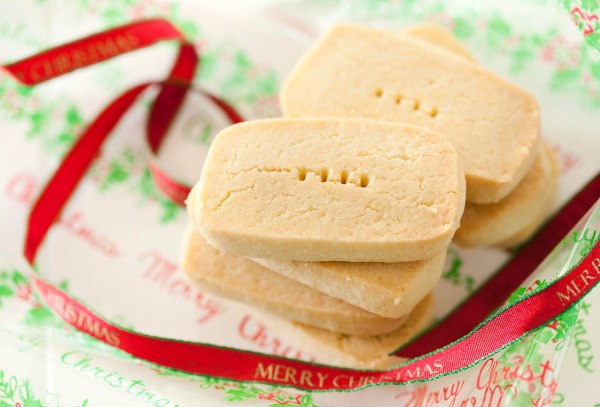
One of the great things about the festive season is that people make shortbread. While of course it is made at other times of the year, it is Christmas time when it really comes into its own and we have great shortbread recipes here to share.
This quick and easy salad looks so pretty with the vibrant colours of the strawberries and snow peas. It also tastes amazing.
I did experiment with blanching the snow peas, I prefer them natural but if you want to blanch them in boiling water then do it very quickly and then refresh.
As we head towards the silly season I am reminded of the necessity of some good freezer meals for nights when the day has been busy or when half of the family are out at end of year functions for school and work.
Have you ever been to China? I haven’t and have always wanted to so I’m hugely excited about the prospect of my next World Expeditions trip to China in May 2018. The Great Wall has been a bucket list place to visit and of course the food will be sensational. For more information check out Helen Jackson’s Culinary Food and Culture Tour Of China. We will of course have a great tour company on the ground with all the knowledge needed.
Happy Cooking!
Generally I prefer to steam my dumplings but the kids love them fried so here they are.
So easy to make and simply delicious to eat, they are very popular in our house.
You can easily freeze them (before cooking) ahead of time and then just cook from frozen.
This apple cake is from an old hand written recipe book.
It is so delicious and super easy to make.
We think it is best eaten on the day of making and is a great cake to serve warm for afternoon tea or dessert.
Aromatic and positively delicious, this is an easy go to recipe in our house.
I buy finely chopped frozen lemongrass from our local Asian supermarket.
It is perfect for this recipe as all you need to do is break off a chunk as needed.

Matt Morris
Takeaway culture has meant that the volume of disposable packaging in our global waste stream has increased to staggering levels; estimates vary but perhaps 500 billion disposable cups are thrown away annually across the globe (58 billion in the US, 2.5 billion in the UK, almost 1 billion in Australia). In New Zealand, 100–200 million disposable cups are used annually.
Tackling the coffee cup mountains
When we at the University of Canterbury were first told, back in 2013, that takeaway coffee cups would soon no longer be accepted by our recycler – because of issues in China – we knew we had to do something. Takeaway cups had become an classic waste issue, and we were extremely unhappy about this retrogressive change. So ahead of the change, we introduced a trial to collect coffee cups and send them away for composting. Blue bins specifically for coffee cups only began to appear on our campus.
Since then, there has been nationwide and international interest and concern about what to do with the burgeoning mountains of cups entering our disposable, takeaway culture. Our small trial at the University of Canterbury, which has diverted around 50,000 cups from landfill, has drawn exactly the right kind of attention.
The issue is complex. For those who ask ‘why can’t they all just be composted?’ or, ‘why can’t we just only use compostable cups?’ there is a long-winded answer. Our story will hopefully shed some light on what the issues are exactly, and help others on the journey.
There are many kinds of takeaway cups on the market, which is an issue for waste service providers. Each brand of cup may need a different treatment – and this is way beyond what anyone can manage locally.
Generally, takeaway coffee cups have waterproof lining. Sometimes this is wax or polyethylene. Sometimes it is a polylactic acid (PLA) plastic lining, which is derived from plant materials – ‘compostable’ cups have this lining. PLA lining is partly what prevents cups being accepted for recycling, because it needs to be stripped out before the paper can be recycled. Practically no one can do this currently. And for compostable cups, that PLA is often derived from cornstarch that has been made with – you guessed it – genetically engineered corn. Ouch.
The next thing is that takeaway coffee cups, by their very nature, travel. At the University, which is more or less a closed system, we could pretty much guarantee that all our cups will be from an approved provider. (At a municipal level this is much harder to police, perhaps impossible). Yet, even with this advantage, there is some important consumer education to do. Cups are notoriously contaminated: think milk foam and soggy marshmallows, or how they get used as mini-rubbish bins for apple cores, pie wrappers and god knows what else. And don’t get me started about lids.
Collection and signage
For the University of Canterbury, during our trial period we have invested in signage that is as explicit as possible to limit contamination at the front end. At the back end of our system we have someone sorting the cups so that what we send away is clean. Our trial has been mostly focused on testing how people will use a separate collection point for coffee cups, and what kind of resource would be required to maintain this system.
So far, we think it has been a success. Chloe Wium, who sorts the cups, says: “I think people are beginning to realise that coffee cups don’t just disappear once you throw them in the bin, and over the last few months I’ve (slowly) noticed less rubbish in the bins, and more people making an effort to sort the cups from general rubbish, even if lids are still a problem.”
Sorting and composting
The next step is what to do with this material. We can divide it into two groups: those cups that claim to be compostable, and those that claim to be recyclable. We simply don’t use cups that are neither. Plastic and polystyrene cups have absolutely no place in this picture. We want to use practices that are regenerative and restorative.
For us, collecting cups to send to China for recycling, or even to be recycled in a New Zealand plant, is a very distant second-best. We want our waste to be composted, to be returned to the earth, and to enrich and nourish our precious soils. To achieve this we need to a) use procurement instruments to ensure all vendors only use an approved variety of cup, and b) know that the selected cups will be taken by a composter (or recycler).
At the University, we started with two district council composting machines. We sent our cups there, they mixed them in with the rest of the waste (lord, the chicken carcasses!) to become compost. We didn’t test for any chemical residue, but the composting part worked fine. However, that option came to an end, so we are now having the cups baled until a better option is developed. Luckily, that is in process.
Three composting trials of coffee cups and other ‘service ware’ items have been undertaken in Christchurch this year, and the results are extremely promising.
Compostable service ware can be split into two types: the ones with a PLA lining (for liquids) and the ones without.
Two trials were undertaken by the Christchurch City Council (CCC) and one by EnviroWaste. The CCC events team sent service ware from three large events to Living Earth (CCC’s organic processing plant), and Cultivate Waste (see sidebar). Living Earth took service ware without the PLA-lined materials; Cultivate Waste took service ware with PLA. EnviroWaste sent both types to a local landscaping firm. In addition, Cultivate Waste took service ware from another firm and composted it in their central city Peterborough Urban Farm.
Ecoware were the exclusive approved supplier of compostable food service ware for the CCC and EnviroWaste trials. The CCC trial diverted 61%, or 12 tonnes, of food waste and packaging which would have otherwise ended up in landfill.
GE corn
It is really important to highlight the fact that Living Earth could not take all the product. One of the reasons was that, as a BioGro certified organic company, they cannot take product that is derived from GE materials (the cornstarch in the PLA is made from GE corn). The fact that it has been denatured and contains no genetic material is not the point; upstream production of the raw material is also taken into account.
This PLA problem is a tricky one to work through, but Ecoware’s founder and director, Alex Magaraggia, is optimistic. “Our PLA has been manufactured by our global partner Natureworks with equal weight given to environmental, social, and economic sustainability considerations. Certain packaging types will always require some sort of lining, and we believe our Ingeo bioplastic is currently the best alternative to non-renewable oil-based plastic linings, as it has the lowest greenhouse gas quotient of any commercially available plastic, and facilitates the diversion of food waste from landfill when it is composted at approved facilities. We don’t claim it’s perfect, but we’re committed to its continuous improvement, and within five years GMO feedstock won’t even be a consideration as with our global partners we’ve launched a pilot facility looking to skip plants, and convert greenhouse gases directly into bioplastic.”
What we’ve learnt
All of the trials were successful, in that the packaging all broke down sufficiently. This is great. For the University of Canterbury, this means we understand a lot more about which products we could require vendors to sell. Coffee cups are still a problem; we can’t send them with our organics to Living Earth because of the PLA. But we have learned that ordinary composting works with these products, and that creates opportunities. We don’t especially want to keep our blue bins forever; we’d dearly love to mix our food waste with the cups and other service ware and send it all away to be composted.
Reusable cups: truly sustainable
Of course, this is only one response to takeaway culture. Dr. Sharon McIver, former UC waste reduction educator, and now the owner of recycling consultancy Our Daily Waste, provided onsite sorting services at two of the events involved with the CCC trial.
“The results of all these trials is really encouraging, and at some point I hope that all Canterbury coffee providers will switch to compostable, but it’s important to remember that whatever it is made of disposable products are never sustainable,” she says. “There is still a lot of upstream waste, transport, processing and environmental costs to consider. The only truly sustainable choice for takeaway coffee cups is reusable – and they’re way classier too. Next time you get offered a disposable coffee cup, ask yourself the question ‘does this go with my outfit?’”
It is an evolving process, and we need to remain responsive to opportunities as they arise, always keeping our eyes on the prize: reducing waste in the first place, and finding new ways to send our waste to the earth as safely as possible.
Originally published in Organic NZ magazine (July/August 2016)

We’re thrilled the first winner dinner is at La Pancetta, the restaurant of Wairarapa’s charcuterie specialist Rachel Priestley, winner of the Outstanding NZ Food Producer Awards Paddock Crafted for her Spicy Sicilian Sausage.
Not only is Rachel the ‘queen of charcuterie’ she is also chef/owner at Greytown restaurant, La Pancetta and our host for the first Outstanding NZ Food Producer Dinner on Friday 21 July 2017.
Rachel aka The Prodigal Daughter, makes fresh salsiccia (sausage) and cures whole cuts for Pancetta, Prosciutto, Coppa and Bresaola. In April The Prodigal Daughter Spicy Sicilian Sausage was awarded Paddock Crafted Winner in the inaugural Outstanding Food Producer Awards. The Prodigal Daughter’s Spicy Sicilian Sausage uses free range Longbush pork coarse-cut and enhanced with back fat spiced with cumin, coriander, chilli and paprika – Rachel’s promising it will feature on the dinner menu. We’re hoping we can twist her arm and encourage her to serve The Prodigal Daughter Coppa and Bresaola. which were also finalists.
Rachel’s cooking philosophy is using quality, organic local ingredients and she is planning a menu which celebrates the Wairarapa and its surrounds. Expect to enjoy produce from The Prodigal Daughter, The Clareville Bakery and winners produce such as Absolute NZ Meat, Jersey Girl Organic Milk, Paneton Bakery, Whitestone Cheese, Fix & Fogg and more.
6PM for 6.30PM Friday 21 July
La Pancetta, Wakelin House, 123 Main Street Greytown
$110 for four courses matched with Ara wines
Hearty and oh so tasty, this beef goulash is a real winner.
As with all of my winter casseroles I generally add 2 teaspoons of miso paste to the dish at the same time as the stock and tomatoes. This is purely optional but I find it does help to give a rounded savoury flavour.
 Vietnam is a land of fabulous food, beautiful flowers and lovely people.
I don’t pretend to be a photographer but I couldn’t help but try to capture some of the faces we saw along the way.
I love the man with the cigarette who quickly had to extinguish his fag and then roll up the brim of his hat so I could see his face better.
This gorgeous lady was working hard harvesting rice in the fields outside Hoi An.

Photo one and two at the request of the model!

 This little poppet is so sweet. I am sending a copy of her photo to our tour guide in the hope that he can pass it on to her parents in the cafe that they work in.


This lovely fellow is watering his crops in an organic garden on the outskirts of Hoi An.
There are acres of vegetables grown on small allotments.


Street Food Hanoi Style