Lois’ Ginger Biscuits

ginger biscuits


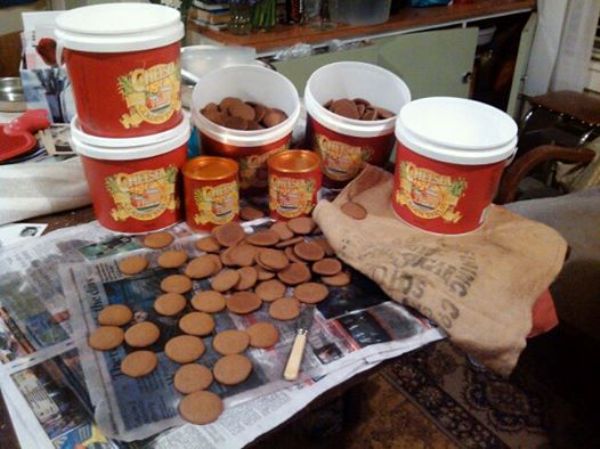
Hi Helen, my 89 yr old mother-in-law has made Ginger Bikkies forever… she is amazing, she never eats them but shares with the community like a currency. Her 8 children,  22 grand children and now about 30 great grandies all look forward to their share which she used to give in the Golden Syrup tin, now she has buckets of golden syrup we get them in re sealable plastic bags. They get taken to family in Perth, there never any problems with Customs.

Lois really is a legend with her garden and her baking, delivering things to her family or around town to anyone who may have helped her or helped someone else.

She still lives alone on the farm in a big farm house with a huge garden, flowers and vege’s galore, she can’t help herself propagating or buying plants and gets things to grow from seed, especially if something tastes nice – the seed is saved…

She has always tripled the recipe,making about 300 biscuits at a time. The dough is really too heavy for her to manage now but she finds a way. She writes in a notebook each time she makes them and it’s about 6000 a year.

 Lois’ Ginger Bickies
300g (10 1/2 oz) golden syrup
3/4 cup white sugar
185g (6 1/2 oz) butter
3 cups plain flour
1 teaspoon baking soda
3 teaspoons ground ginger
Pinch salt
Preheat the oven to 160 C (or just under). Place the golden syrup, sugar and butter together into a saucepan and bring to the boil, stirring to dissolvethe sugar. Allow to cool.
Mix in the flour, baking soda, ginger and salt, the mixture should be able to be rolled in your hands without sticking.  Add a little extra flour if needed.
Roll into balls and place on a lined or greased tray and bake for approximately 15 minutes until well coloured.
The biscuits should be crisp!
Sally

lois


June

This week has been super duper busy at the Mystery Creek Fieldays, it is wonderful to meet so many foodlovers friends and also to round up some more!
Our scrumptious Baileys, Banana, White Choc Pud is being gobbled the minute it comes out of the oven and having made it about 10 times in the last few days, I can tell you that the recipe is definitely tried and true.
Have you checked out our win pages lately?  We have turkey, duck and other goodies looking for a new home!

Happy Cooking!
Helen

Onion and Cauliflower Bhaji

Combine all ingredients aside from the lemon juice and egg in a bowl,  make a well in the centre and pour in the lemon, egg and enough cold water to make a thick batter.
Pour oil to a depth of 2-3 cm in a deep sided frying pan and heat until a small drop of batter immediately sizzles and quickly colours.  Drop large spoonfuls of mixture into the oil and cook in batches, turning as required until golden and crisp.

Drain on paper towels, sprinkle with a little sea salt and serve hot with your favourite chutney.

Foodlovers Food Trivia Quiz


smelly cheese 2


Test your food trivia knowledge with our quiz.
This one does have a few tricky elements – let us know how you go!

Thank you Wayne for submitting this!

Take Our Quiz!

Pasta Pasta


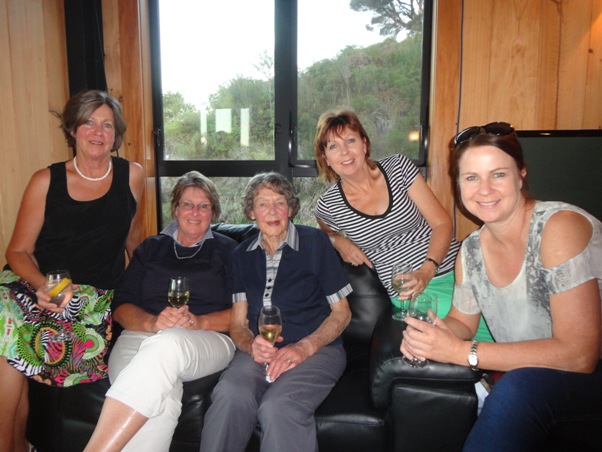
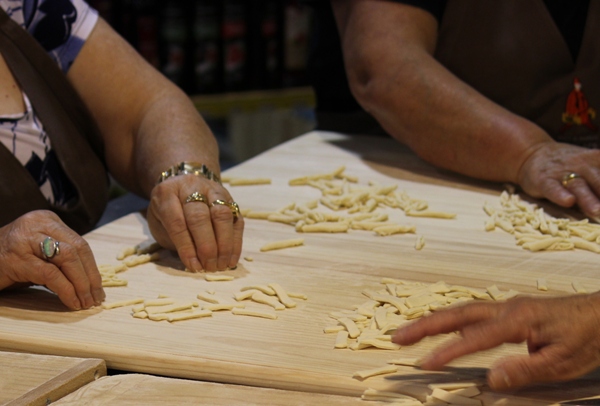
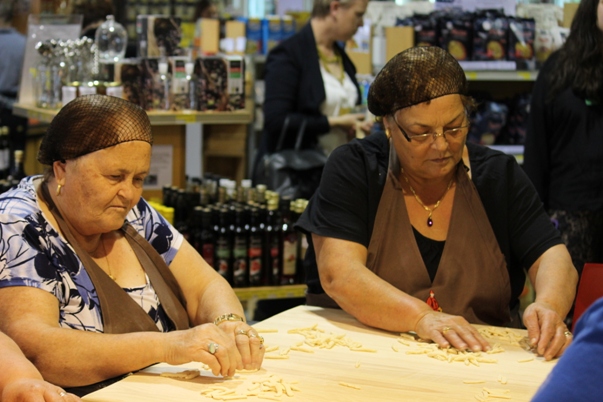
pasta ladies


Some of my favourite all time meals are based around pasta and while they come and go in my cooking repertoire, they remain timeless in my mind.
Pasta is one of the ultimate in comfort foods and something I go to if I am tired or in need of a soothing meal.

Fresh vs Dried Pasta
In this world of fresh is best you could assume that fresh pasta is what you should use, but it is not necessarily so, it very much depends on the end use.
Cucina4Fresh pasta is perfect in recipes with gentle sauces where the soft silkiness of the fresh pasta will shine through.  Dried pasta is best for robust sauces and definitely for soups and casseroles where the pasta is required to hold its shape, even after lengthy cooking.
While dried pasta is essentially flour and water, fresh pasta is made from a simple egg and flour dough, this is kneaded and rolled and then stretched through a pasta machine into long ribbons or cut into ravioli or tortellini.
I bought a pasta machine once, with good intentions of having strings of spaghetti stretched over broom handles and chairs in the kitchen…..  shortly after that I had children and the pasta machine sat in the back of the pantry gathering dust until I passed it on to a friend who needed something that was able to roll fondant icing.  It is one of those things that I still fancy doing and maybe it will be a treat for the grand children!

Rustichella dried pasta
 is a premium dried pasta produced in Abruzzo Italy – home to the most famous Italian pasta.  It is imported to NZ by Sabato and is produced by old artisan traditions.  At close to $17 per kg you may well ask what the difference is between this and the regular supermarket dried pasta and the answers would be – taste, texture and yield.
The pasta is made slowly and with care from the best durum wheat available and the cutters used leave a rough texture on the outside of the pasta meaning sauce will cling to it as opposed to just sliding off.  I think it is one of those things you probably have to try for yourself to truly understand the difference.

Which sauce for which pasta?
There are literally hundreds of pasta shapes and wondering which one for which sauce can be confusing.  Very simply it is best to think of spaghetti and long thin pasta being suited to thin oily sauces while thick chunky sauces are good for pasta with twists and hollows to trap the sauce.  We do however eat bolognese with spaghetti which does show that rules are easily broken.

Cooking Pasta
Pasta should be cooked in a very large saucepan of rapidly boiling water, giving the moving pasta space.  The water, it is said should be as salty as the Mediterranean.
In terms of cooking time, this will vary from fresh to dried and also the quality of the dried pasta.
Bite the pasta to test whether it is cooked, it should be just tender but still with some resistance.
If in doubt you could always throw it against a wall and if it sticks it is cooked….

Quantity per Person
If you work on around 100g per main serving of pasta then you are probably on track.  If using fresh pasta then up the amount to closer to 150g per person for a main serving.

Left over pasta
While some would raise their eyebrows in horror, you can definitely use left over pasta again. Simply store it in a resealable plastic bag or container, drizzle with a little oil if you like and then reheat in a microwave or by immersing it in boiling water.
Add leftover pasta to soups, frittatas, salad or simply reheat in the microwave or by pouring over some boiling water.

Along with the children came mince to my life, despite my good intentions of feeding children blue cheese and olives, spaghetti bolognese quickly became a fixture on the weekly meal repertoire and there it has stayed.  While it isn’t something I necessarily want to eat, it is good solid family fare.  Mine is a mixture of pork and beef mince (or beef mince and bacon), loaded with vegetables and is something that is easily prepared ahead of time and reheated to order.

 Some of our favourite pasta recipes

Spaghettie alla puttanesca –  an amusing read by Virgil Evetts

Spaghetti with Fennel and Pork Sausage

Spaghetti and Meatballs

Smoked Chicken and Walnut Pesto Fettucine

Chilli Prawns with Spaghetti and Rocket

Orechiette with Broccoli

Hot Smoked Salmon Pasta Salad

Frankie Valli’s secret meatball recipe

 Pasta Carbonara

What are your favourite pasta recipes?
pasta ladies2

South Australia Fare


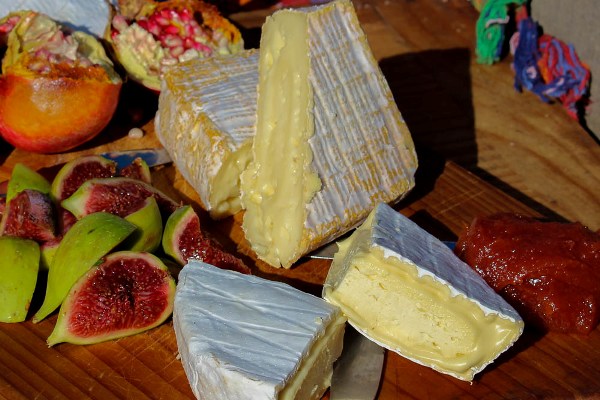
cheese and fruit (1 of 1)South Australia has everything a food lover could ever possibly wish for; incredible wine, fabulous local produce, a plethora of artisan bakers, cheese makers and numerous dairies (the milk/yoghurt product sort not the corner sort), making South Australia arguably the food bowl of Australia.

With two airlines flying direct from Auckland to Adelaide it is achievable to leave home in the morning (albeit very early) and be sitting in the Central market enjoying your latte with a fabulous almond croissant from Wild Loaf by 11am.
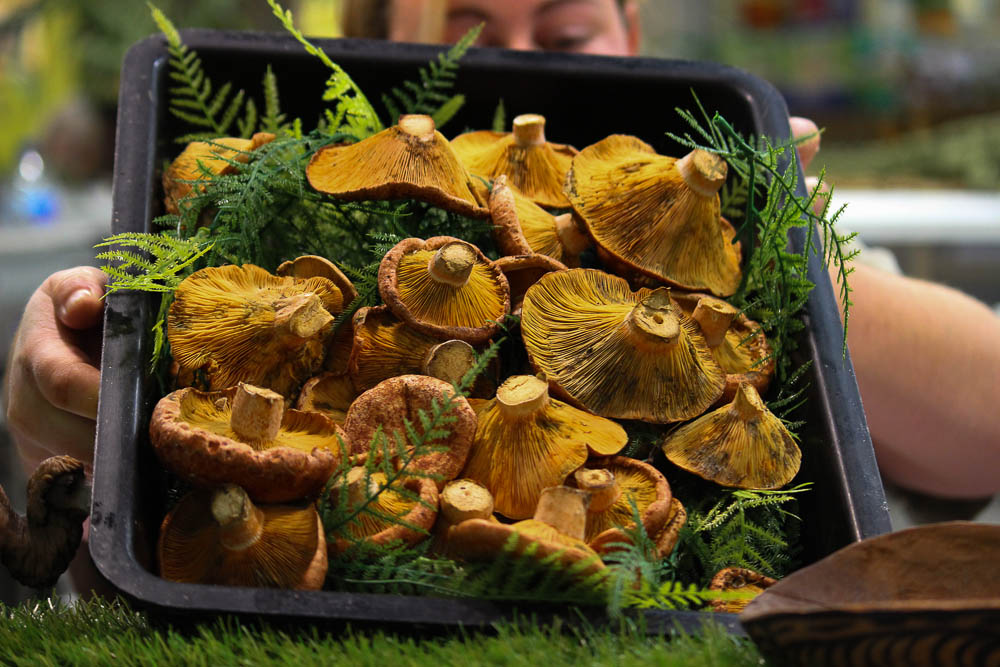
For anyone who cares about what they eat then you simply must visit the Central market. This is where you will start to get a feel for this multicultural city and to understand the integrity with which South Australians hold their food.  It is also well worth embarking on a market tour with the affable Mark Gleeson from his stall Providore.  You can of course wander the market at whim but Mark will introduce you to some of the more interesting stall holders, who will in turn will tell you their story and sometimes there are samples to taste as well.  Whether it is kneading dough, carving meat, brushing off fresh pine mushrooms or simply making your coffee, there is always a story to tell.


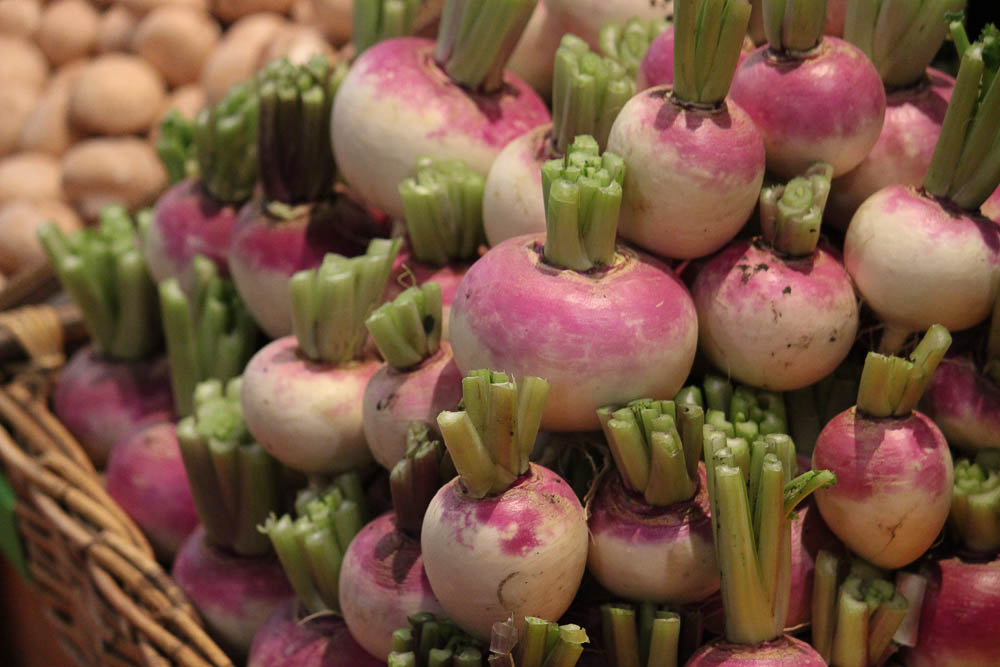
pine mushrooms (1 of 1)As you will soon see, the produce at the market is something to behold, it is sparklingly fresh with detail on both the state of origin plus organic certification where applicable.


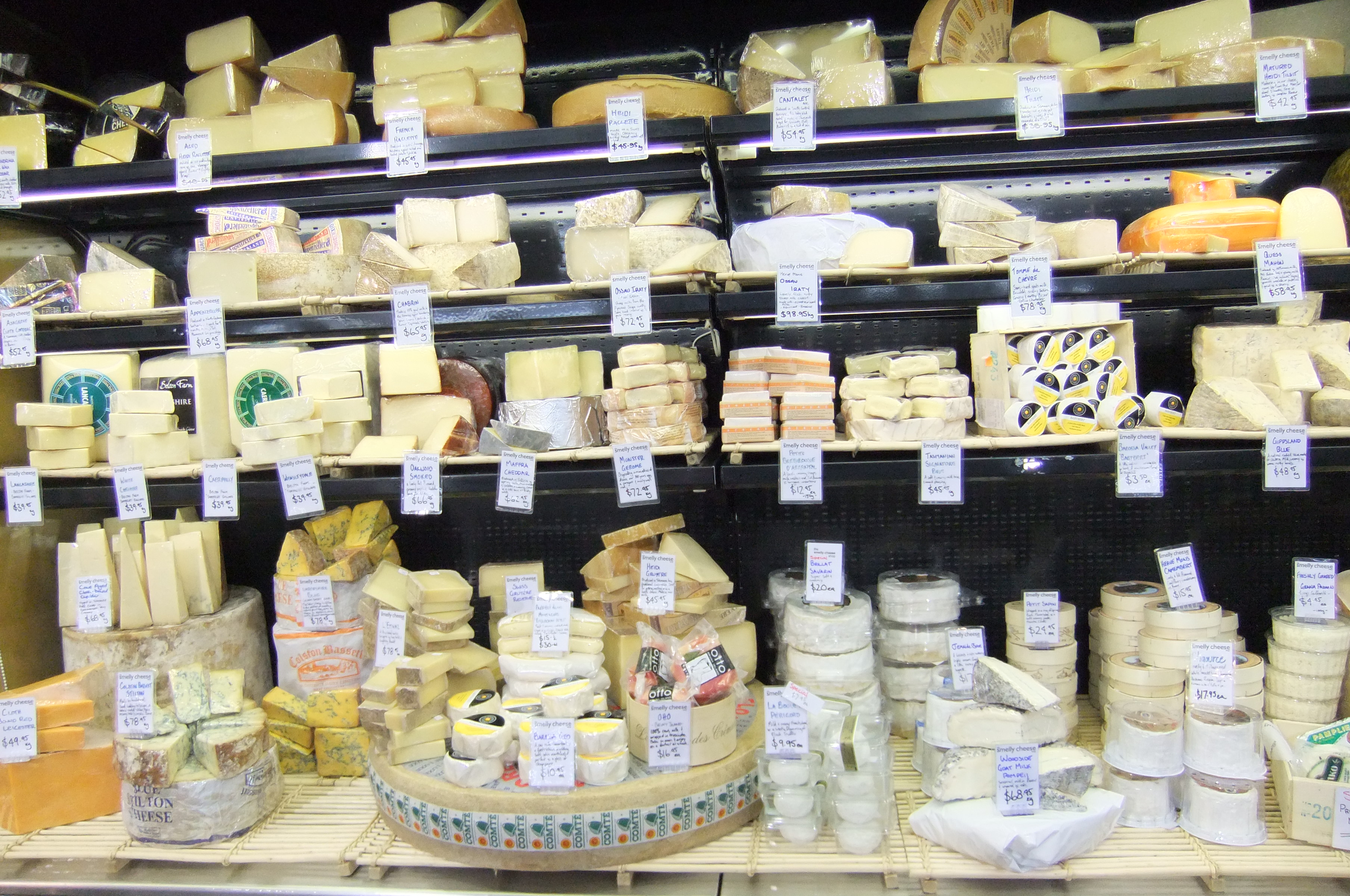
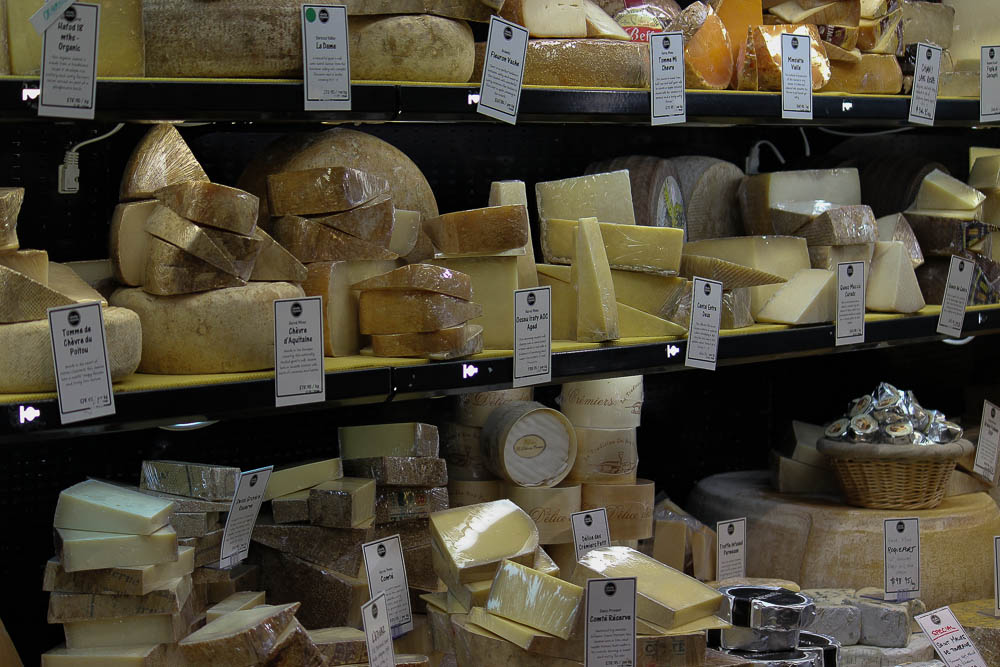
smelly cheese (1 of 1)Assuming you are staying at a hotel, there is little chance you will be buying lamb and vegetables, but it is worth purchasing a few slivers of cheese from the Smelly Cheese Company for pre-dinner drinks later.  The selection is enviable and those mountains of cheese would surely hold their own when matched against the best in Europe.  Try a packet of Barossa bark (crackers of sort) to serve with your cheese and of course some local quince paste.


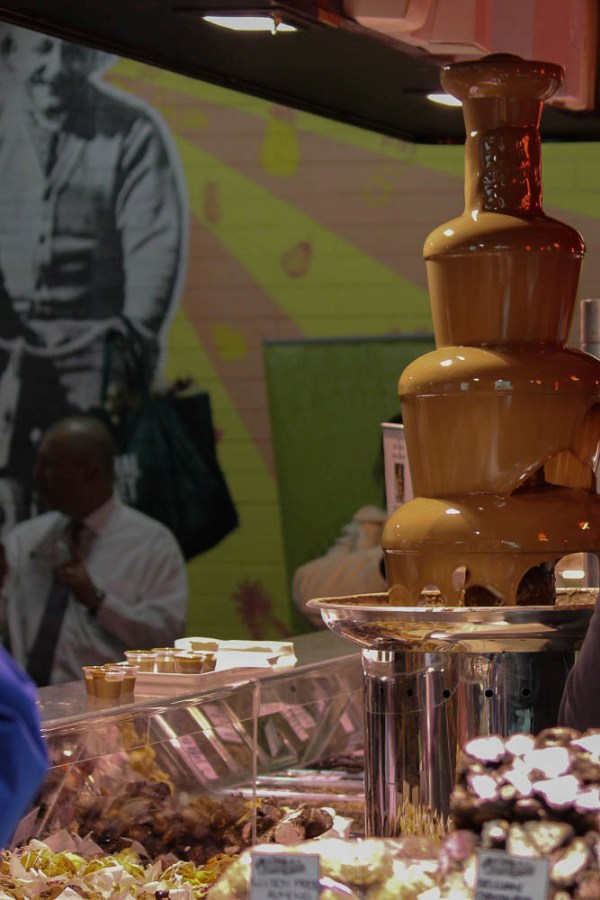
chocolate fountain (1 of 1)Fringing the market is a Haigh’s chocolate shop, an Adelaide institution.  Their chocolate frogs are infamous but they do of course make chocolate for all tastes. A stroll down Rundle street will also be a delight for any self respecting chocolate lover as Adelaide seems to be sprouting chocolate shops at a rate akin to the cafe revolution of some years back. The waft of molten chocolate has a Willy Wonka surrealness.  Rundle St (Mall) is  a great place to shop with department stores such as David Jones blending in with boutiques and well known chain store labels.  It also has its own nightlife with cafes, bars and restaurants in the immediate area.  Another great place to find restaurants is Gouger St (right by the Central market), a wander along this haven will take you around the world in cuisines and is the home to many award winning dining establishments.
Adelaide is quickly becoming known for its food truck culture which at times congregate in the same area, check out Fork on the Road to see where and when these are.
Within Adelaide there are lovely galleries and parks to explore but it is the surrounding hills and valleys rich in wineries and artisan producers where many visitors head, sampling wines from the 200+ cellar doors in South Australia.  Where you go may depend on the wine you like, the Clare is famous for its Rieslings, the Barossa is home to reds that range from Jacob’s creek to Penfolds Grange, the Coonawarra and McLaren Vale are also renowned red wine producing areas (beer and white wine drinkers needn’t fear, there is plenty for you as well).   Most of these regions are close to Adelaide with the closest being the Adelaide Hills.  Less than 30 minutes of leaving the city centre I am perched on a pew in the Hills with a cool glass of Shaw and Smith Sauvignon Blanc and a substantial wedge of local cheese..  The Barossa too is less than an hour from Adelaide, making a weekend escape entirely feasible.

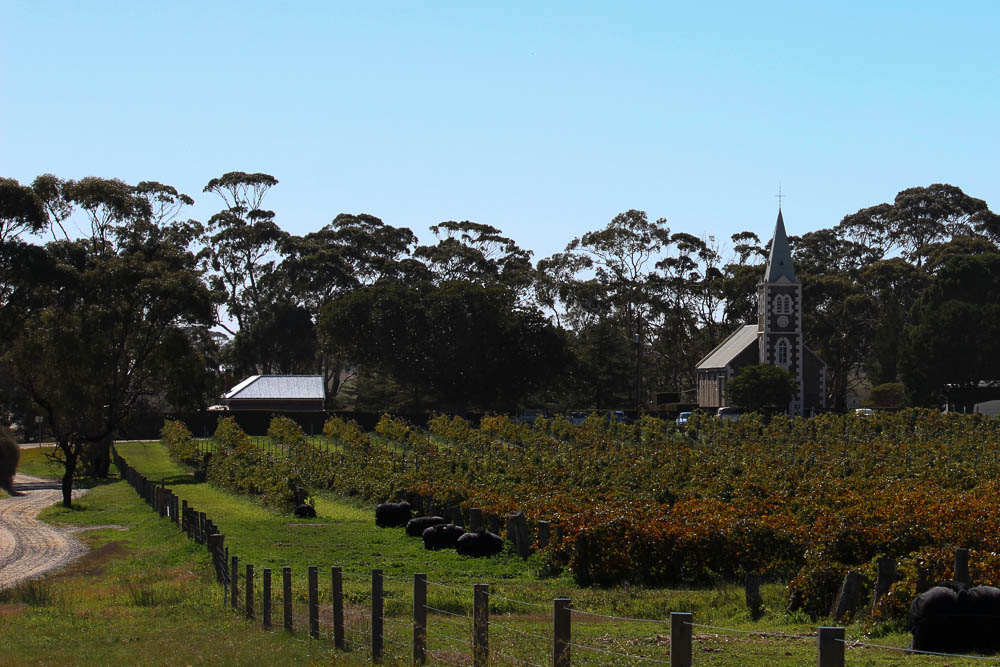
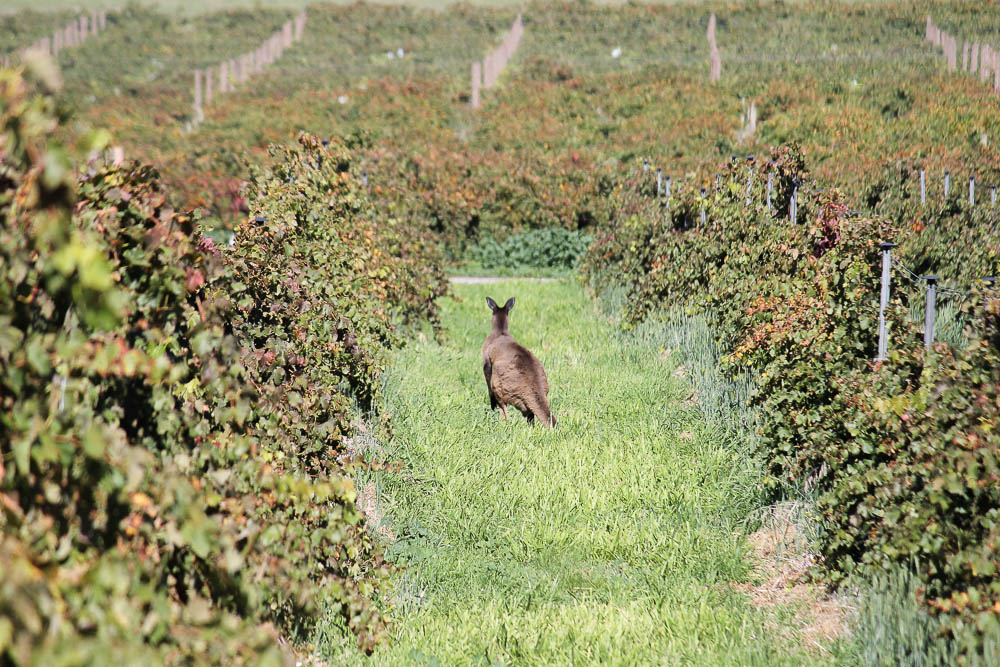
Henschke church (1 of 1)I happen to be in the Barossa during Tasting Australia, a biannual event where lunches, dinners and masterclasses abound.  A walk from the charming Lutheran church at Henschke across paddocks to the Angas’ at Hutton Vale is a lovely way to prepare for a lunch of local fare, a rather large kangaroo was enjoying a nibble on the Henschke vines, hopefully not on their Hill of Grace stock!
Hutton vale lamb is well known and our lunch is a treat, notably the rich apricot frangipane tart with thick luscious jersey cream was unbelievably good, as are the fresh figs with meltingly ripe local cheese.


roo in vines (1 of 1)If staying in the Barossa, you must visit the Barossa  Farmer’s Market on a Saturday morning, lunch at Maggie Beers Farm Shop and a stop at Angas Park fruits store in Angaston for some treats to take home. The rest I will leave to you!  The number of cellar doors in the Barossa are in excess of 80 so it is well worth doing a spot of research before you go or asking once you get there.

This is of course just the tip of what you can do when out and about in South Australia. A houseboat on the Murray river is hugely popular as is a visit to Kangaroo island or a scenic trip to the Flinders ranges.  Those who love getting up close and personal with nature are sure to find diving with tuna or immersing yourself with the great white sharks (in a cage) off Eyre Peninsula a breathtaking experience.
Check out South Australia travel options here at www.southaustralia.co.nz

What are some of your favourite finds in South Australia?

eat local sa (1 of 1)